Portret Лесер Ури

Slike umetnika Лесер Ури: Najpoznatijih 92 kroz oči galerije

Ažurirano: новембар 2026 · rangirano prema našem koeficijentu popularnosti (pretrage, posete i porudžbine za svako delo) · 92 dela Лесер Ури u našem katalogu

Ukratko

Za ljubitelje galerije, najpoznatije delo umetnika Лесер Ури je Nude Lying Down (1889), čiji se original nalazi u muzeju Berlinische Galerie, Berlin. Moses on Mount Nebo Looking at the Promised Land (1927) i Praying Jew (1931) čine triju koju svako oko prepoznaje. Od 92 dela umetnika Лесер Ури u našem katalogu, galerija u nastavku predstavlja 92 najpoznatijih dela, od kojih je svako originalno, sa navedenom godinom nastanka, muzejom i onim što ga čini jedinstvenim.

1861 – 1931, Мјендзиход Impressionism Najviše dela: Berlinische Galerie

Top 10 slika umetnika Лесер Ури u galeriji

1
Nude Lying Down (1889) čiji je Лесер Ури

Nude Lying Down

1889 · Oil · Berlinische Galerie, Berlin

A woman rests upon a bed of deep red sheets. She lies on her side, her body a pale curve against the saturated fabric. The stillness of the room is heavy, held in place by the weight of shadows and the soft geometry of furniture. A chair sits near the edge of the frame, and a couch occupies the opposite side, anchoring the space in a domestic silence. High above,…

2
Moses on Mount Nebo Looking at the Promised Land (1927) čiji je Лесер Ури

Moses on Mount Nebo Looking at the Promised Land

1927 · Pastel

We are looking at Moses on Mount Nebo Looking at the Promised Land, a significant work by the German artist Lesser Ury. Created about 1928, this piece captures a profound moment of biblical history. The subject matter focuses on Moses as he gazes upon the Promised Land from the heights of Mount Nebo.

3
Praying Jew (1931) čiji je Лесер Ури

Praying Jew

1931 · Oil On Canvas · Jevrejski muzej, New York City

Lesser Ury's "Praying Jew," painted in 1931, is more than just a portrait; it’s a poignant meditation on faith, solitude, and the quiet dignity of an aging man. Born Leo Lesser Ury in Birnbaum, Prussia (now Międzychód, Poland), his early life was marked by profound loss – the untimely death of his father instilled within him a sensitivity to the transient nature of existence, a theme that would permeate much…

4
Bülowstraße high station (1922) čiji je Лесер Ури

Bülowstraße high station

1922 · Oil

The scene depicts a city street at night, rendered in a black and white palette. Rain falls through the air, creating a sense of movement across the composition. On the asphalt road, several vehicles are positioned at varying distances from the viewer. A bus moves along the street, its form defined by the light and the wet surface of the road. Traffic lights are placed at intervals throughout the urban…

5
Strolling in the Forest (1923) čiji je Лесер Ури

Strolling in the Forest

1923

A man and a woman walk a narrow path carved through the woods. They move together, their figures small against the vertical lines of the trees. The forest closes in on both sides, creating a corridor of shade and light. Further ahead, a third figure drifts along the trail, a quiet presence in the distance. The air feels still, caught in the soft, dappled light of the canopy. It is…

6
Interior with Children (the Silblings) (1883) čiji je Лесер Ури

Interior with Children (the Silblings)

In Interior with Children (the Silblings), Lesser Ury presents an intimate, quiet scene within a domestic setting. The composition is vertically oriented, drawing the viewer into a private moment shared by three siblings. The figures are arranged in a deliberate triangular formation that guides the eye through the room. At the base of this arrangement, a child sits on the floor in the foreground, facing the viewer directly. This placement…

7
Interior with Woman at the Piano (1888) čiji je Лесер Ури

Interior with Woman at the Piano

1888 · Oil On Canvas

A dim hallway stretches into the distance, a narrow passage of receding walls that pulls the eye toward a doorway. The air feels heavy, thick with the quiet of a house at rest. A red sofa sits in the foreground, its saturated color anchoring the composition against a sea of dark tones. Light does not flood this space; it struggles through, creating sharp highlights and deep, velvet shadows that define…

8
Woman at a Desk (also known as At the Desk) (1898) čiji je Лесер Ури

Woman at a Desk (also known as At the Desk)

1898 · Oil On Canvas · Alte Nationalgalerie, Berlin

The composition centers on a woman seated at a desk, positioned before a large window that divides the interior space from the exterior view. The scene is rendered in a grayscale palette, utilizing a range of black, white, and gray tones. The woman is oriented toward the desk, her posture suggesting she is engaged in reading or writing. To her side, a piano stool and various chairs are placed within…

9
Rebekka at the well (1908) čiji je Лесер Ури

Rebekka at the well

1908 · Oil · Jevrejski muzej u Berlinu, Berlin

The air feels heavy with the stillness of a fading afternoon. A solitary woman stands poised by a stone well, her figure caught in a moment of quiet contemplation. She holds a water jug, her presence anchoring the composition slightly to the right of center. Around her, the world seems to soften into a haze of muted, earthy tones. Deep blues and dark browns ground the scene, while ochre and…

10
In the café - Woman in red (1911) čiji je Лесер Ури

In the café - Woman in red

1911 · Oil · Alte Nationalgalerie, Berlin

A single figure anchors the composition, a woman draped in a saturated red garment that pulls the eye through the dimness of the café. She sits slightly off-center, her presence heavy and immediate, as if the viewer has just pulled up a chair at her table. Her blonde hair catches a soft, ambient light, contrasting against the pale skin of her face and the deep, murky tones of the background.…

Slike umetnika Лесер Ури, rangirane od 11 do 92

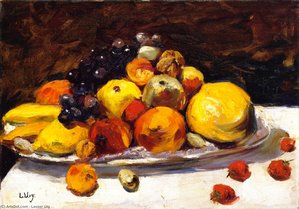
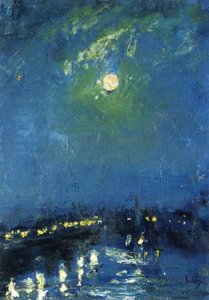
11Street scene at Night, Berlin (1920) čiji je Лесер УриStreet scene at Night, Berlin1920 12Selfportrait (1921) čiji je Лесер УриSelfportrait1921 13Café Scene in Paris (1928) čiji je Лесер УриCafé Scene in Paris1928 14The Red Carpet (1894) čiji je Лесер УриThe Red Carpet1894 · Izraelski muzej 15On Lake Garda (1897) čiji je Лесер УриOn Lake Garda1897 16The Pont Royal in Paris (1928) čiji je Лесер УриThe Pont Royal in Paris1928 · Hamburger Kunsthalle 17Parisian Interior (1881) čiji je Лесер УриParisian Interior1881 18Woman at the Kitchen Stove (1882) čiji je Лесер УриWoman at the Kitchen Stove1882 19Flowers on the Mantel (1882) čiji je Лесер УриFlowers on the Mantel1882 20Estaminet - Flämische Schenke (1884) čiji je Лесер УриEstaminet - Flämische Schenke1884 · Alte Nationalgalerie 21Gargenlichtung am Zaun (1883) čiji je Лесер УриGargenlichtung am Zaun1883 22Siblings (1883) čiji je Лесер УриSiblings1883 23Self-Portrait (1881) čiji je Лесер УриSelf-Portrait1881 24Newspaper Reader in a Café (also known as Woman in a Café or Café Interior) (1882) čiji je Лесер УриNewspaper Reader in a Café (also known as Woman in a Café or Café Interior)1882 25In the Sunshine, near Volluvet (1884) čiji je Лесер УриIn the Sunshine, near Volluvet1884 26Village Road at the Edge of the Forest (1884) čiji je Лесер УриVillage Road at the Edge of the Forest1884 27Mountain Lake (1886) čiji je Лесер УриMountain Lake1886 · Berlinische Galerie 28View into a Valley (1890) čiji je Лесер УриView into a Valley1890 29The Coast of Rügen (1892) čiji je Лесер УриThe Coast of Rügen1892 30Woman by the Chimney Fire (also known as Reverie by the Fireplace) (1890) čiji je Лесер УриWoman by the Chimney Fire (also known as Reverie by the Fireplace)1890 31Rocky Shore at Capri (1890) čiji je Лесер УриRocky Shore at Capri1890 32Young Lady with a Large Hat (1886) čiji je Лесер УриYoung Lady with a Large Hat1886 33Leipzig Street (1889) čiji je Лесер УриLeipzig Street1889 · Berlinische Galerie 34NIght Lights (1889) čiji je Лесер УриNIght Lights1889 35Unter den Linden after the Rain (1888) čiji je Лесер УриUnter den Linden after the Rain1888 36Lake Garda and Monte Baldo (1897) čiji je Лесер УриLake Garda and Monte Baldo1897 37Old Man in a Fur Coat (1895) čiji je Лесер УриOld Man in a Fur Coat1895 38Moonrise on the Grunewaldsee (1898) čiji je Лесер УриMoonrise on the Grunewaldsee1898 39Evening at Café Bauer (1898) čiji je Лесер УриEvening at Café Bauer1898 40Interior (also known as Interior Scene with Woman Reading on a Terrace) (1894) čiji je Лесер УриInterior (also known as Interior Scene with Woman Reading on a Terrace)1894 41Reader with Magnifying Glass (1895) čiji je Лесер УриReader with Magnifying Glass1895 42Sunset at Lake Grunewald (1900) čiji je Лесер УриSunset at Lake Grunewald1900 43Ludwig Geiger (1905) čiji je Лесер УриLudwig Geiger1905 44Eugen Schiffer (1905) čiji je Лесер УриEugen Schiffer1905 45Landscape at Sunset (1900) čiji je Лесер УриLandscape at Sunset1900 46View over Nollendorfplatz (1901) čiji je Лесер УриView over Nollendorfplatz1901 47Otto Brahm in His Loge at the German Theater (1901) čiji je Лесер УриOtto Brahm in His Loge at the German Theater1901 48Stroller in Tiergarten (1905) čiji je Лесер УриStroller in Tiergarten1905 49Rainbow at Beelitzhof (also known as Brandenburg Landscape) (1899) čiji je Лесер УриRainbow at Beelitzhof (also known as Brandenburg Landscape)1899 50On the Kurfurstendamm (1910) čiji je Лесер УриOn the Kurfurstendamm1910 51Field workers in Thuringa (1911) čiji je Лесер УриField workers in Thuringa1911 52Berlin street scene with horse-drawn cabs (1910) čiji je Лесер УриBerlin street scene with horse-drawn cabs1910 53Berlin, Alexanderplatz (1910) čiji je Лесер УриBerlin, Alexanderplatz1910 54Lake Garda Motif (1906) čiji je Лесер УриLake Garda Motif1906 55Self-Portrait with Brush and Palette (1910) čiji je Лесер УриSelf-Portrait with Brush and Palette1910 56Promontory on Lake Garda (1909) čiji je Лесер УриPromontory on Lake Garda1909 57Sunset over the Grunewaldsee (1909) čiji je Лесер УриSunset over the Grunewaldsee1909 58Rebecca at the Fountain (1908) čiji je Лесер УриRebecca at the Fountain1908 59On a Canal (1912) čiji je Лесер УриOn a Canal1912 60Lake Garda with Mount Baldo (1914) čiji je Лесер УриLake Garda with Mount Baldo1914 61Self-Portrait with Dark Hat (1914) čiji je Лесер УриSelf-Portrait with Dark Hat1914 62In Front of the Cafe (Berlin at Night) (1920) čiji je Лесер УриIn Front of the Cafe (Berlin at Night)1920 63Lilac Bouquet (1922) čiji je Лесер УриLilac Bouquet1922 64Street Scene with Woman, Berlin (1918) čiji je Лесер УриStreet Scene with Woman, Berlin1918 65Newspaper Reader at the Café (also known as Gentleman at a Coffee House) (1920) čiji je Лесер УриNewspaper Reader at the Café (also known as Gentleman at a Coffee House)1920 66Two Girls walking along the Street (1921) čiji je Лесер УриTwo Girls walking along the Street1921 67Unter den Linden (1922) čiji je Лесер УриUnter den Linden1922 68Vase of Flowers (1921) čiji je Лесер УриVase of Flowers1921 69Champs-Elysees with Arc de Triomphe, Paris (1928) čiji je Лесер УриChamps-Elysees with Arc de Triomphe, Paris1928 70Paris, Sunrise (1928) čiji je Лесер УриParis, Sunrise1928 71Waterloo Bridge in the Fog (1926) čiji je Лесер УриWaterloo Bridge in the Fog1926 72Eiffel Tower (1928) čiji je Лесер УриEiffel Tower1928 73Nollendorfplazt at Night (1925) čiji je Лесер УриNollendorfplazt at Night1925 74Lennéstraße (1925) čiji je Лесер УриLennéstraße1925 75Traffic Jam at Potsdamer Platz (1925) čiji je Лесер УриTraffic Jam at Potsdamer Platz1925 76Schloß Rheinstein am Rhein (1924) čiji je Лесер УриSchloß Rheinstein am Rhein1924 77Charing Cross, London (1926) čiji je Лесер УриCharing Cross, London1926 78Tiergarten Avenue with Siegessäule (1925) čiji je Лесер УриTiergarten Avenue with Siegessäule1925 79Rainy Day in London, Thames Port (1926) čiji je Лесер УриRainy Day in London, Thames Port1926 80Waterloo Bridge Emerging in the Sunlight (1926) čiji je Лесер УриWaterloo Bridge Emerging in the Sunlight1926 81Paris, Rainy Day at the Quai Voltaire (1928) čiji je Лесер УриParis, Rainy Day at the Quai Voltaire1928 82Untitled (Park Scene or Man in the Gray Suit) (1913) čiji je Лесер УриUntitled (Park Scene or Man in the Gray Suit)1913 · Jevrejski muzej 83Morning Sun (1924) čiji je Лесер УриMorning Sun1924 84A Jewish Man in His Prayer Shawl (1931) čiji je Лесер УриA Jewish Man in His Prayer Shawl1931 85Still Life with Fruit on a White Table (1920) čiji je Лесер УриStill Life with Fruit on a White Table1920 86Thames Bridges in the Twilight (also known as London Bridge) (1926) čiji je Лесер УриThames Bridges in the Twilight (also known as London Bridge)1926 87Abendlicher Park bei Regenwetter čiji je Лесер УриAbendlicher Park bei Regenwetter 88Tiergartenstrasse, Berlin čiji je Лесер УриTiergartenstrasse, Berlin 89Landscape čiji je Лесер УриLandscape 90Self Portrait with Spread Fingers čiji je Лесер УриSelf Portrait with Spread Fingers 91The River Thames, London, Moonlight čiji je Лесер УриThe River Thames, London, Moonlight 92The Fence (also known as Farmyard with Well) (1888) čiji je Лесер УриThe Fence (also known as Farmyard with Well)1888

Čuvena dela Лесер Ури po periodima

Motivi koji su privlačili pažnju Лесер Ури

Četiri teme koje se najčešće ponavljaju u ovim originalima, svaka sa svojim vrhunskim primerom.

Muzeji u kojima se čuvaju originalna dela umetnika Лесер Ури

7 muzeja u kojima se nalazi najviše slika sa ove stranice.

Muzej Grad Radovi umetnika Лесер Ури Slike iz ovog spiska
Berlinische Galerie, BerlinBerlinische Galerie Berlin 3 Nude Lying Down, Mountain Lake, Leipzig Street
Alte Nationalgalerie, BerlinAlte Nationalgalerie Berlin 3 Woman at a Desk (also known as At the Desk), In the café - Woman in red, Estaminet - Flämische Schenke
Jevrejski muzej, New York CityJevrejski muzej New York City 2 Praying Jew, Untitled (Park Scene or Man in the Gray Suit)
Bavarske državne slikopisne kolekcije, MinhenBavarske državne slikopisne kolekcije Minhen 1 Interior with Children (the Silblings)
Jevrejski muzej u Berlinu, BerlinJevrejski muzej u Berlinu Berlin 1 Rebekka at the well
Izraelski muzej, JerusalimIzraelski muzej Jerusalim 1 The Red Carpet
Hamburger Kunsthalle, HamburgHamburger Kunsthalle Hamburg 1 The Pont Royal in Paris

Лесер Ури, jedno autentično delo po deceniji

Radovi po decenijama

Izaberite deceniju da biste videli original koji je definiše.

Slike umetnika Лесер Ури: odgovori galerije

Koja je najpoznatija slika umetnika Лесер Ури?Otkrij odgovor

Nude Lying Down (1889), Berlinische Galerie, Berlin. Slede Moses on Mount Nebo Looking at the Promised Land (1927) i Praying Jew (1931).

Koliko je godina imao/la Лесер Ури kada je dovršio/la Nude Lying Down?Otkrij odgovor

28 godina: Nude Lying Down datira iz 1889, a Лесер Ури je rođen/a 1861.

Koja su najbolja 10 dela umetnika Лесер Ури?Otkrij odgovor

Nude Lying Down, Moses on Mount Nebo Looking at the Promised Land, Praying Jew, Bülowstraße high station, Strolling in the Forest, Interior with Children (the Silblings), Interior with Woman at the Piano, Woman at a Desk (also known as At the Desk), Rebekka at the well i In the café - Woman in red. Gornji rang pokazuje godinu i muzej za svako od njih.

Koliko je dela stvorio/la Лесер Ури?Otkrij odgovor

Naš katalog sadrži 92 dela umetnika Лесер Ури, datiranih od 1881 do 1931.

Gde se nalaze najpoznatiji originali umetnika Лесер Ури?Otkrij odgovor

Većinom u Berlinische Galerie (Berlin), Alte Nationalgalerie (Berlin) i Jevrejski muzej (New York City). Tabela muzeja iznad sadrži njih sve.

Kada je Лесер Ури stvorio svoje najpoznatije slike?Otkrij odgovor

U 1920s: 29 od 92 dela na ovoj stranici nastalo je tada, od čega je Moses on Mount Nebo Looking at the Promised Land.

Koja su najranija i najkasnija poznata dela umetnika Лесер Ури?Otkrij odgovor

Na ovoj stranici, najstarije delo je iz Parisian Interior (1881), a najnovije iz Praying Jew (1931).

Kojim se motivima Лесер Ури najčešće bavio?Otkrij odgovor

Woman (8), Interior (7) i Night (6), kroz svih 92 dela na ovoj stranici.

U kojoj je tehnici najviše radio/la Лесер Ури?Otkrij odgovor

Oil On Canvas, za 8 od 92 dela na ovoj stranici.

Sa kojim umetničkim pravcem je Лесер Ури povezan/a?Otkrij odgovor

Impressionism, sudeći po originalima na ovoj stranici.

Koje originale umetnika Лесер Ури poseduje Berlinische Galerie?Otkrij odgovor

Nude Lying Down, Mountain Lake i Leipzig Street: Berlinische Galerie, Berlin čuva 3 dela sa ove stranice.

Лесер Ури: umetnik

Живот исписан свешћу: Свет Леа Лесера Урија

Лео Лесер Ури, име које можда није одмах препознатљиво као имена неких његових импресионистичких савременика, ипак заузима витално и емотивно место у наративу немачког сликарства. Рођен 7. новембра 1861. године у Бирнбауму, Пруској – данас Миједзиход, Пољска – Уријев пут је био обележен и уметничким успехом и личним тешкоћама. Рано детињство му је засенчила трагедија; смрт оца, пекара, 1872. године натерала га је да се пресели у Берлин са мајком. Тај померај је можда у њега усадио животни осетљивост на градске пределе и пролазност модерног постојања. Првобитно ученик занатлије, Уријев уметнички позив се показао прејаким да би га игнорисао, што га је 1879. године одвело на Кунстакадемију Диселдорф. То је био почетак продуженог периода европских истраживања – Брисел, Париз, Минхен, Штутгарт, Карлсруе – сваки град је допринео еволуирајућој палети и перспективи која ће дефинисати његов јединствени стил. Та путовања нису била само географска; то су биле импресивне студије светлости, атмосфере и бујања енергије модерног живота.

Прихватање импресионизма и осликавање душе града

Уријев уметнички развој био је уско повезан са струјањима касног 19. века. Иако га је почетно дочекао отпор – његова прва изложба 1889. године изазвала је непријатељски одговор – пронашао је заступника у цењеном Адолфу Мензелу, чија је подршка отворила врата у Берлинску академију. То признање се показало кључним, омогућавајући Урију да додатно прецизира своју технику и визију. Његово прихватање импресионизма није било само стилско; то је био начин да се заробе пролазни тренуци модерног градског живота. Придружио се Минхенској сецесији 1893. године, повезавши се са групом уметника који су изазвали академске конвенције и тражили нове начине изражавања. Уријеви платни су тада почели да сијају живим потезима четком, импасто апликацијом стварајући текстуру и дубину, и оштром осетљивошћу на трансформативну моћ светлости. Његове главне теме су се кристализовале око тог времена: пејзажи прожети атмосфером, интимна унутрашња окружења, али најзначајније, живописне, често ноћне сцене градског живота. Он није само *сликао* Берлин; он је заробио његову суштину – сјај гасних лампи на улицама прекривеним кишом, бурну енергију кафића, тиху усамљеност засенчених углова.

Признање и сложена заоставштина

Почетак 20. века обележио је Уријев повратак у Берлин, где је брзо постао позната фигура у градској уметничкој сцени. Његово учешће на изложбама са Берлинском сецесијом од 1915. године постепено је повећавало његово признање. Ландмарк изложба 1922. године, која је представила 150 његових слика и пастела, учврстила је његов углед; градоначелник Берлина га је прогласио „уметничким славославиљем главног града“. То време је обележило врхунац Уријеве каријере, подстакнут и критичким признањем и комерцијалним успехом. Посебно је постао познат по својој мајсторству пастела, користећи медијум за стварање дела изузетне деликатности и атмосферске дубине. Међутим, тај успех је била у сенци сложеног аспекта његове праксе. Да би задовољио растућу потражњу, Ури је почео да понавља композиције, производећи бројне копије – неке нижег квалитета – што је на крају нарушило његов уметнички статус у очима неких критичара. Тај прагматичан приступ, иако финансијски користан, на крају је допринео двосмисленој процени његовог опуса.

Трајан утисак: Историјски значај и трајна привлачност

Историјски значај Леа Лесера Урија се протеже даље од његових техничких вештина и естетичке осетљивости. Запамћен је као оштар посматрач и емотивни портретиста модерног градског живота, посебно ноћних пејзажа Берлина који су резоновали са публиком која је тражила да разуме свој брзо променљиви свет. Његов рад нуди увид у специфично време и место – град на прагу модернизма, који се бори са индустријализацијом, друштвеним променама и анксама нове ере. Шта више, као јеврејски уметник који се кретао немачким друштвом, Уријев живот и рад одражава аспекте јеврејског културног идентитета и искуства у сложеном социополитичком контексту. Његове слике, иако не експлицитно политичке, суптилним начином преносе осећај припадности и отуђености, нудећи јединствену перспективу на изазовима са којима се суочавају јеврејске заједнице у Немачкој током тог периода. Иако је умро у Берлину 18. октобра 1931. године, и сахрањен је на Јеврејском гробљу у Берлин-Вајсензеу, његов утицај се осећа и данас. Његов карактеристичан стил отворио је пут каснијим генерацијама уметника, а његови емотивни прикази градског живота настављају да очаравају гледаоце својом лепотом, атмосфером и догађајним осећајем времена и места. Уријево наслеђе је сведочанство моћи уметности да зароби не само оно што видимо, већ како се осећамо кад смо живи у одређеном тренутку.