Portret Хосефа Де Обидос

38 najpoznatijih slika umetnika Хосефа Де Обидос, izbor iz galerije

Ažurirano: новембар 2026 · rangirano prema našem koeficijentu popularnosti (pretrage, posete i porudžbine za svako delo) · 38 dela Хосефа Де Обидос u našem katalogu

Ukratko

Od svih originala koje je Хосефа Де Обидос ostavio, najpoznatiji je Princess Isabel Luísa Josefa (1600), koji se nalazi u kolekciji Museu Nacional dos Coches, Lisabon. Odmah za njima slede Lactation of St. Bernard (1660) i Mystical marriage of Santa Catarina (1640). Naš katalog sadrži 38 dela umetnika Хосефа Де Обидос; galerija je čuvala 38 dela koja svet najviše admira, od kojih je svako prikazano sa svojim datumom, muzejom i pričom.

1630 – 1684, Севиља Baroque Najviše dela: Nacionalni muzej stare umetnosti

Top 10 slika umetnika Хосефа Де Обидос: izbor galerije

1
Princess Isabel Luísa Josefa (1600) čiji je autor Хосефа Де Обидос

Princess Isabel Luísa Josefa

1600 · Oil On Canvas · Museu Nacional dos Coches, Lisabon

In this intimate portrait, we encounter Princess Isabel Luísa Josefa, a figure of quiet dignity captured in the soft, diffused light of the seventeenth century. She is presented in a bust-length composition, seated at a table that holds a book, her gaze meeting ours with a directness that feels both personal and profoundly composed. The atmosphere is one of solemnity, a characteristic of the Baroque era, where the darkness of…

2
Lactation of St. Bernard (1660) čiji je autor Хосефа Де Обидос

Lactation of St. Bernard

1660 · Oil On Canvas · Machado de Castro National Museum, Koimbra

A celestial hierarchy defines this pyramidal composition, where the Virgin Mary is seated and crowned in the upper center. She holds the Christ Child, offering a moment of sacred lactation that serves as the focal point of the work. Below this heavenly realm, the earthly sphere is populated by figures of intense piety. On the left, four Cistercian friars kneel in adoration, while on the right, four nuns of the…

3
Mystical marriage of Santa Catarina (1640) čiji je autor Хосефа Де Обидос

Mystical marriage of Santa Catarina

1640 · Oil On Copper · Nacionalni muzej stare umetnosti, Lisabon

In this 1647 oil on copper, a quiet, divine intimacy unfolds within a dimly lit interior. The Virgin Mary sits as the central anchor, cradling the Christ Child who reaches toward Saint Catherine. This sacred gesture—the placement of a ring upon the finger of the kneeling saint—marks the mystical marriage, a moment of profound spiritual connection. The composition draws the eye through a careful arrangement of light and shadow, focusing…

5
Pentecost by Josefa de Ayala (1660) čiji je autor Хосефа Де Обидос

Pentecost by Josefa de Ayala

1660 · Oil On Canvas · Machado de Castro National Museum, Koimbra

Pentecost by Josefa de Ayala is an oil painting by the artist Josefa De Óbidos. Created about 1660, this work belongs to the period when the artist was establishing her presence within the Baroque tradition. The piece captures a significant biblical moment through a focused, intimate lens, emphasizing the spiritual intensity of the gathered figures.

6
St. Mary Magdalene (1650) čiji je autor Хосефа Де Обидос

St. Mary Magdalene

1650 · Oil On Copper

This oil painting on copper, titled St. Mary Magdalene, was executed by Josefa De Óbidos about 1650. The work originates from the Convento do Louriçal, a setting that informs its quiet, devotional character. It presents a religious figure of profound emotional significance, captured in a moment of stillness. The scale of the copper panel lends an inherent intimacy to the subject, inviting a close, personal encounter with the saint.

7
Abisag (1650) čiji je autor Хосефа Де Обидос

Abisag

1650 · Oil On Canvas

Josefa De Óbidos presents Abisag in this formal portrait, executed about 1650. The subject is a biblical or saintly figure, rendered with an idealized quality that emphasizes her dignity. She is depicted in a full-length pose, occupying much of the frame to establish a sense of monumentality. Her attire, consisting of a red robe and a blue skirt, suggests a combination of royalty and piety.

8
Supper of the Holy Family (1674) čiji je autor Хосефа Де Обидос

Supper of the Holy Family

1674 · Oil On Canvas · National Museum Frei Manuel do Cenáculo, Évora

In this intimate oil on canvas, Josefa De Óbidos presents the Supper of the Holy Family. Painted about 1674, the work captures a quiet, domestic moment shared between the Virgin Mary, Saint Joseph, and the Christ Child. The scene is set around a table, creating a sense of closeness that draws the viewer into their private circle. It is a depiction of devotion and peace, rendered with a focus on…

10
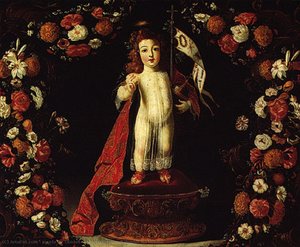
Saint John the Baptist (1670) čiji je autor Хосефа Де Обидос

Saint John the Baptist

1670 · Oil

In the painting Saint John the Baptist by Josefa De Óbidos, the central figure is depicted as a young child. This figure is positioned in the middle of the composition, framed by a circular garland of diverse flowers and ribbons. This lush floral border includes roses, lilies, and carnations. The arrangement creates a decorative window that establishes a shallow depth, looking into the sacred scene. The background behind the saint…

Izbor umetnika Хосефа Де Обидос se nastavlja, od 11 do 38

Čuvena dela Хосефа Де Обидос po periodima

Motivi koji su privlačili pažnju Хосефа Де Обидос

Četiri teme koje se najčešće ponavljaju u ovim originalima, svaka sa svojim vrhunskim primerom.

Muzeji u kojima se čuvaju originalna dela umetnika Хосефа Де Обидос

8 muzeja u kojima se nalazi najviše slika sa ove stranice.

Muzeji Grad Radovi umetnika Хосефа Де Обидос Slike iz ovog spiska
Nacionalni muzej stare umetnosti, LisabonNacionalni muzej stare umetnosti Lisabon 9 Mystical marriage of Santa Catarina, Still life with boxes, glass and ceramic planter, Still life with fruit, vegetables and flowers
Machado de Castro National Museum, KoimbraMachado de Castro National Museum Koimbra 3 Lactation of St. Bernard, Pentecost by Josefa de Ayala, Saint Mary Magdalene
National Museum Frei Manuel do Cenáculo, ÉvoraNational Museum Frei Manuel do Cenáculo Évora 3 Supper of the Holy Family, Natureza morta, Cordeiro Pascal
Museu Nacional dos Coches, LisabonMuseu Nacional dos Coches Lisabon 1 Princess Isabel Luísa Josefa
National Museum of Art, Architecture and Design, OsloNational Museum of Art, Architecture and Design Oslo 1 The Mystic Marriage of Saint Catharine
Municipal Museum of Óbidos, ÓbidosMunicipal Museum of Óbidos Óbidos 1 Portrait of Faustino das Neves
Walters Art Museum, BaltimoreWalters Art Museum Baltimore 1 The Sacrificial Lamb
National Coach Museum, LisbonNational Coach Museum Lisbon 1 Maria Francisca de Saboia's portrait

Хосефа Де Обидос deceniju po deceniju: original koji definiše svaku od njih

Radovi po decenijama

Izaberite deceniju da biste videli original koji je definiše.

Pitanja kolekcionara o slikama umetnika Хосефа Де Обидос

Po kojem delu je Хосефа Де Обидос najpoznatiji/a?Otkrij odgovor

Princess Isabel Luísa Josefa (1600), Museu Nacional dos Coches, Lisabon. Slede Lactation of St. Bernard (1660) i Mystical marriage of Santa Catarina (1640).

Koja su deset najpoznatijih slika umetnika Хосефа Де Обидос?Otkrij odgovor

Princess Isabel Luísa Josefa, Lactation of St. Bernard, Mystical marriage of Santa Catarina, The Mystic Marriage of Saint Catharine, Pentecost by Josefa de Ayala, St. Mary Magdalene, Abisag, Supper of the Holy Family, Portrait of Faustino das Neves i Saint John the Baptist. Gornji rang pokazuje godinu i muzej za svako od njih.

Koliko je slika ostavio Хосефа Де Обидос?Otkrij odgovor

Naš katalog sadrži 38 dela umetnika Хосефа Де Обидос, datiranih od 1640 do 1679.

U kojim muzejima se nalaze remek-dela umetnika Хосефа Де Обидос?Otkrij odgovor

Većinom u Nacionalni muzej stare umetnosti (Lisabon), Machado de Castro National Museum (Koimbra) i National Museum Frei Manuel do Cenáculo (Évora). Tabela muzeja iznad sadrži njih sve.

U kojim godinama je Хосефа Де Обидос naslikao svoja najpoznatija dela?Otkrij odgovor

U 1670s: 18 od 38 dela na ovoj stranici nastalo je tada, od čega je Supper of the Holy Family.

Koja su prva i poslednja čuvena originalna dela umetnika Хосефа Де Обидос?Otkrij odgovor

Na ovoj stranici, najstarije delo je iz Mystical marriage of Santa Catarina (1640), a najnovije iz The Penitent Magdalene Comforted by Angels (1679).

Koje je motive Хосефа Де Обидос najčešće birao/la?Otkrij odgovor

Woman (12), Child (9) i Flowers (9), kroz svih 38 dela na ovoj stranici.

Koju je tehniku najčešće koristio/la Хосефа Де Обидос?Otkrij odgovor

Oil On Canvas, za 16 od 38 dela na ovoj stranici.

Kojem umetničkom pravcu pripada Хосефа Де Обидос?Otkrij odgovor

Baroque, sudeći po originalima na ovoj stranici.

Čija se dela umetnika Хосефа Де Обидос nalaze u Nacionalni muzej stare umetnosti?Otkrij odgovor

Mystical marriage of Santa Catarina, Still life with boxes, glass and ceramic planter i Still life with fruit, vegetables and flowers: Nacionalni muzej stare umetnosti, Lisabon čuva 9 dela sa ove stranice.

Хосефа Де Обидос: život i delo

The Radiant Legacy of Josefa de Óbidos

Josefa de Óbidos, born as Josefa de Ayala Figueira, remains one of the most luminous and enduring figures of the Portuguese Baroque era. Though her journey began in the vibrant, sun-drenched atmosphere of Seville, Spain, in 1630, her artistic soul was irrevocably shaped by the landscapes and traditions of Portugal, where she moved at the tender age of four. Raised under the watchful eye and tutelage of her father, an artist whose influence provided the essential foundation for her technical prowess, Josefa emerged not merely as a student but as a master in her own right. Her work, often signed with the evocative name 'josefa em óbidos' or 'josefa de ayalla', carries the profound weight of a deep connection to her adopted homeland, blending Spanish vitality with a uniquely Portuguese intimacy and grace.

A Tapestry of Still Life and Sacred Devotion

Her oeuvre is a breathtaking testament to the Baroque spirit, characterized by an extraordinary attention to detail and a masterful command over light and texture. Josefa possessed a rare ability to breathe life into the inanimate, transforming simple floral arrangements and fruit displays into profound meditations on beauty, abundance, and mortality. In her celebrated still lifes, every petal, leaf, and dewdrop seems to pulse with a quiet, captured energy, inviting the viewer into a world of sensory richness. Beyond the botanical, her religious compositions offer a window into the spiritual fervor of the 17th century. These works are marked by a delicate tenderness, where sacred figures are rendered with an approachable humanity that resonates deeply with the soul.

The technical brilliance of her work is found in the subtle interplay of shadow and illumination. She utilized the dramatic elements of the period to create depth and volume, yet she infused these techniques with a softness and a precision that were uniquely hers. Whether capturing the sheen of a silver vessel or the ephemeral velvet of a rose petal, her brushwork achieved a level of realism that solidified her reputation as one of the most prolific and skilled artists of her generation.

An Enduring Presence in Art History

The historical significance of Josefa de Óbidos cannot be overstated, as she stands as a pillar of Portuguese art history. In an era where female voices were often silenced, she commanded attention through the sheer volume and quality of her output. Her legacy is defined by several key achievements:
  • A prolific career resulting in approximately 150 attributed works that shaped the aesthetic landscape of 17th-century Portugal.
  • The seamless integration of Spanish heritage with Portuguese cultural identity, creating a unique regional style.
  • The mastery of diverse genres, ranging from intimate portraits and religious iconography to highly detailed still life paintings.
Through her brush, the ephemeral beauty of nature and the eternal themes of faith were captured for posterity, ensuring that her name remains synonymous with the golden age of Portuguese painting.