Portret John Guthrie Spence Smith

43 najpoznatijih slika umetnika John Guthrie Spence Smith, izbor iz galerije

Ažurirano: новембар 2026 · rangirano prema našem koeficijentu popularnosti (pretrage, posete i porudžbine za svako delo) · 43 dela John Guthrie Spence Smith u našem katalogu

Ukratko

Od svih originala koje je John Guthrie Spence Smith ostavio, najpoznatiji je A Midlothian Farm (1925). Odmah za njima slede Self Portrait (recto) (1917) i Standing Female Nude. Naš katalog sadrži 43 dela umetnika John Guthrie Spence Smith; galerija je čuvala 43 dela koja svet najviše admira, od kojih je svako prikazano sa svojim datumom, muzejom i pričom.

1880 – 1951, Perth Impressionism Najviše dela: Royal Scottish Academy of Art - Architecture

Top 10 slika umetnika John Guthrie Spence Smith: izbor galerije

1
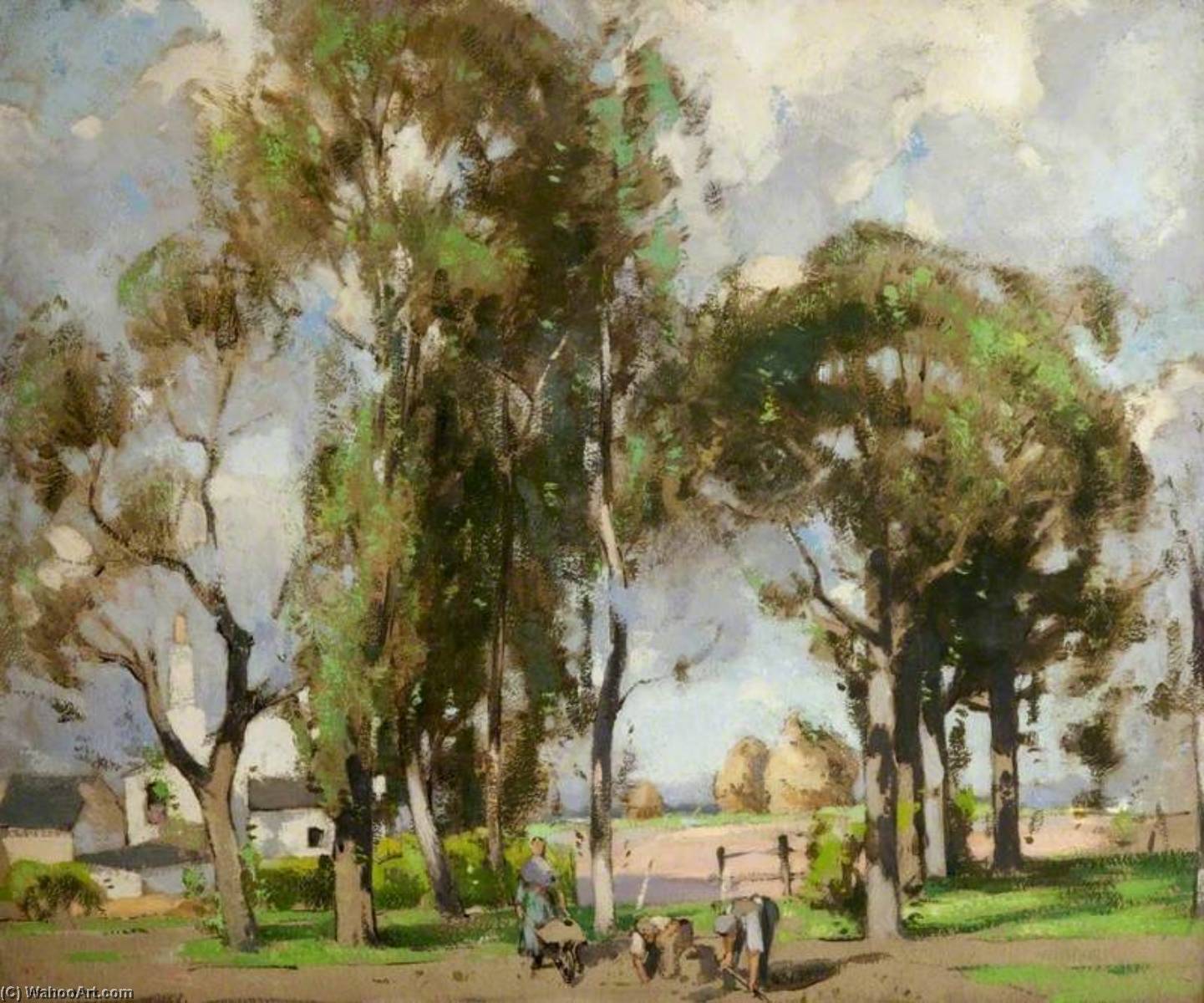
A Midlothian Farm (1925) čiji je John Guthrie Spence Smith

A Midlothian Farm

1925 · Oil

A stillness settles over the Midlothian landscape in this 1925 work. Two men stand in the foreground, their figures anchored to the earth as they tend to the daily rhythms of the farm. A dog rests near them, a silent companion to the labor. Nearby, three horses occupy the space, their forms positioned with a natural, unforced grace. Trees rise in the background, framing the scene and creating a soft,…

2
Self Portrait (recto) (1917) čiji je John Guthrie Spence Smith

Self Portrait (recto)

1917 · Oil On Canvas

The subject sits in a three-quarter view, his presence filling the space with a heavy, contemplative stillness. Light falls softly from the side, carving out the architecture of a face that seems to hold a lifetime of silent observation. There is a profound sense of introspection in his gaze, a look that suggests he is looking through the viewer rather than at them. The background is a soft arrangement of…

Izbor umetnika John Guthrie Spence Smith se nastavlja, od 11 do 43

Čuvena dela John Guthrie Spence Smith po periodima

Motivi koji su privlačili pažnju John Guthrie Spence Smith

Četiri teme koje se najčešće ponavljaju u ovim originalima, svaka sa svojim vrhunskim primerom.

Muzeji u kojima se čuvaju originalna dela umetnika John Guthrie Spence Smith

3 muzeja u kojima se nalazi najviše slika sa ove stranice.

Muzej Grad Radovi umetnika John Guthrie Spence Smith Slike iz ovog spiska
Royal Scottish Academy of Art - Architecture, EdinburghRoyal Scottish Academy of Art - Architecture Edinburgh 2 Canongate Kirk, Bakehouse Close
The Fleming Collection, LondonThe Fleming Collection London 2 St Monance Kirk, Ballachulish Quarries
Wolverhampton Art Gallery, WolverhamptonWolverhampton Art Gallery Wolverhampton 1 Red Roofs

John Guthrie Spence Smith deceniju po deceniju: original koji definiše svaku od njih

Radovi po decenijama

Izaberite deceniju da biste videli original koji je definiše.

Pitanja kolekcionara o slikama umetnika John Guthrie Spence Smith

Po kojem delu je John Guthrie Spence Smith najpoznatiji/a?Otkrij odgovor

A Midlothian Farm (1925). Slede Self Portrait (recto) (1917) i Standing Female Nude.

Koliko je godina imao/la John Guthrie Spence Smith kada je nastalo delo A Midlothian Farm?Otkrij odgovor

45 godina: A Midlothian Farm datira iz 1925, a John Guthrie Spence Smith je rođen/a 1880.

Koja su deset najpoznatijih slika umetnika John Guthrie Spence Smith?Otkrij odgovor

A Midlothian Farm, Self Portrait (recto), Standing Female Nude, French Farmyard near Étaples, Landscape (verso), Pasture near Craigmillar, Cottages with Red Tiles, Castle, The Croft, Anstruther i Preston Kirk. Gornji rang pokazuje godinu i muzej za svako od njih.

Koliko je slika ostavio John Guthrie Spence Smith?Otkrij odgovor

Naš katalog sadrži 43 dela umetnika John Guthrie Spence Smith, datiranih od 1911 do 1950.

U kojim muzejima se nalaze remek-dela umetnika John Guthrie Spence Smith?Otkrij odgovor

Većinom u Royal Scottish Academy of Art - Architecture (Edinburgh), The Fleming Collection (London) i Wolverhampton Art Gallery (Wolverhampton). Tabela muzeja iznad sadrži njih sve.

U kojim godinama je John Guthrie Spence Smith naslikao svoja najpoznatija dela?Otkrij odgovor

U 1920s: 9 od 43 dela na ovoj stranici nastalo je tada, od čega je A Midlothian Farm.

Koja su prva i poslednja čuvena originalna dela umetnika John Guthrie Spence Smith?Otkrij odgovor

Na ovoj stranici, najstarije delo je iz French Farmyard near Étaples (1911), a najnovije iz Skinnergate, Perth (1950).

Koje je motive John Guthrie Spence Smith najčešće birao/la?Otkrij odgovor

Early 20th century (2) i Rural landscape (2), kroz svih 43 dela na ovoj stranici.

Kojem umetničkom pravcu pripada John Guthrie Spence Smith?Otkrij odgovor

Impressionism, sudeći po originalima na ovoj stranici.

Čija se dela umetnika John Guthrie Spence Smith nalaze u Royal Scottish Academy of Art - Architecture?Otkrij odgovor

Canongate Kirk i Bakehouse Close: Royal Scottish Academy of Art - Architecture, Edinburgh čuva 2 dela sa ove stranice.

John Guthrie Spence Smith: život i delo

John Guthrie Spence Smith: A Visionary of Scottish Landscapes

John Guthrie Spence Smith (1880-1951) remains a quietly significant figure in 20th-century British art, particularly within the rich tapestry of Scottish painting. Born in Perth, Scotland, into a family profoundly shaped by tragedy – his three older brothers succumbed to illness at young ages – Smith’s early life instilled a sensitivity and perhaps an unusual focus on observation. A childhood affliction robbed him of speech and hearing, a circumstance that arguably sharpened his visual perception and fostered a unique way of engaging with the world around him. This formative experience deeply influenced his artistic approach, imbuing his landscapes with a profound sense of stillness and quiet contemplation. Smith’s formal training began at Dundee College of Art, followed by studies at Edinburgh College of Art and the prestigious Royal Scottish Academy Life Drawing Classes under the tutelage of Robert Burns and Charles Hodge Mackie. These formative years exposed him to established artistic traditions while simultaneously nurturing his own distinctive style. He quickly distinguished himself as a talented artist, winning several prizes during his time at the RSA, demonstrating an early aptitude for capturing light, atmosphere, and the subtle nuances of the Scottish countryside. Crucially, he became involved with the Edinburgh Group, a collective of artists who challenged academic conventions and sought to forge a new path for modern art in Scotland. This association exposed him to innovative ideas and provided a platform for his work to be seen alongside other emerging talents.

A Distinctive Style: Landscape and Streetscapes

Smith’s artistic output is primarily characterized by meticulously rendered landscapes and evocative street scenes, predominantly depicting the familiar yet subtly transformed vistas of Perthshire, Angus, and the surrounding areas. He wasn't interested in dramatic, sweeping compositions; instead, he favored a measured approach, capturing the quiet dignity of rural life and the understated beauty of everyday settings. His palette was restrained, relying on muted earth tones – ochres, browns, greys, and blues – to create a sense of atmospheric depth and realism. He skillfully employed light and shadow to convey the changing moods of the Scottish weather, imbuing his paintings with a palpable sense of time and place. His work is often described as having a “colourist” quality, echoing the influence of artists like J.M. Whistler, though Smith’s approach was firmly rooted in his own unique vision.

Influences and Artistic Development

Smith's artistic journey reveals a complex interplay of influences. The traditional landscape painting of the Scottish Colourists – particularly their emphasis on capturing the essence of light and colour – undoubtedly shaped his early style. However, he also absorbed elements from Impressionism and Post-Impressionism, evident in his use of broken brushstrokes and his exploration of subjective perception. His time spent in France during World War I, though brief, provided a crucial opportunity to study the works of masters like Monet and Renoir, further expanding his artistic horizons. Following the war, he returned to Scotland, continuing to develop his distinctive style while maintaining close ties with the Edinburgh art community. His later work demonstrates an increasing confidence and maturity, reflecting a deeper understanding of both his subject matter and his own artistic voice.

Legacy and Recognition

Despite not achieving widespread fame during his lifetime, John Guthrie Spence Smith’s contribution to Scottish art is now increasingly recognized. His paintings are held in public collections across Scotland, including those of Glasgow, Paisley, Perth, and Greenock Museums, testament to the enduring quality of his work. His membership in the Royal Scottish Academy and his association with the Edinburgh Group cemented his place within a pivotal period of artistic innovation in Scotland. Smith’s legacy lies not only in his beautiful paintings but also in his quiet determination to pursue his artistic vision despite significant personal challenges. He represents a compelling example of an artist who found solace and expression through observation, capturing the essence of Scottish life with remarkable sensitivity and skill. His work continues to resonate with viewers today, offering a glimpse into a bygone era and a profound appreciation for the beauty of the Scottish landscape.

Further Resources