Portret John Cranch

Slike umetnika John Cranch: Najpoznatijih 13 kroz oči galerije

Ažurirano: новембар 2026 · rangirano prema našem koeficijentu popularnosti (pretrage, posete i porudžbine za svako delo) · 13 dela John Cranch u našem katalogu

Ukratko

Za ljubitelje galerije, najpoznatije delo umetnika John Cranch je The Carrier's Cart (1796), čiji se original nalazi u muzeju Royal Albert Memorial Museum, Exeter. William Greenleaf Eliot, Jr. (1846) i View on the Shannon (1792) čine triju koju svako oko prepoznaje. Od 13 dela umetnika John Cranch u našem katalogu, galerija u nastavku predstavlja 13 najpoznatijih dela, od kojih je svako originalno, sa navedenom godinom nastanka, muzejom i onim što ga čini jedinstvenim.

1807 – 1891, Washington, D.C. Najviše dela: Royal Albert Memorial Museum

Top 10 slika umetnika John Cranch u galeriji

1
The Carrier's Cart (1796) čiji je John Cranch

The Carrier's Cart

1796 · Oil · Royal Albert Memorial Museum, Exeter

In this oil painting from 1796, we find ourselves drawn into a dimly lit interior, a space where the weight of history and faith seems to settle heavily in the air. The scene depicts the Nativity, yet it avoids the grandiosity often associated with such religious subjects. Instead, it offers a crowded, dynamic moment of reverence. We see Mary and Joseph gathered around the infant Jesus in his manger, surrounded…

2
William Greenleaf Eliot, Jr. (1846) čiji je John Cranch

William Greenleaf Eliot, Jr.

1846 · Oil On Canvas · Saint Louis Art Museum, Sent Luis

John Cranch executed this oil on canvas portrait of William Greenleaf Eliot, Jr. about 1846. The sitter is presented in a formal, three-quarter view, seated with a composed expression that meets the viewer's gaze directly. He is depicted holding a piece of white paper or a letter, a detail suggesting a life of literacy or official engagement.

9
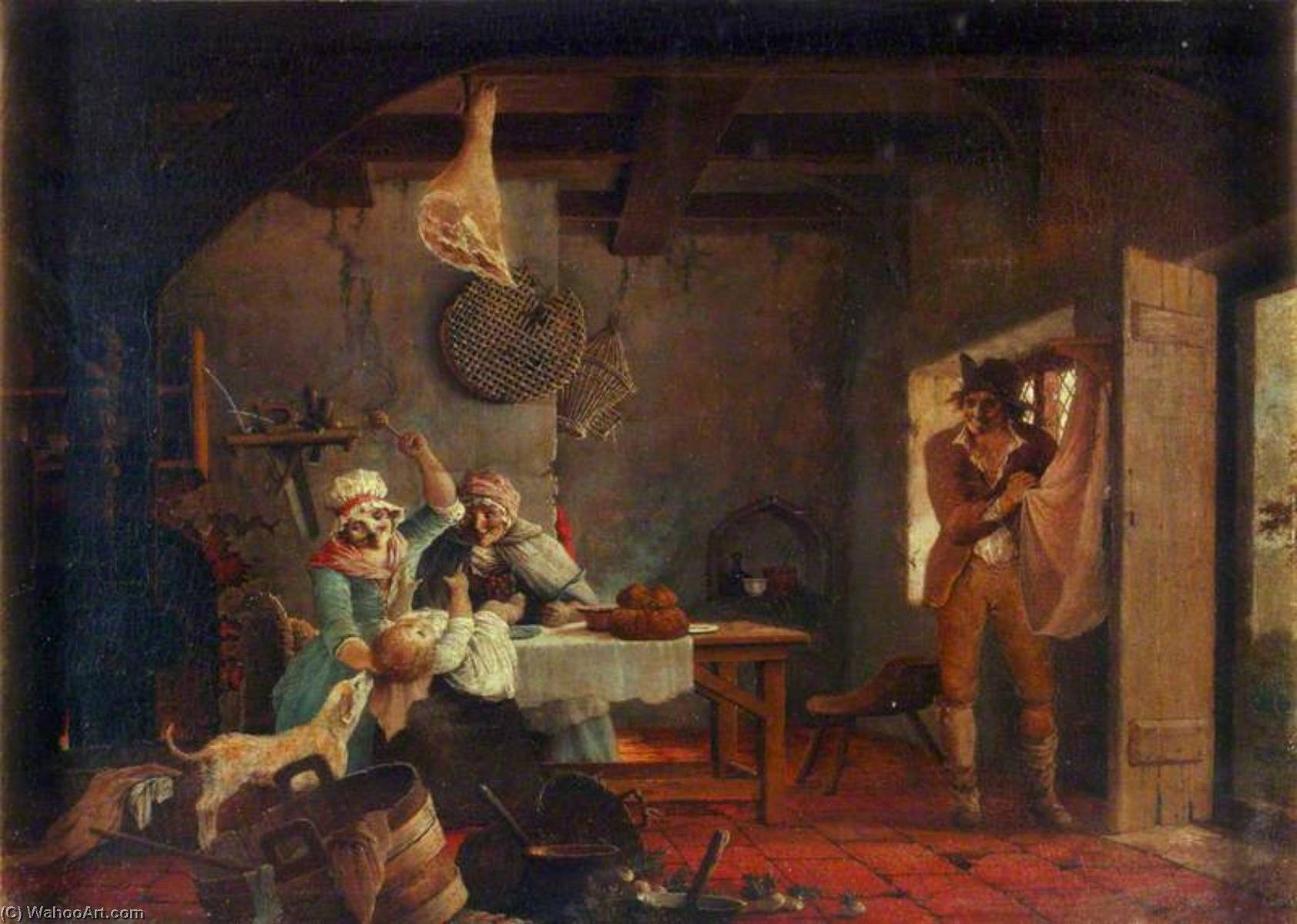
Kitchen Interior (1793) čiji je John Cranch

Kitchen Interior

The Kitchen Interior painting by John Cranch is a remarkable example of 18th century art, showcasing the artist's skill in capturing the warmth and intimacy of everyday life. Created in 1793, this oil on panel piece measures 24 x 35 cm and is currently housed in the Bristol Museum - Art Gallery in Bristol, United Kingdom. A Glimpse into the Past The painting depicts a bustling kitchen scene, with three…

10
Playing with Baby (1795) čiji je John Cranch

Playing with Baby

1795

The Victoria and Albert Museum is home to a beautiful oil on panel painting titled Playing with Baby, created by the British artist John Cranch in 1795. This artwork measures 27 x 38 cm and showcases the artist's skill in capturing intimate family scenes. About the Artist John Cranch was a genre painter who worked principally in rural settings, often depicting everyday life in the countryside. Born in Kingsbridge, Devon,…

Slike umetnika John Cranch, rangirane od 11 do 13

Muzeji u kojima se čuvaju originalna dela umetnika John Cranch

4 muzeja u kojima se nalazi najviše slika sa ove stranice.

Muzej Grad Radovi umetnika John Cranch Slike iz ovog spiska
Royal Albert Memorial Museum, ExeterRoyal Albert Memorial Museum Exeter 5 The Carrier's Cart, The Village Cooper, The Village Butcher
National Portrait Gallery, Vašington, D.C.National Portrait Gallery Vašington, D.C. 2 James Cochran Dobbin, Joshua Reed Giddings
Saint Louis Art Museum, Sent LuisSaint Louis Art Museum Sent Luis 1 William Greenleaf Eliot, Jr.
Bristol Museum - Art Gallery, BristolBristol Museum - Art Gallery Bristol 1 Kitchen Interior

John Cranch, najprepoznatljivija dela svake godine

Deset godina, od 1845 do 1855, bilo je dovoljno za John Cranch: galerija ih prolazi godinu po godinu, jedan poznati original za drugim.

Radovi po godinama

Izaberite godinu da biste videli originalna dela.

Slike umetnika John Cranch: odgovori galerije

Koja je najpoznatija slika umetnika John Cranch?Otkrij odgovor

The Carrier's Cart (1796), Royal Albert Memorial Museum, Exeter. Slede William Greenleaf Eliot, Jr. (1846) i View on the Shannon (1792).

Koja su najbolja 10 dela umetnika John Cranch?Otkrij odgovor

The Carrier's Cart, William Greenleaf Eliot, Jr., View on the Shannon, Cottage at Night, The Village Cooper, Monks Merrymaking, James Cochran Dobbin, Joshua Reed Giddings, Kitchen Interior i Playing with Baby. Gornji rang pokazuje godinu i muzej za svako od njih.

Koliko je dela stvorio/la John Cranch?Otkrij odgovor

Naš katalog sadrži 13 dela umetnika John Cranch, datiranih od 1845 do 1855.

Gde se nalaze najpoznatiji originali umetnika John Cranch?Otkrij odgovor

Većinom u Royal Albert Memorial Museum (Exeter), National Portrait Gallery (Vašington, D.C.) i Saint Louis Art Museum (Sent Luis). Tabela muzeja iznad sadrži njih sve.

Koja su najranija i najkasnija poznata dela umetnika John Cranch?Otkrij odgovor

Na ovoj stranici, najstarije delo je iz James Cochran Dobbin (1845), a najnovije iz Joshua Reed Giddings (1855).

Koje originale umetnika John Cranch poseduje Royal Albert Memorial Museum?Otkrij odgovor

The Carrier's Cart, The Village Cooper i The Village Butcher: Royal Albert Memorial Museum, Exeter čuva 5 dela sa ove stranice.

John Cranch: umetnik

John Cranch (1807–1891): A Painter of Victorian Dignity

John Cranch, born in 1807 in Kingsbridge, Devonshire, England, emerged as a prominent figure in the artistic landscape of his era—the Victorian period. Though initially self-taught through drawing, writing and music, he benefited from early instruction from a Roman Catholic priest, shaping his foundational skills before venturing into London’s art scene. His ambition to join the Royal Academy was thwarted, yet he found considerable success with the Society of Artists and the British Institution, establishing himself as a respected painter known for his refined style and meticulous attention to detail.
  • Early Life & Education: Cranch's formative years were marked by a passion for artistic pursuits fostered by familial connections to influential figures like Sir Joshua Reynolds. His upbringing instilled in him a deep appreciation for classical ideals and humanist values, which would permeate his artistic vision.
  • Notable Works: Cranch’s oeuvre encompasses both portraits and historical scenes, demonstrating versatility and technical prowess. Among his most celebrated paintings are “Playing with Baby,” housed in the Victoria and Albert Museum, and “The Miser,” a poignant depiction of human vulnerability and moral contemplation. His masterpiece, "The Death of Chatterton," now owned by Sir James Winter Lake, showcases his ability to convey emotion through subtle shading and expressive composition.
  • Technique & Style: Cranch’s artistic style is characterized by its dignified composure and meticulous realism—a hallmark of Victorian art. He skillfully employed glazing techniques to achieve luminous surfaces and create depth, capturing the nuances of human expression with remarkable accuracy. His penchant for “poker-pictures”—images that convey complex psychological states—established him as a pioneer in exploring the inner lives of his subjects.
  • Recognition & Legacy: Cranch’s membership in prestigious organizations like the American Academy of Arts and Sciences and the American Antiquarian Society cemented his reputation as an intellectual artist. His contributions to art scholarship, particularly “On the Economy of Testaments” and “Inducements to Promote the Fine Arts,” further solidified his legacy as a champion of artistic excellence and national pride.

Influences & Artistic Context

Cranch’s artistic sensibilities were profoundly shaped by the prevailing intellectual currents of Victorian England—a period marked by scientific inquiry, moral reform, and a renewed interest in classical art history. Reynolds' influence was particularly significant, guiding Cranch toward a style rooted in observation and psychological insight. Furthermore, Cranch absorbed inspiration from Romantic painters like Turner and Constable, incorporating elements of atmospheric perspective and dramatic lighting into his compositions.

Major Achievements & Artistic Contributions

Cranch’s artistic achievements spanned across multiple mediums and genres, reflecting the breadth of his creative vision. He excelled in portraiture, capturing the likenesses of prominent figures with unwavering precision—a skill that earned him considerable acclaim during his lifetime. Simultaneously, he tackled ambitious historical narratives, meticulously reconstructing past events with meticulous detail and conveying their significance through evocative imagery. His enduring legacy resides not only in his celebrated paintings but also in his scholarly writings, which championed artistic innovation and fostered a deeper understanding of the human condition.

Concluding Remarks

John Cranch’s life and work stand as testament to the transformative power of artistic dedication and intellectual curiosity—qualities that defined him as both an artist and a humanist. His paintings continue to resonate with audiences today, offering glimpses into Victorian society and capturing the essence of human emotion with enduring grace. As a painter who skillfully blended observation, technique, and psychological insight, Cranch secured his place among the most distinguished artists of his time—a figure whose legacy persists as an exemplar of artistic excellence and intellectual engagement.