Portret Žan-Batist Regno

51 najpoznatijih slika umetnika Žan-Batist Regno, svaka potpuno jedinstvena

Ažurirano: новембар 2026 · rangirano prema našem koeficijentu popularnosti (pretrage, posete i porudžbine za svako delo) · 52 dela Žan-Batist Regno u našem katalogu

Ukratko

The Education of Achilles by the centaur Chiron (1782) je slika autora Žan-Batist Regno koja privlači najviše pažnje; original se nalazi u muzeju Luvr, Pariz. Nakon toga, pogled se seli na Socrates Dragging Alcibiades from the Embrace of Aspasia (1785) i Jean-François Regnault, fils de l’artiste (1815). Među 52 dela umetnika Žan-Batist Regno u našem katalogu, ovih 51 su najpoznatija, od kojih je svako jedinstveni original predstavljen sa godinom nastanka, muzejom i razlogom zbog kojeg je i danas neprocenjivo.

1754 – 1829, Pariz Neoclassicism Najviše dela: Luvr

Top 10 slika umetnika Žan-Batist Regno, iz ugla galerije

1
The Education of Achilles by the centaur Chiron (1782) čiji je Žan-Batist Regno

The Education of Achilles by the centaur Chiron

1782 · Oil On Canvas · Luvr, Pariz

Jean-Baptiste Regnault’s “The Education of Achilles by the Centaur Chiron,” painted in 1782, isn't merely a depiction of a mythological scene; it’s a profound meditation on mentorship, discipline, and the forging of heroic character. Housed within the hallowed halls of the Louvre Museum, this oil-on-canvas work transcends its subject matter to become a testament to the power of artistic skill and the enduring allure of classical narratives. Regnault, a key…

2
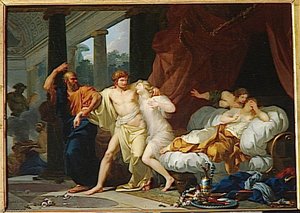
Socrates Dragging Alcibiades from the Embrace of Aspasia (1785) čiji je Žan-Batist Regno

Socrates Dragging Alcibiades from the Embrace of Aspasia

1785 · Oil On Canvas

The air in the room feels heavy with the tension of a sudden, forceful movement. Socrates moves with a determined strength, his hands gripping Alcibiades to pull him away from the soft, clinging presence of Aspasia. The scene captures a moment of profound disruption. One figure represents the unyielding pull of intellect, while the others are caught in the swirling momentum of a life being redirected. The setting, an intimate…

3
Jean-François Regnault, fils de l’artiste (1815) čiji je Žan-Batist Regno

Jean-François Regnault, fils de l’artiste

1815 · Oil On Canvas · Scottish National Gallery, Edinburgh

In this 1815 portrait, we find Jean-François Regnault, the son of the artist, presented with a quiet, formal dignity. The young man is captured in a three-quarter length view, his presence established by a steady, direct gaze that meets the viewer with a sense of youthful authority. He is dressed in military attire, a choice that speaks to a life defined by structure and service. The dark, matte quality of…

4
Cupid and Psyche (1828) čiji je Žan-Batist Regno

Cupid and Psyche

1828 · Oil On Canvas · Art Institute of Chicago, Čikago

In this mythological painting, titled Cupid and Psyche, Jean-Baptiste Regnault captures a quiet moment of intimacy between the two figures. The work, executed in oil on canvas, focuses on the tender connection between the winged Cupid and his lover, Psyche. It is a composition that relies on the soft, luminous tones of the subjects' skin and the heavy, tactile quality of the surrounding drapery to establish its mood. The figures…

5
Aeneas Offering Presents to King Latinus and Asking Him for the Hand of His Daughter (1778) čiji je Žan-Batist Regno

Aeneas Offering Presents to King Latinus and Asking Him for the Hand of His Daughter

1778 · Oil On Canvas · Los Angeles County Museum of Art, Los Anđeles

Aeneas Offering Presents to King Latinus and Asking Him for the Hand of His Daughter is a work by the French painter Jean-Baptiste Regnault. Created about 1778, the painting depicts a formal moment of diplomatic exchange and ceremony. The scene focuses on Aeneas as he offers presents to King Latinus. This interaction is centered on the request for the hand of the King's daughter, a subject that establishes themes of…

6
Madame Regnault with a Blue Ribbon (1795) čiji je Žan-Batist Regno

Madame Regnault with a Blue Ribbon

1795 · Oil On Canvas

In this vertical portrait, titled Madame Regnault with a Blue Ribbon, we encounter a single female subject presented with a quiet, composed dignity. The work was executed by Jean-Baptiste Regnault, a prominent figure in the French Neoclassical tradition. Painted about 1795, the portrait captures Madame Regnault in a moment of poised stillness, her direct gaze establishing an immediate connection with the viewer.

7
Hymen and Love Drinking from the Cup of Friendship (1800) čiji je Žan-Batist Regno

Hymen and Love Drinking from the Cup of Friendship

1800 · Oil

Hymen and Love Drinking from the Cup of Friendship is an oil painting by the French artist Jean-Baptiste Regnault. Created about 1800, this work belongs to the Baroque and Baroque/Romantique traditions, as well as the École française of the 19th century. The composition centers on the mythological figures of Hymen and Love, utilizing themes of Amour et Rédemption to structure the narrative. The subject matter incorporates elements of divinity and…

9
Portrait of Charles-Louis Regnault, an Officer from the Napoleonic War (1814) čiji je Žan-Batist Regno

Portrait of Charles-Louis Regnault, an Officer from the Napoleonic War

1814 · Oil On Canvas · Yale University Art Gallery, New Haven

In this formal portrait, titled Portrait of Charles-Louis Regnault, an Officer from the Napoleonic War, we encounter a quiet moment of military dignity. The work was executed by Jean-Baptiste Regnault in 1814. It presents a focused study of Charles-Louis Regnault, an officer, captured during a period of significant historical transition. The sitter's presence is defined by a steady, direct gaze that establishes an immediate connection with the viewer.

10
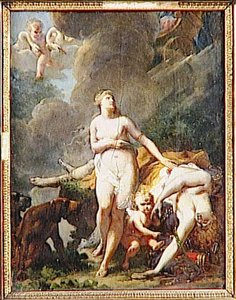
La mort d'Adonis (1812) čiji je Žan-Batist Regno

La mort d'Adonis

1812 · Oil On Panel

In La mort d'Adonis, Jean-Baptiste Regnault organizes the tragic scene through a deliberate pyramidal structure. At the apex of this arrangement, Venus is positioned as the emotional and visual focal point, draped in flowing crimson robes that draw the eye immediately. This central figure anchors the surrounding movement, providing a sense of stability amidst the unfolding grief. Below her, the composition unfolds through a series of diagonal lines created by…

Čuvena dela umetnika Žan-Batist Regno, od 11 do 51

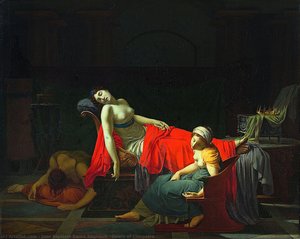
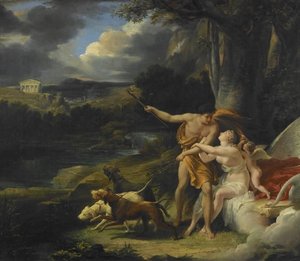
11Portrait of the artist's son, Antoine-Louis Regnault (1788-1856) (1810) čiji je Žan-Batist RegnoPortrait of the artist's son, Antoine-Louis Regnault (1788-1856)1810 12Portrait of Madame Regnault, bust-length, in a white dress and persimmon shawl (1807) čiji je Žan-Batist RegnoPortrait of Madame Regnault, bust-length, in a white dress and persimmon shawl1807 13Portrait of Sophie Meyer (1820) čiji je Žan-Batist RegnoPortrait of Sophie Meyer1820 14Ariadne and Theseus (1829) čiji je Žan-Batist RegnoAriadne and Theseus1829 · Musée des Beaux-Arts de Rouen 15Danae (1829) čiji je Žan-Batist RegnoDanae1829 16LE DELUGE čiji je Žan-Batist RegnoLE DELUGELuvr 17Death of Cleopatra (1796) čiji je Žan-Batist RegnoDeath of Cleopatra1796 · Kunstpalast 18LES TROIS GRACES čiji je Žan-Batist RegnoLES TROIS GRACESLuvr 19The Genius of France between Liberty and Death (1795) čiji je Žan-Batist RegnoThe Genius of France between Liberty and Death1795 · Hamburger Kunsthalle 20Portrait of a Woman as a Bacchante čiji je Žan-Batist RegnoPortrait of a Woman as a BacchanteMusée Calvet 21Sapho čiji je Žan-Batist RegnoSaphoNationalmuseum 22The Triumph of Amphitrite čiji je Žan-Batist RegnoThe Triumph of Amphitrite 23Psyché čiji je Žan-Batist RegnoPsyché 24Portrait de la reine Hortense, reine de Hollande čiji je Žan-Batist RegnoPortrait de la reine Hortense, reine de Hollande 25MORT DE DESAIX A MARENGO.14 JUIN 1800 čiji je Žan-Batist RegnoMORT DE DESAIX A MARENGO.14 JUIN 1800 26JEAN PIERRE BACHASSON, COMTE DE MONTALIVET (1766 1823) čiji je Žan-Batist RegnoJEAN PIERRE BACHASSON, COMTE DE MONTALIVET (1766 1823) 27Autoportrait čiji je Žan-Batist RegnoAutoportrait 28VENUS ET ADONIS čiji je Žan-Batist RegnoVENUS ET ADONIS 29MARIAGE DU PRINCE JEROME BONAPARTE ET DE LA PRINCESSE FREDERIQUE CATHERINE DE WURTEMBERG.22 AOUT 1807 čiji je Žan-Batist RegnoMARIAGE DU PRINCE JEROME BONAPARTE ET DE LA PRINCESSE FREDERIQUE CATHERINE DE WURTEMBERG.22 AOUT 1807 30L'ORIGINE DE LA PEINTURE, OU DIBUTADE TRACANT LE PORTRAIT DE SON BERGER čiji je Žan-Batist RegnoL'ORIGINE DE LA PEINTURE, OU DIBUTADE TRACANT LE PORTRAIT DE SON BERGER 31SOCRATE ARRACHANT ALCIBIADE DU SEIN DE LA VOLUPTE čiji je Žan-Batist RegnoSOCRATE ARRACHANT ALCIBIADE DU SEIN DE LA VOLUPTELuvr 32The Descent from the Cross (1789) čiji je Žan-Batist RegnoThe Descent from the Cross1789 · Luvr 33LA MORT D'ADONIS čiji je Žan-Batist RegnoLA MORT D'ADONISLuvr 34L'HYMEN ET L'AMOUR BUVANT DANS LA COUPE DE L'AMITIE čiji je Žan-Batist RegnoL'HYMEN ET L'AMOUR BUVANT DANS LA COUPE DE L'AMITIELuvr 35Cupid and Psyche čiji je Žan-Batist RegnoCupid and PsycheMusée des Beaux-Arts d'Angers 36Death of Desaix at Marengo čiji je Žan-Batist RegnoDeath of Desaix at MarengoMusée d'Art Roger-Quilliot 37The Toilet of Venus čiji je Žan-Batist RegnoThe Toilet of Venus 38Dibutades Tracing the Portrait of a Shepherd čiji je Žan-Batist RegnoDibutades Tracing the Portrait of a Shepherd 39The Toilet of Venus čiji je Žan-Batist RegnoThe Toilet of Venus 40Venus and adonis čiji je Žan-Batist RegnoVenus and adonis 41The Death of Priam čiji je Žan-Batist RegnoThe Death of PriamMusée de Picardie 42Venus and Cupid čiji je Žan-Batist RegnoVenus and Cupid 43Sleeping venus čiji je Žan-Batist RegnoSleeping venus 44La Toilette de Vénus čiji je Žan-Batist RegnoLa Toilette de VénusMusée National Magnin 45Le sénat français reçoit les drapeaux pris dans la campagne d'Autriche, 1er janvier 1806 čiji je Žan-Batist RegnoLe sénat français reçoit les drapeaux pris dans la campagne d'Autriche, 1er janvier 1806Opera House 46Baron jean baptiste regnault čiji je Žan-Batist RegnoBaron jean baptiste regnault 47DEPLORATION čiji je Žan-Batist RegnoDEPLORATIONLuvr 48The Three Graces (1797) čiji je Žan-Batist RegnoThe Three Graces1797 · Luvr 49Andromeda's Return (1782) čiji je Žan-Batist RegnoAndromeda's Return1782 · Ermitaž 50Wedding of Prince Jérôme Bonaparte and Princess Frédérique-Catherine of Wurtemberg, August 22, 1807 čiji je Žan-Batist RegnoWedding of Prince Jérôme Bonaparte and Princess Frédérique-Catherine of Wurtemberg, August 22, 1807Opera House 51L'ORIGINE DE LA SCULPTURE, OU PYGMALION PRIANT VENUS D'ANIMER SA STATUE čiji je Žan-Batist RegnoL'ORIGINE DE LA SCULPTURE, OU PYGMALION PRIANT VENUS D'ANIMER SA STATUE

Čuvena dela Žan-Batist Regno po periodima

Motivi koji su privlačili pažnju Žan-Batist Regno

Četiri teme koje se najčešće ponavljaju u ovim originalima, svaka sa svojim vrhunskim primerom.

Muzeji u kojima se čuvaju originalna dela umetnika Žan-Batist Regno

8 muzeja u kojima se nalazi najviše slika sa ove stranice.

Muzej Grad Radovi umetnika Žan-Batist Regno Slike iz ovog spiska
Luvr, ParizLuvr Pariz 9 The Education of Achilles by the centaur Chiron, LE DELUGE, LES TROIS GRACES
Opera House, VersalOpera House Versal 2 Le sénat français reçoit les drapeaux pris dans la campagne d'Autriche, 1er janvier 1806, Wedding of Prince Jérôme Bonaparte and Princess Frédérique-Catherine of Wurtemberg, August 22, 1807
Scottish National Gallery, EdinburghScottish National Gallery Edinburgh 1 Jean-François Regnault, fils de l’artiste
Art Institute of Chicago, ČikagoArt Institute of Chicago Čikago 1 Cupid and Psyche
Los Angeles County Museum of Art, Los AnđelesLos Angeles County Museum of Art Los Anđeles 1 Aeneas Offering Presents to King Latinus and Asking Him for the Hand of His Daughter
Musée des Augustins, TuluzMusée des Augustins Tuluz 1 The Education of Achilles by the Centaur Chiron
Yale University Art Gallery, New HavenYale University Art Gallery New Haven 1 Portrait of Charles-Louis Regnault, an Officer from the Napoleonic War
Musée des Beaux-Arts de Rouen, RuanMusée des Beaux-Arts de Rouen Ruan 1 Ariadne and Theseus

Žan-Batist Regno kroz decenije: jedan jedinstveni original za svaku

Radovi po decenijama

Izaberite deceniju da biste videli original koji je definiše.

Slike umetnika Žan-Batist Regno: pitanja za galeriju

Koje je najpoznatije delo umetnika Žan-Batist Regno?Otkrij odgovor

The Education of Achilles by the centaur Chiron (1782), Luvr, Pariz. Slede Socrates Dragging Alcibiades from the Embrace of Aspasia (1785) i Jean-François Regnault, fils de l’artiste (1815).

U kojoj je godini Žan-Batist Regno stvorio/la The Education of Achilles by the centaur Chiron?Otkrij odgovor

28 godina: The Education of Achilles by the centaur Chiron datira iz 1782, a Žan-Batist Regno je rođen/a 1754.

Koji je deset najpoznatijih slika autora Žan-Batist Regno?Otkrij odgovor

The Education of Achilles by the centaur Chiron, Socrates Dragging Alcibiades from the Embrace of Aspasia, Jean-François Regnault, fils de l’artiste, Cupid and Psyche, Aeneas Offering Presents to King Latinus and Asking Him for the Hand of His Daughter, Madame Regnault with a Blue Ribbon, Hymen and Love Drinking from the Cup of Friendship, The Education of Achilles by the Centaur Chiron, Portrait of Charles-Louis Regnault, an Officer from the Napoleonic War i La mort d'Adonis. Gornji rang pokazuje godinu i muzej za svako od njih.

Koliko je poznatih dela umetnika Žan-Batist Regno?Otkrij odgovor

Naš katalog sadrži 52 dela umetnika Žan-Batist Regno, datiranih od 1778 do 1829.

Gde se mogu videti najpoznatiji originali umetnika Žan-Batist Regno?Otkrij odgovor

Većinom u Luvr (Pariz), Opera House (Versal) i Scottish National Gallery (Edinburgh). Tabela muzeja iznad sadrži njih sve.

U kom periodu je Žan-Batist Regno stvorio/la svoje najpoznatije slike?Otkrij odgovor

U 1790s: 5 od 51 dela na ovoj stranici nastalo je tada, od čega je Madame Regnault with a Blue Ribbon.

Ko je najraniji, a koje je najkasnije čuveno delo umetnika Žan-Batist Regno?Otkrij odgovor

Na ovoj stranici, najstarije delo je iz Aeneas Offering Presents to King Latinus and Asking Him for the Hand of His Daughter (1778), a najnovije iz Ariadne and Theseus (1829).

Koje su teme Žan-Batist Regno preferirao/la?Otkrij odgovor

Woman (12), Man (9) i Gods (6), kroz svih 51 dela na ovoj stranici.

Sa kojim materijalima je Žan-Batist Regno najčešće slikao?Otkrij odgovor

Oil On Canvas, za 21 od 51 dela na ovoj stranici.

Kojem umetničkom pravcu pripada delo umetnika Žan-Batist Regno?Otkrij odgovor

Neoclassicism, sudeći po originalima na ovoj stranici.

Koja originalna dela Žan-Batist Regno mogu videti u Luvr?Otkrij odgovor

The Education of Achilles by the centaur Chiron, LE DELUGE i LES TROIS GRACES: Luvr, Pariz čuva 9 dela sa ove stranice.

Žan-Batist Regno: portret umetnika

Velichanstvo neoklasicizma: Život i nasleđe Žan-Batista Regno

U živopisnom i turbulentnom pejzažu francuske umetnosti kasnog 18. veka, malo je figura uživalo toliko poštovanja zbog svoje tehničke preciznosti i klasične gracilnosti kao Žan-Batist Regno. Rođen 1754. godine, Regno se pojavio u eri koju je definišala duboka čežnja za idealima antike. Dok istorija često pod svetla reflektora stavlja njegovog savremenika i rivala, Žaka-Luja Davida, Regno je izciopeo sopstveni, distinktni i blistavi prostor unutar neoklasičnog pokreta. Njegov rad nije bio samo reakcija na preterivanja rokokoa, već promišljeno, poetsko težrenje ka harmoniji, ravnoteži i večitomalnoj lepoti pronađenoj u mitološkim i istorijskim narativima.

Umetnička put Žan-Batista Regno je bila put rigorozne discipline i akademskog izvrsnosti. Njegovo majstorstvo u prikazivanju ljudske forme i sposobnost da koži podeli eterični, nežni sjaj bili su plodovi intenzivnog proučavanja. Kroz prestižne koridore francuskog umetničkog sveta, stizao je do priznanja koja su učvrstila njegov status među elitom. Ovaj period njegovog života obeležen je dubokim angažovanjem u klasičnu tradiciju, crpeći inspiraciju iz skulpturalnog savršenstva antičke Grčke i Rima. Njegovo obrazovanje omogućilo mu je da prevaziđe puku imitaciju, pružajući mu mogućnost da svojim kompozicijama nadoveže osećaj pokreta i emocionalnog odjeka koji je delovao istovremeno vanvremenski i neposredno.

Majstorstvo mita i emocije

Pravo suštinsko značenje Regenovog genija leži u njegovoj sposobnosti da statične mitološke teme transformiše u žive, emotivne drame. Posedovao je redak talenat za hvatanje tenzije između božanskog i smrtnog. U delima kao što je La Mort d'Adonis, možemo svedočiti njegovom dubokom vladanju temama smrtnosti i lepote. Slika služi kao dirljiva studija tragedije, gde se izuzetna detaljnost figura oštro suprotstavlja teškoj, sumornoj atmosferi gubitka. Regno nije samo slikao scene; on je režirao emocionalna iskustva, koristeći svetlost i senku kako bi vodio posmatrača kroz psihološke dubine svojih likova.

Njegov repertoar je bio podjednako raznolik, krećući se od intenzivno duhovnog do intelektualno provokativnog. U delu The Descent from the Cross, Regno koristi dramatičniju, gotovo barokno inspirisanu intenzitet kako bi preneo duboku žalost i religiozni žar scene. Ovde su težina tela i visceralna stvarnost trenutka prikazani sa realizmom koji zahteva poštovanje. Nasuprot tome, u delima kao što je Socrate Arrachant Alcibiade du Sein de la Volupté, on istražuje intelektualne borbe klasičnog doba. Ovo delo prikazuje njegovu sposobnost da kroz igru svetla i senke dočara filozofski konflikt, ilustrująći borbu između razuma i iskušenja majstorskom kompozicijom.

Istorijski značaj i umetnički uticaj

Regnov značaj prevazilazi njegove pojedinačne platna; bio je ključna figura u evoluciji francuske akademske slike. Kao predavač i istaknuti član umetničke zajednice, njegov uticaj se proširio na narednu generaciju slikara, uključujući umetnike kao što su Geren i Lorimije. Njegov stil — koji karakteriše određena mekoća i lirski pristup neoklasicizmu u poređenju sa Davidovim oštrim i rigidnijim kompozicijama — ponudio je alternativnu viziju klasične lepote koja je bila privlačna širokom spektru senzibiliteta.

Da bismo razumeli širinu njegovog doprinosa, možemo razmotriti sledeće stubove njegove karijere:

  • Tehnička virtuoznost: Njegova neuporediva sposobnost da prikaže anatomsku tačnost i delikatne teksture, posebno u prikazivanju kože i draperija.
  • Narativna dubina: Sposobnost da u istorijske i mitološke scene utka složena alegorijska značenja, čineći ih pristupačnim, a opet dubokim.
  • Stilski svestranost: Jedinstven spoj neoklasičnog reda sa fluidnijim, emotivnim senzibilitetom koji je premostio jaz između različitih umetničkih era.
  • Akademsko nasleđe: Njegova uloga u oblikovanju estetskih standarda francuske akademije i uticaj na pravac evropske umetnosti 19. veka.

Iako su se talasi istorije umetnosti na kraju okrenuli ka romantizmu i dalje, dela Žan-Batista Regno ostaju trajni dokazi jedne ere neprevaziđene elegancije. Njegove slike nastavljaju da očaravaju modernu publiku, nudeći prozor u svet u kojem su težnja ka savršenstvu, istraživanje mita i slavljenje ljudskih emocija bili harmonično isprepleteni.