A Painter's Quiet Revolution
Jacqueline Green’s name may not immediately command the headlines of 21st-century art criticism, yet her canvases possess a remarkable, quiet power—a resonance born from meticulous observation and an unwavering dedication to capturing the soul of rural landscapes. Emerging from Baltimore in 1989, Green’s artistic journey was profoundly shaped by a lifelong passion for ballet, a discipline that instilled in her a deep appreciation for precise execution and emotional depth. Her formative years at the Baltimore School for the Arts provided the foundation for this technical rigor, where she encountered the transformative influence of mentors like Linda-Denise Fisher-Harrell. This early exposure to the disciplined world of professional dance infused her painting with a unique sensibility, teaching her how movement, even when frozen on canvas, can convey a palpable atmosphere.
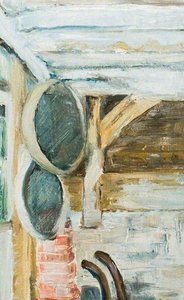
Green’s artistic style is a sophisticated dialogue between realism and impressionism. She does not merely seek to replicate the physical world but strives to capture its ephemeral essence. Her work often focuses on detailed depictions of historic mills, frequently bathed in the warm, golden light of a late afternoon. Through her lens, these structures become more than mere architecture; they are vessels of nostalgia and serenity. Unlike artists who rely on grand, dramatic gestures to capture attention, Green favors subtlety. She invites the viewer to linger upon the intricate textures of weathered wood, the shimmer of water, and the nuanced shifts in color that reveal a profound intimacy with the natural world.
Technique and Artistic Lineage
The technical mastery evident in Green’s work draws clear inspiration from the Impressionist masters. One can detect the echoes of Claude Monet and Pierre-Auguste Renoir in her skillful use of broken brushstrokes and a luminous, light-filled palette. By layering colors to evoke the play of sunlight, she creates scenes that feel alive with atmosphere. However, Green’s work transcends simple stylistic imitation; there is an inherent honesty in her approach—a commitment to portraying her subjects with unwavering accuracy while simultaneously imbuing them with a sense of timeless beauty.
Her development as an artist is inextricably linked to her background in the performing arts. Having achieved recognition as a powerful ballet dancer with the Alvin Ailey American Dance Theater, Green brought the grace and structural awareness of the stage to the easel. This dual identity allows her to approach a landscape with a sense of composition and rhythm that is uniquely her own. Her paintings are not static images but rhythmic compositions where light and shadow dance across the surface, much like a performer moves through a choreographed piece.
Legacy and Artistic Vision
The significance of Jacqueline Green’s work lies in its ability to evoke a sense of peace in an increasingly chaotic world. Her paintings serve as a meditative retreat, offering viewers a chance to reconnect with the quiet dignity of the landscape. Through her focus on the rustic and the historic, she preserves a sense of heritage and tranquility that feels both ancient and immediate.
As her body of work continues to grow, Green remains dedicated to her "quiet revolution"—a movement toward art that values observation over spectacle and emotion over noise. Her contribution to contemporary landscape painting is marked by:
- Atmospheric Precision: The ability to capture the specific, fleeting quality of light within rural settings.
- Textural Depth: A mastery of oil medium to recreate the tactile reality of historic structures and natural elements.
- Emotional Resonance: Creating works that foster a deep sense of nostalgia, serenity, and connection to the past.