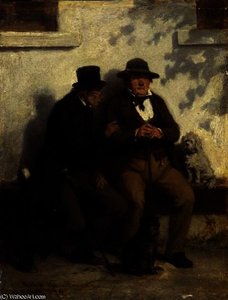
Portret Hugo Kauffmann

33 najpoznatijih slika umetnika Hugo Kauffmann, svaka potpuno jedinstvena

Ažurirano: новембар 2026 · rangirano prema našem koeficijentu popularnosti (pretrage, posete i porudžbine za svako delo) · 34 dela Hugo Kauffmann u našem katalogu

Ukratko

Dead Hare (1869) je slika autora Hugo Kauffmann koja privlači najviše pažnje; original se nalazi u muzeju Bavarske državne slikopisne kolekcije, Minhen. Nakon toga, pogled se seli na Dead Fox (1869) i Study Head of an Old Woman (1869). Među 34 dela umetnika Hugo Kauffmann u našem katalogu, ovih 33 su najpoznatija, od kojih je svako jedinstveni original predstavljen sa godinom nastanka, muzejom i razlogom zbog kojeg je i danas neprocenjivo.

1844 – 1915, Hamburg Najviše dela: Bavarske državne slikopisne kolekcije

Top 10 slika umetnika Hugo Kauffmann, iz ugla galerije

1
Dead Hare (1869) čiji je autor Hugo Kauffmann

Dead Hare

The stillness of 1869 finds its form in Dead Hare, a work that captures a quiet, heavy moment of existence. Hugo Kauffmann, the hand behind this composition, brings a specific, grounded presence to the subject. He was born in Hamburg, Germany, in 1844, a beginning that eventually leads him to the heart of the Munich School. His gaze settles on the small, the overlooked, and the silent, finding a profound…

2
Dead Fox (1869) čiji je autor Hugo Kauffmann

Dead Fox

1869 · Oil On Panel · Bavarske državne slikopisne kolekcije, Minhen

In this monochromatic oil painting, Hugo Kauffmann presents a quiet study of mortality titled Dead Fox. The composition follows a horizontal arrangement, with the subject positioned as a deceased fox lying on its side. The animal's form stretches across the frame, moving from the upper left toward the lower right. This diagonal orientation creates a sense of stillness, anchoring the viewer's gaze on the stillness of the creature.

3
Study Head of an Old Woman (1869) čiji je autor Hugo Kauffmann

Study Head of an Old Woman

1869 · Oil On Panel · Bavarske državne slikopisne kolekcije, Minhen

In this monochromatic, grayscale oil study, Hugo Kauffmann focuses on the head and shoulders of an elderly woman. The composition is a close-up portrait, centering the viewer's attention directly on the subject's face. Her head is tilted slightly downward, a posture that contributes to the realistic study of aging presented in the work. The subject is set against a neutral, indistinct background, creating a shallow depth that pushes the figure…

4
Peasant Maid at the Stove (1874) čiji je autor Hugo Kauffmann

Peasant Maid at the Stove

The oil painting Peasant Maid at the Stove, executed in 1874, presents a solitary woman seated within a rustic, domestic setting. She is positioned to the right of the center, resting on a simple wooden stool beside a large masonry stove. Her attire consists of a dark bodice worn over a light-colored blouse with puffed sleeves, a long heavy skirt, and a dark headscarf. Her feet are bare, and her…

5
Bowling Alley (1872) čiji je autor Hugo Kauffmann

Bowling Alley

This 1872 monochromatic, grayscale oil painting presents a lively and rustic scene set outside a tavern or inn. The composition is densely packed with various figures and architectural elements, creating a bustling, lived-in environment. Through the use of dramatic chiaroscuro, the lighting highlights central figures—specifically a man in white and a young boy—against a darker, textured background consisting of stone walls and a thatched roof.

6
Hunter with Dog in the Wirtshaus (1872) čiji je autor Hugo Kauffmann

Hunter with Dog in the Wirtshaus

1872 · Oil

Inside the dim, wooden confines of a Bavarian tavern, the air feels heavy with the scent of sawdust and spilled ale. A single window allows a soft, pale light to spill across the floorboards, catching the coarse texture of a dog's fur as it rests quietly on the ground. Men occupy the space in various states of repose and motion. One figure sits slumped in a chair, his body heavy…

7
Quarreling Peasants (1884) čiji je autor Hugo Kauffmann

Quarreling Peasants

1884 · Oil On Canvas · Bavarske državne slikopisne kolekcije, Minhen

Hugo Kauffmann’s Quarreling Peasants, painted about 1884, captures a moment of intense interpersonal strife. The scene unfolds within a rustic, dimly lit interior, where a group of peasants is locked in a heated confrontation. This social realism focuses on the raw, unvarnished emotions of a sudden argument, stripping away any sense of idealized rural life to reveal a moment of genuine human conflict.

8
Peasant drinking beer (1879) čiji je autor Hugo Kauffmann

Peasant drinking beer

1879 · Lithograph

In "Peasant drinking beer" by Hugo Kauffmann, we find ourselves in a quiet, intimate moment within a rustic interior. The composition is a medium shot that focuses on a solitary man, positioned slightly off-center to create a sense of natural, unforced balance. He sits within a shallow space, a choice that brings the viewer close to his private world. The scene, created about 1879, captures a man in a state…

9
young couple in Bavarian costume (1885) čiji je autor Hugo Kauffmann

young couple in Bavarian costume

1885 · Oil

In this 1885 oil painting, a man and a woman sit facing one another within a dimly lit, rustic room. The man is positioned on the left, seated in a wooden chair. He leans forward with his arms resting upon the back of the chair, his gaze directed toward the woman. He wears a hat, a light-colored shirt, a vest, and dark breeches paired with light-colored stockings. To the right,…

10
Inn Scene with Magician (1887) čiji je autor Hugo Kauffmann

Inn Scene with Magician

1887 · Oil On Canvas

Step into the dim, crowded atmosphere of this 1887 oil painting. We find ourselves positioned directly within a bustling tavern, seated among the patrons as they lean in toward a central spectacle. A magician, elevated upon a table or platform, holds an object—perhaps a small animal—to command the attention of the room. The scene is dense, layered with figures whose faces catch the light while the edges of the room…

Čuvena dela umetnika Hugo Kauffmann, od 11 do 33

Čuvena dela Hugo Kauffmann po periodima

Motivi koji su privlačili pažnju Hugo Kauffmann

Četiri teme koje se najčešće ponavljaju u ovim originalima, svaka sa svojim vrhunskim primerom.

Muzeji u kojima se čuvaju originalna dela umetnika Hugo Kauffmann

1 muzeja u kojima se nalazi najviše slika sa ove stranice.

Muzeji Grad Radovi umetnika Hugo Kauffmann Slike iz ovog spiska
Bavarske državne slikopisne kolekcije, MinhenBavarske državne slikopisne kolekcije Minhen 8 Dead Hare, Dead Fox, Study Head of an Old Woman

Hugo Kauffmann kroz decenije: jedan jedinstveni original za svaku

Radovi po decenijama

Izaberite deceniju da biste videli original koji je definiše.

Slike umetnika Hugo Kauffmann: pitanja za galeriju

Koje je najpoznatije delo umetnika Hugo Kauffmann?Otkrij odgovor

Dead Hare (1869), Bavarske državne slikopisne kolekcije, Minhen. Slede Dead Fox (1869) i Study Head of an Old Woman (1869).

U kojoj je godini Hugo Kauffmann stvorio/la Dead Hare?Otkrij odgovor

25 godina: Dead Hare datira iz 1869, a Hugo Kauffmann je rođen/a 1844.

Koji je deset najpoznatijih slika autora Hugo Kauffmann?Otkrij odgovor

Dead Hare, Dead Fox, Study Head of an Old Woman, Peasant Maid at the Stove, Bowling Alley, Hunter with Dog in the Wirtshaus, Quarreling Peasants, Peasant drinking beer, young couple in Bavarian costume i Inn Scene with Magician. Gornji rang pokazuje godinu i muzej za svako od njih.

Koliko je poznatih dela umetnika Hugo Kauffmann?Otkrij odgovor

Naš katalog sadrži 34 dela umetnika Hugo Kauffmann, datiranih od 1869 do 1915.

Gde se mogu videti najpoznatiji originali umetnika Hugo Kauffmann?Otkrij odgovor

Većinom u Bavarske državne slikopisne kolekcije (Minhen). Tabela muzeja iznad sadrži njih sve.

U kom periodu je Hugo Kauffmann stvorio/la svoje najpoznatije slike?Otkrij odgovor

U 1880s: 6 od 33 dela na ovoj stranici nastalo je tada, od čega je Quarreling Peasants.

Ko je najraniji, a koje je najkasnije čuveno delo umetnika Hugo Kauffmann?Otkrij odgovor

Na ovoj stranici, najstarije delo je iz Dead Hare (1869), a najnovije iz A conversation (1915).

Koje su teme Hugo Kauffmann preferirao/la?Otkrij odgovor

Man (13), Woman (9) i Table (8), kroz svih 33 dela na ovoj stranici.

Sa kojim materijalima je Hugo Kauffmann najčešće slikao?Otkrij odgovor

Oil, za 11 od 33 dela na ovoj stranici.

Koja originalna dela Hugo Kauffmann mogu videti u Bavarske državne slikopisne kolekcije?Otkrij odgovor

Dead Hare, Dead Fox i Study Head of an Old Woman: Bavarske državne slikopisne kolekcije, Minhen čuva 8 dela sa ove stranice.

Hugo Kauffmann: portret umetnika

The Soul of the Munich School: The Life and Art of Hugo Wilhelm Kauffmann

In the heart of nineteenth-century German art, few painters captured the quiet dignity of the common man as poignantly as Hugo Wilhelm Kauffmann. Born in Hamburg in 1844, Kauffmann’s journey was one of profound movement—not just across the geographic landscapes of Germany and France, but through a deepening emotional maturity that would eventually define his place within the prestigious Munich School. While his early years were rooted in the traditions of his father, Hermann Kauffmann, it was his rigorous training under masters such as Jakob Becker and Johann Nepomuk Zwerger that provided him with the technical foundation necessary to translate the mundane into the monumental. His artistic evolution was a deliberate departure from the rigid academicism of his era, seeking instead a truth found in the textures of everyday existence.

Kauffmann’s aesthetic sensibility was deeply informed by the atmospheric weight of Romanticism. The haunting, psychological landscapes of Caspar David Friedrich left an indelible mark on his psyche, teaching him that light and shadow could serve as vessels for human emotion. As he moved through the artistic hubs of Düsseldorf and Paris, his style began to coalesce into a unique form of realism. He did not merely observe; he empathized. This empathy became the cornerstone of his genre paintings, where the bustling atmosphere of a Bavarian tavern or the weary posture of a laborer was rendered with a precision that felt both intimate and universal. His brushwork, often described as loose yet remarkably controlled, allowed for a palpable sense of movement and life to breathe within the frame.

A Master of the Mundane and the Magnificent

The true brilliance of Kauffmann lies in his ability to elevate the ordinary. To look upon a Kauffmann painting is to enter a world where the small, often overlooked moments of life are granted eternal significance. He possessed an extraordinary talent for rendering the tactile qualities of his subjects—the rough grain of a wooden table, the heavy fabric of a peasant's tunic, or the soft glow of candlelight reflecting in a glass of beer. This commitment to verisimilitude was not just about visual accuracy; it was about capturing the very essence of the human condition, portraying individuals with all their inherent vulnerability and resilience.

His notable works serve as windows into a bygone era of German social life:

  • Besuch Des Schaustellers Dazogard: A poignant exploration of Bavarian peasant life that captures the fleeting magic of a traveling performer's visit.
  • The Musicians: A piece that showcases his ability to weave narrative and sound into a visual composition, highlighting the communal joy found in simple melodies.
  • Portrait of a Man: Demonstrating his skill in character study, where every line on a face tells a story of lived experience.

Through these works, Kauffmann became a chronicler of the Munich School’s ethos, working alongside contemporaries like Wilhelm Leibl to reject idealized, hollow representations in favor of an unflinching honesty. His legacy is not found in grand historical epics, but in the quiet, enduring strength of the people he painted—the laborers, the villagers, and the dreamers who inhabited the corners of the German landscape.