Portret Horace Pippin

15 najpoznatijih slika umetnika Horace Pippin, svaka potpuno jedinstvena

Ažurirano: новембар 2026 · rangirano prema našem koeficijentu popularnosti (pretrage, posete i porudžbine za svako delo) · 26 dela Horace Pippin u našem katalogu

Ukratko

The Park Bench (1946) je slika autora Horace Pippin koja privlači najviše pažnje; original se nalazi u muzeju Philadelphia Museum of Art, Filadelfija. Nakon toga, pogled se seli na School Studies (1944) i Self-Portrait (1944). Među 26 dela umetnika Horace Pippin u našem katalogu, ovih 15 su najpoznatija, od kojih je svako jedinstveni original predstavljen sa godinom nastanka, muzejom i razlogom zbog kojeg je i danas neprocenjivo.

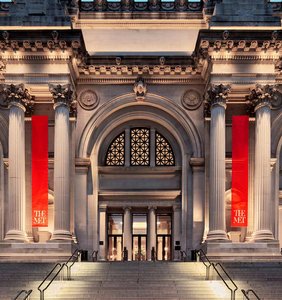
1888 – 1946, West Chester Najviše dela: Metropoliten музеј у Њујорку

Top 10 slika umetnika Horace Pippin, iz ugla galerije

1
The Park Bench (1946) čiji je autor Horace Pippin

The Park Bench

1946 · Oil On Canvas · Philadelphia Museum of Art, Filadelfija

In this 1946 oil on canvas, Horace Pippin presents The Park Bench. The work depicts an elegantly-dressed older man seated upon a bench, positioned amidst a landscape of trees, animals, and natural scenery. It is a quiet scene, captured in the final year of the artist's life.

2
School Studies (1944) čiji je autor Horace Pippin

School Studies

1944 · Oil On Canvas

In 1944, Horace Pippin painted School Studies. This work is a semi-autobiographical domestic interior. It captures a quiet, private moment within a home. The scene is anchored by the stillness of its inhabitants.

3
Self-Portrait (1944) čiji je autor Horace Pippin

Self-Portrait

1944 · Oil On Canvas · Metropoliten музеј у Њујорку, Њујорк

The work titled Self-Portrait is a direct encounter with the artist, Horace Pippin. Created in 1944, this oil on canvas captures the man behind the brush. It is a quiet moment of looking back, a steady gaze held between the subject and the viewer.

4
Sunday Morning Breakfast (1943) čiji je autor Horace Pippin

Sunday Morning Breakfast

1943 · Oil On Canvas · Saint Louis Art Museum, Sent Luis

Sunday Morning Breakfast is an oil on canvas painting created by Horace Pippin in 1943. This work belongs to the Harlem Renaissance movement. The piece depicts a domestic scene involving several figures within an interior space, centered around a meal.

5
Mr. Prejudice (1943) čiji je autor Horace Pippin

Mr. Prejudice

1943 · Oil On Canvas

Horace Pippin produced the painting titled Mr. Prejudice during the period of World War II. This work was created at the request of an unidentified patron. The scale of the piece is relatively small, measuring approximately the size of a magazine cover. Given its dimensions and the circumstances of its commission, the work was possibly intended for use as a poster or an illustration.

6
Abraham Lincoln, the Great Emancipator, Pardons the Sentry (1942) čiji je autor Horace Pippin

Abraham Lincoln, the Great Emancipator, Pardons the Sentry

1942 · Oil On Canvas

The oil on canvas painting titled Abraham Lincoln, the Great Emancipator, Pardons the Sentry was rendered by the artist Horace Pippin in 1942. This work belongs to the Harlem Renaissance. It captures a fictional scene within the heavy folds of a tent. Inside this space, Lincoln grants a pardon to a kneeling man named Scott.

7
Sleepers (1943) čiji je autor Horace Pippin

Sleepers

1943 · Oil On Canvas · Metropoliten музеј у Њујорку, Њујорк

In Sleepers, Horace Pippin captures a quiet, intimate scene of domesticity and rest. Created about 1943, the work focuses on a single person resting within a simple bed. The room feels sparsely furnished, stripped of excess to focus on the essential act of repose. A window on the right offers a glimpse of the outside world, while a stove and lamp sit to the left, anchoring the room in a…

8
Holy Mountain, I (1944) čiji je autor Horace Pippin

Holy Mountain, I

1944 · Oil On Canvas

Horace Pippin painted Holy Mountain, I in 1944. This oil on canvas work belongs to his Holy Mountain series. It emerges from the Harlem Renaissance, a period of profound creative awakening. The canvas holds a quiet, heavy stillness.

9
Holy Mountain IV (1946) čiji je autor Horace Pippin

Holy Mountain IV

1946 · Oil On Canvas · Metropoliten музеј у Њујорку, Њујорк

Created in 1946, Holy Mountain IV by Horace Pippin presents a somber and dreamlike landscape. The scene is divided into distinct horizontal planes, establishing a sense of stillness across a desolate terrain. In the foreground, three animals—a lion, a feline, and a spotted canine—occupy a muted space alongside the silhouette of a leafless tree. These figures exist within a landscape characterized by a snowy or sandy slope that transitions into…

10
Cabin in the Cotton (1934) čiji je autor Horace Pippin

Cabin in the Cotton

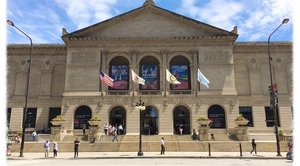
1934 · Oil · Art Institute of Chicago, Čikago

A dark, silhouetted cabin sits anchored in the mid-ground, framed by the heavy, rounded forms of a tree. Beyond this structure, an expansive field of white cotton stretches toward the horizon, creating a sharp, high-contrast boundary against a deep blue sky. In the foreground, an older woman tends to a young child, their presence grounding the scene in a quiet, domestic moment amidst the vast agricultural landscape. The composition emphasizes…

Čuvena dela umetnika Horace Pippin, od 11 do 15

Čuvena dela Horace Pippin po periodima

Motivi koji su privlačili pažnju Horace Pippin

Četiri teme koje se najčešće ponavljaju u ovim originalima, svaka sa svojim vrhunskim primerom.

Muzeji u kojima se čuvaju originalna dela umetnika Horace Pippin

5 muzeja u kojima se nalazi najviše slika sa ove stranice.

Muzeji Grad Radovi umetnika Horace Pippin Slike iz ovog spiska
Metropoliten музеј у Њујорку, ЊујоркMetropoliten музеј у Њујорку Њујорк 7 Self-Portrait, Sleepers, Holy Mountain IV
Philadelphia Museum of Art, FiladelfijaPhiladelphia Museum of Art Filadelfija 1 The Park Bench
Saint Louis Art Museum, Sent LuisSaint Louis Art Museum Sent Luis 1 Sunday Morning Breakfast
Art Institute of Chicago, ČikagoArt Institute of Chicago Čikago 1 Cabin in the Cotton
de Young Museum, San Franciscode Young Museum San Francisco 1 The Trial of John Brown

Horace Pippin kroz godine: jedinstveni originali svakog dela

13 godina razmaka između prvog i poslednjeg datiranog originala umetnika Horace Pippin prikazanog ovde, 1934 i 1946: svaka godina ima svoje mesto u nastavku.

Radovi po godinama

Izaberite godinu da biste videli originalna dela.

Slike umetnika Horace Pippin: pitanja za galeriju

Koje je najpoznatije delo umetnika Horace Pippin?Otkrij odgovor

The Park Bench (1946), Philadelphia Museum of Art, Filadelfija. Slede School Studies (1944) i Self-Portrait (1944).

U kojoj je godini Horace Pippin stvorio/la The Park Bench?Otkrij odgovor

58 godina: The Park Bench datira iz 1946, a Horace Pippin je rođen/a 1888.

Koji je deset najpoznatijih slika autora Horace Pippin?Otkrij odgovor

The Park Bench, School Studies, Self-Portrait, Sunday Morning Breakfast, Mr. Prejudice, Abraham Lincoln, the Great Emancipator, Pardons the Sentry, Sleepers, Holy Mountain, I, Holy Mountain IV i Cabin in the Cotton. Gornji rang pokazuje godinu i muzej za svako od njih.

Koliko je poznatih dela umetnika Horace Pippin?Otkrij odgovor

Naš katalog sadrži 26 dela umetnika Horace Pippin, datiranih od 1934 do 1946.

Gde se mogu videti najpoznatiji originali umetnika Horace Pippin?Otkrij odgovor

Većinom u Metropoliten музеј у Њујорку (Њујорк), Philadelphia Museum of Art (Filadelfija) i Saint Louis Art Museum (Sent Luis). Tabela muzeja iznad sadrži njih sve.

U kom periodu je Horace Pippin stvorio/la svoje najpoznatije slike?Otkrij odgovor

U 1943: 3 od 15 dela na ovoj stranici nastalo je tada, od čega je Sunday Morning Breakfast.

Ko je najraniji, a koje je najkasnije čuveno delo umetnika Horace Pippin?Otkrij odgovor

Na ovoj stranici, najstarije delo je iz Cabin in the Cotton (1934), a najnovije iz The Park Bench (1946).

Koje su teme Horace Pippin preferirao/la?Otkrij odgovor

Man (6), Table (4) i Flowers (4), kroz svih 15 dela na ovoj stranici.

Sa kojim materijalima je Horace Pippin najčešće slikao?Otkrij odgovor

Oil On Canvas, za 13 od 15 dela na ovoj stranici.

Koja originalna dela Horace Pippin mogu videti u Metropoliten музеј у Њујорку?Otkrij odgovor

Self-Portrait, Sleepers i Holy Mountain IV: Metropoliten музеј у Њујорку, Њујорк čuva 7 dela sa ove stranice.

Horace Pippin: portret umetnika

Horace Pippin: A Voice Forged in War and Color

Horace Pippin (February 22, 1888 – July 6, 1946) remains a profoundly resonant figure in American art history—a testament to resilience, self-taught artistry, and the power of visual storytelling. Born in West Chester, Pennsylvania, into a family grappling with the legacy of slavery, Pippin’s journey from a young boy sketching racehorses to a celebrated painter is one of remarkable determination and artistic evolution. His work transcends mere representation; it embodies the spirit of his time, reflecting both the horrors of World War I and the burgeoning struggle for racial equality in America.

Pippin's early life was marked by hardship and limited formal education. Growing up in Goshen, New York, he largely taught himself to draw, fueled by a natural talent and an insatiable curiosity about the world around him. His family’s history—rooted in slavery and domestic service—shaped his perspective and informed the themes that would later dominate his art. Despite lacking traditional training, Pippin developed a distinctive style characterized by bold outlines, vibrant colors, and a remarkable ability to capture emotion and movement. This unique approach stemmed from an intuitive understanding of composition and color theory, honed through countless hours of observation and practice.

The Crucible of War: Painting the Reality of Combat

Horace Pippin’s artistic trajectory took a dramatic turn during World War I when he enlisted with the 369th Infantry Regiment—the Harlem Hellfighters—an all-Black unit that served with distinction in France. His experiences on the front lines, including being shot and severely wounded in his right shoulder, profoundly impacted his art. The injury, initially debilitating, became a catalyst for creativity; Pippin adapted to painting primarily with his left hand, developing an innovative technique of guiding the brush with his wrist—a testament to his unwavering spirit.

His war paintings are not romanticized depictions of heroism but stark and unflinching portrayals of combat. Works like “The End of the War: Starting Home” (1930-33) capture the chaos, exhaustion, and psychological toll of trench warfare with a raw honesty rarely seen in contemporary art. These pieces, imbued with a deep sense of empathy and understanding, stand as powerful indictments of war’s brutality and a poignant reflection on the experiences of Black soldiers fighting for their country.

Beyond the Battlefield: Exploring American Life

Following his return to America, Pippin continued to explore a diverse range of subjects in his art. While his wartime paintings remain central to his legacy, he also produced compelling depictions of African American family life, historical events, and biblical scenes. His work frequently addressed themes of social justice, particularly the lingering effects of slavery and racial segregation in the United States. “Giving Thanks” (1942), for example, offers a tender portrait of a Black family gathered around a table, celebrating a bountiful harvest—a powerful symbol of resilience and hope amidst adversity.

Pippin’s artistic vision extended beyond mere representation; he sought to capture the essence of his subjects – their emotions, their struggles, and their humanity. His use of color was particularly striking, employing bold hues and dynamic compositions to create visually arresting images that resonated deeply with viewers. He skillfully blended elements of folk art—characterized by simple forms and expressive brushwork—with a more sophisticated understanding of artistic technique.

Legacy and Recognition

Despite facing significant challenges as a self-taught Black artist in a predominantly white art world, Horace Pippin achieved considerable recognition during his lifetime. He was the first African American to be the subject of a full-length monograph, “Horace Pippin, A Negro Painter in America” (1947), by Selden Rodman—a landmark achievement that brought attention to his work and challenged prevailing racial biases within the art community. The New York Times famously hailed him as "the most important Negro painter" in American history.

Today, Pippin’s paintings are celebrated for their emotional depth, artistic innovation, and historical significance. His legacy continues to inspire artists and art enthusiasts alike, serving as a reminder of the transformative power of creativity and the importance of amplifying marginalized voices. His work can be found in prestigious collections such as the New Hope Museum of Art and is documented extensively online through platforms like OriginalUniqueArt.com, offering viewers a window into the life and artistry of this remarkable American painter.

Pippin’s story stands as an enduring testament to the human spirit—a celebration of resilience, creativity, and the unwavering pursuit of artistic expression in the face of adversity. His paintings remain powerful symbols of hope, justice, and the beauty found within the complexities of the American experience.