Portret Henri Regno

21 najpoznatijih slika umetnika Henri Regno, izbor iz galerije

Ažurirano: новембар 2026 · rangirano prema našem koeficijentu popularnosti (pretrage, posete i porudžbine za svako delo) · 21 dela Henri Regno u našem katalogu

Ukratko

Od svih originala koje je Henri Regno ostavio, najpoznatiji je Automedon sa Ahilovim konjima (1868), koji se nalazi u kolekciji Muzej finih umetnosti u Bostonu, Boston. Odmah za njima slede General Juan Prim (1814-1870) (1868) i Portrait of a Young Woman (1863). Naš katalog sadrži 21 dela umetnika Henri Regno; galerija je čuvala 21 dela koja svet najviše admira, od kojih je svako prikazano sa svojim datumom, muzejom i pričom.

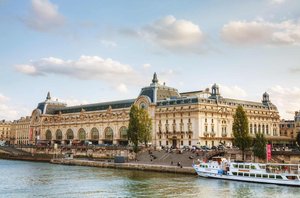
1843 – 1871, Pariz Romanticism Najviše dela: Musée d'Orsay

Top 10 slika umetnika Henri Regno: izbor galerije

1
Automedon sa Ahilovim konjima (1868) čiji je autor Henri Regno

Automedon sa Ahilovim konjima

1868 · Ulje na platnu · Muzej finih umetnosti u Bostonu, Boston

U panteonu devetnaestoveg francuske umetnosti, malo je dela koje osvaja prostor sa takvom visceralnom intenzitetom kao što je Automedon sa Ahilovim konjima od Henrija Regnaulta. Izvedeno 1868. godine, ovo monumentalno remek-delo služi kao zadivljujući prozor u srce romantizma, gde se granice između ljudskog duha i božanske sile brišu usred suncem okupane obale. Slika beleži trenutak duboke borbe i mitske napetosti, prikazujući Automedona—legendarnog kočijaša—dok se bori sa veličanstvenim, moćnim Ahilovim konjima.…

2
General Juan Prim (1814-1870) (1868) čiji je autor Henri Regno

General Juan Prim (1814-1870)

1868 · Oil On Canvas · Art Institute of Chicago, Čikago

A black horse pulls its weight against a pale, shifting sky. The animal's musculature is defined by sharp, white highlights that catch the light, tracing the tension in its neck and flank. Atop this powerful creature sits General Juan Prim, a figure of stillness amidst a world of motion. He sits upright, his gaze fixed forward, meeting the viewer with a steady, unblinking presence. The palette is stripped of color,…

4
Juan Prim, October 8, 1868 (1869) čiji je autor Henri Regno

Juan Prim, October 8, 1868

1869 · Oil On Canvas · Musée d'Orsay, Pariz

The work before us is titled Juan Prim, October 8, 1868, a significant oil on canvas by the French artist Henri Regnault. It was executed around 1869, capturing a moment of profound historical weight. The subject is the Spanish general and statesman Juan Prim, a figure central to the political shifts of his era. Regnault’s approach to this portrait moves beyond simple likeness, functioning as a tribute to both the…

5
Orpheus in the Underworld (1865) čiji je autor Henri Regno

Orpheus in the Underworld

1865 · Oil On Canvas · Musée d'Orsay, Pariz

Orpheus in the Underworld is a work by Henri Regnault. Created in 1865, the piece captures a moment of profound mythological tension. This specific composition was submitted to the Prix de Rome in 1865, marking a significant point in the artist's early career. The subject matter draws from the ancient tales of the musician who descended into the realm of the dead.

6
Presumed portrait of the artist's brother (23 June 1859) (1859) čiji je autor Henri Regno

Presumed portrait of the artist's brother (23 June 1859)

1859 · Graphite Pencil

In this intimate graphite study, we encounter Presumed portrait of the artist's brother (23 June 1859) by Henri Regnault. Created in 1859, the work offers a quiet glimpse into the artist's personal sphere. It is a portrait of a young man, captured in a moment of stillness. The subject is presumably the artist's brother, providing a rare, private connection to the man behind the more public canvases of the nineteenth…

7
The Spanish scoundrel (1868) čiji je autor Henri Regno

The Spanish scoundrel

1868 · Oil On Canvas · Musée des Beaux-Arts de Dijon, Dijon

In The Spanish scoundrel by Henri Regnault, a vertical portrait focuses on the upper body of a woman. Positioned slightly off-center, the subject is captured in a close-up, eye-level view that establishes an immediate presence. She is depicted looking away from the viewer, her expression contemplative or perhaps melancholic. This averted gaze creates a sense of emotional mystery, distancing the subject from the observer while maintaining an intimate connection through…

8
Hassan Et Namouna (1870) čiji je autor Henri Regno

Hassan Et Namouna

1870 · Oil On Canvas

A diagonal line pulls the eye through a room of heavy shadows and warm light. On the right, a man reclines, his body a slow curve against a mountain of cushions. To the left, a woman sits, her fingers poised over the strings of a musical instrument. The air in the room feels thick, weighted by the scent of dust and the low hum of a melody. Sunlight filters through…

9
The madrilenian (1868) čiji je autor Henri Regno

The madrilenian

1868 · Watercolor

This work functions as a study of traditional Spanish costume. The man's attire and posture suggest the role of a street vendor or a porter. The sketch reflects a period of intense observation of foreign cultures, specifically the materiality of life found in Spain. The technique relies on layering diluted washes to create subtle tonal variations, a method common to 19th-century watercolor practice. The result is a document of cultural…

10
Still Life (1867) čiji je autor Henri Regno

Still Life

1867 · Oil On Canvas · Musée de Grenoble, Grenoble

In "Still Life" by Henri Regnault, the canvas captures a somber aftermath. Created about 1867, the work presents a collection of dead game and furs arranged in a dense, triangular formation. A dead hare lies at the center of this quiet assembly, its limp form resting among various animal skins. These elements occupy the foreground, creating a visceral scene of the hunt's conclusion.

Izbor umetnika Henri Regno se nastavlja, od 11 do 21

Čuvena dela Henri Regno po periodima

Motivi koji su privlačili pažnju Henri Regno

Četiri teme koje se najčešće ponavljaju u ovim originalima, svaka sa svojim vrhunskim primerom.

Muzeji u kojima se čuvaju originalna dela umetnika Henri Regno

8 muzeja u kojima se nalazi najviše slika sa ove stranice.

Muzeji Grad Radovi umetnika Henri Regno Slike iz ovog spiska
Musée d'Orsay, ParizMusée d'Orsay Pariz 4 Juan Prim, October 8, 1868, Orpheus in the Underworld, Historical scene
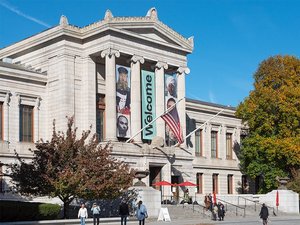
Muzej finih umetnosti u Bostonu, BostonMuzej finih umetnosti u Bostonu Boston 3 Automedon sa Ahilovim konjima, Sketch for Automedon with the Horses of Achilles, Sketch for Automedon with the Horses of Achilles
Art Institute of Chicago, ČikagoArt Institute of Chicago Čikago 2 General Juan Prim (1814-1870), Portrait of a Young Woman
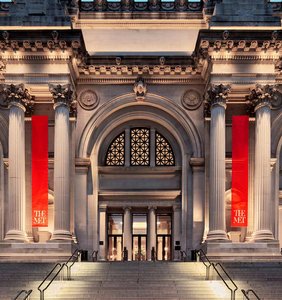
Metropoliten музеј у Њујорку, ЊујоркMetropoliten музеј у Њујорку Њујорк 2 The spy, Salome
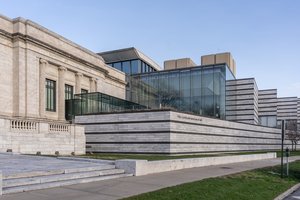
Cleveland Museum of Art, KlivlendCleveland Museum of Art Klivlend 2 Self portrait, Seated african woman
Musée des Beaux-Arts de Dijon, DijonMusée des Beaux-Arts de Dijon Dijon 1 The Spanish scoundrel
Musée de Grenoble, GrenobleMusée de Grenoble Grenoble 1 Still Life
National Gallery of Art, WashingtonNational Gallery of Art Washington 1 A Chief of Abyssinia

Henri Regno deceniju po deceniju: original koji definiše svaku od njih

Radovi po decenijama

Izaberite deceniju da biste videli original koji je definiše.

Pitanja kolekcionara o slikama umetnika Henri Regno

Po kojem delu je Henri Regno najpoznatiji/a?Otkrij odgovor

Automedon sa Ahilovim konjima (1868), Muzej finih umetnosti u Bostonu, Boston. Slede General Juan Prim (1814-1870) (1868) i Portrait of a Young Woman (1863).

Koliko je godina imao/la Henri Regno kada je nastalo delo Automedon sa Ahilovim konjima?Otkrij odgovor

25 godina: Automedon sa Ahilovim konjima datira iz 1868, a Henri Regno je rođen/a 1843.

Koja su deset najpoznatijih slika umetnika Henri Regno?Otkrij odgovor

Automedon sa Ahilovim konjima, General Juan Prim (1814-1870), Portrait of a Young Woman, Juan Prim, October 8, 1868, Orpheus in the Underworld, Presumed portrait of the artist's brother (23 June 1859), The Spanish scoundrel, Hassan Et Namouna, The madrilenian i Still Life. Gornji rang pokazuje godinu i muzej za svako od njih.

Koliko je slika ostavio Henri Regno?Otkrij odgovor

Naš katalog sadrži 21 dela umetnika Henri Regno, datiranih od 1859 do 1870.

U kojim muzejima se nalaze remek-dela umetnika Henri Regno?Otkrij odgovor

Većinom u Musée d'Orsay (Pariz), Muzej finih umetnosti u Bostonu (Boston) i Art Institute of Chicago (Čikago). Tabela muzeja iznad sadrži njih sve.

U kojim godinama je Henri Regno naslikao svoja najpoznatija dela?Otkrij odgovor

U 1860s: 10 od 21 dela na ovoj stranici nastalo je tada, od čega je Automedon sa Ahilovim konjima.

Koja su prva i poslednja čuvena originalna dela umetnika Henri Regno?Otkrij odgovor

Na ovoj stranici, najstarije delo je iz Presumed portrait of the artist's brother (23 June 1859) (1859), a najnovije iz Hassan Et Namouna (1870).

Koje je motive Henri Regno najčešće birao/la?Otkrij odgovor

Man (9), Woman (5) i Portrait (3), kroz svih 21 dela na ovoj stranici.

Koju je tehniku najčešće koristio/la Henri Regno?Otkrij odgovor

Oil On Canvas, za 13 od 21 dela na ovoj stranici.

Kojem umetničkom pravcu pripada Henri Regno?Otkrij odgovor

Romanticism, sudeći po originalima na ovoj stranici.

Čija se dela umetnika Henri Regno nalaze u Musée d'Orsay?Otkrij odgovor

Juan Prim, October 8, 1868, Orpheus in the Underworld i Historical scene: Musée d'Orsay, Pariz čuva 4 dela sa ove stranice.

Henri Regno: život i delo

A Brilliant Light Extinguished: The Life and Legacy of Henri Regnault

The history of nineteenth-century French art is often told through the lens of enduring movements, yet few figures embody the tragic intersection of immense promise and sudden loss as poignantly as Henri Regnault. Born in Paris in 1843 to the esteemed physicist Henri Victor Regnault, the young artist was raised within an atmosphere of intellectual rigor and scientific curiosity. This foundation of precision would later manifest in his breathtaking command over anatomical detail and light. His journey through the prestigious studios of Antoine Montfort, Louis Lamothe, and the celebrated Alexandre Cabanel provided him with a formidable academic toolkit, yet Regnault was never merely a student of tradition. He possessed an innate restlessness, a desire to push beyond the rigid boundaries of the École des Beaux-Arts to capture the visceral energy of the world around him.

Regnault’s ascent in the Parisian art world was nothing short of meteoric. The turning point of his early career arrived in 1866, when he secured the prestigious Prix de Rome. This triumph, achieved with his monumental work Thetis Bringing Vulcan’s Arms to Achilles, signaled the arrival of a master capable of blending classical grandeur with an unprecedented sense of movement and sculptural depth. While the award traditionally directed winners toward the study of antiquity in Italy, Regnault’s time in Rome and his travels through Spain and North Africa served to broaden his aesthetic horizons far beyond the classical canon. He found himself increasingly drawn to the Hispanophone-Italian school, a style that favored the materiality of life and the evocative power of capturing fleeting, everyday moments.

Mastery of the Dramatic and the Orientalist Vision

As his technique matured, Regnault’s work began to bridge the gap between academic precision and a burgeoning fascination with Orientalism and Spanish realism. He possessed a rare ability to infuse historical and biblical narratives with a contemporary, almost cinematic intensity. Nowhere is this more evident than in his most famous masterpiece, Salomé. Originally conceived as a portrait of an Italian model in Rome, the canvas underwent a dramatic transformation as Regnault expanded its scope, eventually completing it amidst the vibrant atmosphere of Tangier. The resulting painting is a sensory triumph; through disheveled hair, flowing drapery, and a palpable sense of tension, he captures the biblical temptress at the height of her seductive power, leaving viewers breathless with the sheer vitality of the brushwork.
His repertoire was remarkably diverse, reflecting a deep engagement with both the mythic and the mundane. His ability to oscillate between the epic scale of Greek mythology—seen in works like Automedon with the Horses of Achilles—and the intimate, atmospheric studies of Spanish shepherds demonstrates an artist who refused to be pigeonholed. Regnault’s eye was uniquely attuned to the dynamism of urban centers and the rugged beauty of foreign landscapes, seeking to portray humanity not as static figures in a vacuum, but as living beings caught within the swirling currents of their era. His work often featured:

  • Anatomical Precision: A profound understanding of the human form, inherited from his classical training.
  • Luminous Color Palettes: An ability to use light to create depth and emotional resonance.
  • Narrative Tension: The capacity to freeze a moment of high drama, making the mythological feel immediate and real.

A Tragic End and Lasting Significance

The trajectory of Regnault’s life was violently interrupted by the onset of the Franco-Prussian War. In a final, tragic act of devotion to his country, the artist laid down his brushes to take up arms. He fell on the field of battle in January 1871, at the tender age of twenty-seven. His death sent shockwaves through the Parisian art community, marking the loss of a talent that many believed would lead the next generation of French painters into a new era of brilliance.

Despite his short life, Regnault’s impact remains indelible. He stands as a pivotal figure who navigated the delicate transition between the structured traditions of the past and the expressive freedoms of the modern age. His works continue to captivate audiences in institutions such as The Metropolitan Museum of Art, serving as enduring testaments to a spirit that was as much about the pursuit of truth as it was about the pursuit of beauty. In the annals of art history, Henri Regnault remains a luminous star—a painter whose brief, intense flame left behind a glow that continues to illuminate the complexities of 19th-century realism and Orientalism.