


1


Ažurirano: новембар 2026 · rangirano prema našem koeficijentu popularnosti (pretrage, posete i porudžbine za svako delo) · 28 dela Henri Evenepoel u našem katalogu
Ukratko
Man in Red (1894) je slika autora Henri Evenepoel koja privlači najviše pažnje; original se nalazi u muzeju Musées Royaux Des Beaux, Brisel. Nakon toga, pogled se seli na My Ill Grandfather (1892) i Charles Milcendeau (1899). Među 28 dela umetnika Henri Evenepoel u našem katalogu, ovih 28 su najpoznatija, od kojih je svako jedinstveni original predstavljen sa godinom nastanka, muzejom i razlogom zbog kojeg je i danas neprocenjivo.


This portrait, titled Charles Milcendeau, was painted by Henri Evenepoel in 1899. It captures a specific individual, Charles Edmond Théodore Soullans, who is known to us through this work as Charles Milcendeau. The painting offers a direct encounter with the subject, presented in a way that feels both personal and quiet.


 Count Aymer de la Chevalerie1896 · Kraljevski muzej lepih umetnosti u Antverpenu
12
 The running girl1895 · Kraljevski muzej lepih umetnosti u Antverpenu
13
 Wrestling Barrack at a Fair1898 · Kraljevski muzej lepih umetnosti u Antverpenu
14
 The Poulterer1897 · Kraljevski muzej lepih umetnosti u Antverpenu
15
 The Box1896 · Kraljevski muzej lepih umetnosti u Antverpenu
16
 Portrait of Edward Tuck, Vice-Consul of the United States in Paris1899 · Museum of Fine Arts Ghent (MSK)
17
 Sunday at the Bois de Boulogne1899 · Kraljevski muzej lepih umetnosti u Antverpenu
18
 Sunday in the Bois de Boulogne1891
19
 Portrait with the Green Chair1897 · Kraljevski muzej lepih umetnosti u Antverpenu
20
 Orange Market at Blida1898 · Kraljevski muzeji fine umetnosti Belgije
21
 Avenue de la Motte-Picquet in Paris1897 · Kraljevski muzej lepih umetnosti u Antverpenu
22
 Sunday Fair at Les Invalides1897 · Kraljevski muzej lepih umetnosti u Antverpenu
23
 Mendiant. Algerie1897
24
 Veterans' Festival1898 · Musées Royaux des Beaux-Arts
25
 Henriette in a Large Hat1899 · Musées Royaux Des Beaux
26
 La chambre de l'artiste
27
 Charles in a Striped Jersey1898
28
 The Spaniard in Paris1899 · Museum of Fine Arts Ghent (MSK)
8 muzeja u kojima se nalazi najviše slika sa ove stranice.
| Muzej | Grad | Radovi umetnika Henri Evenepoel | Slike iz ovog spiska |
|---|---|---|---|
 Kraljevski muzej lepih umetnosti u Antverpenu |
Antverpen | 12 | My Ill Grandfather, Louise in Mourning, Returning from Work at Sunset |
 Museum of Fine Arts Ghent (MSK) |
Gent | 4 | Portrait of Hélène Roulet, the Wife of the Artist Adolphe Crespin, The Clown, Portrait of Edward Tuck, Vice-Consul of the United States in Paris |
 Musées Royaux Des Beaux |
Brisel | 2 | Man in Red, Henriette in a Large Hat |
 Kraljevski muzeji fine umetnosti Belgije |
Brisel | 2 | Pictures - Portrait of Louis Charles Crespin, Orange Market at Blida |
 Musée d'Orsay |
Pariz | 1 | Charles Milcendeau |
 Städel Museum |
Frankfurt | 1 | In the Café d'Harcourt in Paris |
 Muzej fine umetnosti u Hjustonu |
Hjuston | 1 | At the Moulin Rouge |
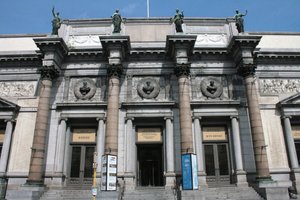 Musées Royaux des Beaux-Arts |
Brisel | 1 | Veterans' Festival |
Originalna dela Henri Evenepoel prikazana ovde obuhvataju period od otprilike deset godina, od 1891 do 1899: oko prati ih godinu po godinu.
Izaberite godinu da biste videli originalna dela.

Još od 1896
This portrait, titled Charles Milcendeau, was painted by Henri Evenepoel in 1899. It captures a specific individual, Charles Edmond Théodore Soullans, who is known to us through this work as Charles Milcendeau. The painting offers a direct encounter with the subject, presented in a way that feels both personal and quiet.
Još od 1899
Man in Red (1894), Musées Royaux Des Beaux, Brisel. Slede My Ill Grandfather (1892) i Charles Milcendeau (1899).
22 godina: Man in Red datira iz 1894, a Henri Evenepoel je rođen/a 1872.
Man in Red, My Ill Grandfather, Charles Milcendeau, In the Café d'Harcourt in Paris, Pictures - Portrait of Louis Charles Crespin, At the Moulin Rouge, Portrait of Hélène Roulet, the Wife of the Artist Adolphe Crespin, The Clown, Louise in Mourning i Returning from Work at Sunset. Gornji rang pokazuje godinu i muzej za svako od njih.
Naš katalog sadrži 28 dela umetnika Henri Evenepoel, datiranih od 1891 do 1899.
Većinom u Kraljevski muzej lepih umetnosti u Antverpenu (Antverpen), Museum of Fine Arts Ghent (MSK) (Gent) i Musées Royaux Des Beaux (Brisel). Tabela muzeja iznad sadrži njih sve.
U 1897: 7 od 28 dela na ovoj stranici nastalo je tada, od čega je In the Café d'Harcourt in Paris.
Na ovoj stranici, najstarije delo je iz Sunday in the Bois de Boulogne (1891), a najnovije iz Charles Milcendeau (1899).
My Ill Grandfather, Louise in Mourning i Returning from Work at Sunset: Kraljevski muzej lepih umetnosti u Antverpenu, Antverpen čuva 12 dela sa ove stranice.


