Portret Giovanni Giuliani

Slike umetnika Giovanni Giuliani: Najpoznatijih 7 kroz oči galerije

Ažurirano: новембар 2026 · rangirano prema našem koeficijentu popularnosti (pretrage, posete i porudžbine za svako delo) · 7 dela Giovanni Giuliani u našem katalogu

Ukratko

Za ljubitelje galerije, najpoznatije delo umetnika Giovanni Giuliani je Hercules Enthroned (1709), čiji se original nalazi u muzeju Liechtenstein Museum, Beč. Wooden base for a tabletop (1711) i Dancing Faun (1707) čine triju koju svako oko prepoznaje. Od 7 dela umetnika Giovanni Giuliani u našem katalogu, galerija u nastavku predstavlja 7 najpoznatijih dela, od kojih je svako originalno, sa navedenom godinom nastanka, muzejom i onim što ga čini jedinstvenim.

1664 – 1744, Venice Najviše dela: Liechtenstein Museum

Top 10 slika umetnika Giovanni Giuliani u galeriji

1
Hercules Enthroned (1709) čiji je Giovanni Giuliani

Hercules Enthroned

1709 · Bronze · Liechtenstein Museum, Beč

To gaze upon this depiction of Hercules Enthroned is to be immediately enveloped by an aura of monumental power tempered by classical grace. This bronze statue, dating from the year 1709, captures more than just a mythological figure; it embodies the very concept of enduring strength—a physical and spiritual fortitude that has captivated artists for millennia. The composition itself is rich with narrative detail. At the heart sits Hercules, portrayed…

2
Wooden base for a tabletop (1711) čiji je Giovanni Giuliani

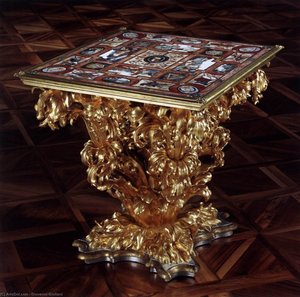
Wooden base for a tabletop

1711 · Liechtenstein Museum, Beč

A Glimpse into Venetian Opulence: The Tabletop Base by Giovanni Giuliani This exquisitely crafted wooden base, dating to 1711, offers a captivating window into the lavish world of early 18th-century Venice. Created by the skilled hand of Giovanni Giuliani, a master known for his allegorical and mythological depictions, this piece transcends mere furniture; it is a sculptural statement designed to elevate any space with its dramatic presence. The base’s rich,…

3
Dancing Faun (1707) čiji je Giovanni Giuliani

Dancing Faun

1707 · Stone · Liechtenstein Museum, Beč

In this sculpture, we encounter a figure caught in a state of pure, uninhibited exuberance. The subject is a faun, a creature of myth that bridges the gap between the human and the animal, rendered here with a sense of weightless vitality. He is poised on a single leg, the other bent sharply at the knee, creating a silhouette that suggests a sudden, joyful leap. His arms are raised high,…

4
Cleopatra (1707) čiji je Giovanni Giuliani

Cleopatra

1707 · Stone · Liechtenstein Museum, Beč

The sculpture depicts a seated female figure, identified as Cleopatra, rendered in stone with a smooth, polished surface. She is positioned upon a pedestal, her body captured in a moment of quietude. One arm extends outward in a gesture of reaching or signaling, while the other hand is held near the chest, grasping a small object. Her facial features are composed, with eyes directed slightly upward and to the side.…

5
Cartouche from a frame (1706) čiji je Giovanni Giuliani

Cartouche from a frame

1706 · Wood · Liechtenstein Museum, Beč

The "Cartouche from a frame" by Giovanni Giuliani emerges from the shadows in a warm, golden hue. This wooden piece radiates a luxurious glow, catching the light across its deeply carved surfaces. At the very heart of the composition, a small heart shape rests within a central motif. This core resembles a shell, its edges scalloped and rhythmic, drawing the eye inward toward the center of the ornament. The play…

7
Amor and Psyche čiji je Giovanni Giuliani

Amor and Psyche

Sculptures produced of burnt red clay, with subjects from the ancient myth of the beautiful Psyche and of the god Eros (in Latin Amor), who fell in love with her, were made as bozzettas, i.e. modellos for the sandstone sculptures in the garden of the chateau in Slavkov near Brno. They were commissioned by Count Dominik Ondřej Kounic (1655–1705), who as imperiál Vice-Chancellor lived in Vienna. There he may have…

Motivi koji su privlačili pažnju Giovanni Giuliani

Četiri teme koje se najčešće ponavljaju u ovim originalima, svaka sa svojim vrhunskim primerom.

Muzeji u kojima se čuvaju originalna dela umetnika Giovanni Giuliani

1 muzeja u kojima se nalazi najviše slika sa ove stranice.

Muzej Grad Radovi umetnika Giovanni Giuliani Slike iz ovog spiska
Liechtenstein Museum, BečLiechtenstein Museum Beč 5 Hercules Enthroned, Wooden base for a tabletop, Dancing Faun

Giovanni Giuliani, najprepoznatljivija dela svake godine

6 godina, od 1706 do 1711, prikazuje čitavu datiranu karijeru umetnika Giovanni Giuliani na ovoj stranici: kratku, prikazanu ovde godinu po godinu kroz njegova najpoznatija originalna dela.

Radovi po godinama

Izaberite godinu da biste videli originalna dela.

Slike umetnika Giovanni Giuliani: odgovori galerije

Koja je najpoznatija slika umetnika Giovanni Giuliani?Otkrij odgovor

Hercules Enthroned (1709), Liechtenstein Museum, Beč. Slede Wooden base for a tabletop (1711) i Dancing Faun (1707).

Koliko je godina imao/la Giovanni Giuliani kada je dovršio/la Hercules Enthroned?Otkrij odgovor

45 godina: Hercules Enthroned datira iz 1709, a Giovanni Giuliani je rođen/a 1664.

Koliko je dela stvorio/la Giovanni Giuliani?Otkrij odgovor

Naš katalog sadrži 7 dela umetnika Giovanni Giuliani, datiranih od 1706 do 1711.

Gde se nalaze najpoznatiji originali umetnika Giovanni Giuliani?Otkrij odgovor

Većinom u Liechtenstein Museum (Beč). Tabela muzeja iznad sadrži njih sve.

Kada je Giovanni Giuliani stvorio svoje najpoznatije slike?Otkrij odgovor

U 1707: 2 od 7 dela na ovoj stranici nastalo je tada, od čega je Dancing Faun.

Koja su najranija i najkasnija poznata dela umetnika Giovanni Giuliani?Otkrij odgovor

Na ovoj stranici, najstarije delo je iz Cartouche from a frame (1706), a najnovije iz Wooden base for a tabletop (1711).

Kojim se motivima Giovanni Giuliani najčešće bavio?Otkrij odgovor

Sculpture (2) i Stone (2), kroz svih 7 dela na ovoj stranici.

U kojoj je tehnici najviše radio/la Giovanni Giuliani?Otkrij odgovor

Stone, za 2 od 7 dela na ovoj stranici.

Koje originale umetnika Giovanni Giuliani poseduje Liechtenstein Museum?Otkrij odgovor

Hercules Enthroned, Wooden base for a tabletop i Dancing Faun: Liechtenstein Museum, Beč čuva 5 dela sa ove stranice.

Giovanni Giuliani: umetnik

The Venetian Bridge Between Baroque and the Rising Classical

Giovanni Giuliani (1664-1744) stands as a compelling figure in the late Baroque artistic landscape of Venice and, surprisingly, Vienna. Often overshadowed by his more flamboyant contemporaries, Giuliani’s work represents a subtle yet significant shift—a move away from the overtly dramatic gestures of the earlier Baroque towards a refined elegance that foreshadowed the burgeoning Classical style. His career, spanning nearly eight decades, reveals an artist deeply rooted in Venetian tradition while simultaneously adapting to and influencing the artistic currents of Central Europe. His legacy is not defined by grand, sweeping narratives, but rather by his meticulous execution, his ability to imbue seemingly simple subjects with a quiet dignity, and his crucial role as a transitional figure between two distinct aesthetic periods.

Born into a family marked by both opportunity and hardship—his father a convicted criminal—Giuliani’s early life instilled within him a pragmatic sensibility that informed his artistic practice. He received his initial training in Venice, the undisputed heart of the Baroque, where he likely honed his skills under the primacy of established masters. The Venetian tradition, with its emphasis on rich color, dynamic composition, and theatricality, undoubtedly shaped his early style. However, Giuliani’s career trajectory took an unexpected turn when he relocated to Vienna in 1689. This move proved pivotal, as it placed him within the orbit of the Habsburg court—a center increasingly receptive to the cooler, more restrained aesthetics emerging from Italy.

A Mastery of Form and Material

Giuliani's work during his Viennese period is particularly noteworthy for its versatility and technical sophistication. While he continued to draw upon Venetian influences—particularly in his depictions of religious figures—he adapted them to suit the tastes of the Austrian aristocracy. His talent extended far beyond the canvas, reaching into the realms of sculpture and decorative arts, where he could manipulate various media to achieve a sense of opulent craftsmanship. This versatility is evident in several key areas of his output:

  • Sculptural Studies: His bronze studies, such as the refined Hercules Enthroned, serve as masterful examples of how he bridged eras, utilizing classical subject matter to convey a sense of timeless strength and poise.
  • Decorative Arts: Giuliani demonstrated an extraordinary ability to integrate art into the very fabric of luxury living. A notable example is his 1711 creation, a wooden base for a tabletop, which utilized intricately gilded wood and mosaic details to showcase the height of Venetian-inspired luxury.
  • Allegorical Themes: His repertoire frequently explored mythological and allegorical figures, including iconic characters like Cleopatra and Hercules, imbuing these classical archetypes with a new, more restrained grace.

Historical Significance and Artistic Legacy

The historical importance of Giovanni Giuliani lies in his role as an artistic conduit. By transporting the warmth and richness of Venetian technique to the more formal atmosphere of the Habsburg court, he helped facilitate a stylistic evolution. He did not merely replicate the past; he refined it. His ability to move away from the heavy, often overwhelming drama of the high Baroque toward a more controlled, elegant aesthetic provided a foundation for the Classical movements that would follow.

Through his work in both sculpture and decorative design, Giuliani left an indelible mark on the aesthetic landscape of Central Europe. He remains a vital subject for those studying the transition of European art, representing a moment when the theatricality of the 17th century began to yield to the clarity and order of the 18th. His life's work serves as a testament to the power of adaptation, proving that an artist can remain true to their cultural roots while profoundly shaping the artistic destiny of a new home.