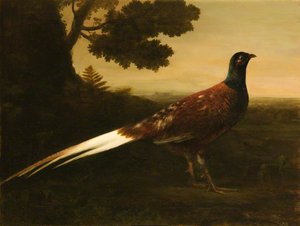
Portret George Haddo

9 najpoznatijih slika umetnika George Haddo, svaka potpuno jedinstvena

Ažurirano: новембар 2026 · rangirano prema našem koeficijentu popularnosti (pretrage, posete i porudžbine za svako delo) · 9 dela George Haddo u našem katalogu

Ukratko

Windsor Castle (1843) je slika autora George Haddo koja privlači najviše pažnje; original se nalazi u muzeju The National Trust For Scotland, Elgin. Nakon toga, pogled se seli na A Stormy Landscape with Classical Figures (after Gaspard Dughet) (1841) i Lady Haddo (1841). Među 9 dela umetnika George Haddo u našem katalogu, ovih 9 su najpoznatija, od kojih je svako jedinstveni original predstavljen sa godinom nastanka, muzejom i razlogom zbog kojeg je i danas neprocenjivo.

1816 – 1864 Najviše dela: The National Trust For Scotland

Top 10 slika umetnika George Haddo, iz ugla galerije

1
Windsor Castle (1843) čiji je George Haddo

Windsor Castle

1843 · Oil · The National Trust For Scotland, Elgin

A landscape unfolds across the canvas, defined by a field in the foreground where trees anchor the composition. The sky, heavy with clouds, casts a somber light over the scene, creating a sense of quiet melancholy. Within this rural setting, life moves at a measured pace: a single animal grazes near the center-left, while two figures—one positioned closer to the left and another further back to the right—occupy the space.…

2
A Stormy Landscape with Classical Figures (after Gaspard Dughet) (1841) čiji je George Haddo

A Stormy Landscape with Classical Figures (after Gaspard Dughet)

1841 · Oil On Canvas · The National Trust For Scotland, Elgin

Dark clouds loom heavily over a rugged mountain range, casting a deep shadow across the landscape. A group of figures sits huddled on the ground, their presence small against the vastness of the terrain. The air feels heavy with the approach of rain, yet a strange sense of tranquility settles over the scene. Trees are scattered throughout the composition, their branches reaching into the turbulent sky. In the distance, a…

3
Lady Haddo (1841) čiji je George Haddo

Lady Haddo

1841 · Oil · The National Trust For Scotland, Elgin

The portrait known as Lady Haddo emerges from the shadows of the mid-19th century, a quiet presence captured by the hand of George Haddo. Created about 1841, the work finds its subject in a moment of stillness. The artist, born in 1816, brings a specific sensitivity to the woman's features, rendering her with a clarity that feels immediate. There is a sense of a life caught in a pause, a…

4
View from St Leonard's Park (1843) čiji je George Haddo

View from St Leonard's Park

1843 · Oil · The National Trust For Scotland, Elgin

The painting titled View from St Leonard's Park was executed by the Scottish landscape painter George Haddo. This work dates to about 1843. The composition focuses on a landscape scene featuring an arched structure with metalwork, positioned between two benches with patterned fabric, overlooking rolling hills and trees under an overcast sky.

Motivi koji su privlačili pažnju George Haddo

Četiri teme koje se najčešće ponavljaju u ovim originalima, svaka sa svojim vrhunskim primerom.

Muzeji u kojima se čuvaju originalna dela umetnika George Haddo

1 muzeja u kojima se nalazi najviše slika sa ove stranice.

Muzej Grad Radovi umetnika George Haddo Slike iz ovog spiska
The National Trust For Scotland, ElginThe National Trust For Scotland Elgin 9 Windsor Castle, A Stormy Landscape with Classical Figures (after Gaspard Dughet), Lady Haddo

George Haddo kroz godine: jedinstveni originali svakog dela

Svako originalno delo umetnika George Haddo prikazano ovde nastalo je tokom 3 godina, između 1841 i 1843 godine: godina po godinu, evo ih.

Radovi po godinama

Izaberite godinu da biste videli originalna dela.

Slike umetnika George Haddo: pitanja za galeriju

Koje je najpoznatije delo umetnika George Haddo?Otkrij odgovor

Windsor Castle (1843), The National Trust For Scotland, Elgin. Slede A Stormy Landscape with Classical Figures (after Gaspard Dughet) (1841) i Lady Haddo (1841).

U kojoj je godini George Haddo stvorio/la Windsor Castle?Otkrij odgovor

27 godina: Windsor Castle datira iz 1843, a George Haddo je rođen/a 1816.

Koliko je poznatih dela umetnika George Haddo?Otkrij odgovor

Naš katalog sadrži 9 dela umetnika George Haddo, datiranih od 1841 do 1843.

Gde se mogu videti najpoznatiji originali umetnika George Haddo?Otkrij odgovor

Većinom u The National Trust For Scotland (Elgin). Tabela muzeja iznad sadrži njih sve.

U kom periodu je George Haddo stvorio/la svoje najpoznatije slike?Otkrij odgovor

U 1841: 2 od 9 dela na ovoj stranici nastalo je tada, od čega je A Stormy Landscape with Classical Figures (after Gaspard Dughet).

Ko je najraniji, a koje je najkasnije čuveno delo umetnika George Haddo?Otkrij odgovor

Na ovoj stranici, najstarije delo je iz A Stormy Landscape with Classical Figures (after Gaspard Dughet) (1841), a najnovije iz Windsor Castle (1843).

Koje su teme George Haddo preferirao/la?Otkrij odgovor

Landscape (4), Trees (3) i Sky (3), kroz svih 9 dela na ovoj stranici.

Sa kojim materijalima je George Haddo najčešće slikao?Otkrij odgovor

Oil, za 3 od 9 dela na ovoj stranici.

Koja originalna dela George Haddo mogu videti u The National Trust For Scotland?Otkrij odgovor

Windsor Castle, A Stormy Landscape with Classical Figures (after Gaspard Dughet) i Lady Haddo: The National Trust For Scotland, Elgin čuva 9 dela sa ove stranice.

George Haddo: portret umetnika

George Haddow: A Scottish Vision of the Highlands

The landscape paintings of George Haddow (1816-1864) offer a profoundly intimate and atmospheric glimpse into the heart of 19th-century Scotland. More than mere depictions of scenery, his works—particularly those capturing the lochs, mountains, and coastal regions of the Highlands—are imbued with a palpable sense of mood, light, and the enduring spirit of the land. Born in Edinburgh, Haddow’s artistic journey was shaped by a deep connection to his native country and a keen observation of its dramatic natural beauty. His career unfolded during a period of significant change for Britain, marked by industrialization and social upheaval, yet he remained steadfastly committed to portraying the timeless allure of Scotland's wild spaces.

Haddow’s early artistic training remains somewhat shrouded in mystery, though it is believed he initially studied under John Thomson, a prominent Scottish landscape painter. This mentorship undoubtedly instilled within him a respect for tonal harmony and an appreciation for capturing subtle shifts in light and atmosphere – qualities that would become hallmarks of his distinctive style. However, Haddow quickly developed his own unique approach, prioritizing emotional resonance over precise topographical detail. He wasn’t interested in creating photographic representations; instead, he sought to evoke the feeling of being *within* a landscape—to transport the viewer into its quiet grandeur and contemplative solitude.

The Language of Light and Shadow

Haddow's technique is characterized by an extraordinary mastery of light and shadow. He employed a muted palette – predominantly blues, greens, greys, and browns – to create a sense of depth and atmosphere that is both subtle and profoundly moving. Rather than relying on bright highlights or dramatic contrasts, he built up his compositions through layers of delicate washes and carefully blended tones. This approach allowed him to capture the ethereal quality of Highland light—the way it filters through mist, dances across water surfaces, and casts long shadows in valleys. His paintings are not about showing *what* a landscape looks like; they’re about conveying *how* it feels.

Consider his “Lady Haddo,” a captivating depiction of a woman standing before a loch. The figure is rendered with remarkable sensitivity, her form almost dissolving into the surrounding landscape. The water itself seems to shimmer and breathe, reflecting the shifting light and creating an illusion of movement. It’s not simply a portrait; it's a meditation on the relationship between humanity and nature—a poignant reminder of our place within the vastness of the Scottish wilderness.

Influences and Artistic Context

Haddow’s work resonates with several key artistic currents of his time. Like many Romantic landscape painters, he was deeply influenced by the Sublime – a concept that emphasized the awe-inspiring power and beauty of nature. However, Haddow's approach to the Sublime differs from that of some of his contemporaries. He avoids bombast and melodrama, instead opting for a quiet, understated expression of wonder. His paintings possess a contemplative quality that invites viewers to pause and reflect on their own connection to the natural world.

Furthermore, Haddow’s work shares affinities with the Hudson River School painters in America, who similarly sought to capture the grandeur and spirituality of American landscapes. Both groups prioritized atmospheric effects over detailed representation, and both aimed to evoke a sense of emotional resonance within their viewers. However, Haddow's focus remained firmly rooted in Scotland—his paintings are uniquely shaped by the specific character of his homeland.

Key Works and Legacy

Among Haddow’s most celebrated works is “Hagar and the Angel,” an evocative interpretation of a scene from the Book of Genesis. While drawing inspiration from Claude Lorrain's classical composition, Haddow imbues the painting with a distinctly Scottish sensibility—the rugged beauty of the Highland landscape serves as a powerful backdrop for this biblical narrative. His "View from St Leonard’s Park" further exemplifies his ability to capture the essence of Scotland’s iconic scenery.

Despite facing financial challenges and battling illness throughout his life, Haddow continued to paint until his death in 1864. He left behind a significant body of work—over two hundred paintings—that are now treasured for their atmospheric beauty and profound emotional depth. George Haddow’s legacy endures as one of Scotland's most important landscape painters, a master of light, shadow, and the evocative power of nature.

Haddo House: A Reflection of His Life

George Haddow’s life was inextricably linked to Haddo House, the family estate near Tarves in Aberdeenshire. The house itself—a grand but somewhat austere building—became a focal point for his artistic endeavors and a testament to his connection with Scotland's cultural heritage. As a prominent member of the Gordon family, Haddow played a significant role in preserving the history and traditions of Haddo House, which served as a gathering place for Scottish nobility and intellectuals. The house’s transformation into a maternity hospital during World War II further underscores Haddow’s commitment to his community and his enduring legacy.