Portret Gabriel Jules Thomas

Slike umetnika Gabriel Jules Thomas: Najpoznatijih 3 kroz oči galerije

Ažurirano: новембар 2026 · rangirano prema našem koeficijentu popularnosti (pretrage, posete i porudžbine za svako delo) · 3 dela Gabriel Jules Thomas u našem katalogu

Ukratko

Za ljubitelje galerije, najpoznatije delo umetnika Gabriel Jules Thomas je Drama and Music (1873), čiji se original nalazi u muzeju Opéra national de Paris, Pariz. The Stoning of St Stephen (1863) i Virgil (1861) čine triju koju svako oko prepoznaje. Od 3 dela umetnika Gabriel Jules Thomas u našem katalogu, galerija u nastavku predstavlja 3 najpoznatijih dela, od kojih je svako originalno, sa navedenom godinom nastanka, muzejom i onim što ga čini jedinstvenim.

1824 – 1905, Paris Najviše dela: Opéra national de Paris

Top 10 slika umetnika Gabriel Jules Thomas u galeriji

1
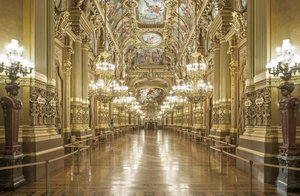
Drama and Music (1873) čiji je autor Gabriel Jules Thomas

Drama and Music

1873 · Acrylic On Canvas · Opéra national de Paris, Pariz

Gabriel Jules Thomas’s “Drama and Music” is more than just a depiction of an opulent Parisian setting; it's a meticulously crafted tableau vivant, capturing the very essence of the Second Empire era. Painted in 1873, this artwork transports us to the heart of the Opéra Garnier – specifically, the grand stalls entrance – where music and theatrical spectacle converged with breathtaking artistry. The scene unfolds within a vast architectural space,…

2
The Stoning of St Stephen (1863) čiji je autor Gabriel Jules Thomas

The Stoning of St Stephen

1863 · Stone · Saint-Étienne-du-Mont, Pariz

The stone carving of The Stoning of St Stephen presents a dense arrangement of human figures frozen in a moment of intense physical action. Located within the church of Saint-Étienne-du-Mont in Paris, France, the relief depicts the biblical scene through a series of overlapping bodies and dynamic poses. At the center of the composition, a figure representing Saint Stephen is positioned amidst a crowd of individuals. These figures are rendered…

3
Virgil (1861) čiji je autor Gabriel Jules Thomas

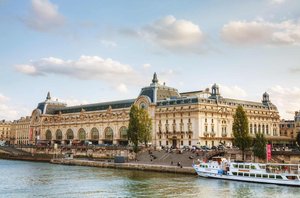
Virgil

1861 · Marble · Musée d'Orsay, Pariz

The marble figure of Virgil emerges from the stone, a quiet presence captured in the stillness of the mid-nineteenth century. Created by the French sculptor Gabriel Jules Thomas, this work presents the Roman poet in a moment of profound contemplation. The sculpture, dating from about 1861, finds its subject in the legendary author of epic poetry, rendered with a sense of dignity that honors his literary legacy.

Motivi koji su privlačili pažnju Gabriel Jules Thomas

Četiri teme koje se najčešće ponavljaju u ovim originalima, svaka sa svojim vrhunskim primerom.

Muzeji u kojima se čuvaju originalna dela umetnika Gabriel Jules Thomas

3 muzeja u kojima se nalazi najviše slika sa ove stranice.

Muzeji Grad Radovi umetnika Gabriel Jules Thomas Slike iz ovog spiska
Opéra national de Paris, ParizOpéra national de Paris Pariz 1 Drama and Music
Saint-Étienne-du-Mont, ParizSaint-Étienne-du-Mont Pariz 1 The Stoning of St Stephen
Musée d'Orsay, ParizMusée d'Orsay Pariz 1 Virgil

Gabriel Jules Thomas, najprepoznatljivija dela svake godine

Karijera umetnika Gabriel Jules Thomas na ovoj stranici traje 13 godine, od 1861 do 1873: svaka godina je prikazana sa njegovim najpoznatijim originalima.

Radovi po godinama

Izaberite godinu da biste videli originalna dela.

Slike umetnika Gabriel Jules Thomas: odgovori galerije

Koja je najpoznatija slika umetnika Gabriel Jules Thomas?Otkrij odgovor

Drama and Music (1873), Opéra national de Paris, Pariz. Slede The Stoning of St Stephen (1863) i Virgil (1861).

Koliko je godina imao/la Gabriel Jules Thomas kada je dovršio/la Drama and Music?Otkrij odgovor

49 godina: Drama and Music datira iz 1873, a Gabriel Jules Thomas je rođen/a 1824.

Koliko je dela stvorio/la Gabriel Jules Thomas?Otkrij odgovor

Naš katalog sadrži 3 dela umetnika Gabriel Jules Thomas, datiranih od 1861 do 1873.

Gde se nalaze najpoznatiji originali umetnika Gabriel Jules Thomas?Otkrij odgovor

Većinom u Opéra national de Paris (Pariz), Saint-Étienne-du-Mont (Pariz) i Musée d'Orsay (Pariz). Tabela muzeja iznad sadrži njih sve.

Koja su najranija i najkasnija poznata dela umetnika Gabriel Jules Thomas?Otkrij odgovor

Na ovoj stranici, najstarije delo je iz Virgil (1861), a najnovije iz Drama and Music (1873).

Kojim se motivima Gabriel Jules Thomas najčešće bavio?Otkrij odgovor

Architecture (2) i Sculpture (2), kroz svih 3 dela na ovoj stranici.

Gabriel Jules Thomas: umetnik

Early Life and Academic Foundations

Gabriel-Jules Thomas, a name resonant with the classical spirit of 19th-century French sculpture, was born in Paris in 1824. His artistic journey began within the esteemed walls of the École des Beaux-Arts, where he immersed himself in the rigorous training that defined the era’s sculptural standards. The influence of Augustin-Alexandre Dumont, a prominent figure in academic art, proved formative during these early years. Thomas wasn't merely absorbing technique; he was internalizing a tradition steeped in idealized form and narrative power. This dedication culminated in a pivotal moment: his triumph at the 1848 Prix de Rome competition with “Philoctète partant pour le siège de Troie” (“Philoctetes Leaves for the Siege of Troy”). This plaster sculpture, depicting the tragic hero from Homer’s epic, wasn't simply an exercise in skill; it was a statement of Thomas’s ambition and mastery of classical subject matter. The piece briefly graced New York City with its presence at the Dahesh Museum of Art’s 2005–2006 exhibition, “The Legacy of Homer,” before returning to its permanent home at the École Nationale Supérieure des Beaux-Arts in Paris—a testament to its enduring significance.

A Classical Style and Allegorical Vision

Thomas's artistic identity blossomed into a distinctive classical style characterized by allegorical works that resonated with the intellectual currents of his time. He wasn’t simply replicating ancient forms; he was imbuing them with new meaning, exploring themes of drama, music, and human emotion through meticulously crafted statues. His marble sculpture of Virgil, created after his return from Rome, exemplifies this approach. The work, now housed in the Musée d'Orsay, showcases a refined classicism—a balance between anatomical precision and expressive nuance. Beyond individual commissions, Thomas’s talent extended to larger-scale public works. “Frankfurt,” a stone façade for the Gare du Nord train station in Paris (1864–1865), demonstrates his ability to integrate sculpture into architectural contexts, enhancing the grandeur of urban spaces.

The Role of Educator and Artistic Lineage

Beyond his own creative endeavors, Gabriel-Jules Thomas dedicated himself to nurturing the next generation of sculptors as a teacher at the École des Beaux-Arts. This commitment solidified his position within the French artistic establishment and ensured the continuation of classical traditions. Among his most notable students was Gaston Lachaise, an American sculptor who would later forge his own path while carrying forward elements of Thomas’s rigorous training and emphasis on form. The influence wasn't limited to a single student; Thomas shaped the sensibilities of numerous artists, contributing to the broader landscape of 19th-century sculpture.

Major Works and Lasting Legacy

While Virgil and “Philoctetes” stand as cornerstones of his oeuvre, Thomas’s body of work reveals a consistent dedication to classical themes and allegorical representation. “Mademoiselle Mars,” a plaster statue currently residing in the Musée des Beaux-Arts d'Angers, showcases his skill in capturing delicate emotion and form. “The Stoning of St. Stephen” (1863), adorning the church of Saint-Étienne-du-Mont in Paris, demonstrates his ability to tackle religious subjects with both technical proficiency and dramatic intensity. His memorial to Baron Taylor at Père Lachaise Cemetery further illustrates his versatility as a sculptor capable of creating poignant commemorative works.

Historical Significance and Revival of Academic Classicism

Gabriel-Jules Thomas occupies an important position within the broader context of 19th-century art history, specifically in the revival of Academic Classicism. He embodied the values of the French Académie—a commitment to idealized form, narrative clarity, and technical mastery. His work reflects a deliberate engagement with classical precedents, yet it wasn’t merely imitative. Thomas infused his sculptures with a sense of emotional depth and allegorical meaning that resonated with contemporary audiences. His influence extended beyond his immediate circle of students, contributing to the enduring legacy of academic sculpture in France and beyond. He represents a bridge between the grand traditions of the past and the evolving artistic landscape of the modern era.