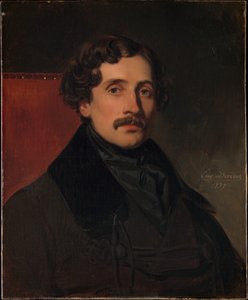
Portret Ežen Devéria

33 najpoznatijih slika umetnika Ežen Devéria, svaka potpuno jedinstvena

Ažurirano: новембар 2026 · rangirano prema našem koeficijentu popularnosti (pretrage, posete i porudžbine za svako delo) · 33 dela Ežen Devéria u našem katalogu

Ukratko

Portrait of Monsieur Couche (1824) je slika autora Ežen Devéria koja privlači najviše pažnje; original se nalazi u muzeju Detroit Institute of Arts, Detroit. Nakon toga, pogled se seli na Young Women Sitting (1827) i The Assassination (1828). Među 33 dela umetnika Ežen Devéria u našem katalogu, ovih 33 su najpoznatija, od kojih je svako jedinstveni original predstavljen sa godinom nastanka, muzejom i razlogom zbog kojeg je i danas neprocenjivo.

1805 – 1865, Pariz Najviše dela: Musée des Beaux-Arts de Pau

Top 10 slika umetnika Ežen Devéria, iz ugla galerije

2
Young Women Sitting (1827) čiji je Ežen Devéria

Young Women Sitting

1827 · Oil On Canvas

In the oil painting Young Women Sitting by Eugène Devéria, the composition is centered on a woman seated upon a large, gilded yellow chaise longue. To the left, a second woman reclines, her form partially obscured by heavy red drapery. The scene is set within an opulent interior where the color palette is dominated by deep reds, golds, and creams. This arrangement creates a shallow perspective that directs the viewer's…

3
The Assassination (1828) čiji je Ežen Devéria

The Assassination

1828 · Oil On Canvas · Reading Public Museum, Reading

We find ourselves before The Assassination, a significant work by the French painter Eugène Devéria. This piece was executed about 1828, a period when the artist was beginning to establish his presence within the Parisian art scene. Devéria, who was born in Paris, France, in 1805, brought a specific sense of historical gravity to his compositions, a quality that is palpable in this particular canvas.

4
Portrait of General Joseph-Léopold Sigisbert Hugo (1835) čiji je Ežen Devéria

Portrait of General Joseph-Léopold Sigisbert Hugo

1835 · Oil On Canvas · Musée Victor Hugo, Pariz

The subject is captured in a moment of quiet authority, positioned centrally against a somber, atmospheric landscape. He wears a dark blue military tunic, heavily detailed with gold braided aiguillettes, epaulettes, and medals that catch a sharp, directional light. This illumination, striking from the upper left, defines the contours of his face and the metallic textures of his uniform while casting the background into deep shadow. A sense of monumental…

5
Puget Presenting His Statue of Milon de Crotone to Louis XIV, in the Gardens of Versailles (1832) čiji je Ežen Devéria

Puget Presenting His Statue of Milon de Crotone to Louis XIV, in the Gardens of Versailles

1832 · Oil On Canvas

In this 1832 oil on canvas, we find ourselves within the formal, structured elegance of the Gardens of Versailles. The scene captures a specific historical intersection: the presentation of a sculpture by Puget to the French monarchy. At the heart of the composition, a large, muscular statue of Milon de Crotone commands the viewer's attention. The figure is rendered with a sense of physical weight, its pale, marble-like surface contrasting…

6
Puget Presenting His Statue of Milo of Croton to Louis XIV, in the Gardens of Versailles (1832) čiji je Ežen Devéria

Puget Presenting His Statue of Milo of Croton to Louis XIV, in the Gardens of Versailles

1832 · Oil On Canvas

The scene unfolds in the grand, manicured expanse of the Gardens of Versailles, where the air feels heavy with the weight of ceremony. Here, the artist Eugène Devéria captures a moment of profound historical significance. In this work, titled Puget Presenting His Statue of Milo of Croton to Louis XIV, in the Gardens of Versailles, the viewer finds themselves amidst a gathering of the French elite. The composition centers on…

7
Portrait of the Artist and His Brother Achille (1836) čiji je Ežen Devéria

Portrait of the Artist and His Brother Achille

1836 · Terracotta · Opera House, Versal

The gaze settles upon Portrait of the Artist and His Brother Achille, a work that brings together two figures bound by blood and art. This piece is the creation of Eugène Devéria, a man whose life began in Paris, France, in 1805. He carries the weight of a long creative life until his passing in 1865. Within this frame, the artist captures a personal connection, presenting himself alongside his brother,…

8
Breton Family Praying Before a Country Oratory (1838) čiji je Ežen Devéria

Breton Family Praying Before a Country Oratory

In Breton Family Praying Before a Country Oratory, Eugène Devéria arranges a quiet, intimate scene of religious devotion. The composition is centered on a group of five figures—two men, one woman, and two children—who are gathered in a moment of shared prayer. They are positioned in a triangular formation, a structural choice that provides a sense of stability and familial unity. This geometric arrangement naturally directs the viewer's eye toward…

9
Sketch for the church Notre-Dame-de-Lorette: Apotheosis of Saint Genevieve (1835) čiji je Ežen Devéria

Sketch for the church Notre-Dame-de-Lorette: Apotheosis of Saint Genevieve

1835 · Oil On Canvas · Petit Palais, Pariz

The artwork titled Sketch for the church Notre-Dame-de-Lorette: Apotheosis of Saint Genevieve is a religious study by the French painter Eugène Devéria. Created about 1835, this oil on canvas work functions as a preliminary sketch for a larger painting intended for the church Notre-Dame-de-Lorette. The composition focuses on the subject matter of the Apotheosis of Saint Genevieve, depicting the saint's transition toward a celestial state.

10
Apotheosis of Saint Genevieve, sketch for the painting of the church Notre-Dame-de-Lorette (1835) čiji je Ežen Devéria

Apotheosis of Saint Genevieve, sketch for the painting of the church Notre-Dame-de-Lorette

1835 · Drawing · Muzej Carnavalet, Pariz

This vertical sketch, dated 1835, captures a moment of religious exaltation centered on the figure of Saint Genevieve. The composition is organized around a strong upward movement, drawing the eye from the lower grouping of figures toward a concentrated burst of white and yellow light at the top of the frame. Saint Genevieve is positioned in the midground, her arms reaching toward the celestial light, her white garments providing a…

Čuvena dela umetnika Ežen Devéria, od 11 do 33

Čuvena dela Ežen Devéria po periodima

Motivi koji su privlačili pažnju Ežen Devéria

Četiri teme koje se najčešće ponavljaju u ovim originalima, svaka sa svojim vrhunskim primerom.

Muzeji u kojima se čuvaju originalna dela umetnika Ežen Devéria

8 muzeja u kojima se nalazi najviše slika sa ove stranice.

Muzej Grad Radovi umetnika Ežen Devéria Slike iz ovog spiska
Musée des Beaux-Arts de Pau, PauMusée des Beaux-Arts de Pau Pau 3 Portrait of Octavie Courcier, née Devéria (1804-1887), Portrait of Philippe-Adolphe Courcier, husband of Octavie Devéria, Christopher Columbus at the Court of Ferdinand and Isabella
Detroit Institute of Arts, DetroitDetroit Institute of Arts Detroit 1 Portrait of Monsieur Couche
Reading Public Museum, ReadingReading Public Museum Reading 1 The Assassination
Musée Victor Hugo, ParizMusée Victor Hugo Pariz 1 Portrait of General Joseph-Léopold Sigisbert Hugo
Opera House, VersalOpera House Versal 1 Portrait of the Artist and His Brother Achille
Musée des Beaux-Arts de Quimper, KempMusée des Beaux-Arts de Quimper Kemp 1 Breton Family Praying Before a Country Oratory
Petit Palais, ParizPetit Palais Pariz 1 Sketch for the church Notre-Dame-de-Lorette: Apotheosis of Saint Genevieve
Muzej Carnavalet, ParizMuzej Carnavalet Pariz 1 Apotheosis of Saint Genevieve, sketch for the painting of the church Notre-Dame-de-Lorette

Ežen Devéria kroz decenije: jedan jedinstveni original za svaku

Radovi po decenijama

Izaberite deceniju da biste videli original koji je definiše.

Slike umetnika Ežen Devéria: pitanja za galeriju

Koje je najpoznatije delo umetnika Ežen Devéria?Otkrij odgovor

Portrait of Monsieur Couche (1824), Detroit Institute of Arts, Detroit. Slede Young Women Sitting (1827) i The Assassination (1828).

U kojoj je godini Ežen Devéria stvorio/la Portrait of Monsieur Couche?Otkrij odgovor

19 godina: Portrait of Monsieur Couche datira iz 1824, a Ežen Devéria je rođen/a 1805.

Koji je deset najpoznatijih slika autora Ežen Devéria?Otkrij odgovor

Portrait of Monsieur Couche, Young Women Sitting, The Assassination, Portrait of General Joseph-Léopold Sigisbert Hugo, Puget Presenting His Statue of Milon de Crotone to Louis XIV, in the Gardens of Versailles, Puget Presenting His Statue of Milo of Croton to Louis XIV, in the Gardens of Versailles, Portrait of the Artist and His Brother Achille, Breton Family Praying Before a Country Oratory, Sketch for the church Notre-Dame-de-Lorette: Apotheosis of Saint Genevieve i Apotheosis of Saint Genevieve, sketch for the painting of the church Notre-Dame-de-Lorette. Gornji rang pokazuje godinu i muzej za svako od njih.

Koliko je poznatih dela umetnika Ežen Devéria?Otkrij odgovor

Naš katalog sadrži 33 dela umetnika Ežen Devéria, datiranih od 1824 do 1864.

Gde se mogu videti najpoznatiji originali umetnika Ežen Devéria?Otkrij odgovor

Većinom u Musée des Beaux-Arts de Pau (Pau), Detroit Institute of Arts (Detroit) i Reading Public Museum (Reading). Tabela muzeja iznad sadrži njih sve.

U kom periodu je Ežen Devéria stvorio/la svoje najpoznatije slike?Otkrij odgovor

U 1830s: 10 od 33 dela na ovoj stranici nastalo je tada, od čega je Portrait of General Joseph-Léopold Sigisbert Hugo.

Ko je najraniji, a koje je najkasnije čuveno delo umetnika Ežen Devéria?Otkrij odgovor

Na ovoj stranici, najstarije delo je iz Portrait of Monsieur Couche (1824), a najnovije iz Charles-Théodule Devéria (1831-1871) (1864).

Koje su teme Ežen Devéria preferirao/la?Otkrij odgovor

Man (11), Woman (9) i People (6), kroz svih 33 dela na ovoj stranici.

Sa kojim materijalima je Ežen Devéria najčešće slikao?Otkrij odgovor

Oil On Canvas, za 10 od 33 dela na ovoj stranici.

Koja originalna dela Ežen Devéria mogu videti u Musée des Beaux-Arts de Pau?Otkrij odgovor

Portrait of Octavie Courcier, née Devéria (1804-1887), Portrait of Philippe-Adolphe Courcier, husband of Octavie Devéria i Christopher Columbus at the Court of Ferdinand and Isabella: Musée des Beaux-Arts de Pau, Pau čuva 3 dela sa ove stranice.

Ežen Devéria: portret umetnika

Ežen Devéria: Premošćujući istoriju i posmatranje

Ežen Devéria (1805 – 1865) bio je francuski slikar čiji je prepoznatljiv stil spajao pedantni realizam sa ekspresivnim rukovanjem bojom, čime je postao jedan od vodećih hroničara svog doba. Rođen u Parizu u porodici duboko ukorenjenoj u umetničkoj tradiciji — njegov otac bio je vajar — Devériin rani život najavio je njegovu buduću vokaciju, uronivši ga u živopisni kulturni pejzaž Restoracije u Francuskoj. Iako su biografski detalji prilično oskudni, naučna istraživanja sugerišu da je svoje veštine usavršavao pod mentorstvom Žan-Batista Kamila Korota i Aleksandra Kabanele, upijajući impresionističkog duha uporedo sa akademskom rigoroznošću École Supérieure des Beaux-Arts.

Njegove formativne godine koincidirale su sa periodom umetničkog preporoda nakon Napoleonove vladavine. Romantičarski pokret duboko je uticao na njegovu senzibilitet, podstičući poštovanje prema dramatičnim pejzažima i emocionalno nabijenim narativima. Međutim, on je vešto balansirao ove uticaje sa pedantnim posmatranjem koje su zagovarali Korot i Kabanel — umetnici koji su prioritet stavljali na hvatanje prirodne svetlosti i teksture sa neuporedivom preciznošću.

Devérijino delo je izuzetno raznoliko, obuhvatajući kako monumentalne istorijske slike, tako i intimne portrete. Stegao je značajnu slavu zahvaljujući svojim prikazima škotskih klanova, pedantno izvedenim uljanim bojama koje prenose ne samo fizičku sličnost, već i psihološku dubinu — što je svedočanstvo njegovoj sposobnosti da destilira složene emocije na platno.

Značajna dela i umetnički stil

Umetnički stil Ežena Devérija karakteriše izuzetan spoj realizma i tonalne suptilnosti. On je izbegavaoాafourisane poteze četkicom koje su favorisali neki njegovi savremenici, birajući umesto toga glatke, izmešane površine koje su postizale zapanjujući stepen luminoznosti. Ova tehnika — posebno očigledna na njegovim slavnim platnima koja prikazuju dolazak Kristofera Kolumba u Ameriku i Sivog goluba — omogućila mu je da sa zadivljujućom preciznošću prenese atmosferske uslove. Štaviše, Devérijeva paleta bila je suzdržana, ali ekspresivna, koristeći prigušene nijanse kako bi stvorio osećaj raspoloženja i atmosfere koji je duboko odjekivao kod gledalaca.

Njegova monumentalna platna, poput dela „Prijem Kristofera Kolumba“, exemplifikuju njegovu posvećenost portretisanju istorijskih događaja sa nepokolebljivim detaljem. Devérijeve kompozicije su pažljivo konstruisane, vodeći oko kroz prostrane pejzaže i hvatajući prolazne izraze ljudskih emocija — što odražava humanistički senzibilitet koji ga je izdvajao od mnogih umetnika njegovog vremena. Njegovi portreti bili su podjednako vredni pažnje zbog svog psihološkog uvida; vešto je hvatao esenciju ličnosti svojih subjekata, prenoseći ne samo fizički izgled, već i unutrašnji karakter kroz suptilne pokrete i izraze lica.

Nasleđe i istorijski značaj

Doprinos Ežena Devérija istoriji francuske umetnosti prevazilazi njegova pojedinačna remek-dela. Pomogao je da se učvrsti reputacija École Supérieure des Beaux-Arts kao institucije izvrsnosti, negujući generaciju umetnika koji su prihvatili i akademsku tradiciju i impresionističku inovaciju. Njegove slike nastavljaju da inspirišu divljenje svojom tehničkom virtuoznošću i emocionalnim odjekom — služeći kao trajni podsetnici ključnog trenutka u evropskoj umetničkoj kulturi. Devérijino pedantno posmatranje i tonalna majstorstvo učvrstili su njegovo mesto među najuticavnijim slikarima sredine 19. veka, osiguravajući da se njegovo delo proučava i ceni decenijama nakon njegove smrti.