Portret Елсворт Кели

26 najpoznatijih slika umetnika Елсворт Кели, izbor iz galerije

Ažurirano: новембар 2026 · rangirano prema našem koeficijentu popularnosti (pretrage, posete i porudžbine za svako delo) · 28 dela Елсворт Кели u našem katalogu

Ukratko

Od svih originala koje je Елсворт Кели ostavio, najpoznatiji je Blue Green Red (1963), koji se nalazi u kolekciji Metropoliten музеј у Њујорку, Њујорк. Odmah za njima slede Cite (1951) i Red Yellow Blue White and Black (1953). Naš katalog sadrži 28 dela umetnika Елсворт Кели; galerija je čuvala 26 dela koja svet najviše admira, od kojih je svako prikazano sa svojim datumom, muzejom i pričom.

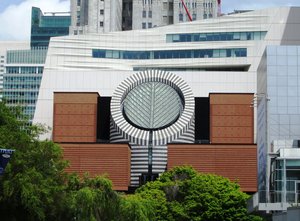
1923 – 2015, Нјуброк Najviše dela: San Francisco Museum of Modern Art

Top 10 slika umetnika Елсворт Кели: izbor galerije

1
Blue Green Red (1963) čiji je Елсворт Кели

Blue Green Red

1963 · Acrylic On Canvas · Metropoliten музеј у Њујорку, Њујорк

Ellsworth Kelly's "Blue Green Red," created in 1963, stands as a cornerstone of Hard Edge Painting—a movement that championed uncompromising simplicity and directness within abstract art. Unlike many artists of his era who wrestled with illusionistic depth or expressive brushstrokes, Kelly approached abstraction by meticulously observing the world around him, translating visual sensations into geometric forms rendered in bold, unmodulated colors.

2
Cite (1951) čiji je Елсворт Кели

Cite

1951 · Oil On Board · San Francisco Museum of Modern Art, San Francisko

The artwork Cité consists of twenty joined panels of wood. The surface features a grid-like arrangement of rectangular shapes in black and off-white. These rectangles interlock and overlap across the wooden support. Some shapes are oriented horizontally, while others are positioned vertically. The edges of these forms are defined by straight, precise lines. The color palette is restricted to two tones: a deep black and an off-white that appears as…

3
Red Yellow Blue White and Black (1953) čiji je Елсворт Кели

Red Yellow Blue White and Black

1953 · Oil On Canvas · Art Institute of Chicago, Čikago

Red Yellow Blue White and Black is an artwork by the American artist Ellsworth Kelly. Created in 1953, this piece reflects a period in the artist's career following his time in Europe. Ellsworth Kelly was born in Newburgh, New York, in 1923 and remained active in the American art scene until his death in Spencertown, New York, in 2015.

4
Spectrum Colors Arranged by Chance (1953) čiji je Елсворт Кели

Spectrum Colors Arranged by Chance

1953 · Oil On Canvas · San Francisco Museum of Modern Art, San Francisko

Small squares of red, blue, and yellow float within a dark void. They do not follow a predictable sequence. Instead, they drift across a black field like light caught in a sudden shadow. This arrangement relies on the repetition of uniform shapes, creating a rhythmic pulse that lacks a central focus. Each color—cyan, orange, pink, and purple—exists as a solid, flat plane. There is no depth here, only the tension…

Izbor umetnika Елсворт Кели se nastavlja, od 11 do 26

Motivi koji su privlačili pažnju Елсворт Кели

Četiri teme koje se najčešće ponavljaju u ovim originalima, svaka sa svojim vrhunskim primerom.

Muzeji u kojima se čuvaju originalna dela umetnika Елсворт Кели

5 muzeja u kojima se nalazi najviše slika sa ove stranice.

Muzej Grad Radovi umetnika Елсворт Кели Slike iz ovog spiska
San Francisco Museum of Modern Art, San FranciskoSan Francisco Museum of Modern Art San Francisko 2 Cite, Spectrum Colors Arranged by Chance
Metropoliten музеј у Њујорку, ЊујоркMetropoliten музеј у Њујорку Њујорк 1 Blue Green Red
Art Institute of Chicago, ČikagoArt Institute of Chicago Čikago 1 Red Yellow Blue White and Black
Art Museum, SeattleArt Museum Seattle 1 Blue Green Red II
Dallas Museum of Art, DallasDallas Museum of Art Dallas 1 Red Panel

Елсворт Кели deceniju po deceniju: original koji definiše svaku od njih

Radovi po decenijama

Izaberite deceniju da biste videli original koji je definiše.

Pitanja kolekcionara o slikama umetnika Елсворт Кели

Po kojem delu je Елсворт Кели najpoznatiji/a?Otkrij odgovor

Blue Green Red (1963), Metropoliten музеј у Њујорку, Њујорк. Slede Cite (1951) i Red Yellow Blue White and Black (1953).

Koliko je godina imao/la Елсворт Кели kada je nastalo delo Blue Green Red?Otkrij odgovor

40 godina: Blue Green Red datira iz 1963, a Елсворт Кели je rođen/a 1923.

Koja su deset najpoznatijih slika umetnika Елсворт Кели?Otkrij odgovor

Blue Green Red, Cite, Red Yellow Blue White and Black, Spectrum Colors Arranged by Chance, Blue Green Red II, Colors for a Large Wall, Triangle Form, Study for "La Combe II", Orange Red Relief i Red Dark Blue. Gornji rang pokazuje godinu i muzej za svako od njih.

Koliko je slika ostavio Елсворт Кели?Otkrij odgovor

Naš katalog sadrži 28 dela umetnika Елсворт Кели, datiranih od 1950 do 1997.

U kojim muzejima se nalaze remek-dela umetnika Елсворт Кели?Otkrij odgovor

Većinom u San Francisco Museum of Modern Art (San Francisko), Metropoliten музеј у Њујорку (Њујорк) i Art Institute of Chicago (Čikago). Tabela muzeja iznad sadrži njih sve.

U kojim godinama je Елсворт Кели naslikao svoja najpoznatija dela?Otkrij odgovor

U 1950s: 7 od 26 dela na ovoj stranici nastalo je tada, od čega je Cite.

Koja su prva i poslednja čuvena originalna dela umetnika Елсворт Кели?Otkrij odgovor

Na ovoj stranici, najstarije delo je iz Study for "La Combe II" (1950), a najnovije iz Three Panels: Yellow, Orange, Blue (1997).

Koje je motive Елсворт Кели najčešće birao/la?Otkrij odgovor

Color field (3), Abstract art (3) i Geometric form (3), kroz svih 26 dela na ovoj stranici.

Koju je tehniku najčešće koristio/la Елсворт Кели?Otkrij odgovor

Oil On Canvas, za 2 od 26 dela na ovoj stranici.

Čija se dela umetnika Елсворт Кели nalaze u San Francisco Museum of Modern Art?Otkrij odgovor

Cite i Spectrum Colors Arranged by Chance: San Francisco Museum of Modern Art, San Francisko čuva 2 dela sa ove stranice.

Елсворт Кели: život i delo

Early Life and the Seeds of Abstraction

Ellsworth Kelly, born in Newburgh, New York, in 1923, emerged as a pivotal figure in American art, renowned for his strikingly minimalist approach to painting, sculpture, and printmaking. His artistic journey wasn’t one of immediate declaration but rather a gradual unfolding, deeply rooted in the formative experiences of his childhood. Growing up in Oradell, New Jersey, Kelly developed an acute sensitivity to form and color through the simple act of birdwatching with his grandmother. This pastime instilled within him a fascination for the vibrant hues and simplified shapes found in nature – a world distilled to its essential elements. The meticulously detailed illustrations of John James Audubon proved particularly influential, shaping his aesthetic sensibilities and fostering an appreciation for precise observation and representation. Even early art classes emphasized materials and imaginative development, nurturing a budding artistic spirit. Despite initial parental reservations about pursuing a career in the arts, a supportive school teacher recognized Kelly’s potential and encouraged him to seek further training, setting him on a path that would redefine abstract art.

From Camouflage to Color: War, Education, and Parisian Influences

Kelly's formal artistic education began at the Pratt Institute in Brooklyn, but was soon interrupted by the exigencies of World War II. His military service proved unexpectedly formative; he served with the 603rd Engineers Camouflage Battalion – part of the aptly named “Ghost Army.” This unit utilized artistic skills to create deceptive visual aids for Allied forces, employing illusions and spatial manipulation to mislead the enemy. The experience exposed Kelly to principles of camouflage, perspective, and the power of visual deception, concepts that would later subtly inform his art. Following the war, he continued his studies at the School of the Museum of Fine Arts in Boston before embarking on a transformative period in Paris. It was within the vibrant artistic milieu of post-war Paris that Kelly’s aesthetic truly solidified. Immersing himself in the city's rich cultural resources, he encountered influential figures like Jean Arp and Constantin Brâncuși, whose commitment to simplified forms resonated deeply with his own developing vision. Visits to the studios of artists such as Alberto Magnelli, Francis Picabia, Alberto Giacometti, and Georges Vantongerloo proved equally pivotal, exposing him to diverse approaches to abstraction and challenging conventional notions of representation.

A Language of Form and Color: Defining a Minimalist Aesthetic

Ellsworth Kelly’s artistic style is characterized by its unwavering commitment to minimalist principles – an emphasis on line, color, and form with an almost unassuming simplicity. He became associated with hard-edge painting, color field painting, and minimalism, yet his work transcends easy categorization. His canvases often feature bold, saturated colors arranged in geometric shapes, creating a sense of spatial unity and visual harmony. *Three Panels: Red Yellow Blue, I* (1963) exemplifies this approach, showcasing vibrant hues across multiple panels to explore the interplay of color and form. *Blue Panel II* (1977), a monumental abstract work, demonstrates his mastery of layered blues and subtle textures, evoking a sense of depth and contemplation. And works like *Colors for a Large Wall* reveal his ability to create large-scale installations that interact dynamically with architectural spaces. Kelly’s exploration wasn't merely about aesthetics; it was an investigation into the fundamental elements of perception, seeking to distill complex ideas into essential forms. He aimed not to represent the world but to present pure visual experience, free from narrative or symbolic content.

Recognition and Legacy: A Lasting Impact on American Art

Throughout his prolific career, Ellsworth Kelly received widespread acclaim for his groundbreaking contributions to American art. His work was showcased in solo exhibitions at prestigious institutions such as the Museum of Modern Art and the Whitney Museum of American Art, solidifying his position within the canon of modern masters. He participated in significant group shows like “Young America 1957” at the Whitney, gaining recognition among a new generation of artists. Kelly’s innovative approach challenged conventional notions of painting and sculpture, earning him a reputation as an essential innovator and contributor to the American art movement. He received numerous accolades, including honorary doctoral degrees from several universities, the Praemium Imperiale in 2000, and the National Medal of Arts in 2012 – testaments to his enduring influence. Ellsworth Kelly’s legacy lies in his pioneering minimalist aesthetic and his profound impact on subsequent generations of artists. His emphasis on pure form, color, and spatial relationships redefined the boundaries of abstract art, influencing a wide range of artistic practices. He is remembered as a key figure in American abstraction, whose unwavering commitment to simplicity and clarity resulted in a body of work that remains both visually striking and intellectually stimulating – a testament to the power of reduction and the enduring beauty of essential forms.