Portret Donat Nonnotte

20 najpoznatijih slika umetnika Donat Nonnotte, svaka potpuno jedinstvena

Ažurirano: новембар 2026 · rangirano prema našem koeficijentu popularnosti (pretrage, posete i porudžbine za svako delo) · 21 dela Donat Nonnotte u našem katalogu

Ukratko

Sébastien II Le Clerc (1676-1763), painter (1741) je slika autora Donat Nonnotte koja privlači najviše pažnje; original se nalazi u muzeju Opera House, Versal. Nakon toga, pogled se seli na Portrait of Pierre Dulin, painter (1699-1748) (1741) i Portrait of Charlotta Sparre as a Vestal (1741). Među 21 dela umetnika Donat Nonnotte u našem katalogu, ovih 20 su najpoznatija, od kojih je svako jedinstveni original predstavljen sa godinom nastanka, muzejom i razlogom zbog kojeg je i danas neprocenjivo.

1708 – 1785, Besançon Najviše dela: Opera House

Top 10 slika umetnika Donat Nonnotte, iz ugla galerije

1
Sébastien II Le Clerc (1676-1763), painter (1741) čiji je autor Donat Nonnotte

Sébastien II Le Clerc (1676-1763), painter

1741 · Oil On Canvas · Opera House, Versal

In this 1741 portrait, we find ourselves in the quiet, focused atmosphere of an eighteenth-century study. The subject is a gentleman of significant standing, captured in a three-quarter length pose that suggests a moment of pause in his intellectual pursuits. He sits at a desk, his presence defined by a sense of professional dignity and the weight of his vocation. A single light source from the upper left carves his…

2
Portrait of Pierre Dulin, painter (1699-1748) (1741) čiji je autor Donat Nonnotte

Portrait of Pierre Dulin, painter (1699-1748)

1741 · Oil On Canvas · Opera House, Versal

In this three-quarter length portrait from 1741, we find Pierre Dulin seated in a moment of quiet reflection. He is turned slightly toward the viewer's left, yet his gaze is directed upward and to the right, as if caught in the middle of a sudden thought or a flash of creative inspiration. The lighting is deliberate, employing a chiaroscuro effect that pulls his face and the delicate lace of his…

3
Portrait of Charlotta Sparre as a Vestal (1741) čiji je autor Donat Nonnotte

Portrait of Charlotta Sparre as a Vestal

1741 · Oil On Canvas · National Portrait Gallery of Sweden, Strängnäs

A dignified figure emerges from a dark, near-black background, positioned in a three-quarter view. The subject, Charlotta Sparre, is rendered as a Vestal Virgin, her presence defined by a soft, focused light that illuminates her face and hands. She holds a small, flaming oil lamp, the light from which catches the delicate texture of her skin and the luster of a pearl bracelet. The composition is intimate, pushing the figure…

4
Portrait of a Woman in Blue (1751) čiji je autor Donat Nonnotte

Portrait of a Woman in Blue

1751 · Oil On Canvas

Portrait of a Woman in Blue is an oil on canvas work by the French artist Donat Nonnotte. Executed in 1751, the portrait captures a young woman in a bust-length composition. The subject is positioned centrally, facing slightly toward the viewer with a calm, neutral expression.

5
Portrait of a Young Woman (1750) čiji je autor Donat Nonnotte

Portrait of a Young Woman

1750 · Oil On Canvas

In this Portrait of a Young Woman by Donat Nonnotte, the viewer is met with an intimate, oval-shaped bust-length composition. Created about 1750, the work focuses our attention entirely on the subject's face and upper torso. There is a quiet stillness to the arrangement. The subject meets our eyes through a direct, frontal gaze that establishes an immediate connection. Her expression remains calm, carrying a subtle, enigmatic hint of a…

6
Portrait of a Man (1747) čiji je autor Donat Nonnotte

Portrait of a Man

1747 · Oil On Canvas · Musée des Beaux-Arts de Strasbourg, Strasburg

In the 1747 oil portrait titled "Portrait of a Man" by Donat Nonnotte, the subject occupies a central position within a three-quarter view. He faces slightly toward the viewer's right, yet his gaze remains fixed directly upon the observer. This steady eye contact anchors the composition against a dark, indeterminate background. The sitter's pale skin and rosy cheeks provide a soft contrast to the structured lines of his mid-18th-century fashion.…

8
Portrait of a woman (1752) čiji je autor Donat Nonnotte

Portrait of a woman

1752 · Oil On Canvas · Musée d'art et d'histoire de Narbonne, Narbona

In this 1752 oil on canvas, we encounter a woman captured in profile, her gaze directed toward the right of the frame. There is a profound sense of composure in her expression, a stillness that suggests a life of quiet nobility. The composition is a close-up bust portrait, set against a dark, indeterminate background that allows the subject to emerge from the shadows. The lighting, appearing to descend from the…
9
Jean Gabriel Charvet (1750-1829), draftsman (1765) čiji je autor Donat Nonnotte

Jean Gabriel Charvet (1750-1829), draftsman

1765 · Stone · Opera House, Versal

The work carries the hallmarks of the Neoclassical style, focusing on idealized human forms and a balanced, structured composition. There is a stillness here that contradicts the motion of the winged figure, creating a tension between the divine and the mortal. The architectural lines in the background provide a sense of order, grounding the ethereal encounter in a structured, physical reality. Every line is a deliberate choice, intended to guide…

10
Madame de Sevré as Hebe (1756) čiji je autor Donat Nonnotte

Madame de Sevré as Hebe

1756 · Oil On Canvas · Petit Palais, Pariz

In this portrait, titled Madame de Sevré as Hebe, we encounter a work from 1756 by the French painter Donat Nonnotte. The subject is presented in the guise of Hebe, the goddess of youth, a choice that allows the artist to blend the likeness of a noblewoman with the idealized attributes of classical mythology. It is a quiet study of grace, capturing a specific moment of mythological transformation through a…

Čuvena dela umetnika Donat Nonnotte, od 11 do 20

Čuvena dela Donat Nonnotte po periodima

Motivi koji su privlačili pažnju Donat Nonnotte

Četiri teme koje se najčešće ponavljaju u ovim originalima, svaka sa svojim vrhunskim primerom.

Muzeji u kojima se čuvaju originalna dela umetnika Donat Nonnotte

8 muzeja u kojima se nalazi najviše slika sa ove stranice.

Muzeji Grad Radovi umetnika Donat Nonnotte Slike iz ovog spiska
Opera House, VersalOpera House Versal 3 Sébastien II Le Clerc (1676-1763), painter, Portrait of Pierre Dulin, painter (1699-1748), Jean Gabriel Charvet (1750-1829), draftsman
National Portrait Gallery of Sweden, SträngnäsNational Portrait Gallery of Sweden Strängnäs 1 Portrait of Charlotta Sparre as a Vestal
Musée des Beaux-Arts de Strasbourg, StrasburgMusée des Beaux-Arts de Strasbourg Strasburg 1 Portrait of a Man
Library-museum of the Comédie-Française Paris 1 Portrait of Mademoiselle Dumesnil
Musée d'art et d'histoire de Narbonne, NarbonaMusée d'art et d'histoire de Narbonne Narbona 1 Portrait of a woman
Petit Palais, ParizPetit Palais Pariz 1 Madame de Sevré as Hebe
Muzej Carnavalet, ParizMuzej Carnavalet Pariz 1 Presumed Portrait of Jacques de Flesselles (1730-1789), Last Provost of the Merchants
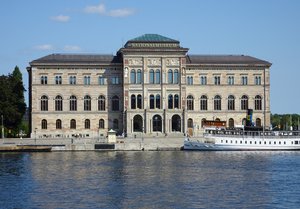
Nationalmuseum, СтокхолмNationalmuseum Стокхолм 1 Charlotta Fredrika Sparre as Vestal

Donat Nonnotte kroz decenije: jedan jedinstveni original za svaku

Radovi po decenijama

Izaberite deceniju da biste videli original koji je definiše.

Slike umetnika Donat Nonnotte: pitanja za galeriju

Koje je najpoznatije delo umetnika Donat Nonnotte?Otkrij odgovor

Sébastien II Le Clerc (1676-1763), painter (1741), Opera House, Versal. Slede Portrait of Pierre Dulin, painter (1699-1748) (1741) i Portrait of Charlotta Sparre as a Vestal (1741).

U kojoj je godini Donat Nonnotte stvorio/la Sébastien II Le Clerc (1676-1763), painter?Otkrij odgovor

33 godina: Sébastien II Le Clerc (1676-1763), painter datira iz 1741, a Donat Nonnotte je rođen/a 1708.

Koji je deset najpoznatijih slika autora Donat Nonnotte?Otkrij odgovor

Sébastien II Le Clerc (1676-1763), painter, Portrait of Pierre Dulin, painter (1699-1748), Portrait of Charlotta Sparre as a Vestal, Portrait of a Woman in Blue, Portrait of a Young Woman, Portrait of a Man, Portrait of Mademoiselle Dumesnil, Portrait of a woman, Jean Gabriel Charvet (1750-1829), draftsman i Madame de Sevré as Hebe. Gornji rang pokazuje godinu i muzej za svako od njih.

Koliko je poznatih dela umetnika Donat Nonnotte?Otkrij odgovor

Naš katalog sadrži 21 dela umetnika Donat Nonnotte, datiranih od 1741 do 1768.

Gde se mogu videti najpoznatiji originali umetnika Donat Nonnotte?Otkrij odgovor

Većinom u Opera House (Versal), National Portrait Gallery of Sweden (Strängnäs) i Musée des Beaux-Arts de Strasbourg (Strasburg). Tabela muzeja iznad sadrži njih sve.

U kom periodu je Donat Nonnotte stvorio/la svoje najpoznatije slike?Otkrij odgovor

U 1750s: 5 od 20 dela na ovoj stranici nastalo je tada, od čega je Portrait of a Woman in Blue.

Ko je najraniji, a koje je najkasnije čuveno delo umetnika Donat Nonnotte?Otkrij odgovor

Na ovoj stranici, najstarije delo je iz Sébastien II Le Clerc (1676-1763), painter (1741), a najnovije iz Presumed Portrait of Jacques de Flesselles (1730-1789), Last Provost of the Merchants (1768).

Koje su teme Donat Nonnotte preferirao/la?Otkrij odgovor

Woman (10), Man (8) i Drapery (4), kroz svih 20 dela na ovoj stranici.

Sa kojim materijalima je Donat Nonnotte najčešće slikao?Otkrij odgovor

Oil On Canvas, za 17 od 20 dela na ovoj stranici.

Koja originalna dela Donat Nonnotte mogu videti u Opera House?Otkrij odgovor

Sébastien II Le Clerc (1676-1763), painter, Portrait of Pierre Dulin, painter (1699-1748) i Jean Gabriel Charvet (1750-1829), draftsman: Opera House, Versal čuva 3 dela sa ove stranice.

Donat Nonnotte: portret umetnika

Donatien Nonnotte: A Master of Dramatic Allegory and Baroque Portraiture

Donatien Nonnotte (1708-1785), a name perhaps less familiar than many of his contemporaries, nevertheless stands as a significant figure in 18th-century French art. Born in Besançon, France, he rose from humble beginnings to become a respected portraitist and, crucially, a painter deeply invested in the dramatic narratives of biblical and mythological scenes. His career spanned several decades, marked by a shift from early academic portraiture to a more expressive and emotionally charged style that reflects the evolving tastes of his era – a period bridging the formality of the Baroque with the burgeoning sensibilities of Rococo.

Nonnotte’s artistic journey began within the framework of the Académie royale de peinture et de sculpture in Paris. Receiving admission in 1741, he initially focused on portraiture, establishing a solid reputation for his ability to capture likeness with technical precision. However, it was during this period that he began to experiment with larger-scale compositions and increasingly theatrical subject matter. This transition wasn’t merely stylistic; it reflected a growing interest in the allegorical and moralistic themes prevalent in art at the time – a desire to communicate complex ideas through visual storytelling.

The Rise of Dramatic Narrative

A pivotal moment in Nonnotte's career arrived with his relocation to Lyon in 1754. Here, he secured the prestigious title of “official painter” for the city, a recognition that underscored his growing influence and artistic standing. Lyon, a thriving center of commerce and culture, provided a fertile ground for his evolving style. It was during this period that Nonnotte truly embraced the dramatic narrative, moving beyond simple likeness to create works brimming with emotion, symbolism, and carefully orchestrated compositions.

His most celebrated works exemplify this shift. Paintings like “Régulus quittant sa famille pour retourner à Carthage” (Regulus Leaving His Family to Return to Carthage) are particularly compelling. The scene depicts the Roman general’s agonizing decision to abandon his wife and children in order to fulfill his duty to Rome, a powerful allegory of loyalty versus personal devotion. The painting is characterized by its intense emotionalism – Regulus's grief palpable in his posture and expression – and its masterful use of light and shadow to heighten the drama. Similarly, “Esther présentée à Assuerus” (Esther Presented to Ahasuerus) showcases Nonnotte’s ability to infuse biblical narratives with a sense of intrigue and psychological depth. The composition is meticulously arranged, drawing the viewer's eye to the central figures while subtly hinting at the underlying tensions and potential dangers within the scene.

Technique and Influences

Nonnotte’s artistic style can be characterized by a rich, layered technique—a hallmark of Baroque painting. He employed a complex system of glazing and scumbling to achieve a luminous quality in his colors and create a sense of depth and texture. His brushwork is often loose and expressive, particularly in the rendering of drapery and facial features, contributing to the overall dynamism of his compositions. While firmly rooted in the traditions of Baroque painting, Nonnotte’s work also reveals subtle influences from Rococo style – a preference for elegant curves, delicate colors, and an emphasis on decorative elements.

His training under François-Hubert Drouais, a prominent portraitist, undoubtedly played a role in shaping his early artistic development. However, Nonnotte quickly surpassed his teacher, developing a distinctive voice that combined technical skill with a profound understanding of human emotion and narrative potential. He was also influenced by the works of Caravaggio, whose dramatic use of light and shadow served as a model for his own approach to composition and rendering.

Legacy and Significance

Donatien Nonnotte’s legacy is one of artistic versatility and dramatic flair. While he may not be as widely recognized as some of his contemporaries, his paintings continue to captivate viewers with their emotional intensity and masterful storytelling. His work represents a crucial bridge between the formal conventions of academic portraiture and the more expressive styles that would emerge in the following decades. His influence can be seen in the works of later artists who sought to infuse narrative into their art, demonstrating his lasting contribution to the development of French painting.

Today, Nonnotte’s paintings are housed in museums across France and beyond, offering a valuable glimpse into the artistic landscape of 18th-century Europe. His ability to transform historical and mythological subjects into compelling visual narratives ensures that his work will continue to resonate with audiences for generations to come.