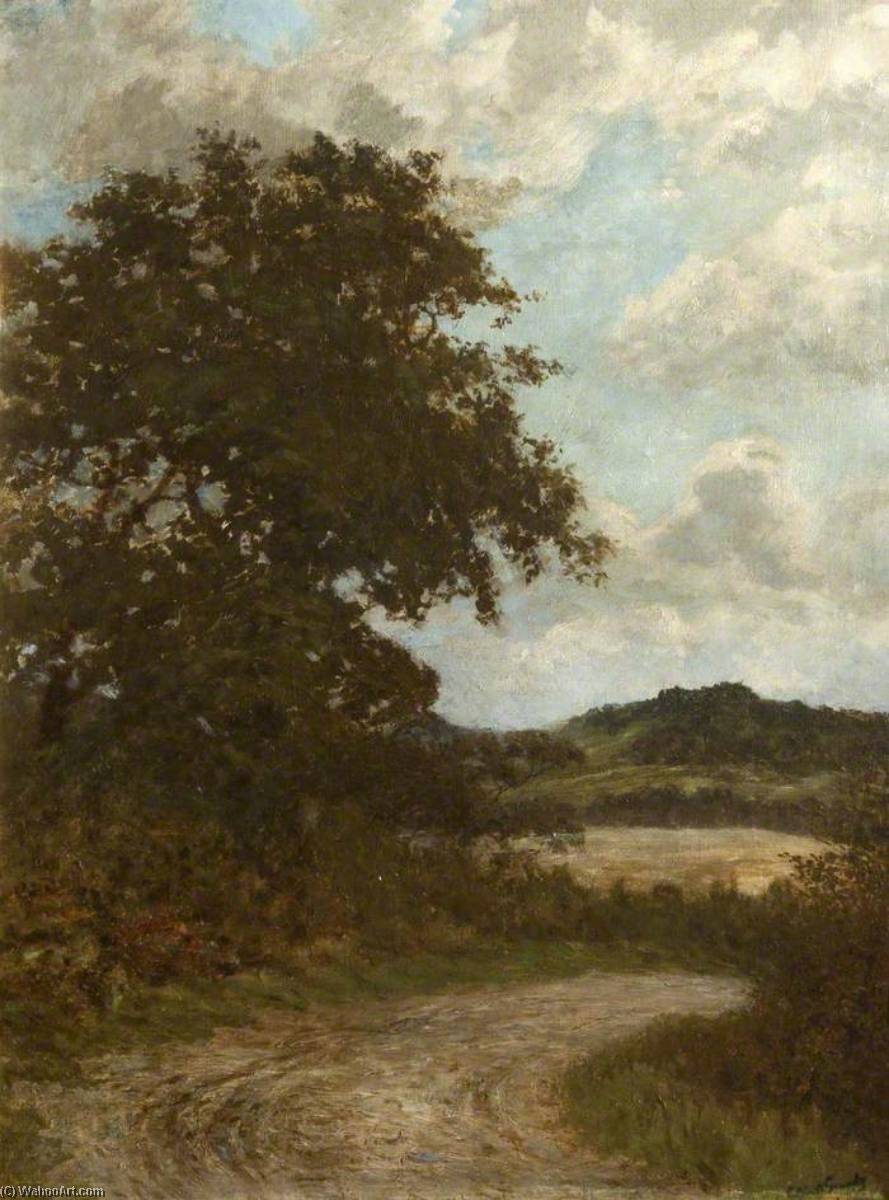
Ukratko
Dawn (1900) je slika autora Cuthbert Cartwright Grundy koja privlači najviše pažnje; original se nalazi u muzeju Grundy Art Gallery, Blackpool. Nakon toga, pogled se seli na The Old Millhouse, Milnthorpe (1900) i The End of the Village. Među 15 dela umetnika Cuthbert Cartwright Grundy u našem katalogu, ovih 15 su najpoznatija, od kojih je svako jedinstveni original predstavljen sa godinom nastanka, muzejom i razlogom zbog kojeg je i danas neprocenjivo.
Top 10 slika umetnika Cuthbert Cartwright Grundy, iz ugla galerije
Autumn
The painting Autumn by Cuthbert Cartwright Grundy is a stunning representation of the fall season, showcasing the artist's skill in capturing the essence of nature. Created in 1919, this oil on canvas piece measures 111 x 86 cm and is currently housed at the Harris Museum - Art Gallery in Preston, United Kingdom. A Closer Look at the Painting The scene features two trees, one on the left side and…
Čuvena dela umetnika Cuthbert Cartwright Grundy, od 11 do 15
Motivi koji su privlačili pažnju Cuthbert Cartwright Grundy
Četiri teme koje se najčešće ponavljaju u ovim originalima, svaka sa svojim vrhunskim primerom.
Landscape 2 dela
Hills 2 dela
Tranquility 2 dela
Atmospheric 2 dela
Muzeji u kojima se čuvaju originalna dela umetnika Cuthbert Cartwright Grundy
5 muzeja u kojima se nalazi najviše slika sa ove stranice.
| Muzej | Grad | Radovi umetnika Cuthbert Cartwright Grundy | Slike iz ovog spiska |
|---|---|---|---|
| Blackpool | 4 | Dawn, The Old Millhouse, Milnthorpe, View from My Window | |
| Njukl na Tajnu | 1 | Plas Mawr, Conwy | |
| Preston | 1 | Autumn | |
| Rochdale | 1 | Fresh and Breezy | |
| Bristol | 1 | A Study, A Grassy Bank, with Trees |
Cuthbert Cartwright Grundy kroz decenije: jedan jedinstveni original za svaku
Slike umetnika Cuthbert Cartwright Grundy: pitanja za galeriju
Koje je najpoznatije delo umetnika Cuthbert Cartwright Grundy?Otkrij odgovor
Dawn (1900), Grundy Art Gallery, Blackpool. Slede The Old Millhouse, Milnthorpe (1900) i The End of the Village.
U kojoj je godini Cuthbert Cartwright Grundy stvorio/la Dawn?Otkrij odgovor
54 godina: Dawn datira iz 1900, a Cuthbert Cartwright Grundy je rođen/a 1846.
Koji je deset najpoznatijih slika autora Cuthbert Cartwright Grundy?Otkrij odgovor
Dawn, The Old Millhouse, Milnthorpe, The End of the Village, Plas Mawr, Conwy, View from My Window, Autumn, Landscape, Coming Rain, Undisturbed i Elterwater. Gornji rang pokazuje godinu i muzej za svako od njih.
Koliko je poznatih dela umetnika Cuthbert Cartwright Grundy?Otkrij odgovor
Naš katalog sadrži 15 dela umetnika Cuthbert Cartwright Grundy, datiranih od 1900 do 1937.
Gde se mogu videti najpoznatiji originali umetnika Cuthbert Cartwright Grundy?Otkrij odgovor
Većinom u Grundy Art Gallery (Blackpool), Laing Art Gallery (Njukl na Tajnu) i Harris Museum - Art Gallery (Preston). Tabela muzeja iznad sadrži njih sve.
U kom periodu je Cuthbert Cartwright Grundy stvorio/la svoje najpoznatije slike?Otkrij odgovor
U 1900s: 2 od 15 dela na ovoj stranici nastalo je tada, od čega je Dawn.
Ko je najraniji, a koje je najkasnije čuveno delo umetnika Cuthbert Cartwright Grundy?Otkrij odgovor
Na ovoj stranici, najstarije delo je iz Dawn (1900), a najnovije iz View from My Window (1937).
Koje su teme Cuthbert Cartwright Grundy preferirao/la?Otkrij odgovor
Landscape (2), Hills (2) i Tranquility (2), kroz svih 15 dela na ovoj stranici.
Koja originalna dela Cuthbert Cartwright Grundy mogu videti u Grundy Art Gallery?Otkrij odgovor
Dawn, The Old Millhouse, Milnthorpe i View from My Window: Grundy Art Gallery, Blackpool čuva 4 dela sa ove stranice.
Cuthbert Cartwright Grundy: portret umetnika
Cuthbert Cartwright Grundy: A Vision of Northumberland
Cuthbert Cartwright Grundy (1846 – 1946) remains a relatively obscure figure in the annals of British watercolor painting, yet his landscapes hold a quiet beauty and profound connection to the rugged terrain of Northumberland. Born into a family steeped in artistic tradition—his father was a noted sculptor—Grundy’s early life fostered an appreciation for visual art that would shape his lifelong dedication to capturing the spirit of Northern England. While biographical details remain sparse, archival records indicate he pursued formal training at Slade School of Art in London, honing his skills under influential instructors and absorbing the stylistic currents of Impressionism and Neo-Romanticism prevalent during his formative years.- Early Influences: Grundy’s artistic sensibilities were undeniably shaped by the Romantic movement's fascination with sublime landscapes and emotional expression. Artists like Turner and Constable served as beacons, demonstrating how watercolor could convey grandeur and evoke powerful feelings.
- Northumberland Obsession: From around 1890 onwards, Grundy established his studio in Kirkcudbrightshire, Scotland, but Northumberland became the focal point of his artistic endeavors. He tirelessly documented the dramatic coastline, rolling hills, and picturesque villages of Northumberland with meticulous detail and sensitivity.
A Distinctive Watercolor Style
Grundy’s technique distinguished him from many of his contemporaries. Unlike looser Impressionists who prioritized fleeting effects of light, Grundy favored a deliberate layering process—often applying multiple washes to build up tonal depth and texture. He meticulously observed the nuances of color and atmosphere, striving for accuracy while simultaneously imbuing his paintings with an emotional resonance. His palette leaned towards muted greens, blues, and browns, reflecting the subdued hues of Northumberland’s landscape. Notably, Grundy employed a technique known as ‘grisaille,’ applying thin washes of gray to establish tonal values before adding color—a method that allowed him to achieve remarkable realism and compositional control.- Detailed Observation: Grundy's approach mirrored the scientific rigor championed by Victorian naturalists; he meticulously documented geological formations, plant life, and animal behavior.
- Emotional Resonance: Despite his technical precision, Grundy’s paintings are imbued with a palpable sense of tranquility and contemplation. He sought to convey not merely what he saw but how he felt—a testament to the power of art as a vehicle for emotional expression.