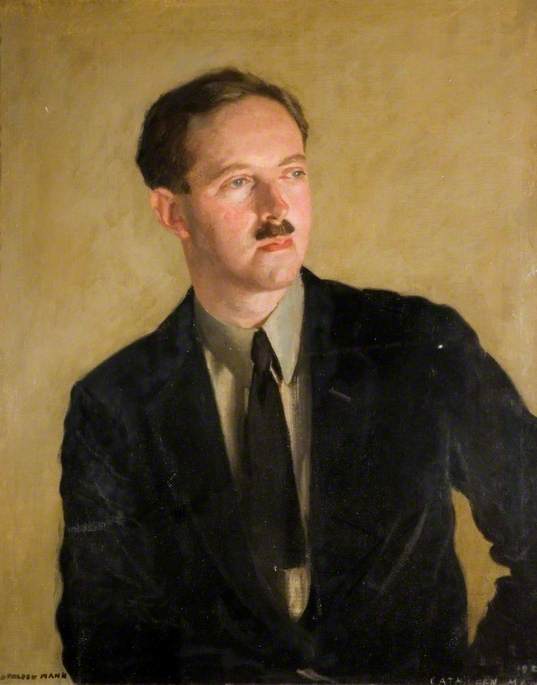
Portret Cathleen Sabine Mann

14 najpoznatijih slika umetnika Cathleen Sabine Mann, izbor iz galerije

Ažurirano: новембар 2026 · rangirano prema našem koeficijentu popularnosti (pretrage, posete i porudžbine za svako delo) · 14 dela Cathleen Sabine Mann u našem katalogu

Ukratko

Od svih originala koje je Cathleen Sabine Mann ostavio, najpoznatiji je Ballerina (1934). Odmah za njima slede Francis Brett Young (1884–1954) (1922) i Jane Posing (1931). Naš katalog sadrži 14 dela umetnika Cathleen Sabine Mann; galerija je čuvala 14 dela koja svet najviše admira, od kojih je svako prikazano sa svojim datumom, muzejom i pričom.

1896 – 1959, Newcastle upon Tyne Najviše dela: University of Birmingham

Top 10 slika umetnika Cathleen Sabine Mann: izbor galerije

1
Ballerina (1934) čiji je Cathleen Sabine Mann

Ballerina

1934

The Ballerina painting by Cathleen Mann is a stunning example of artistic excellence, showcasing the artist's skill and attention to detail. Created in 1934, this oil on canvas masterpiece measures 91 x 71 cm and is currently housed at the Glasgow Museums Resource Centre in the United Kingdom. Artist Background Cathleen Mann was a talented artist known for her captivating portraits and figurative paintings. Her work often featured women and…

Izbor umetnika Cathleen Sabine Mann se nastavlja, od 11 do 14

Muzeji u kojima se čuvaju originalna dela umetnika Cathleen Sabine Mann

4 muzeja u kojima se nalazi najviše slika sa ove stranice.

Muzej Grad Radovi umetnika Cathleen Sabine Mann Slike iz ovog spiska
University of Birmingham, BirminghamUniversity of Birmingham Birmingham 1 Francis Brett Young (1884–1954)
Ferens Art Gallery, HullFerens Art Gallery Hull 1 Diana Napier (1904–1982) (Mrs Richard Tauber)
National Trust, GranthamNational Trust Grantham 1 Peregrine Francis Adelbert Cust (1899–1978), 6th Baron Brownlow
Bolton Museum And Art Gallery, BoltonBolton Museum And Art Gallery Bolton 1 Flowers

Cathleen Sabine Mann deceniju po deceniju: original koji definiše svaku od njih

Radovi po decenijama

Izaberite deceniju da biste videli original koji je definiše.

Pitanja kolekcionara o slikama umetnika Cathleen Sabine Mann

Po kojem delu je Cathleen Sabine Mann najpoznatiji/a?Otkrij odgovor

Ballerina (1934). Slede Francis Brett Young (1884–1954) (1922) i Jane Posing (1931).

Koliko je godina imao/la Cathleen Sabine Mann kada je nastalo delo Ballerina?Otkrij odgovor

38 godina: Ballerina datira iz 1934, a Cathleen Sabine Mann je rođen/a 1896.

Koja su deset najpoznatijih slika umetnika Cathleen Sabine Mann?Otkrij odgovor

Ballerina, Francis Brett Young (1884–1954), Jane Posing, Composition in Pink and Green, David Douglas, Viscount Drumlanrig (b.1929), Diana Napier (1904–1982) (Mrs Richard Tauber), Barrage Balloons over St James's Park, St James's Park, Evreux i Evan Frederick Morgan (1893–1949), 2nd Viscount Tredegar (2nd Creation). Gornji rang pokazuje godinu i muzej za svako od njih.

Koliko je slika ostavio Cathleen Sabine Mann?Otkrij odgovor

Naš katalog sadrži 14 dela umetnika Cathleen Sabine Mann, datiranih od 1922 do 1952.

U kojim muzejima se nalaze remek-dela umetnika Cathleen Sabine Mann?Otkrij odgovor

Većinom u University of Birmingham (Birmingham), Ferens Art Gallery (Hull) i National Trust (Grantham). Tabela muzeja iznad sadrži njih sve.

U kojim godinama je Cathleen Sabine Mann naslikao svoja najpoznatija dela?Otkrij odgovor

U 1940s: 6 od 14 dela na ovoj stranici nastalo je tada, od čega je Barrage Balloons over St James's Park.

Koja su prva i poslednja čuvena originalna dela umetnika Cathleen Sabine Mann?Otkrij odgovor

Na ovoj stranici, najstarije delo je iz Francis Brett Young (1884–1954) (1922), a najnovije iz Sir Eduardo Luigi Paolozzi (1952).

Cathleen Sabine Mann: život i delo

A Life in Lines and Layers

Cathleen Mann began her days in Newcastle upon Tyne, born to parents who lived through the brush and pigment. Her father, Harrington Mann, and her mother, Florence Sabine Pasley, were both portraitists, providing a childhood shaped by the quiet work of the studio. She learned to paint within her father's London studio, receiving early lessons that would later lead her to the Slade School of Fine Art and eventually to Paris. These formative years were marked by the steadying influence of Ethel Walker, another painter who continued to guide her even as Cathleen pursued her own studies.

The rhythms of her life changed with the arrival of the First World War. The studio was left behind for the work of an ambulance unit, a period that placed her in the middle of a much larger, more chaotic reality. When she returned to her art, her focus remained on the human form and the quiet details of life. She became known for portraits and landscapes, often capturing women and children with a careful eye for the subtle shifts in emotion. Her work found homes in the Victoria and Albert Museum, the Musée du Luxembourg, and the Royal Glasgow Institute of the Fine Arts.

The Dual Path of Paint and Film

During the 1930s, her hands were busy with more than just canvas. She moved into the world of British film, working as a costume designer. This period saw her contributing to the visual fabric of films such as:

  • The Iron Duke (1935)
  • Things to Come (1937)
  • Backstage (1937)
  • Forbidden Music (1936)
  • The Show Goes On (1936)
  • Evensong (1934)
  • Chu Chin Chow (1934)
  • The Wandering Jew (1933)

Her design work left a physical trace in the collections of the Victoria & Albert Museum. At the same time, her painting continued to evolve. In 1934, she produced Ballerina, an oil on canvas that shows a woman on a couch with a black cat nearby. Her later years brought a shift toward abstraction. Influenced by Matthew Smith, she began experimenting with landscapes of increasing abstraction, nude drawings, and sculpture. This period of experimentation followed the personal losses of 1953, when her husband, John Robert Follett, passed away.

Service and Legacy

The Second World War brought a different kind of responsibility. Mann served as an official war artist, painting portraits of officers and Allied commanders. These works were seen in London and traveled to America, sometimes appearing in the pages of Time magazine. Beyond the canvas, she used her position as the Marchioness of Queensberry to assist others during the bombing of 1940. She worked to secure transport by road and rail to move people to safety in the dock district of south West Ham.

Her career was defined by a movement between the structured world of portraiture and the fluid experimentation of her later years. She held memberships in both the Royal Institute of Oil Painters and the Royal Society of Portrait Painters. Her portraits, such as those of Sir Matthew Smith and Sir Eduardo Paolozzi, remain in the National Portrait Gallery in London. She died in 1959 in her studio on Montpelier Walk, Brompton.