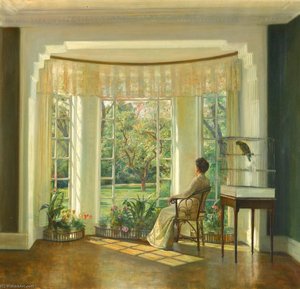
Portret Carl Holsøe

27 najpoznatijih slika umetnika Carl Holsøe, izbor iz galerije

Ažurirano: новембар 2026 · rangirano prema našem koeficijentu popularnosti (pretrage, posete i porudžbine za svako delo) · 28 dela Carl Holsøe u našem katalogu

Ukratko

Od svih originala koje je Carl Holsøe ostavio, najpoznatiji je Interior with the artist's wife sewing at the window. (1881). Odmah za njima slede Interior with the artist's wife reading a book by the window. (1881) i Interior with a Girl Sewing (1888). Naš katalog sadrži 28 dela umetnika Carl Holsøe; galerija je čuvala 27 dela koja svet najviše admira, od kojih je svako prikazano sa svojim datumom, muzejom i pričom.

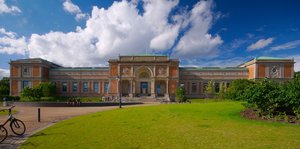
1863 – 1935, Aarhus Realism Najviše dela: Statens Museum For Kunst

Top 10 slika umetnika Carl Holsøe: izbor galerije

1
Interior with the artist's wife sewing at the window. (1881) čiji je autor Carl Holsøe
Interior with the artist's wife sewing at the window.

1881 · Oil On Canvas

Interior with the artist's wife sewing at the window. is a quiet study by Carl Holsøe, painted about 1881. The work captures a solitary moment of domestic life, focusing on a woman seated by a window, absorbed in her sewing. It is a scene that prioritizes the stillness of a room and the subtle presence of a person within a structured space.

2
Interior with the artist's wife reading a book by the window. (1881) čiji je autor Carl Holsøe

Interior with the artist's wife reading a book by the window.

1881 · Oil On Canvas

The quietude of a private moment finds its form in Interior with the artist's wife reading a book by the window., an oil on canvas painted by Carl Holsøe. Created about 1881, the work captures a stillness that feels as though it is happening right now, just as the light shifts across the room. The scene rests within the intimate confines of a domestic space, where the soft glow from…

4
Interior with Girl (1905) čiji je autor Carl Holsøe

Interior with Girl

1905 · Oil On Canvas · Bavarske državne slikopisne kolekcije, Minhen

A soft, pale light spills from a window on the far left, washing over a domestic scene that feels suspended in a moment of profound stillness. A young girl sits at a table, her form a gentle, organic curve against the rigid, rectangular lines of the room. The scene is rendered in a monochromatic palette, where every detail relies on the subtle interplay of gray, white, and deep black. There…

5
Interior from the artist's home. (1914) čiji je autor Carl Holsøe

Interior from the artist's home.

1914 · Oil On Canvas

Interior from the artist's home. is a painting by Carl Holsøe. This work was created in 1914. The artist, Carl Holsøe, was born in Aarhus, Denmark, in 1863 and died in Asserbo in 1935. His practice focused primarily on domestic interior scenes, often capturing the specific arrangement of objects and the way light occupies a room.

6
An Italian village with women at the fountain (1916) čiji je autor Carl Holsøe

An Italian village with women at the fountain

1916 · Oil On Canvas · Imago Museum, Pescara

In "An Italian village with women at the fountain" by Carl Holsøe, we find ourselves observing a quiet moment of daily life. The scene is set within a tranquil Italian village, where the composition is anchored by a stone fountain. Three women are gathered in the central courtyard, their presence providing a soft human element to the structured environment. This central gathering is framed by architectural structures on the left…

7
Self portrait (1920) čiji je autor Carl Holsøe

Self portrait

1920 · Oil On Canvas

In this 1920 self-portrait, we find the artist, Carl Holsøe, seated within the sanctuary of his studio. The composition is intentionally asymmetrical, placing the figure slightly to the right and creating a sense of lived-in space. An easel rests in the lower foreground, a subtle reminder of the creative act that has just occurred or is about to begin. The atmosphere is one of profound stillness, where the air itself…

8
Mother and Child by a window (1935) čiji je autor Carl Holsøe

Mother and Child by a window

1935 · Oil On Canvas

Soft, diffused light spills through a large window, washing the room in a gentle glow that seems to suspend time itself. Within this intimate interior, a mother and her child occupy a space of profound stillness. The scene is a quiet study of domesticity, where the weight of the world is replaced by the soft textures of fabric and the warmth of wood. The mother, dressed in dark, solid tones,…

9
Last Autumn (1935) čiji je autor Carl Holsøe

Last Autumn

1935 · Oil On Canvas

In Last Autumn by Carl Holsøe, a quietude settles over a solitary interior. Created about 1935, the scene captures a lone woman seated in a room where time seems to have paused. She faces a small wooden chest or table, her dark dress providing a sharp, heavy contrast against the pale, muted tones of her surroundings. To her side, a large, closed white door dominates the space, creating a sense…

10
Interior with Mother and Child. (1881) čiji je autor Carl Holsøe

Interior with Mother and Child.

1881 · Oil On Canvas

Interior with Mother and Child. is an oil on canvas by Carl Holsøe. Created in 1881, the work belongs to a period when the artist was developing his specific approach to domestic spaces. Holsøe was born in Aarhus, Denmark, in 1863 and remained a significant figure in Danish art until his death in Asserbo in 1935.

Izbor umetnika Carl Holsøe se nastavlja, od 11 do 27

Čuvena dela Carl Holsøe po periodima

Motivi koji su privlačili pažnju Carl Holsøe

Četiri teme koje se najčešće ponavljaju u ovim originalima, svaka sa svojim vrhunskim primerom.

Muzeji u kojima se čuvaju originalna dela umetnika Carl Holsøe

3 muzeja u kojima se nalazi najviše slika sa ove stranice.

Muzeji Grad Radovi umetnika Carl Holsøe Slike iz ovog spiska
Statens Museum For Kunst, KopenhagenStatens Museum For Kunst Kopenhagen 3 Interior with a Girl Sewing, Interior with a Girl Reading, Interior with the Artist's Wife Emilie Heise
Imago Museum, PescaraImago Museum Pescara 2 An Italian village with women at the fountain, Village in the Apennine Mountains.
Bavarske državne slikopisne kolekcije, MinhenBavarske državne slikopisne kolekcije Minhen 1 Interior with Girl

Carl Holsøe deceniju po deceniju: original koji definiše svaku od njih

Radovi po decenijama

Izaberite deceniju da biste videli original koji je definiše.

Pitanja kolekcionara o slikama umetnika Carl Holsøe

Po kojem delu je Carl Holsøe najpoznatiji/a?Otkrij odgovor

Interior with the artist's wife sewing at the window. (1881). Slede Interior with the artist's wife reading a book by the window. (1881) i Interior with a Girl Sewing (1888).

Koliko je godina imao/la Carl Holsøe kada je nastalo delo Interior with the artist's wife sewing at the window.?Otkrij odgovor

18 godina: Interior with the artist's wife sewing at the window. datira iz 1881, a Carl Holsøe je rođen/a 1863.

Koja su deset najpoznatijih slika umetnika Carl Holsøe?Otkrij odgovor

Interior with the artist's wife sewing at the window., Interior with the artist's wife reading a book by the window., Interior with a Girl Sewing, Interior with Girl, Interior from the artist's home., An Italian village with women at the fountain, Self portrait, Mother and Child by a window, Last Autumn i Interior with Mother and Child.. Gornji rang pokazuje godinu i muzej za svako od njih.

Koliko je slika ostavio Carl Holsøe?Otkrij odgovor

Naš katalog sadrži 28 dela umetnika Carl Holsøe, datiranih od 1881 do 1935.

U kojim muzejima se nalaze remek-dela umetnika Carl Holsøe?Otkrij odgovor

Većinom u Statens Museum For Kunst (Kopenhagen), Imago Museum (Pescara) i Bavarske državne slikopisne kolekcije (Minhen). Tabela muzeja iznad sadrži njih sve.

U kojim godinama je Carl Holsøe naslikao svoja najpoznatija dela?Otkrij odgovor

U 1880s: 5 od 27 dela na ovoj stranici nastalo je tada, od čega je Interior with the artist's wife sewing at the window..

Koja su prva i poslednja čuvena originalna dela umetnika Carl Holsøe?Otkrij odgovor

Na ovoj stranici, najstarije delo je iz Interior with the artist's wife sewing at the window. (1881), a najnovije iz Mother and Child by a window (1935).

Koje je motive Carl Holsøe najčešće birao/la?Otkrij odgovor

Woman (15), Window (13) i Table (13), kroz svih 27 dela na ovoj stranici.

Koju je tehniku najčešće koristio/la Carl Holsøe?Otkrij odgovor

Oil On Canvas, za 19 od 27 dela na ovoj stranici.

Kojem umetničkom pravcu pripada Carl Holsøe?Otkrij odgovor

Realism, sudeći po originalima na ovoj stranici.

Čija se dela umetnika Carl Holsøe nalaze u Statens Museum For Kunst?Otkrij odgovor

Interior with a Girl Sewing, Interior with a Girl Reading i Interior with the Artist's Wife Emilie Heise: Statens Museum For Kunst, Kopenhagen čuva 3 dela sa ove stranice.

Carl Holsøe: život i delo

Arhitekta tišine: Život i nasleđe umetnika Carl Holsøe

Carl Vilhelm Holsøe (1863–1935) ostaje jedan od najemotivnijih glasova danske umetnosti, majstor onog tišog trenutka koji je transformisao svakodnevne okvire domaćinstva u duboke meditacije o svetlosti i prostoru. Rođen u Arhusu u porodici duboko ukorenjenoj u arhitektonskoj tradiciji, Carl Holsøe je od najranijih godina posedovao urođeno razumevanje za strukturnu harmoniju. Kao sin cenjenog arhitekte N.P.C. Holsøe, njegov pogled je prirodno bio usmeren ka logici linija, težini senki i načinu na koji prostor „diše“. Ovo rano uranjanje u geometriju građevina pružilo je tihu osnovu umetničkoj viziji koja će na kraju dati prednost atmosferskoj duši enterijera ispred njegovog čistog fizičkog sadržaja.

Njegov formalni put kroz Kraljevsku dansku akademiju lepih umetnosti u Kopenhagenu i škole Kunstnernes Frie Studieskoler doveo ga je pod mentorstvo velikana kao što je Peder Severin Krøyer. Dok su ga te studije utemeljili u tehničkoj briljantnosti impresionizma, Holsøe-ovo srce je težilo ka kontemplativnijem realizmu. Pronašao je duboku inspiraciju u holandskim majstorima, posebno u prosvetljenoj tišini koju je ostavio Johannes Vermeer i dramatičnom chiaroscuro-u Rembrandta. Od njih je naučio da jedan jedini snop svetlosti koji pada preko drvenog poda može nositi istu emocionalnu težinu kao i veličepostni istorijski ep.

Majstorstvo svetlosti i unutrašnjosti

Holsøe i njegovi savremenici često su istraživali granice domovinskog sfere, ali Holsøe-ov pristup je bio jedinstveno odlikovan promišljenim suzdržanošću. Njegov proboj na Decemberskoj izložbi u Charlottenborgu 1886. godine, sa delom pod naslovom Enterijer, kritičari su proglasili za delo koje ima „skoro karakter manifesta“. To je označilo dolazak umetnika kojem nisu bili potrebni grandiozni gestovi da bi privukao pažnju; umesto toga, koristio je pedantnu, gotovo arhitektonsku preciznost kako bi uhvatio suptilne promene svetlosti i mir usamljenosti.

Njegova tehnika bila je delikatan balans disciplinovanog poteza četkicom i atmosferskog senzibiliteta. U njegovim najslavnijim delima, kao što su Devojka u enterijeru ili Sunčano osvetljen enterijer, posmatrač je pozvan u svet gde se vreme čini suspendovanim. Postoji duboki osećaj nepomičnosti, često postignut kroz prigušenu paletu koja naglašava teksturu i ton iznad živopisne boje. Ovo majstorstvo mu je omogućilo da uzdigne jednostavne domaće scene—ženu koja čita, suncem okupani ugao ili tih hodnik—u duhovna iskustva. Njegov česti model i supruga, Emilie Heise, često je krasila ova platna, pružajući ljudsku toplinu inače strogim i strukturiranim okruženjima koja je stvarao.

Priznanja i istorijski značaj

Tokom svoje plodne karijere, Holsøe je bio stalno prisutan na danskoj umetničkoj sceni, redovno izlažući na prolećnim i jesenjim izložbama u Charlottenborgu. Njegov talenat je priznat prestižnim priznanjima, uključujući godišnju akademijsku medalju 1901. i 1908. godine, kao i zlatnu medalju u Minhenu 1891. godine. Pored njegovih individualnih dostignuća, bio je vitalni deo umetničkog tkiva svog doba, održavajući prijateljstva sa drugim titanima danske slikarstva, kao što je Vilhelm Hammershøi. Zaista, slično kao Hammershøi, Holsøe-ovo delo zauzima prostor gde se domovinsko i metafizičko prepliću, čineći ga kamenom temeljcem skandinavskog slikarstva enterijera.

Trajna značajnost Carl Holsøe leži u njegovoj sposobnosti da pronađe izuzetno u običnom. On nije samo slikao sobe; on je slikao osećaj boravka u njima—usamljenost, mir i prolaznu lepotu koja prolazi kroz popodne. Njegovo nasleđe nastavlja da odjekuje u svakome ko pronađe lepotu u tihim uglovima sveta, dokazujući da se najdublje priče često pričaju šapatom, a ne vikanjem.