Portret Antonio Zucchi

87 najpoznatijih slika umetnika Antonio Zucchi, izbor iz galerije

Ažurirano: новембар 2026 · rangirano prema našem koeficijentu popularnosti (pretrage, posete i porudžbine za svako delo) · 101 dela Antonio Zucchi u našem katalogu

Ukratko

Od svih originala koje je Antonio Zucchi ostavio, najpoznatiji je A Putto Being Woken from Sleep by Tickling of His Nose (1770), koji se nalazi u kolekciji Nostell Priory, Wakefield. Odmah za njima slede James Adam, 1732 - 1794. Architect and designer (1763) i Landscape with a Bridge and Ruins with Peasants Fishing (a set of six decorative wall panels) (1781). Naš katalog sadrži 101 dela umetnika Antonio Zucchi; galerija je čuvala 87 dela koja svet najviše admira, od kojih je svako prikazano sa svojim datumom, muzejom i pričom.

1726 – 1795, Венеција Neoclassical style Najviše dela: Nostell Priory

Top 10 slika umetnika Antonio Zucchi: izbor galerije

1
A Putto Being Woken from Sleep by Tickling of His Nose (1770) čiji je Antonio Zucchi

A Putto Being Woken from Sleep by Tickling of His Nose

1770 · Oil · Nostell Priory, Wakefield

We find ourselves before A Putto Being Woken from Sleep by Tickling of His Nose, a work by the Venetian painter Antonio Zucchi. This piece dates to about 1770, a period when Zucchi was establishing his presence within the English artistic landscape. The painting is currently held within the Nostell Priory collection, where it has been preserved as part of their significant holdings.

2
James Adam, 1732 - 1794. Architect and designer (1763) čiji je Antonio Zucchi

James Adam, 1732 - 1794. Architect and designer

1763 · Oil On Canvas · Scottish National Portrait Gallery, Edinburg

In this portrait, James Adam, 1732 - 1794. Architect and designer, meets the viewer through the brush of Antonio Zucchi. The scene unfolds in Rome, captured during the subject's Grand Tour of Italy in 1763. Here, the youngest member of a prominent dynasty of Scottish architects appears not merely as a man, but as a central figure in the unfolding Neoclassical movement. He carries the weight of his profession with…

3
Landscape with a Bridge and Ruins with Peasants Fishing (a set of six decorative wall panels) (1781) čiji je Antonio Zucchi

Landscape with a Bridge and Ruins with Peasants Fishing (a set of six decorative wall panels)

1781 · Oil On Canvas · National Trust, Plymouth

Antonio Zucchi’s “Landscape with a Bridge and Ruins with Peasants Fishing,” painted in 1781, is more than just a picturesque scene; it’s a poignant meditation on time, memory, and the enduring relationship between humanity and nature. This captivating work, originally conceived as one of a set of decorative wall panels, transports us to an idealized Italian countryside where classical grandeur meets rustic simplicity. The eye is immediately drawn to the…

4
Nymphs garlanding Cupid (1774) čiji je Antonio Zucchi

Nymphs garlanding Cupid

1774 · Oil · Nostell Priory, Wakefield

This work, titled Nymphs garlanding Cupid, is an oil painting by the Italian painter and printmaker Antonio Zucchi. Created about 1774, the piece presents a mythological scene set within a sun-drenched woodland. The composition focuses on a central group of figures, including several nymphs and a small, nude Cupid, captured in a moment of celebration.

6
Hector and Andromache (1773) čiji je Antonio Zucchi

Hector and Andromache

1773 · Oil On Canvas · Nostell Priory, Wakefield

In Hector and Andromache, Antonio Zucchi captures a heavy moment of farewell and reunion. A muscular warrior, clad in a helmet, pulls a woman into a tight embrace. She holds a small baby against her, a fragile weight amidst the tension of the scene. They are framed by the skeletal remains of Roman architecture, where weathered stone walls and broken arches rise into the shadows. In the distance, other figures…

7
Three dancing nymphs and a reclining cupid in a landscape (1772) čiji je Antonio Zucchi

Three dancing nymphs and a reclining cupid in a landscape

The forest breathes with a quiet, rhythmic energy as three women move through the dappled light. They are caught in a moment of pure, unburdened motion, their bodies swaying in a synchronized grace that defies the stillness of the trees. One woman leads on the left, her pose a delicate curve against the greenery, while the central figure anchors the movement, her form a focal point of light and motion.…

8
Jurisprudence (1769) čiji je Antonio Zucchi

Jurisprudence

1769 · Oil · English Heritage, London

In the quiet, commanding presence of Antonio Zucchi’s Jurisprudence, we encounter more than a mere portrait; we enter a realm where personified virtue meets classical grandeur. Painted in 1769, this exquisite work serves as a profound meditation on the nature of law, wisdom, and authority. The composition centers upon a regal woman, seated with a poised grace that suggests both accessibility and an impenetrable intellect. As she sits with her…

9
The Four Continents America (1777) čiji je Antonio Zucchi

The Four Continents America

1777 · Painting · National Trust, Derby

To gaze upon this magnificent piece is to step directly into the vibrant heart of Enlightenment-era global ambition. The Four Continents America, executed in 1777 by Antonio Zucchi, is far more than a mere depiction of people; it is a sweeping, allegorical testament to human connection, exploration, and the perceived organization of the known world at the close of the eighteenth century. The composition immediately draws the eye to the…

10
Mathematics (1769) čiji je Antonio Zucchi

Mathematics

1769 · Oil On Canvas · English Heritage, London

In "Mathematics," Antonio Zucchi presents a scene where intellect and grace meet in a quiet, suspended moment. Completed in 1769, the painting centers on a woman seated upon an easel-like structure. She exists in a state of profound contemplation, her gaze directed upwards toward an unseen height, as if she is tracing the very logic of the heavens. This upward look suggests a mind reaching beyond the physical realm to…

Izbor umetnika Antonio Zucchi se nastavlja, od 11 do 87

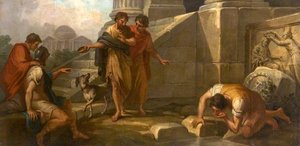
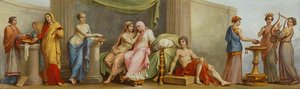
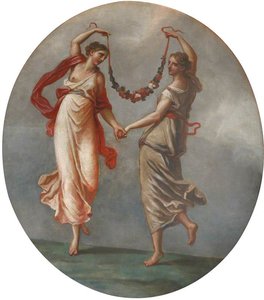
11The Four Continents Europe (1777) čiji je Antonio ZucchiThe Four Continents Europe1777 · National Trust 12Winter (1769) čiji je Antonio ZucchiWinter1769 · English Heritage 13Chloe Playing the Lyre to Daphnis (or Sappho and Anacreon) (1776) čiji je Antonio ZucchiChloe Playing the Lyre to Daphnis (or Sappho and Anacreon)1776 · Nostell Priory 14The Four Continents Asia (1777) čiji je Antonio ZucchiThe Four Continents Asia1777 · National Trust 15The Four Continents Africa (1777) čiji je Antonio ZucchiThe Four Continents Africa1777 · National Trust 16Diogenes Casting Away His Wooden Bowl as a Superfluity, on Seeing a Youth Drinking from His Hand (a set of three decorative wall panels) (1768) čiji je Antonio ZucchiDiogenes Casting Away His Wooden Bowl as a Superfluity, on Seeing a Youth Drinking from His Hand (a set of three decorative wall panels)1768 · National Trust 17Theology (1769) čiji je Antonio ZucchiTheology1769 · English Heritage 18Ruins of Classical Baths with Nymphs Bathing (a set of six decorative wall panels) (1781) čiji je Antonio ZucchiRuins of Classical Baths with Nymphs Bathing (a set of six decorative wall panels)1781 · National Trust 19A Bacchanal (1769) čiji je Antonio ZucchiA Bacchanal1769 · English Heritage 20Minerva among the Arts (1769) čiji je Antonio ZucchiMinerva among the Arts1769 · English Heritage 21Sappho Giving Anacreon a Feather from Cupid's Wing (1770) čiji je Antonio ZucchiSappho Giving Anacreon a Feather from Cupid's Wing1770 · Nostell Priory 22Capriccio of Figures Dancing amongst Classical Ruins, with a Statue of the Rape of Proserpine (1775) čiji je Antonio ZucchiCapriccio of Figures Dancing amongst Classical Ruins, with a Statue of the Rape of Proserpine1775 · Nostell Priory 23Commerce (1769) čiji je Antonio ZucchiCommerce1769 · English Heritage 24The Rape of Europa (1769) čiji je Antonio ZucchiThe Rape of Europa1769 · English Heritage 25Apollo and the Muses (1767) čiji je Antonio ZucchiApollo and the Muses1767 · Nostell Priory 26Capriccio of Figures Dancing amongst Classical Ruins, with a Ruined Arch (1775) čiji je Antonio ZucchiCapriccio of Figures Dancing amongst Classical Ruins, with a Ruined Arch1775 · Nostell Priory 27The Aldobrandini Marriage (1769) čiji je Antonio ZucchiThe Aldobrandini Marriage1769 · English Heritage 28Navigation (1769) čiji je Antonio ZucchiNavigation1769 · English Heritage 29Justice Embracing Peace (1769) čiji je Antonio ZucchiJustice Embracing Peace1769 · English Heritage 30Bacchantes (5 of 6 ovals) (1773) čiji je Antonio ZucchiBacchantes (5 of 6 ovals)1773 · English Heritage 31Homer Crowned as Poet Laureate (1767) čiji je Antonio ZucchiHomer Crowned as Poet Laureate1767 · Nostell Priory 32Agriculture (1769) čiji je Antonio ZucchiAgriculture1769 · English Heritage 33Bacchantes (2 of 6 ovals) (1773) čiji je Antonio ZucchiBacchantes (2 of 6 ovals)1773 · English Heritage 34Dido and Aeneas ( ) (1773) čiji je Antonio ZucchiDido and Aeneas ( )1773 · Nostell Priory 35An Unidentified Classical Subject A Fight (1767) čiji je Antonio ZucchiAn Unidentified Classical Subject A Fight1767 · Nostell Priory 36Putti Making Music (1770) čiji je Antonio ZucchiPutti Making Music1770 · Nostell Priory 37The Infant Hercules (1769) čiji je Antonio ZucchiThe Infant Hercules1769 · English Heritage 38Anacreon Sacrificing to the Three Graces (1770) čiji je Antonio ZucchiAnacreon Sacrificing to the Three Graces1770 · Nostell Priory 39Bacchantes (4 of 6 ovals) (1773) čiji je Antonio ZucchiBacchantes (4 of 6 ovals)1773 · English Heritage 40Bacchantes (3 of 6 ovals) (1773) čiji je Antonio ZucchiBacchantes (3 of 6 ovals)1773 · English Heritage 41Bacchantes (1 of 6 ovals) (1773) čiji je Antonio ZucchiBacchantes (1 of 6 ovals)1773 · English Heritage 42Putti Fishing (1770) čiji je Antonio ZucchiPutti Fishing1770 · Nostell Priory 43An Epithalium (1769) čiji je Antonio ZucchiAn Epithalium1769 · English Heritage 44An Unidentified Classical Subject A Quarrel over a Dead Ass (1767) čiji je Antonio ZucchiAn Unidentified Classical Subject A Quarrel over a Dead Ass1767 · Nostell Priory 45Putti with a Bird (1770) čiji je Antonio ZucchiPutti with a Bird1770 · Nostell Priory 46Putti with a Dog (1770) čiji je Antonio ZucchiPutti with a Dog1770 · Nostell Priory 47Socrates Drinking the Hemlock (1767) čiji je Antonio ZucchiSocrates Drinking the Hemlock1767 48Wisdom (Prudence) and Temperance (1767) čiji je Antonio ZucchiWisdom (Prudence) and Temperance1767 · Nostell Priory 49Rinaldo and Armida (1773) čiji je Antonio ZucchiRinaldo and Armida1773 · Nostell Priory 50A Greek Philosopher and His Disciples (1767) čiji je Antonio ZucchiA Greek Philosopher and His Disciples1767 · Nostell Priory 51Justice and Strength (Fortitude) (1767) čiji je Antonio ZucchiJustice and Strength (Fortitude)1767 · Nostell Priory 52Minerva Presenting the Personifications of the Arts of Painting, Gardening, Sculpture and Architecture to Britannia (1767) čiji je Antonio ZucchiMinerva Presenting the Personifications of the Arts of Painting, Gardening, Sculpture and Architecture to Britannia1767 · Nostell Priory 53Putti with a Garland of Flowers (1770) čiji je Antonio ZucchiPutti with a Garland of Flowers1770 · Nostell Priory 54The Return of Telemachus (1773) čiji je Antonio ZucchiThe Return of Telemachus1773 · Nostell Priory 55Virgil Reading the Aeneid to the Emperor Augustus, His Wife Livia and His Fainting Sister, Octavia (1767) čiji je Antonio ZucchiVirgil Reading the Aeneid to the Emperor Augustus, His Wife Livia and His Fainting Sister, Octavia1767 · Nostell Priory 56Hercules between Glory and the Passions (1769) čiji je Antonio ZucchiHercules between Glory and the Passions1769 · English Heritage 57Cupid Preparing Venus for an Amorous Encounter with Mars (1773) čiji je Antonio ZucchiCupid Preparing Venus for an Amorous Encounter with Mars1773 · Nostell Priory 58Mythological Subject with a Couple in an Embrace (1773) čiji je Antonio ZucchiMythological Subject with a Couple in an Embrace1773 · Nostell Priory 59Bacchus and Ceres (1773) čiji je Antonio ZucchiBacchus and Ceres1773 · English Heritage 60Aristippus and His Companions after Being Shipwrecked, Seeing Mathematical Diagrams, Realise the Land Was Inhabited (a set of three decorative wall panels) (1768) čiji je Antonio ZucchiAristippus and His Companions after Being Shipwrecked, Seeing Mathematical Diagrams, Realise the Land Was Inhabited (a set of three decorative wall panels)1768 · National Trust 61Mitellus Ordering a Marble Crow to Be Put on the Tomb of His Former Master, Diodorus Siculus (a set of three decorative wall panels) (1768) čiji je Antonio ZucchiMitellus Ordering a Marble Crow to Be Put on the Tomb of His Former Master, Diodorus Siculus (a set of three decorative wall panels)1768 · National Trust 62Catullus Comforting Lesbia over the Death of Her Pet Sparrow and Writing an Ode (1773) čiji je Antonio ZucchiCatullus Comforting Lesbia over the Death of Her Pet Sparrow and Writing an Ode1773 · Nostell Priory 63Angelica and Medoro Medoro Carving the Name of Angelica into the Trunk of a Tree (1773) čiji je Antonio ZucchiAngelica and Medoro Medoro Carving the Name of Angelica into the Trunk of a Tree1773 · Nostell Priory 64Capriccio with a Pagan Temple and a Sacrifice (1776) čiji je Antonio ZucchiCapriccio with a Pagan Temple and a Sacrifice1776 · Nostell Priory 65Capriccio with the Ruins of a Triumphal Arch and a Bridge (1776) čiji je Antonio ZucchiCapriccio with the Ruins of a Triumphal Arch and a Bridge1776 · Nostell Priory 66A Ruined Temple and Fountain with Musicians (a set of six decorative wall panels) (1781) čiji je Antonio ZucchiA Ruined Temple and Fountain with Musicians (a set of six decorative wall panels)1781 · National Trust 67Fountain with Women Washing Clothes (a set of six decorative wall panels) (1781) čiji je Antonio ZucchiFountain with Women Washing Clothes (a set of six decorative wall panels)1781 · National Trust 68Daphnis Giving an Apple to Chloe (1776) čiji je Antonio ZucchiDaphnis Giving an Apple to Chloe1776 · Nostell Priory 69Daphnis Bestowing a Garland of Flowers on Chloe (1776) čiji je Antonio ZucchiDaphnis Bestowing a Garland of Flowers on Chloe1776 · Nostell Priory 70Philetus Explaining Love to Daphnis and Chloe (1776) čiji je Antonio ZucchiPhiletus Explaining Love to Daphnis and Chloe1776 · Nostell Priory 71A Procession of Classical Figures with a Donkey and a Tambourine (a set of six decorative wall panels) (1781) čiji je Antonio ZucchiA Procession of Classical Figures with a Donkey and a Tambourine (a set of six decorative wall panels)1781 · National Trust 72Girls Dancing amid Classical Ruins (a set of six decorative wall panels) (1781) čiji je Antonio ZucchiGirls Dancing amid Classical Ruins (a set of six decorative wall panels)1781 · National Trust 73Philosophy (1769) čiji je Antonio ZucchiPhilosophy1769 · English Heritage 74Spring (1769) čiji je Antonio ZucchiSpring1769 · English Heritage 75Venus and Cupid čiji je Antonio ZucchiVenus and CupidNostell Priory 76Putto with a Personification of Chemistry čiji je Antonio ZucchiPutto with a Personification of ChemistryNostell Priory 77Putto with a Personification of Sculpture čiji je Antonio ZucchiPutto with a Personification of SculptureNostell Priory 78Putto with a Personification of Drawing čiji je Antonio ZucchiPutto with a Personification of DrawingNostell Priory 79Putto with a Personification of Architecture čiji je Antonio ZucchiPutto with a Personification of ArchitectureNostell Priory 80Putto with a Personification of Mathematics čiji je Antonio ZucchiPutto with a Personification of MathematicsNostell Priory 81Putto with a Personification of Painting čiji je Antonio ZucchiPutto with a Personification of PaintingNostell Priory 82Putto with a Personification of Poetry čiji je Antonio ZucchiPutto with a Personification of PoetryNostell Priory 83Autumn (1769) čiji je Antonio ZucchiAutumn1769 · English Heritage 84Summer (1769) čiji je Antonio ZucchiSummer1769 · English Heritage 85Баханти (6 од 6 круга) (1773) čiji je Antonio ZucchiБаханти (6 од 6 круга)1773 · English Heritage 86A Pair of Dancing Women čiji je Antonio ZucchiA Pair of Dancing WomenNational Trust 87Disarming of Cupid čiji je Antonio ZucchiDisarming of CupidThe National Trust For Scotland

Čuvena dela Antonio Zucchi po periodima

Motivi koji su privlačili pažnju Antonio Zucchi

Četiri teme koje se najčešće ponavljaju u ovim originalima, svaka sa svojim vrhunskim primerom.

Muzeji u kojima se čuvaju originalna dela umetnika Antonio Zucchi

8 muzeja u kojima se nalazi najviše slika sa ove stranice.

Muzej Grad Radovi umetnika Antonio Zucchi Slike iz ovog spiska
Nostell Priory, WakefieldNostell Priory Wakefield 43 A Putto Being Woken from Sleep by Tickling of His Nose, Nymphs garlanding Cupid, Putto with Personification of Music
English Heritage, LondonEnglish Heritage London 26 Jurisprudence, Mathematics, Winter
National Trust, PlymouthNational Trust Plymouth 9 Landscape with a Bridge and Ruins with Peasants Fishing (a set of six decorative wall panels), Diogenes Casting Away His Wooden Bowl as a Superfluity, on Seeing a Youth Drinking from His Hand (a set of three decorative wall panels), Ruins of Classical Baths with Nymphs Bathing (a set of six decorative wall panels)
National Trust, DerbyNational Trust Derby 4 The Four Continents America, The Four Continents Europe, The Four Continents Asia
Scottish National Portrait Gallery, EdinburgScottish National Portrait Gallery Edinburg 1 James Adam, 1732 - 1794. Architect and designer
Metropoliten музеј у Њујорку, ЊујоркMetropoliten музеј у Њујорку Њујорк 1 Three dancing nymphs and a reclining cupid in a landscape
National Trust, AylesburyNational Trust Aylesbury 1 A Pair of Dancing Women
The National Trust For Scotland, MayboleThe National Trust For Scotland Maybole 1 Disarming of Cupid

Antonio Zucchi deceniju po deceniju: original koji definiše svaku od njih

Radovi po decenijama

Izaberite deceniju da biste videli original koji je definiše.

Pitanja kolekcionara o slikama umetnika Antonio Zucchi

Po kojem delu je Antonio Zucchi najpoznatiji/a?Otkrij odgovor

A Putto Being Woken from Sleep by Tickling of His Nose (1770), Nostell Priory, Wakefield. Slede James Adam, 1732 - 1794. Architect and designer (1763) i Landscape with a Bridge and Ruins with Peasants Fishing (a set of six decorative wall panels) (1781).

Koliko je godina imao/la Antonio Zucchi kada je nastalo delo A Putto Being Woken from Sleep by Tickling of His Nose?Otkrij odgovor

44 godina: A Putto Being Woken from Sleep by Tickling of His Nose datira iz 1770, a Antonio Zucchi je rođen/a 1726.

Koja su deset najpoznatijih slika umetnika Antonio Zucchi?Otkrij odgovor

A Putto Being Woken from Sleep by Tickling of His Nose, James Adam, 1732 - 1794. Architect and designer, Landscape with a Bridge and Ruins with Peasants Fishing (a set of six decorative wall panels), Nymphs garlanding Cupid, Putto with Personification of Music, Hector and Andromache, Three dancing nymphs and a reclining cupid in a landscape, Jurisprudence, The Four Continents America i Mathematics. Gornji rang pokazuje godinu i muzej za svako od njih.

Koliko je slika ostavio Antonio Zucchi?Otkrij odgovor

Naš katalog sadrži 101 dela umetnika Antonio Zucchi, datiranih od 1763 do 1781.

U kojim muzejima se nalaze remek-dela umetnika Antonio Zucchi?Otkrij odgovor

Većinom u Nostell Priory (Wakefield), English Heritage (London) i National Trust (Plymouth). Tabela muzeja iznad sadrži njih sve.

U kojim godinama je Antonio Zucchi naslikao svoja najpoznatija dela?Otkrij odgovor

U 1770s: 38 od 87 dela na ovoj stranici nastalo je tada, od čega je A Putto Being Woken from Sleep by Tickling of His Nose.

Koja su prva i poslednja čuvena originalna dela umetnika Antonio Zucchi?Otkrij odgovor

Na ovoj stranici, najstarije delo je iz James Adam, 1732 - 1794. Architect and designer (1763), a najnovije iz Landscape with a Bridge and Ruins with Peasants Fishing (a set of six decorative wall panels) (1781).

Koje je motive Antonio Zucchi najčešće birao/la?Otkrij odgovor

Woman (28), People (20) i Man (13), kroz svih 87 dela na ovoj stranici.

Koju je tehniku najčešće koristio/la Antonio Zucchi?Otkrij odgovor

Oil On Canvas, za 33 od 87 dela na ovoj stranici.

Kojem umetničkom pravcu pripada Antonio Zucchi?Otkrij odgovor

Neoclassical style, sudeći po originalima na ovoj stranici.

Čija se dela umetnika Antonio Zucchi nalaze u Nostell Priory?Otkrij odgovor

A Putto Being Woken from Sleep by Tickling of His Nose, Nymphs garlanding Cupid i Putto with Personification of Music: Nostell Priory, Wakefield čuva 43 dela sa ove stranice.

Antonio Zucchi: život i delo

Frans Kos: Pionir engleskog pastela

Frans Kos (1726–1770) predstavlja ključnu figuru u uzbudljivom svetu engleskog portretizma, prepoznatljiv naročito po inovativnoj upotrebi pastela i sposobnosti da uhvati prolazne trenutke karaktera. Rođen u Londonu, prošao je kroz zanat kod Vilijama Fejtrouna, slikara poznatog po svojim teatralnim grupnim portretima, što je iskustvo nesumnjivo oblikovalo njegove rane umetničke senzibilitete. Ipak, Kos je brzo nadmašio svog učitelja, razvijajući izrazito individualni stil koji karakteriše izuzetna osetljivost na svetlost, teksturu i psihološke nijanse njegovih subjekata. Za razliku od često krute formalnosti ranijeg engleskog portretizma, Kosova dela poseduju živopisnu neposrednost, odražavajući duboku povezanost sa ličnošću modela i oštru svest o vizuelnom svetu koji ga okružuje. Njegova rana karijera bila je obeležena porudbinama istaknutih porodica, uključujući Astlije, za koje je stvorio slavno delo „Sa sedam godina, i njen brat Edvard, star pet i po godina“, nežan prikaz detinjstva i nevinosti koji ostaje jedno od njegovih najomiljenijih dela. Ova slika je primer Kosove sposobnosti da čak i naizgled jednostavne teme prožme dubokim emocionalnim odjekom. Vešto je koristio pastel — medij koji se u to vreme u Engleskoj smatrao relativno novim — kako bi postigao izvanredne efekte boje i tona, beležeći nežni rumeni sjaj kože, blistavost tkanine i suptilne gradacije svetlosti i senke. Kos nije samo replicirao izgled; on je prevodio posmatranu stvarnost na platno sa slikarskom gracioznošću koja ga je izdvajala od savremenika. Njegova upotreba labavih, ekspresivnih poteza stvarala je osećaj pokreta i vitalnosti, doprinoseći očaravajućem kvalitetu njegovih portreta.

Tehnika i uticaji

Kosova tehnička majstorija proistekla je ne samo iz njegovog urođenog talenta, već i iz pedantnog proučavanja prirode i dela drugih umetnika. Duboko je bio pod uticajem holandskih majstora, naročito Rembranta, čija je upotreba svetlosti i senke za kreiranje dramatičnih efekata vidljiva u Kosovim portretom. Takođe je divio radu Entonija van Dijka, čije je elegantne kompozicije i psihološke uvide nastojao da oponaša. Međutim, za razliku od Van Dijkovog uglađenog stila, Kos je prihvatio neformalniji pristup, često prikazujući svoje modele u opuštenim pozama i u prirodnim okruženjima. Njegova tehnika pastela dodatno je usavršena kroz eksperimentisanje sa slojevima boja i njihovim nanošenjem različitim stepenom pritiska, što mu je omogućilo da postigne zapanjujući raspon tonalnih vrednosti i tekstura. Rezultujući portreti nisu samo sličice; oni su intimne studije karaktera, prožete opipljivim osećajem života.

Značajna dela i porudžbine

Pored kultnog dela „Sa sedam godina“, Kos je stvorio značajan korpus radova koji uključuje brojne portrete pripadnika aristokratije i plemstva. Slikao je za istaknute ličnosti kao što su ser Robert Pil, lord Čarls Taunsend i ledi Meri Vortli Montagu. Njegove porudžbine često su bile vođene željom da se uhvati jedinstvena ličnost i društveni status modela, odražavajući promenljive ukuse Engleske 18. veka. Njegov rad se protezao i izvan portretizma; stvarao je pejzaže i žanrovske scene, demonstrirajući svoju svestranost kao umetnika. Kraljevska akademija, osnovana 1769. godine, prepoznala je Kosov doprinos izborom ga za jednog od svojih osnivača, učvrstivši njegovo mesto među vodećim umetnicima svog vremena.

Nasleđe i istorijski značaj

Nasleđe Fransa Kosa leži prvenstveno u njegovoj pionirskoj ulozi u razvoju engleskog slikanja pastelom. Pokazao je potencijal ovog medija za beleženje suptilnih nijansi boje i tona, postavljajući put budućim generacijama pastelista. Njegovi portreti se danas cene ne samo zbog tehničke briljantnosti, već i zbog psihološke dubine i emocionalne rezonance. Kosovo delo predstavlja pomeranje od formalnih konvencija ranijeg portretizma ka intimnijem i ekspresivnijem pristupu koji je odražavao duh prosvetiteljstva. Pamti se kao ključna figura u uspostavljanju engleskog slikarstva kao posebne i živopisne tradicije, ostavljajući neizbrisiv trag u istoriji umetnosti. Njegov uticaj se može videti u delima kasnijih umetnika koji su krenuli njegovim stazama, učvršćujući njegov položaj istinskog inovatora i majstora svog zanata.