Ukratko
Od svih originala koje je Andrea da Murano ostavio, najpoznatiji je Madonna and Child with Saint John the Evangelist (1503), koji se nalazi u kolekciji Metropoliten музеј у Њујорку, Њујорк. Odmah za njima slede \n\nPitcher and basin (1903) i Polyptych (1478). Naš katalog sadrži 6 dela umetnika Andrea da Murano; galerija je čuvala 6 dela koja svet najviše admira, od kojih je svako prikazano sa svojim datumom, muzejom i pričom.
Top 10 slika umetnika Andrea da Murano: izbor galerije
\n\nPitcher and basin
Light finds its way through the transparent walls of a pitcher and a basin. These two objects sit in a quiet arrangement, their forms defined by the way they catch the shadows. The glass is clear, revealing the hollow spaces within. A smaller bowl rests to the left, a quiet companion to the taller vessels. Everything is captured in monochrome, stripping away the distraction of color to focus on the…
Polyptych
The Polyptych is a religious work executed by the artist Andrea da Murano. Created in 1478, this multi-paneled painting functions as a religious polyptych. The composition features various saints who were traditionally venerated for their perceived miraculous powers against epidemics.
Muzeji u kojima se čuvaju originalna dela umetnika Andrea da Murano
4 muzeja u kojima se nalazi najviše slika sa ove stranice.
| Muzej | Grad | Radovi umetnika Andrea da Murano | Slike iz ovog spiska |
|---|---|---|---|
| Venecija | 2 | Polyptych, Polyptych | |
| Њујорк | 1 | Madonna and Child with Saint John the Evangelist | |
| Lisabon | 1 | \n\nPitcher and basin | |
| Detroit | 1 | The Mourning Saint John |
Andrea da Murano iz godine u godinu: originalna dela koja definišu svaku od njih
Od 1478 do 1503, Andrea da Murano je stvarao 26 godina: ovaj izbor prati tu dugogodišnju karijeru godinu po godinu, kroz njegova najlepša originalna dela.
Radovi po godinama
Izaberite godinu da biste videli originalna dela.
Polyptych
The Polyptych is a religious work executed by the artist Andrea da Murano. Created in 1478, this multi-paneled painting functions as a religious polyptych. The composition features various saints who were traditionally venerated for their perceived miraculous powers against epidemics.
Još od 1478
Pitanja kolekcionara o slikama umetnika Andrea da Murano
Po kojem delu je Andrea da Murano najpoznatiji/a?Otkrij odgovor
Madonna and Child with Saint John the Evangelist (1503), Metropoliten музеј у Њујорку, Њујорк. Slede \n\nPitcher and basin (1903) i Polyptych (1478).
Koliko je godina imao/la Andrea da Murano kada je nastalo delo Madonna and Child with Saint John the Evangelist?Otkrij odgovor
41 godina: Madonna and Child with Saint John the Evangelist datira iz 1503, a Andrea da Murano je rođen/a 1462.
Koliko je slika ostavio Andrea da Murano?Otkrij odgovor
Naš katalog sadrži 6 dela umetnika Andrea da Murano, datiranih od 1478 do 1503.
U kojim muzejima se nalaze remek-dela umetnika Andrea da Murano?Otkrij odgovor
Većinom u Gallerie dell'Accademia di Venezia (Venecija), Metropoliten музеј у Њујорку (Њујорк) i Palácio Nacional da Ajuda (Lisabon). Tabela muzeja iznad sadrži njih sve.
U kojim godinama je Andrea da Murano naslikao svoja najpoznatija dela?Otkrij odgovor
U 1478: 2 od 6 dela na ovoj stranici nastalo je tada, od čega je Polyptych.
Koja su prva i poslednja čuvena originalna dela umetnika Andrea da Murano?Otkrij odgovor
Na ovoj stranici, najstarije delo je iz Polyptych (1478), a najnovije iz Madonna and Child with Saint John the Evangelist (1503).
Čija se dela umetnika Andrea da Murano nalaze u Gallerie dell'Accademia di Venezia?Otkrij odgovor
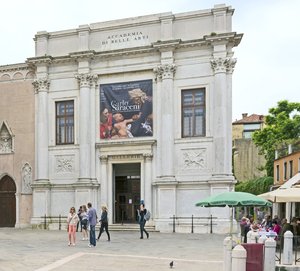
Polyptych i Polyptych: Gallerie dell'Accademia di Venezia, Venecija čuva 2 dela sa ove stranice.
Andrea da Murano: život i delo
The Venetian Dawn and a Legacy of Light
In the shimmering heart of the Venetian Renaissance, where the light of the lagoon dances upon gilded altars, the name Andrea da Murano resonates with the quiet strength of a master. Born in Venice in 1462, Andrea emerged from a lineage of profound artistic significance, inheriting a brush touched by the hand of his father, Giovanni Bellini. This ancestral connection to one of Venice’s most influential painters provided more than just technical skill; it bestowed upon him a spiritual vocation—a dedication to capturing the divine through the meticulous observation of the human form and the ethereal play of light. His early years were steeped in the traditions of his home, preparing him to become a pivotal figure in an era defined by both religious fervor and the blossoming of humanist ideals.
Collaborative Brilliance and the Vivarini Influence
The trajectory of Andrea's career was irrevocably shaped by his early encounters with the leading innovators of his time. In 1468, he was entrusted with a monumental commission for the Scuola di San Marco, working alongside the talented Bartolomeo Vivarini. This collaboration served as a vital crucible for his developing style, exposing him to Vivarini’s mastery of luminous hues and dynamic spatial arrangements. Through this partnership, Andrea learned to navigate the complexities of large-scale religious decorations, absorbing a sense of movement and color that would become hallmarks of his own oeuvre. The prestige of the Scuola di San Marco project solidified his reputation within the competitive Venetian artistic circles, marking him as a rising talent capable of profound execution.
The Studio at Santa Maria Formosa
By 1472, Andrea had established a distinct presence in the neighborhood of Santa Maria Formosa, operating a studio alongside his brother, the engraver Girolamo. This collaborative environment was more than a mere workshop; it was an intellectual sanctuary where the currents of Renaissance Humanism converged. Within these walls, Andrea engaged with the profound shifts of his era, drawing inspiration from the geometric precision of Piero della Francesca and the striking realism of Antonello da Messina. His work began to reflect a deep commitment to portraying human emotion with an unprecedented realism, blending the spiritual grandeur of his Bellini heritage with a burgeoning interest in the complexities of the individual experience. This period of development allowed him to refine the techniques that would define his later, more mature works.
A Master of the Polyptych
The true essence of Andrea’s mastery is perhaps most vividly captured in his polyptychs—complex, multi-paneled religious works that demand both technical precision and narrative depth. A stunning example from 1478 showcases his ability to weave together disparate scenes into a cohesive theological tapestry, utilizing tempera on panel to create textures that feel almost tactile. His altarpieces, such as those created for the church of Santa Maria di Trebaseleghe in Treviso, stand as testaments to a life dedicated to the service of faith and art. Though his journey concluded in 1512, the echoes of his luminous palettes and emotive figures continue to illuminate the history of the Venetian Renaissance, leaving behind a legacy of spiritual grandeur and artistic innovation.