The Florentine Cradle: Setting the Stage for Renaissance Innovation
The story of the Early Renaissance is inextricably linked to Florence, a city that, by the 14th century, had blossomed into a vibrant hub of commerce, finance, and intellectual curiosity. Unlike other European centers grappling with the aftermath of plague and political instability, Florence possessed an unusual confluence of wealth, civic pride, and a burgeoning merchant class eager to demonstrate their status through patronage of the arts. This wasn’t merely about ostentation; it was a calculated investment in prestige, a visual articulation of Florentine power and sophistication. The city's geographical position – nestled within the Arno valley and strategically located along major trade routes – facilitated an exchange not only of goods but also of ideas. The very fabric of Florentine life, from its powerful guilds to its competitive families, fostered an environment ripe for artistic experimentation. Before the grand masterpieces we now associate with the Renaissance, Florence was a city teeming with skilled artisans working in traditional styles, laying the groundwork for the revolutionary changes that were about to unfold.
Humanism's Ascent: A New Focus on Man and the Classical World
Humanism is a philosophical stance that emphasizes the individual and social potential, and agency of human beings, whom it considers the starting point for serious moral and philosophical inquiry. The meaning of the term "humanism" has changed accor...
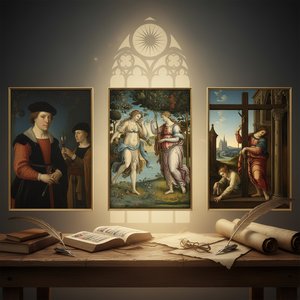
Central to understanding the shift in artistic sensibilities during the Early Renaissance is the rise of Humanism. This philosophical stance wasn’t a rejection of faith, but rather a re-evaluation of humanity’s place within the cosmos. Scholars rediscovered classical texts – works by Plato, Aristotle, Cicero, and Vitruvius – igniting a passion for ancient Greek and Roman thought. These writings emphasized human potential, reason, and civic virtue, prompting artists to move away from purely religious iconography towards depictions that celebrated the beauty and dignity of the individual. The rediscovery of perspective, rooted in classical mathematical principles, became a powerful tool for achieving realism and creating a sense of depth previously unseen in Western art. This wasn’t simply about technical skill; it was an attempt to understand and represent the world with greater accuracy and intellectual rigor. The human form, no longer solely symbolic, became a subject worthy of meticulous study and celebration – a testament to God's creation, yes, but also a reflection of humanity’s inherent worth.
Revolutionizing Representation: Masaccio, Perspective, and Naturalism in Painting
The impact of Humanist ideals is perhaps most vividly illustrated by the work of Masaccio. His frescoes, particularly those in the Brancacci Chapel, represent a watershed moment in Renaissance painting. Before Masaccio, figures often appeared flat and stylized, lacking a convincing sense of volume or spatial relationships. Masaccio’s “Holy Trinity”, for example, demonstrates a masterful understanding of linear perspective, creating an illusionistic depth that draws the viewer into the scene. He employed *chiaroscuro* – the dramatic use of light and shadow – to sculpt his figures with remarkable realism, imbuing them with weight and presence. This wasn’t merely about replicating reality; it was about conveying emotion and psychological depth. His figures are not ethereal beings but grounded individuals inhabiting a tangible world. The influence of Masaccio extended far beyond his tragically short career, shaping the course of Renaissance painting for generations to come.
Beyond Florence: The Spread of Renaissance Ideals Across Italy
Florence ( FLORR-ənss; Italian: Firenze [fiˈrɛntse] ) is the capital city of the Italian region of Tuscany. It is also the most populated city in Tuscany, with 362,353 inhabitants, and 989,460 in its metropolitan province as of 2025. Florence was a c...
While Florence served as the epicenter of the Early Renaissance, its innovations didn’t remain confined within city walls. Artists from other Italian centers – Siena, Padua, Urbino, and Rome – traveled to Florence to study the new techniques and absorb the humanist principles that were transforming artistic practice. Piero della Francesca, for instance, brought a unique mathematical precision to his paintings, blending Florentine perspective with Umbrian traditions of serene composition. Sandro Botticelli, though rooted in the Florentine style, developed a distinctive lyrical quality characterized by graceful lines and allegorical themes. The dissemination of these ideas was also facilitated by the patronage networks that extended across Italy. Powerful families like the Medici commissioned works from artists throughout the peninsula, fostering a cross-pollination of styles and techniques. The Renaissance wasn’t a monolithic movement but rather a dynamic exchange of ideas, each region contributing its own unique flavor to the evolving artistic landscape.
Patronage and Power: How Wealth Fueled Artistic Flourishing
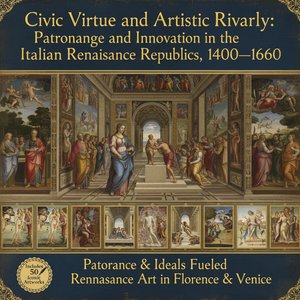
The remarkable artistic output of the Early Renaissance was inextricably linked to the patronage system. Wealthy families – most notably the Medici in Florence – commissioned artworks not only as displays of their power and piety but also as investments in their own legacy. Cosimo de’ Medici, for example, understood that art could serve as a powerful tool for shaping public perception and solidifying his family's authority. He supported artists like Donatello and Fra Angelico, commissioning works that adorned churches, palaces, and public spaces. This patronage wasn’t simply about financial support; it involved close collaboration between artist and patron, with the latter often dictating subject matter, style, and even specific details. The Church also remained a significant patron, albeit with different priorities – emphasizing religious themes and promoting its own doctrines. This complex interplay of power, wealth, and artistic ambition fueled an unprecedented period of creativity.
Lasting Legacies: The Enduring Impact of Early Renaissance Art
The innovations of the Early Renaissance—the rediscovery of perspective, the emphasis on humanism, and the pursuit of naturalism—fundamentally altered the course of Western art. Artists like Masaccio, Donatello, and Fra Angelico laid the groundwork for the High Renaissance masters – Leonardo da Vinci, Michelangelo, and Raphael – who would build upon their achievements to create some of the most iconic works in history. The focus on classical antiquity inspired a renewed interest in sculpture and architecture, leading to the creation of monumental structures that celebrated human ingenuity and civic pride. The legacy of the Early Renaissance extends far beyond the 15th century, continuing to influence artists, architects, and designers today. It reminds us of the power of art to reflect our values, shape our perceptions, and inspire generations to come. At OriginalUniqueArt.com, we are proud to offer high-quality reproductions of these masterpieces, allowing you to bring the beauty and intellectual richness of the Early Renaissance into your own home.