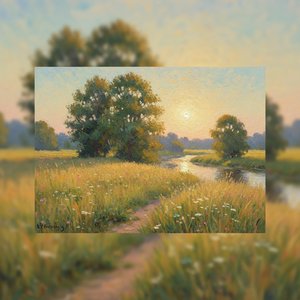
Early Life & Artistic Foundations: From California Roots to Parisian Training
 Wikipedia: Guy Rose
Guy Orlando Rose (March 3, 1867 – November 17, 1925) was an American Impressionist painter and California resident, who received national recognition in the late 19th and early 20th centuries. == Early life and education == Guy Orlando Rose was bor...
Guy Orlando Rose, born March 3, 1867, in the burgeoning landscape of San Gabriel, California, emerged from a family deeply rooted in the American West. His father, Leonard John Rose, was a prominent state senator, and the family’s expansive ranch and vineyard – lending its name to the town of Rosemead – provided a pastoral backdrop for young Guy's formative years. This early connection to the land would profoundly shape his artistic vision, imbuing his later works with a sense of place and an intimate understanding of natural light. However, a childhood accident in 1876, a hunting mishap that resulted in a facial injury, unexpectedly steered him toward art. Confined during recovery, he discovered solace and expression through sketching and watercolor painting, igniting a passion that would define his life’s trajectory.
Rose's formal artistic education began in San Francisco at the California School of Design between 1885 and 1888. Under the tutelage of Virgil Williams, Warren E. Rollins, and Emil Carlsen, he honed his technical skills, receiving accolades for both drawing and oil painting. But it was his decision to journey to Paris in September 1888 that proved pivotal. Enrolling at the prestigious Académie Julian, Rose immersed himself in the heart of the European art world, studying with luminaries like Benjamin-Constant, Jules Lefebvre, Lucien Doucet, and Jean-Paul Laurens. This period was crucial; he not only mastered academic techniques but also began to absorb the burgeoning Impressionist movement that was reshaping artistic sensibilities.
The Influence of Giverny & Monet: Shaping Rose’s Impressionistic Style
 Guy Orlando Rose
Discover Guy Orlando Rose (1867-1925), a leading American Impressionist! Explore his vibrant California landscapes & Giverny scenes, deeply influenced by Monet and plein air painting. Experience his luminous legacy!
Paris provided more than just technical training—it offered exposure. Rose's time at the Académie Delacluse, coupled with his participation in various Salon exhibitions throughout the 1890s, broadened his artistic horizons. Yet, it was his move to Giverny in 1899, alongside his wife Ethel, that truly cemented his Impressionistic style. Giverny, of course, was synonymous with Claude Monet, and Rose’s proximity to the master proved transformative. He wasn't merely a neighbor; he forged a genuine friendship with Monet, absorbing his philosophies on light, color, and *plein air* painting.
The influence is palpable in Rose’s work from this period (1904-1912). He embraced the broken brushstrokes, the emphasis on atmospheric effects, and the pursuit of capturing fleeting moments of light. However, Rose didn't simply mimic Monet; he synthesized these lessons with his own Californian sensibility, creating a unique voice within the Impressionistic landscape. His Giverny scenes are characterized by a delicate luminosity and a subtle emotional resonance that distinguishes them from their French counterparts.
California Landscapes: Capturing Light and Atmosphere in the Golden State
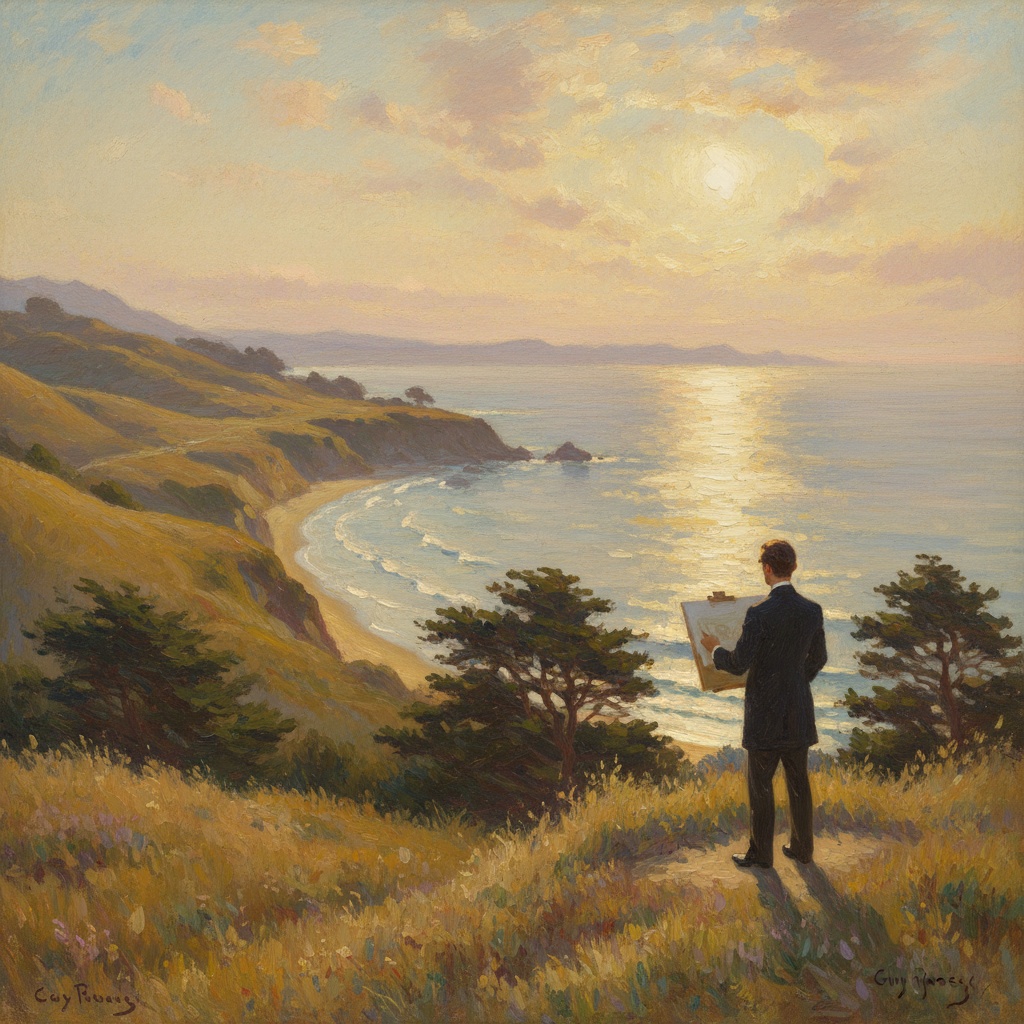
 Carmel hills, (1920)
Discover 'Carmel Hills' (1920) by Guy Rose – a stunning California landscape painting in the Impressionist style. Explore its atmospheric beauty & serene charm.
Despite his extended sojourn in France, California remained central to Rose’s artistic identity. Upon returning to the United States in 1914, he settled in Los Angeles and dedicated himself to depicting the landscapes of his native state. He found inspiration in the dramatic coastlines, rolling hills, and sun-drenched valleys of Southern California, particularly around Laguna Beach and Carmel-by-the-Sea.
Rose’s Californian paintings are notable for their vibrant color palettes and masterful handling of light. He captured the crystalline clarity of the Pacific Ocean, the dappled sunlight filtering through oak groves, and the warm hues of the coastal hills with remarkable sensitivity. Works like “Carmel Hills” (1920) exemplify this approach – a stunning depiction of atmospheric beauty and serene charm. He wasn’t simply recording what he saw; he was conveying an *experience* of California—the feeling of warmth, light, and tranquility.
Challenges and Resilience: Lead Poisoning, Illustration, and Continued Creativity
Rose's artistic journey wasn’t without its obstacles. A recurring battle with lead poisoning, stemming from the pigments used in his oil paints, periodically forced him to abandon this medium. This adversity, however, didn’t extinguish his creative spirit; instead, it led him down new avenues of expression. He and Ethel turned their talents toward illustration, becoming highly sought-after fashion artists in New York City during the 1890s.
This period honed their skills in composition and detail, qualities that would later enrich his paintings. Even after returning to California, Rose continued to balance painting with illustration, demonstrating remarkable adaptability and resilience. His ability to navigate these challenges underscores his unwavering dedication to art and his willingness to explore different creative outlets.
Legacy and Recognition: The Rediscovery of a California Master
Despite achieving national recognition in the late 19th and early 20th centuries, Guy Rose’s work experienced a period of relative obscurity for much of the latter half of the 20th century. However, recent decades have witnessed a significant resurgence of interest in his art, fueled by scholarly research and renewed appreciation for California Impressionism.
Exhibitions like the comprehensive retrospective at the Crocker Art Museum (May 9 – Oct 3, 2027) are bringing Rose’s paintings to new audiences. Publications such as “Guy Rose: American Impressionist” (1995), by Will South, have provided invaluable insights into his life and artistic development. Today, Guy Rose is rightfully recognized as a leading figure in the California Impressionist movement—a master of light, color, and atmosphere whose luminous landscapes continue to captivate and inspire. His works are not merely paintings; they are windows into a specific time and place, imbued with a sense of beauty, tranquility, and enduring artistic vision.
Discover more exceptional artworks at OriginalUniqueArt.com, where the legacy of masters like Guy Rose lives on through meticulously crafted reproductions.