Romanticism · 1905
Venice (Tomas Moran, 1905)
Tomas Moran (1837–1926) je napravio Venice. Datirano je iz 1905. Pripada pokretu Romanticism. Izrađeno je u Oil On Canvas.
- 1905
- Oil On Canvas

 Pregledaj u prostoru

 Ručno oslikano uljanim bojama
 Pošalji
 Podeli
 Informativni list


 Preuzmi
 Slični predmeti
 Rendgenski snimak
 Automatska prezentacija
 Pitanja i odgovori

 Statistika
Venice, ukratko
- Naslov
- Venice
- Umetnik
- Tomas Moran (1837–1926)
- Rođen/a u
- Болтон, Уједињено Краљевство
- Datum
- 1905
- Tehnika
- Oil On Canvas
- Pokret
- Romanticism
- Period
- 19th Century
- Tema
- venetian landscape, sunset reflections, gondola scene, bell tower view, golden light effect, coastal italy art
Šta prikazuje Venice?
Identification of the Artwork and Artist
This work, titled Venice, was painted by Thomas Moran in 1905. It offers a quiet glimpse into the Venetian landscape, capturing a specific moment of light and activity along the waterways. The artist, who was born in Bolton, United Kingdom, on February 12, 1837, brought a unique perspective to this European setting, moving away from the rugged terrains of his earlier career to focus on the atmosphere of the Italian coast. He remained active in his craft until his death in 1926.
Moran’s presence in the art world was marked by a transition from the meticulous precision of wood-engraving to a more fluid, emotive application of oil. In this particular piece, his ability to handle color and light is central to the work's character. The scene focuses on the interaction between the architecture of the city and the movement of the water, rendered with a sensitivity to the shifting qualities of the sky and its reflections.
The Composition and Visual Elements
The scene unfolds through a broadly horizontal composition, emphasizing the quiet expanse of the Venetian waterway. In the foreground, a sandy bank provides a grounded entry point to the work, where several individuals are gathered. These figures appear engaged in quiet, everyday tasks, perhaps collecting shells or fishing, which lends a sense of lived-in reality to the setting. The water itself is tranquil, reflecting the soft, golden light of a sunset that bathes the entire landscape in warm hues.
Moving into the middle ground, several gondolas drift across the surface, their dark forms cutting through the shimmering reflections. These boats, occupied by various figures, add a rhythmic movement to the water without disturbing its inherent peace. The architecture of the city lines the edges of the canal, providing a structured boundary to the liquid path. In the distance, a prominent campanile rises above the rooftops, anchoring the composition and providing a sense of vertical depth against the low horizon.
The arrangement of elements creates a deep perspective, drawing the eye from the active shoreline toward the softer, hazy details of the distant cityscape. The interplay of light and shadow is central here, as the setting sun casts long shadows and illuminates the textures of the water and stone. It is a study of atmosphere and the quietude of Venetian life at dusk.
Technique and Artistic Style
The work is executed in oil, utilizing a technique that leans toward Romanticism. Moran employs loose brushwork to define the movement of the water and the soft edges of the distant architecture. These fluid and expressive lines allow the forms of the gondolas and the buildings to merge subtly with the surrounding atmosphere. There is a palpable sense of air and light, achieved through a sophisticated use of atmospheric perspective that recedes into the distance.
The lighting is central to the composition, casting a strong sunset glow across the scene. This warmth illuminates the water's surface and the sandy bank in the foreground, creating long shadows that anchor the figures and boats within the landscape. The interplay of this golden light with the organic shapes of the canal creates a quiet, luminous presence. The texture of the paint is visible, lending a physical depth to the depiction of the Venetian waterway.
Related Works by Thomas Moran
Moran’s fascination with the Venetian landscape is evident through several other studies of the city. He captured the movement of the canals in The Gate of Venice in 1895, a work that focuses on the rhythm of gondolas and the activity of people within the waterways. His interest in the city's atmosphere also led him to explore its nocturnal character. In 1898, he produced Moonlight in Venice, which examines the interplay between light and shadow under a lunar glow, and he also painted Venice during that same year.
The artist continued to return to these maritime settings, later producing Grand Canal, Venice in 1906. These various iterations show a persistent preoccupation with how light settles upon the liquid surfaces and the stone architecture of the Adriatic. His approach to the subject matter shifted between the lively, active scenes of the canals and more quiet, contemplative studies of the water and its reflections.
Slike visoke rezolucije za Venice
Tomas Moran, Venice (1905). Javno dobro.
Odgovori na pitanja o Venice
Kada je nastalo delo „Venice”, autor Tomas Moran?
Delo „Venice”, autor Tomas Moran datira iz 1905. godine.
Kojom tehnikom je izrađeno "Venice"?
"Venice" je urađeno u tehnici Oil On Canvas.
Šta predstavlja delo "Venice"?
Teme prisutne u delu „Venice”, autor Tomas Moran obuhvataju venetian landscape, sunset reflections, gondola scene, bell tower view, golden light effect, coastal italy art, romantic venice, što zajedno sažima suštinu ovog umetničkog dela.
Da li je delo „Venice”, autor Tomas Moran u javnom vlasništvu?
Status autorskih prava za „Venice”, autor Tomas Moran: delo je u javnom vlasništvu – autorska prava su istekla. Ovo određuje da li se reprodukcije slike mogu slobodno izrađivati.
Ko je autor dela "Venice"?
Delo "Venice" je kreirao/la Tomas Moran. Informacije na ovoj stranici opisuju originalno delo umetnika Tomas Moran.
Koji umetnički pravac pripada delu "Venice"?
„Venice”, autor Tomas Moran pripada pravcu Romanticism. Ovaj pravac pruža stilski kontekst dela.
U kojoj fazi stvaralaštva umetnika Tomas Moran se nalazi delo "Venice"?
„Venice“ pripada Mature Period u karijeri umetnika Tomas Moran. Ova klasifikacija povezuje delo sa razvojem samog umetnika.
Koliko je godina imao/la Tomas Moran kada je stvorio/la "Venice"?
Kada je delo "Venice" nastalo 1905. godine, Tomas Moran – rođen/a 1837. godine – imao/la je 68 godina.
Da li je delo "Venice" autora Tomas Moran u javnom vlasništvu i zašto?
"Venice" autora Tomas Moran je u u javnom vlasništvu – autorska prava su istekla. Autorska prava se računaju od godine smrti umetnika, a Tomas Moran je preminuo/la 1926.
O umetniku, Tomas Moran

1837–1926, Уједињено Краљевство
Tomas Moran
Rani život, porodica i umetničko obrazovanje Bolton u Lankširu, u Engleskoj, predstavlja mesto gde je 12. februara 1837. godine došao na svet Tomas Moran. Rođen je u porodici Thomasa Morana starijeg i Mary Higson.
Takođe i Tomas Moran
 The Teton Range1897
 East Moriches1900
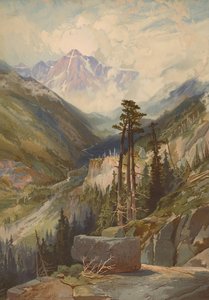 The Mountain of the Holy Cross, Colorado1876
 Fingal's Cave, Island of Staffa, Scotland1884
Eseji o delu Venice
 Masterpieces of the Dutch Golden Age: Top 25 Jan van Goyen ArtworksExplore 25 iconic Jan van Goyen masterpieces of the Dutch Golden Age. Discover the beauty of tonal landscapes on OriginalUniqueArt.com.
 Reflections of Venice: The Mastery of Canal Scene Painting from Canaletto to ImpressionismTrace the evolution of Venetian canal scenes from Canaletto to Monet. Explore this masterclass in art history now.
 20th century British paintersIconic 20th century British art from David Hockney to Henry Moore. Explore the full collection online at OriginalUniqueArt.com.