Visoka renesansa · 1507
Теолошки врхутности (Рафаел, 1507)
Рафаел (1483–1520) je napravio Теолошки врхутности. Datirano je iz 1507. Pripada pokretu Visoka renesansa. Izrađeno je u Ulje na panelu. Dimenzije su 44 × 16 cm.
- 1507
- Ulje na panelu
- 44 × 16 cm

 Pregledaj u prostoru

 Ručno oslikano uljanim bojama
 Pošalji
 Podeli
 Informativni list


 Preuzmi
 Slični predmeti
 Rendgenski snimak
 Automatska prezentacija
 Pitanja i odgovori

 Statistika
Теолошки врхутности, ukratko
- Naslov
- Теолошки врхутности
- Umetnik
- Рафаел (1483–1520)
- Rođen/a u
- Урбино, Италија
- Datum
- 1507
- Tehnika
- Ulje na panelu
- Dimenzije
- 44 × 16 cm
- Pokret
- Visoka renesansa
- Period
- Renesansa
- Tema
- теологија, вероучитице, вера, надежда, љугост, мудрост
Šta prikazuje Теолошки врхутности?
Theological Virtues: A Renaissance Masterpiece by Raphael
- Title: Theological Virtues
- Artist: Raphael (Raffaello Sanzio Da Urbino)
- Date: 1507
- Style: High Renaissance
Composition and Symbolic Representation
“Theological Virtues” is a remarkable series of four panels painted by the celebrated Italian artist Raphael. This work, created in 1507, exemplifies the artistic ideals of the High Renaissance—a period characterized by balance, harmony, and meticulous detail. Each panel embodies one of the core theological virtues: Faith, Hope, Charity, and Wisdom. Raphael masterfully populates each scene with figures that eloquently represent these abstract concepts.
The panel representing Faith features two angels alongside a depiction of Christ, symbolizing unwavering belief. The Hope panel showcases an angel holding a cross and another bearing a book, conveying the promise of salvation and knowledge. Charity is portrayed with three angelic figures, one tenderly cradling a baby—a powerful symbol of selfless love and compassion. Finally, the Wisdom panel depicts an angel holding a scroll, representing divine understanding and guidance.
Artistic Techniques and Visual Harmony
Raphael’s exceptional skill in employing light and shadow is immediately apparent. He utilizes chiaroscuro—the dramatic contrast between light and dark—to create depth and dimensionality within the composition, drawing the viewer's eye through each scene. The subtle application of sfumato softens the figures, lending them an ethereal quality and enhancing their emotional resonance.
The color palette is carefully chosen to evoke a sense of serenity and spiritual elevation. Warm tones dominate, creating a welcoming atmosphere while highlighting the divine nature of the subjects. The meticulous attention to detail in rendering fabrics, facial expressions, and anatomical forms demonstrates Raphael’s mastery of technique and his commitment to realism within an idealized framework.
Historical Context and Influence
Painted during the Cinquecento Art Movement, a period of significant cultural and artistic flourishing in Italy, "Theological Virtues" reflects the era's embrace of humanism and classical ideals. Raphael’s work embodies these values through its balanced composition, harmonious proportions, and celebration of human potential within a spiritual context.
This masterpiece has had an enduring influence on subsequent art movements. Its principles of balance and harmony inspired Neoclassicism, while his innovative use of light and shadow influenced Baroque and Impressionist artists. Raphael’s legacy continues to inspire generations of artists and art enthusiasts alike.
Emotional Impact and Enduring Appeal
“Theological Virtues” is more than just a visually stunning work; it's an emotionally resonant exploration of fundamental human values. The serene expressions on the figures’ faces, combined with Raphael’s masterful use of light and color, evoke feelings of peace, hope, and spiritual contemplation.
This painting serves as a timeless reminder of the importance of faith, hope, charity, and wisdom—qualities that remain essential to human flourishing. Its enduring appeal lies in its ability to transcend time and culture, offering viewers a glimpse into the profound beauty and meaning of the human spirit.
Slike visoke rezolucije za Теолошки врхутности

Рафаел, Теолошки врхутности (1507). Javno dobro.
Odgovori na pitanja o Теолошки врхутности
Kada je nastalo delo „Теолошки врхутности”, autor Рафаел?
„Теолошки врхутности“ potiče iz 1507. Ovaj datum smešta delo u okviru karijere umetnika Рафаел i same ere.
U kojoj je tehnici izvedeno delo „Теолошки врхутности”, autor Рафаел?
"Теолошки врхутности" je urađeno u tehnici Ulje na panelu.
Koje su stvarne dimenzije dela „Теолошки врхутности”, autor Рафаел?
Dimenzije dela „Теолошки врхутности”, autor Рафаел su 44 x 16 cm. Reprodukcije se mogu naručiti u drugim dimenzijama uz zadržavanje istih proporcija.
Šta predstavlja delo "Теолошки врхутности"?
„Теолошки врхутности”, autor Рафаел prikazuje: теологија, вероучитице, вера, надежда, љугост, мудрост, ренесанса, анђели.
Da li je "Теолошки врхутности" slobodan od autorskih prava?
Status autorskih prava za „Теолошки врхутности”, autor Рафаел: delo je u javnom vlasništvu – autorska prava su istekla. Ovo određuje da li se reprodukcije slike mogu slobodno izrađivati.
Kome se pripisuje delo "Теолошки врхутности"?
Delo "Теолошки врхутности" je kreirao/la Рафаел. Informacije na ovoj stranici opisuju originalno delo umetnika Рафаел.
Koji umetnički pravac pripada delu "Теолошки врхутности"?
Umetnički pravac koji se povezuje sa delom „Теолошки врхутности”, autor Рафаел je Visoka renesansa. Ova klasifikacija smešta rad među srodne umetnike i umetnička dela.
U kom periodu karijere Рафаел pripada delo "Теолошки врхутности"?
"Теолошки врхутности" predstavlja Зрело доба umetnika Рафаел.
Koliko je godina imao/la Рафаел kada je kreirao/la "Теолошки врхутности" 1507. godine?
Рафаел je imao/la 24 godina kada je kreirao/la "Теолошки врхутности" u 1507. Godina je izračunata na osnovu godine rođenja umetnika, 1483.
O umetniku, Рафаел

1483–1520, Италија
Рафаел
Рафаело: Легенда Изазване Светлом Рафаело Санцио да Урбино, познат свету као Рафаело, израстао је из изузетно плодне културне атмосфере. Рођен 1483. године у Урбину, малом али интелектуално живом граду-држави у централној Италији, његове прве године биле су испуњене окружењем које је ценило и умнешко вештине и хуманистичко образовање. Његов отац, Ђовани Санти, није био само сликар запослен код војводе Федерика да Монтефелтра – он је био човек дубоко ангажован у струјама ренесансног мишљења, песник који је хроничарио живот војводе и активно тражио иновативне уметничке идеје из целе Италије и шире.
Takođe i Рафаел
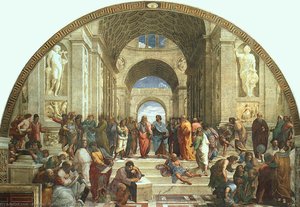 Атенска школа1511
 Систинска мадона1513
 Transfiguracija1520
 Venčanje Device Marije1504
Eseji o delu Теолошки врхутности
 Rafaela Sanzio: 25 Remek-dela Renesansnog Majstora za Vaš Dom | OriginalUniqueArtUronite u svet Rafaela Sanzija! Otkrijte 25 remek-dela renesansnog umetnika, od Madona do fresaka Vatikana. Inspiracija za dekoraciju enter…
 Illuminating Belief: Faith & Symbolism Across Art History's CanvasExplore the rich history of faith through art! Discover religious symbolism, Renaissance masterpieces & iconic artists. Expert analysis for…
 Najvešanih 10 Remeka Dela Visoke Renesanse: Umjetnost koja je Definirala EpohuOtkrijte 10 remek dela Visoke Renesanse koja su oblikovala umetnost! Leonardo, Rafael, Mikelanđelo... Istorija, tehnika i priče iza najpozn…