Post-Impressionism
Garden path (Емил Нолде)
Емил Нолде (1867–1956) je napravio Garden path. Pripada pokretu Post-Impressionism.

 Pregledaj u prostoru

 Ručno oslikano uljanim bojama
 Pošalji
 Podeli
 Informativni list


 Preuzmi
 Slični predmeti
 Rendgenski snimak
 Automatska prezentacija
 Pitanja i odgovori

 Statistika
Garden path, ukratko
- Naslov
- Garden path
- Umetnik
- Емил Нолде (1867–1956)
- Rođen/a u
- Нордел, Данска
- Pokret
- Post-Impressionism
- Tema
- vibrant flowers, impasto texture, red floral art, nature painting, german art, post-impressionism
Šta prikazuje Garden path?
A Symphony of Red: Exploring Emile Nolde’s “Garden Path”
“Garden Path” by German-Danish Expressionist painter Emile Nolde is a captivating oil painting that plunges the viewer into an intensely vibrant floral world. More than a simple depiction of flowers, this artwork is an exploration of color, texture, and emotion – a hallmark of Nolde’s unique artistic vision.Subject & Composition
The composition centers around a dense cluster of brilliantly red blossoms set against a backdrop of lush green foliage. The artist eschews precise botanical representation, instead prioritizing the *feeling* of being immersed within a flourishing garden. There's an almost overwhelming abundance conveyed through the tightly packed forms and energetic brushwork. Nolde doesn’t offer a clear “path” in the traditional sense; rather, the viewer is invited to lose themselves within the floral mass itself – a path into sensation.Style & Technique: A Post-Impressionist Force
Nolde's style firmly aligns with Post-Impressionism, and particularly echoes the expressive power of Vincent van Gogh. The painting is defined by its bold, unrestrained brushstrokes and a palpable sense of movement. Impasto – the thick application of paint – is central to the work’s impact; the surface isn't merely painted *on*, it’s built *up*, creating a nearly sculptural texture that invites tactile engagement. Lines are implied rather than explicitly drawn, contributing to a dreamlike quality and blurring the boundaries between individual forms. The flattened perspective further emphasizes this immersive experience, drawing the viewer directly into the heart of the flowers.Historical Context: A Pioneer of Expressionism
Emile Nolde (1867-1956) was a pivotal figure in early 20th-century art, and a founding member of Die Brücke (“The Bridge”), a group of German Expressionist artists. This movement sought to convey subjective emotion and inner experience rather than objective reality. Nolde’s work, along with that of his contemporaries, represented a radical departure from traditional artistic conventions. Despite facing controversy – his art was deemed “degenerate” by the Nazi regime – Nolde remained committed to his unique vision, pushing the boundaries of color and form.Symbolism & Emotional Impact
The dominant use of red is particularly significant. Red often symbolizes passion, energy, vitality, and even a fleeting moment in time. Within the context of Nolde’s work, it can also be interpreted as representing the raw power of nature and the intensity of emotional experience. The overall effect is one of exuberance and unrestrained joy, yet there's also an underlying sense of wildness and untamed energy.For Collectors & Designers
“Garden Path” offers a powerful statement piece for any collection or interior space. Its vibrant color palette and dynamic texture will inject life and energy into a room. The painting’s expressive quality lends itself well to both modern and traditional settings, adding a touch of artistic sophistication and emotional depth. A high-quality reproduction would capture the essence of Nolde's technique, bringing the vibrancy and passion of this remarkable artwork into your home or office.- Style: Post-Impressionism, Expressionism
- Materials: Oil on Canvas
- Key Features: Impasto technique, vibrant color palette, expressive brushwork, flattened perspective.
Slike visoke rezolucije za Garden path

Емил Нолде, Garden path. Javno dobro.
Odgovori na pitanja o Garden path
Šta prikazuje „Garden path”, autor Емил Нолде?
„Garden path”, autor Емил Нолде prikazuje: vibrant flowers, impasto texture, red floral art, nature painting, german art, post-impressionism, abstract blooms.
Da li je "Garden path" slobodan od autorskih prava?
Status autorskih prava za „Garden path”, autor Емил Нолде: delo je u javnom vlasništvu – autorska prava su istekla. Ovo određuje da li se reprodukcije slike mogu slobodno izrađivati.
Kome se pripisuje delo "Garden path"?
Autor dela "Garden path" je Емил Нолде. Delo je katalogizovano pod imenom Емил Нолде.
Koji umetnički pravac obuhvata „Garden path”, autor Емил Нолде?
„Garden path“ je delo Post-Impressionism pokreta. Ovaj pokret označava umetničku tradiciju kojoj je delo pripada.
U kojoj periodi karijere umetnika Емил Нолде pripada delo "Garden path"?
U okviru karijere umetnika Емил Нолде, delo "Garden path" pripada periodu Mature Period, što omogućava poređenje sa drugim radovima ovog autora.
Zašto je status autorskih prava za "Garden path" takav kakav jeste?
Status autorskih prava za delo "Garden path" - u javnom vlasništvu – autorska prava su istekla - proizilazi iz godine smrti umetnika, 1956.
Šta "Garden path" deli sa ostatkom stvaralaštva umetnika Емил Нолде?
U okviru celokupnog stvaralaštva umetnika Емил Нолде, delo "Garden path" pripada stilu Post-Impressionism, uz prisustvo tema kao što su key post-impressional work, exploration of color, emotional intensity, van gogh's brushwork, expressionist color, impressionist texture, passionate energy, fleeting beauty.
Da li je "Garden path" tipično za ono što je Емил Нолде obično stvarao?
Učestale teme umetnika Емил Нолде obuhvataju key post-impressional work, exploration of color, emotional intensity, van gogh's brushwork, expressionist color, impressionist texture, passionate energy, fleeting beauty; delo "Garden path" fokusira se na vibrant flowers, impasto texture, red floral art, nature painting, german art, post-impressionism, abstract blooms.
O umetniku, Емил Нолде
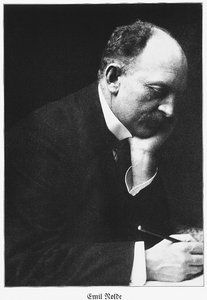
1867–1956, Данска
Емил Нолде
The Life and Identity of Emile Nolde Born Hans Emil Hansen on 7 August 1867, the man who would become known as Emile Nolde grew up near the village of Nolde in the Duchy of Schleswig. His early years were shaped by the rural, agrarian life of his family. He eventually moved away from this path, choosing instead to work as a wood carver and furniture decorator. This tactile, physical labor preceded his shift toward painting and printmaking.
Takođe i Емил Нолде
 Sunset
 Sea with Red Sky
 Couple on the beach1903
 Masks1911
Eseji o delu Garden path
 25 Masterpieces by Alexej von Jawlensky: The Soul of ExpressionismImmerse yourself in the vibrant world of Alexej von Jawlensky. Explore 25 iconic Expressionist masterpieces, from soulful portraits to bold…
 Expressionism vs. New Objectivity: Emotion vs. Precision in German ArtMaster the tension between Expressionist emotion and New Objectivity precision. Explore the soul of German modern art now.
 Amédée Masclef: Navigating Symbolism & Sentiment in Late 19th-Century French Landscape PaintingExplore the evocative landscapes of Amédée Masclef, a key figure bridging Barbizon realism & Symbolist sentiment. Discover his exquisite bo…