Škola Pariza · 1917
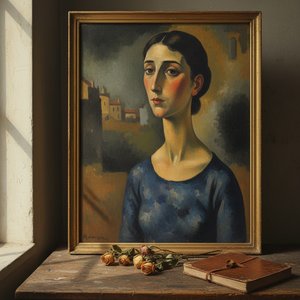
Pevačica u kafiću (Амедео Модиљани, 1917)
Амедео Модиљани (1884–1920) je napravio Pevačica u kafiću. Datirano je iz 1917. Pripada pokretu Škola Pariza. Izrađeno je u Ulje na platnu. Dimenzije su 92 × 60 cm.
- 1917
- Ulje na platnu
- 92 × 60 cm

 Pregledaj u prostoru

 Ručno oslikano uljanim bojama
 Pošalji
 Podeli
 Informativni list


 Preuzmi
 Slični predmeti
 Rendgenski snimak
 Automatska prezentacija
 Pitanja i odgovori

 Statistika
Pevačica u kafiću, ukratko
- Naslov
- Pevačica u kafiću
- Umetnik
- Амедео Модиљани (1884–1920)
- Rođen/a u
- Ливорно, Италија
- Datum
- 1917
- Tehnika
- Ulje na platnu
- Dimenzije
- 92 × 60 cm
- Pokret
- Škola Pariza
- Period
- Modernizam
- Tema
- portret, žena, pevačica, stilizovano, melanholija, apstrakcija
Šta prikazuje Pevačica u kafiću?
A Portrait of Melancholy Beauty
In the quiet, evocative realm of Amedeo Modigliani’s Cafe Singer, we encounter more than just a portrait; we enter a profound state of introspection. The painting presents a woman captured in a moment of somber stillness, her presence commanding the frame through a delicate balance of strength and vulnerability. Positioned centrally, she faces the viewer with hands clasped before her, a posture that suggests both a sense of formal restraint and a deep, internal retreat. There is an undeniable weight to her gaze—a weary, soulful quality that seems to pull the observer into her private world of contemplation. This is not merely a depiction of a performer in a cafe, but a study of the human spirit caught in a moment of quiet, beautiful isolation.
The mastery of Modigliani’s technique lies in his ability to transcend realism through stylized representation. He famously employs elongated lines to define the subject's neck and limbs, a signature aesthetic that creates an arresting, almost surreal distortion. These stretched forms lend the figure an ethereal, sculptural quality, reminiscent of the African art influences that permeated the Parisian avant-garde during his era. The composition is intentionally simplified; shapes are flattened and features are streamlined, stripping away unnecessary detail to focus entirely on the emotional essence of the subject. Through this deliberate reduction, Modigliani achieves a timelessness that allows the painting to resonate far beyond its 1917 origins.
Earthy Tones and Emotional Depth
The color palette of Cafe Singer is a masterclass in restraint, utilizing a muted spectrum of earthy tones—deep browns, mossy greens, and somber blacks. These colors do not compete for attention but rather work in harmony to reinforce the painting’s melancholic atmosphere. Subtle variations within these darker hues provide a necessary sense of depth and texture, preventing the flattened forms from appearing static. The lighting is soft and diffused, eschewing dramatic highlights for an even illumination that enhances the painting's quiet, steady mood. This lack of harsh shadow allows the viewer to linger on the subtle transitions of color, mirroring the slow, thoughtful pace of the subject’s own introspection.
For the discerning collector or interior designer, this artwork offers a sophisticated anchor for a curated space. The tactile quality suggested by the visible, organic brushstrokes adds a layer of warmth and authenticity to the piece, making it an ideal centerpiece for environments that value understated elegance and emotional resonance. Whether placed in a contemporary gallery setting or a classic study, Cafe Singer serves as a powerful symbol of the beauty found in solitude. It is a work that does not shout for attention but rather invites a slow, meaningful engagement, offering a sense of peace and profound dignity to any room it inhabits.
Slike visoke rezolucije za Pevačica u kafiću
Амедео Модиљани, Pevačica u kafiću (1917). Javno dobro.
Odgovori na pitanja o Pevačica u kafiću
U kojoj godini je nastalo "Pevačica u kafiću"?
Delo „Pevačica u kafiću”, autor Амедео Модиљани datira iz 1917. godine.
Kojom tehnikom je izrađeno "Pevačica u kafiću"?
Tehnika dela „Pevačica u kafiću”, autor Амедео Модиљани je Ulje na platnu. Reprodukcije imaju za cilj da dočaraju izgled ove tehnike.
Kolikih je dimenzija originalnog dela "Pevačica u kafiću"?
Dimenzije originalnog dela „Pevačica u kafiću”, autor Амедео Модиљани su 92 x 60 cm.
Koje su teme prikazane u delu „Pevačica u kafiću”, autor Амедео Модиљани?
Motivi dela "Pevačica u kafiću" su portret, žena, pevačica, stilizovano, melanholija, apstrakcija, italijanska umetnost, uticaj kubizma.
Da li je delo „Pevačica u kafiću”, autor Амедео Модиљани u javnom vlasništvu?
Status autorskih prava za „Pevačica u kafiću”, autor Амедео Модиљани: delo je u javnom vlasništvu – autorska prava su istekla. Ovo određuje da li se reprodukcije slike mogu slobodno izrađivati.
Kome se pripisuje delo "Pevačica u kafiću"?
Delo "Pevačica u kafiću" je kreirao/la Амедео Модиљани. Informacije na ovoj stranici opisuju originalno delo umetnika Амедео Модиљани.
Koji umetnički pravac obuhvata „Pevačica u kafiću”, autor Амедео Модиљани?
„Pevačica u kafiću“ je delo Škola Pariza pokreta. Ovaj pokret označava umetničku tradiciju kojoj je delo pripada.
U kom periodu karijere Амедео Модиљани pripada delo "Pevačica u kafiću"?
U okviru karijere umetnika Амедео Модиљани, delo "Pevačica u kafiću" pripada periodu Zrelo doba, što omogućava poređenje sa drugim radovima ovog autora.
Koliko je godina imao/la Амедео Модиљани kada je kreirao/la "Pevačica u kafiću" 1917. godine?
Амедео Модиљани je imao/la 33 godina kada je kreirao/la "Pevačica u kafiću" u 1917. Godina je izračunata na osnovu godine rođenja umetnika, 1884.
O umetniku, Амедео Модиљани

1884–1920, Италија
Амедео Модиљани
Амедео Модиљани: Душа у Линијама и Сенкама Амедео Клементе Модиљани, име које одјекује кроз историју уметности као синоним за тужну лепоту и меланхоличну грациозност, остаје једна од највољених и трагичних фигура почетка двадесетог века. Рођен у Ливорну, Италији, 1884. године, у породици дубоко укорењеној у сефардској јеврејској традицији, његов живот је обележен не само изузетном уметничком визијом, већ и сталним тешкоћама. Честа обољења пратила су га још од младости – плућна запаљење и тифус постали су непријатни сапутници – можда у њему будивши осетљивост на хрупкост која је прожета кроз све његове радове.
Takođe i Амедео Модиљани
 Crveni nude1917
 Akt sedi na divanu1917
 Портрет Жан Ебитерн1918
 Discover Modigliani’s ‘Reclining Nude.’ Explore
Reclining Nude with Blue Cushion
/en/art/amedeo-clemente-modigliani-reclining-nude-with-blue-cushion-5ZKBJP-en/
/media/artworks/images/thumbnails/04/82/04820f9858de4c2bb35194494e9cd973.jpg
Amedeo Clement
Eseji o delu Pevačica u kafiću
 Masterpieces of Modigliani: The Top 25 Essential ArtworksExplore 25 iconic Amedeo Modigliani masterpieces. Discover the soul of Expressionism and explore the full collection online at OriginalUniq…
 Capturing the Soul: An Exploration of Modigliani's Iconic Portraits and the Melancholy of ModernismDelve into the haunting beauty of Amedeo Modigliani's portraits. Explore the intersection of Expressionism and Modernism through an expert …
 25 Masterpieces by Amedeo Modigliani: The Soul of Modern PortraitureExplore 25 iconic Modigliani masterpieces and their soulful stories. Discover the full collection online at OriginalUniqueArt.com.