A Journey Through Early Medieval Spain: Unveiling Santa Maria d’Egara
Nestled in the verdant hills of Terrassa, just a short distance from Barcelona, lies Santa Maria d’Egara – a remarkably preserved architectural and artistic testament to the dawn of Christian Spain. More than simply a church, this complex represents a tangible timeline of artistic evolution, spanning the turbulent 5th to 8th centuries and offering an unparalleled glimpse into the religious and cultural landscape of Visigothic and pre-Romanesque Catalonia. It’s a place where echoes of ancient rituals mingle with the enduring power of faith, inviting visitors on a profound journey through history.
Originally established as the Episcopal seat of Egara, Santa Maria d’Egara's story is one of continuous adaptation and transformation. Initially conceived as a relatively modest structure, it evolved over centuries under the influence of shifting political alliances, religious doctrines, and architectural trends. The site’s strategic location – at the confluence of the Vallparadís stream – ensured its importance as a regional center, while its subsequent additions reflect the changing styles and ambitions of successive bishops. Today, Santa Maria d’Egara stands as a strong contender for UNESCO World Heritage status, a recognition of its exceptional historical significance and artistic value.
Architectural Layers: A Chronicle in Stone
What immediately captivates visitors to Santa Maria d’Egara is the complex's remarkable architectural layering. It’s not merely a single building but rather a carefully constructed ensemble, revealing a fascinating narrative of artistic development across several distinct periods. The earliest foundations date back to the 5th and 6th centuries, showcasing elements of Visigothic architecture – characterized by its robust construction, barrel vaults, and simple ornamentation. These early structures gradually gave way to pre-Romanesque influences, evident in the rounded arches, small windows, and a more restrained aesthetic. Later additions, particularly during the 11th and 12th centuries, demonstrate the burgeoning Romanesque style, with its emphasis on verticality, elaborate portals, and sculptural decoration.
The interplay of these styles creates a truly unique architectural experience. Walking through the church, one can trace the evolution of artistic techniques and religious symbolism over several centuries. The careful restoration efforts undertaken in recent decades have meticulously preserved these layers, allowing visitors to appreciate the rich history embedded within each stone.
Treasures of Early Medieval Art
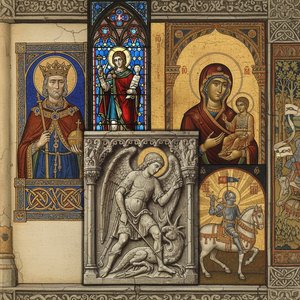
Within Santa Maria d’Egara's walls resides a collection of early medieval art that is both breathtaking and deeply moving. The museum’s centerpiece is undoubtedly its exceptional collection of frescoes, remarkably well-preserved after centuries of exposure to the elements. These vibrant murals depict scenes from the Bible, offering invaluable insights into the beliefs and artistic practices of the time. The colors – deep blues, reds, and golds – retain their intensity, transporting viewers back to a world where faith permeated every aspect of life.
Beyond the frescoes, the museum houses a remarkable array of sculptures and liturgical objects. Fragments of Visigothic sculpture, including intricately carved crosses and fragments of monumental figures, provide evidence of the region’s artistic heritage. These pieces, often imbued with symbolic meaning, reflect the complex religious beliefs of the era. The collection also includes examples of reliquaries, chalices, and other sacred vessels, showcasing the craftsmanship and artistry of medieval artisans.
Notable Artists & Masterpieces
Among the artists whose works are showcased at Santa Maria d’Egara is Jaume Huguet (1459), a prominent figure in Catalan Gothic art. His masterpiece, ‘Saints Abdon & Sennen,’ exemplifies the elegance and sophistication of the period. This 290x220cm panel painting, with its rich detail and symbolic imagery, stands as a testament to Huguet’s skill and artistic vision. The museum also features works by Alfonso de la Peña y Montenegro (1596-1687), a significant Spanish bishop and artist whose religious paintings and portraits offer further glimpses into the cultural context of the era.
Furthermore, exploring the broader historical context reveals connections to figures like Pere Antoni Ventalló i Vintró, who meticulously studied the church’s construction and restoration throughout the 20th century. His research has been instrumental in understanding the complex history of Santa Maria d’Egara and its enduring legacy.
A Unique Cultural Experience
Santa Maria d’Egara is more than just a museum; it's a portal to the past, offering visitors an immersive cultural experience unlike any other. Its exceptional collection of early medieval art, combined with its rich history and architectural significance, makes it a truly remarkable destination. It stands as a powerful reminder of Catalonia’s deep roots in Spanish Christianity and the enduring beauty of ancient artistry. A visit here is not merely sightseeing; it's an encounter with the soul of a nation.