Portrait of Théodore Géricault

The 100 Most Famous Théodore Géricault Paintings, Each One of a Kind

Updated oktober 2026 · ranked by our popularity score (searches, visits and orders for each work) · 183 works by Théodore Géricault in our catalogue

In short

Raft of the Medusa (1818) is the Théodore Géricault painting that draws the most eyes; the original belongs to the Louvre, Pariz. After it, the eye goes to Nymph and Satyr (Jupiter and Antiope) (1820) and The Oath of Brutus after the Death of Lucretia (1815). Among the 183 works of Théodore Géricault in our catalog, these 100 are the most famous, each a unique original presented with its year, its museum and the reason it endures.

1791 – 1824, Rouen Romantic painting Most works: Louvre

Top 10 paintings by Théodore Géricault, through the gallery's eye

1
Raft of the Medusa (1818) by Théodore Géricault

Raft of the Medusa

1818 · Olje na platnu · Louvre, Pariz

Život Jean-Louisa André Théodorea Gericaulta: Žarnica Romantizma Jean-Louis André Théodore Géricault je francoski slikar in grafičar, ki je postal simbol romantične umetnosti. Rojstvo v Rouenju leta 1791 ga je vodilo skozi obdobje revolucije in vzorenje Napoleonskega cesarstva. Čeprav je prejel ugledno življenje preko družinske zakonske posesti – njegov oče je bil odvetnik, ki je deloval v družbeni tobakarni Hôtel de Long – Gericaultova umetniška pot ni bila urejena po zakonitih…

2
Nymph and Satyr (Jupiter and Antiope) (1820) by Théodore Géricault

Nymph and Satyr (Jupiter and Antiope)

1820 · Acrylic On Canvas · Musée des Beaux-Arts et de la Céramique, Rouen

The Allure of the Divine Encounter: Géricault’s *Nymph and Satyr* Jean-Louis André Théodore Géricault's *Nymph and Satyr*, painted in 1819, isn’t merely a depiction of a mythological scene; it’s a profound exploration of desire, transgression, and the inherent tension between innocence and primal instinct. Born amidst the tumultuous backdrop of post-revolutionary France, Géricault, already recognized for his dramatic intensity, sought to capture not just a narrative but an emotional truth—a…

4
Lions in a Mountainous Landscape (1818) by Théodore Géricault

Lions in a Mountainous Landscape

1818 · Acrylic On Canvas · Metropolitanski muzej umetnosti, New York

This vigorous painting of six lions in a remote, spectrally illuminated lair—possibly intended to evoke the Atlas Mountains of Morocco—is an extraordinary example of Gericault’s spontaneous handling of paint. Rather than applying finishing touches to make a polished cabinet picture, the artist left the painting in a state known as an esquisse, or sketch, a work prized by fellow artists for its strength of directly capturing a subject or effect.…

5
The Kiss (1822) by Théodore Géricault

The Kiss

1822 · Acrylic On Canvas · Thyssen-Bornemisza Museum, Madrid

Théodore Géricault's "The Kiss," painted in 1816, isn’t merely a depiction of lovers entwined; it’s a visceral embodiment of the burgeoning Romantic movement’s fascination with raw emotion, dramatic intensity, and the sublime. This arresting work, housed within the Thyssen-Bornemisza Museum in Madrid, transcends simple representation to become a profound meditation on passion, vulnerability, and the very essence of human connection. Géricault, already a figure known for his unflinching portrayals of…

6
Wounded Soldiers Retrating from Russia (1814) by Théodore Géricault

Wounded Soldiers Retrating from Russia

1814 · Acrylic On Canvas · Musée des Beaux-Arts, Rouen

A Symphony of Suffering: Géricault’s “Wounded Soldiers Retrating from Russia” Jean-Louis André Théodore Géricault's "Wounded Soldiers Retrating from Russia" is not merely a painting; it’s a visceral embodiment of the horrors and human cost of war, rendered with an unprecedented level of realism and emotional intensity for its time. Completed in 1814, this monumental canvas—measuring a commanding 250 x 206 cm—captures a pivotal moment during Napoleon's disastrous invasion of Russia,…

7
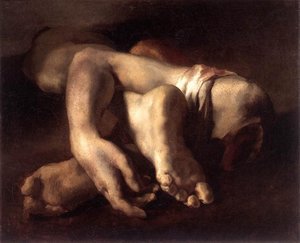
Study of Feet and Hands (1818) by Théodore Géricault

Study of Feet and Hands

1818 · Oil On Canvas · Musée Fabre, Montpellier

Jean-Louis André Théodore Géricault's "Study of Feet and Hands," painted in 1818, isn’t a grand statement of Romantic drama like his monumental “The Raft of the Medusa.” Instead, it offers a profoundly intimate glimpse into the artist’s meticulous process and a poignant meditation on the human form. This unassuming oil painting—measuring a modest 52 x 64 cm—is far more than just a preparatory sketch; it's a concentrated distillation of Géricault’s…

8
The Raft of the Medusa (detail) (1818) by Théodore Géricault

The Raft of the Medusa (detail)

1818 · Oil On Canvas · Louvre, Pariz

Jean-Louis André Théodore Géricault's "The Raft of the Medusa," a monumental detail from his 1818 painting, isn’t merely a depiction of shipwreck; it’s a visceral plunge into the depths of human suffering and political indictment. The scene, rendered with a dramatic intensity characteristic of Romanticism, captures the harrowing aftermath of the French frigate *Medusa*'s wreck off the coast of Mauritania in 1816. This disaster, largely attributed to the incompetence and…

10
The Wreck (1821) by Théodore Géricault

The Wreck

1821 · Oil On Canvas · Louvre, Pariz

Théodore Géricault's "The Wreck," painted in 1821, isn’t merely a seascape; it’s a visceral confrontation with the sublime—a raw depiction of humanity’s vulnerability against the overwhelming force of nature. Born amidst the turbulent currents of post-revolutionary France, Géricault, a figure both lauded and controversial within the burgeoning Romantic movement, channeled his own anxieties and the era's fascination with dramatic events into this monumental canvas. The painting immediately commands attention not…

Théodore Géricault's famous paintings, numbers 11 to 100

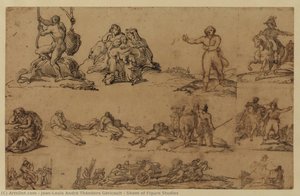
11The Horse Race (1816) by Théodore GéricaultThe Horse Race1816 · Thyssen-Bornemisza Museum 12Swiss Guard and Wounded Veteran (1819) by Théodore GéricaultSwiss Guard and Wounded Veteran1819 · Louvre 13Mazeppa (1823) by Théodore GéricaultMazeppa1823 · Château de Chantilly 14Two Horses (1809) by Théodore GéricaultTwo Horses1809 · The Phillips Collection 15A Turk (Mustapha) (1820) by Théodore GéricaultA Turk (Mustapha)1820 · Louvre 16A Carabinier with his Horse (1814) by Théodore GéricaultA Carabinier with his Horse1814 · Musée des Beaux-Arts 17Riderless Horse Races (detail) (1817) by Théodore GéricaultRiderless Horse Races (detail)1817 · Louvre 18Boxers (1818) by Théodore GéricaultBoxers1818 · Château de Chantilly 19Horse Market: Five Horses at the Stake (1816) by Théodore GéricaultHorse Market: Five Horses at the Stake1816 · Louvre 20The Epsom Derby (1821) by Théodore GéricaultThe Epsom Derby1821 · Louvre 21Mounted Trumpeters of Napoleon's Imperial Guard (1813) by Théodore GéricaultMounted Trumpeters of Napoleon's Imperial Guard1813 · National Gallery of Art 22Three Lovers (1817) by Théodore GéricaultThree Lovers1817 · J. Paul Getty Museum 23Portrait of Simon Bonnesoeur-Bourginire (1812) by Théodore GéricaultPortrait of Simon Bonnesoeur-Bourginire1812 · Minneapolis Institute of Art 24Equestrian portrait of Wincenty Krasiński. (1814) by Théodore GéricaultEquestrian portrait of Wincenty Krasiński.1814 · Narodni muzej v Varšavi 25The Wounded Cuirassier, study (1814) by Théodore GéricaultThe Wounded Cuirassier, study1814 · Brooklyn Museum 26Lion devouring a horse by Théodore GéricaultLion devouring a horseChâteau de Chantilly 27Français Étude de bras et de main realisé par Géricault por son oeuvre Le Radeau de la Méduse (1819) by Théodore GéricaultFrançais Étude de bras et de main realisé par Géricault por son oeuvre Le Radeau de la Méduse1819 28Untitled (ARJCHM) by Théodore GéricaultUntitled (ARJCHM)Louvre 29Scene from the Epidemic of Yellow Fever in Cadiz (1819) by Théodore GéricaultScene from the Epidemic of Yellow Fever in Cadiz1819 · Virginia Museum of Fine Arts 30The Raft of the Medusa, Louvre (1819) by Théodore GéricaultThe Raft of the Medusa, Louvre1819 31Head of a Drowned Man (1819) by Théodore GéricaultHead of a Drowned Man1819 32Portrait of a Young Man (1818) by Théodore GéricaultPortrait of a Young Man1818 · Minneapolis Institute of Art 33A study for a nude. (1801) by Théodore GéricaultA study for a nude.1801 · Narodni muzej v Varšavi 34Study of a Model (1818) by Théodore GéricaultStudy of a Model1818 · J. Paul Getty Museum 35The Martyrdom of Saint Peter (1814) by Théodore GéricaultThe Martyrdom of Saint Peter1814 · Kunstmuseum Basel 36The Wreck (1824) by Théodore GéricaultThe Wreck1824 · Louvre 37The Scotsman (1801) by Théodore GéricaultThe Scotsman1801 · Petit Palais 38Mater dolorosa, Copy after Ribera (1811) by Théodore GéricaultMater dolorosa, Copy after Ribera1811 · Kunstmuseum Basel 39Lion in Repose by Théodore GéricaultLion in ReposeWalters Art Museum 40Equestrian Portrait of Jérôme Bonaparte, after Antoine-Jean GROS (1813) by Théodore GéricaultEquestrian Portrait of Jérôme Bonaparte, after Antoine-Jean GROS1813 · Musée Eugène Delacroix 41Justice and Divine Vengeance Pursuing Crime (1811) by Théodore GéricaultJustice and Divine Vengeance Pursuing Crime1811 42Lying Lions (1812) by Théodore GéricaultLying Lions1812 43The Trumpeter of the Orleans Hussars (1813) by Théodore GéricaultThe Trumpeter of the Orleans Hussars1813 44The Trumpeter of the Lancers of the Guard (1813) by Théodore GéricaultThe Trumpeter of the Lancers of the Guard1813 · Burrell Collection 45The horse is out of the stable (1810) by Théodore GéricaultThe horse is out of the stable1810 · Musée Condé 46Un carabinier, vu à mi-corps (1814) by Théodore GéricaultUn carabinier, vu à mi-corps1814 47Portrait of Louise Vernet (1812) by Théodore GéricaultPortrait of Louise Vernet1812 48Head of a woundet Man (1814) by Théodore GéricaultHead of a woundet Man1814 · Wallraf-Richartz-Museum 49Untitled (ARJCJD) (1814) by Théodore GéricaultUntitled (ARJCJD)1814 50The Monomaniac of Child Abduction (1822) by Théodore GéricaultThe Monomaniac of Child Abduction1822 51Horse Race, Moving to the Right (1820) by Théodore GéricaultHorse Race, Moving to the Right1820 · Musée des Beaux-Arts de Caen 52The Raft of the Medusa (1818) by Théodore GéricaultThe Raft of the Medusa1818 53Etude d'un homme nu (Study of a Nude Man) (1817) by Théodore GéricaultEtude d'un homme nu (Study of a Nude Man)1817 · The New Art Gallery Walsall 54Mounted Jockey (1821) by Théodore GéricaultMounted Jockey1821 · Virginia Museum of Fine Arts 55Portrait of a Negro (1822) by Théodore GéricaultPortrait of a Negro1822 · Buffalo AKG Art Museum 56Portrait Study of a Youth (1819) by Théodore GéricaultPortrait Study of a Youth1819 · Kimbell Art Museum 57The White Horse Tavern (1821) by Théodore GéricaultThe White Horse Tavern1821 · Fogg Museum 58Cattle Market (1817) by Théodore GéricaultCattle Market1817 · Fogg Museum 59Fighting Horses (1820) by Théodore GéricaultFighting Horses1820 · Cleveland Museum of Art 60Wounded Soldiers in a Cart (1815) by Théodore GéricaultWounded Soldiers in a Cart1815 · Fitzwilliam Museum 61Shipwrecked on a Beach (The Tempest) (1822) by Théodore GéricaultShipwrecked on a Beach (The Tempest)1822 · Yale University Art Gallery 62Alexandre Colin (1815) by Théodore GéricaultAlexandre Colin1815 63The Raft of the Medusa (1818) by Théodore GéricaultThe Raft of the Medusa1818 64Course de Chevaux montés allant à gauche, au moment du départ (1822) by Théodore GéricaultCourse de Chevaux montés allant à gauche, au moment du départ1822 65Francisco de Moncada Marqués d'Aytona (1815) by Théodore GéricaultFrancisco de Moncada Marqués d'Aytona1815 · Amsterdam Museum 66Riderless Racers at Rome (1817) by Théodore GéricaultRiderless Racers at Rome1817 · Walters Art Museum 67Trumpeter of the Hussars (1817) by Théodore GéricaultTrumpeter of the Hussars1817 68Nude Warrior with a Spear (1816) by Théodore GéricaultNude Warrior with a Spear1816 · National Gallery of Art 69The Wild Horse Race at Rome (1817) by Théodore GéricaultThe Wild Horse Race at Rome1817 70The Raft of the Medusa, Detalj, (1819) by Théodore GéricaultThe Raft of the Medusa, Detalj,1819 71Portrait of a Negro (1800) by Théodore GéricaultPortrait of a Negro1800 · Palácio Nacional da Ajuda 72Head of a Youth (1824) by Théodore GéricaultHead of a Youth1824 · Art Gallery of South Australia 73Portrait d'homme (1825) by Théodore GéricaultPortrait d'homme1825 · Musée Fabre 74Equestrian Portrait of Charles V (1814) by Théodore GéricaultEquestrian Portrait of Charles V1814 · Fine Arts Museums of San Francisco 75Chestnut horse in a stable (1814) by Théodore GéricaultChestnut horse in a stable1814 · Cantor Arts Center na Univerzi Stanford 76Horses of the Auvergne (1822) by Théodore GéricaultHorses of the Auvergne1822 · University of Michigan Museum of Art 77A Prancing Grey Horse (1812) by Théodore GéricaultA Prancing Grey Horse1812 · Burrell Collection 78Sheet of Figure Studies (1818) by Théodore GéricaultSheet of Figure Studies1818 · Courtauld Gallery 79Portrait of an Artist in His Studio (1820) by Théodore GéricaultPortrait of an Artist in His Studio1820 · Louvre 80An Officer of the Chasseurs Commanding a Charge (1812) by Théodore GéricaultAn Officer of the Chasseurs Commanding a Charge1812 · Louvre 81Study of a nude man by Théodore GéricaultStudy of a nude manNarodni muzej v Varšavi 82The Plaster Kiln (1823) by Théodore GéricaultThe Plaster Kiln1823 · Louvre 83Officer of Chasseurs à Cheval of the Imperial Guard Charging (1812) by Théodore GéricaultOfficer of Chasseurs à Cheval of the Imperial Guard Charging1812 84Dogs Fighting Bears (1814) by Théodore GéricaultDogs Fighting Bears1814 · Foundation E.G. Bührle Collection 85Cheval gris au râtelier (1811) by Théodore GéricaultCheval gris au râtelier1811 86Untitled (ARJCGT) (1814) by Théodore GéricaultUntitled (ARJCGT)1814 87The Woman with Gambling Mania, ca (1822) by Théodore GéricaultThe Woman with Gambling Mania, ca1822 88Deutsch Firmenschild für einen Hufschmied, Detail (1814) by Théodore GéricaultDeutsch Firmenschild für einen Hufschmied, Detail1814 89Italian Landscape with Tomb (1818) by Théodore GéricaultItalian Landscape with Tomb1818 · Petit Palais 90A Cart Loaded with Kegs (1822) by Théodore GéricaultA Cart Loaded with Kegs1822 · Rhode Island School of Design Museum of Art 91Cinq chevaux vus par la croupe (1821) by Théodore GéricaultCinq chevaux vus par la croupe1821 92The Race of the Riderless Horses (1817) by Théodore GéricaultThe Race of the Riderless Horses1817 · J. Paul Getty Museum 93Dervish in His Stall (1820) by Théodore GéricaultDervish in His Stall1820 94Untitled (ARJCHB) (1819) by Théodore GéricaultUntitled (ARJCHB)1819 95Untitled (ARJCJF) (1818) by Théodore GéricaultUntitled (ARJCJF)1818 96Untitled (ARJCHV) (1817) by Théodore GéricaultUntitled (ARJCHV)1817 · Palais des Beaux-Arts de Lille 97German Der Page Mazeppa (1820) by Théodore GéricaultGerman Der Page Mazeppa1820 98English Anatomical Pieces (1819) by Théodore GéricaultEnglish Anatomical Pieces1819 · Musée des Beaux-Arts de Rouen 99A Shipwreck (1817) by Théodore GéricaultA Shipwreck1817 100Français Têtes coupées English Cut heads Português Cabeças cortadas (1818) by Théodore GéricaultFrançais Têtes coupées English Cut heads Português Cabeças cortadas1818

Théodore Géricault's famous paintings, period by period

The subjects that held Théodore Géricault's eye

The four subjects that come back most often in these originals, each with its finest example.

The museums that keep Théodore Géricault's originals

The 8 museums that hold the most of the paintings on this page.

Museum City Works by Théodore Géricault Paintings from this list
Louvre, ParizLouvre Pariz 20 Raft of the Medusa, The Raft of the Medusa (detail), Leda and the Swan
Château de Chantilly, ChantillyChâteau de Chantilly Chantilly 6 Mazeppa, Boxers, Lion devouring a horse
J. Paul Getty Museum, Los AngelesJ. Paul Getty Museum Los Angeles 3 Three Lovers, Study of a Model, The Race of the Riderless Horses
Narodni muzej v Varšavi, VaršavaNarodni muzej v Varšavi Varšava 3 Equestrian portrait of Wincenty Krasiński., A study for a nude., Study of a nude man
Burrell Collection, GlasgowBurrell Collection Glasgow 8 The Trumpeter of the Lancers of the Guard, A Prancing Grey Horse
Musée Fabre, MontpellierMusée Fabre Montpellier 4 Study of Feet and Hands, Portrait d'homme
Petit Palais, ParizPetit Palais Pariz 3 The Scotsman, Italian Landscape with Tomb
Thyssen-Bornemisza Museum, MadridThyssen-Bornemisza Museum Madrid 2 The Kiss, The Horse Race

Théodore Géricault across the decades: one unique original for each

Works per decade

Pick a decade to see the original that defines it.

Théodore Géricault's paintings: questions for the gallery

What is the single most famous work of Théodore Géricault?Reveal the answer

Raft of the Medusa (1818), Louvre, Pariz. Nymph and Satyr (Jupiter and Antiope) (1820) and The Oath of Brutus after the Death of Lucretia (1815) come next.

At what age did Théodore Géricault create Raft of the Medusa?Reveal the answer

27 years old: Raft of the Medusa dates from 1818, and Théodore Géricault was born in 1791.

Which ten paintings by Théodore Géricault are the most famous?Reveal the answer

Raft of the Medusa, Nymph and Satyr (Jupiter and Antiope), The Oath of Brutus after the Death of Lucretia, Lions in a Mountainous Landscape, The Kiss, Wounded Soldiers Retrating from Russia, Study of Feet and Hands, The Raft of the Medusa (detail), Leda and the Swan and The Wreck. The ranking above gives each one's year and museum.

How many works by Théodore Géricault are known?Reveal the answer

Our catalog holds 183 works by Théodore Géricault, dated from 1800 to 1824.

Where can the most famous Théodore Géricault originals be seen?Reveal the answer

Mostly in Louvre (Pariz), Château de Chantilly (Chantilly) and J. Paul Getty Museum (Los Angeles). The museum table above lists them all.

During which period did Théodore Géricault create the best-known paintings?Reveal the answer

In 1810s: 67 of the 100 works on this page were made then, Raft of the Medusa among them.

Which famous Théodore Géricault painting is the earliest, and which the latest?Reveal the answer

On this page, the earliest is Portrait of a Negro (1800) and the latest The Wreck (1824).

What subjects did Théodore Géricault favour?Reveal the answer

Man (12), Portrait (9) and Horse (8), across the 100 works on this page.

What materials did Théodore Géricault paint with most?Reveal the answer

Oil On Canvas, for 25 of the 100 works on this page.

Which movement does the work of Théodore Géricault belong to?Reveal the answer

Romantic painting, judging by the originals on this page.

What Théodore Géricault originals can I see at the Louvre?Reveal the answer

Raft of the Medusa, The Raft of the Medusa (detail) and Leda and the Swan: the Louvre, Pariz holds 14 of the works on this page.

Where can I order a hand-painted Théodore Géricault reproduction?Reveal the answer

Yes, as a reproduction: the original stays in its museum, but any painting on this page can be painted by hand for you, made to order one at a time, from the painting's own page.

Théodore Géricault: a portrait of the artist

Življenje, izklesano v romantičnem žaru

Jean-Louis André Théodore Géricault, ime, ki odmeva z bujnim duhom francoskega romantizma, se je rodil v svetu na robu drastičnih sprememb. Prišel je na svet leta 1791 v Rouenu, Francija, njegovo zgodnje življenje pa se je odvijalo v odmevih revolucije in naraščajočih ambicij Napoleonove dobe. Čeprav je podedoval udobno premoženje prek družinskih pravnih in poslovnih podvigov – vključno s tovarno tobaka – Géricaultova usoda ni bila v pravu ali trgovini, temveč v svetu umetniškega izražanja. Njegovo začetno usposabljanje pri Carleu Vernetu, mojstru angleške športne umetnosti, mu je vlilo ostrino za anatomijo in gibanje, kar se še posebej kaže v njegovih upodobitvah konj. Vendar pa so bile prav njegove nadaljnje študije pri Pierru-Narcissu Guérinu tiste, ki so mu zagotovile temelj klasične kompozicije, čeprav je Géricaultov nemiren duh kmalu usmeril njegovo pozornost neodvisno v svete dvorane Louvra.

Louvre kot akademija: dialog z mojstri

Od leta 1810 do 1815 je Louvre postal Géricaultova prava akademija. Potopil se je v dela starih mojstrov – Rubensa, Titiana, Velázqueza in Rembrandta – ne le kopiral njihove tehnike, temveč se spoprijel s poglobljenim dialogom z njihovimi umetniškimi filozofijami. To obdobje je bilo ključno pri oblikovanju njegovega značilnega sloga, za katerega so bili značilni dramatični chiaroscuro, dinamične kompozicije in intenzivna čustvenost, ki ga je ločila od njegovih sodobnikov. Ni preprosto ponavljal; absorbiral je bistvo teh mojstrov, internaliziral njihove pristope k svetlobi, senci in človeški obliki. To samostojno izobraževanje je spodbudilo edinstven umetniški glas, ki bi kmalu izzval prevladujoče neoklasične konvencije. Njegova zgodnja dela, kot je Konjeniški polk v napadu (1812), so že namigovala na to nastajajočo občutljivost, kar kaže na drznost izvedbe in fascinacijo z gibanjem, ki spominja na energična platna Rubensa. Nadaljeval je raziskovanje konjeniških tem, izpilil svoje spretnosti pri upodabljanju moči in elegance konj – tema, ki bi ostala ponavljajoči se motiv skozi njegovo kariero.

Splav Meduze: spomenik človeškemu trpljenju

Géricaultovo ime je neločljivo povezano s Splavom Meduze (1818-1819), monumentalnim platnom, ki preseže preprosto zgodovinsko upodobitev in postane oster obtožni list človeške šibkosti in družbene nepravičnosti. Navdihnjen s pretresljivo resničnostjo brodoloma francoske fregate Méduza leta 1816, kjer sta malomarnost in nekompetentnost vodila do nezamisljivega trpljenja njenih potnikov, je slika visceralni prikaz obupa, upanja in razočaranja. Géricault se je lotil natančnih raziskav, intervjuval preživele, študiral trupla v bolnišnicah in celo zgradil model splava v naravni velikosti, da bi zagotovil točnost. Rezultat ni le upodobitev tragedije; gre za poglobljeno izkušnjo, ki sooči gledalce s surovo resničnostjo človeškega trpljenja. Kompozicija, zgrajena okoli dveh piramidnih struktur – ene, ki predstavlja obup in smrt, druge pa upe in morešen rešitev – ustvari dinamično napetost, ki privlači oko po platnu. Splav Meduze je bil kontroverzen ob razstavi na Salonu leta 1819, sprožil politične debate in utrdil Géricaultov ugled kot drzega in nekonvencionalnega umetnika. Vpliv slike se je razširil onkraj umetniškega sveta in postal simbol vladne nekompetentnosti in človeške odpornosti v soočanju z nezamisljivimi težavami.

Onkrat tragedije: vojaške teme in umetnostna zapuščina

Čeprav Splav Meduze ostaja njegov najbolj slavni dosežek, se je Géricaultova umetniška produkcija razširila onkraj tega samega mojstrskega dela. Nenehno se je vračal k vojaškim temam, kar je očitno v delih kot sta Ranjenik konjeniški polk (1814) in Derbi Epsoma (1821), kar kaže na fascinacijo z dramo in ekspresivno močjo. Te slike razkrivajo njegovo nadaljnje raziskovanje človeških čustev v stiski, pogosto osredotočene na fizični davek konflikta in psihološke posledice vojne. Podal se je tudi v portretiranje in litografijo, s čimer je dodatno razširil svoj umetniški repertoar. Žal je bilo Géricaultovo življenje skrajšano zaradi bolezni pri 32 letih leta 1824, po letih trpljenja zaradi konjeniških nesreč in kronične tuberkuloze. Njegova prezgodnja smrt je odvzela umetniškemu svetu izjemno nadarjenost, njegov vpliv na naslednje generacije umetnikov – zlasti Eugèna Delacroixa – pa je bil globok. Zapomnil se je kot pionir romantizma, umetnik, ki si upal soočiti se s težkimi resnicami in napolniti svoje delo močnim čustvenim odzivom, ki še danes očara občinstvo. Njegova bronasta figura počiva z v roki držanim čopičem na njegovem grobu na pokopališču Père Lachaise v Parizu, nad nizko reliefno ploščo, ki prikazuje pretresljiv prizor iz Splava Meduze, primeren poklon umetniku, ki je posvetil svoje življenje zajemanju kompleksnosti in protislovij človeškega stanja.

Ključne značilnosti in vplivi

  • Romantizem: Géricaulta štejejo za enega prvih francoskih romantičnih slikarjev, ki se je odmaknil od neoklasičnih idealov k čustveni intenzivnosti in dramatičnemu izražanju.
  • Dramatična kompozicija: Njegove slike so znane po dinamični kompoziciji, pogosto uporabljajo diagonalne linije in kontrastno svetlobo in senco za ustvarjanje občutka gibanja in napetosti.
  • Realizem in raziskave: Géricault je bil zavezan realizmu, izvajal obsežne raziskave – vključno s študijem trupel in intervjuvanjem preživelih – da bi zagotovil točnost in čustveni učinek svojega dela.
  • Vpliv starih mojstrov: Navdihnila ga je baročna mojstrstva, kot so Rubens, Titian in Velázquez, sprejel njihove tehnike za dramatično osvetlitev in ekspresiven čopič.
  • Osredotočenost na človeško trpljenje: Njegova umetnost pogosto prikazuje prizore tragedije, obupa in temnejših vidikov človeške izkušnje, kar odraža romantično fascinacijo z intenzivnimi čustvi.

All 183 works by Théodore Géricault →