


1


Updated oktober 2026 · ranked by our popularity score (searches, visits and orders for each work) · 147 works by Quentin Massys the Elder in our catalogue
In short
Of all the originals Quentin Massys the Elder left, the most famous is An Old Woman ('The Ugly Duchess') (1513). Close behind it come The Moneylender and his Wife (1514) and Portrait of Erasmus of Rotterdam (1517). Our catalog holds 147 works by Quentin Massys the Elder; the gallery has kept the 100 the world admires most, each shown with its date, its museum and its story.
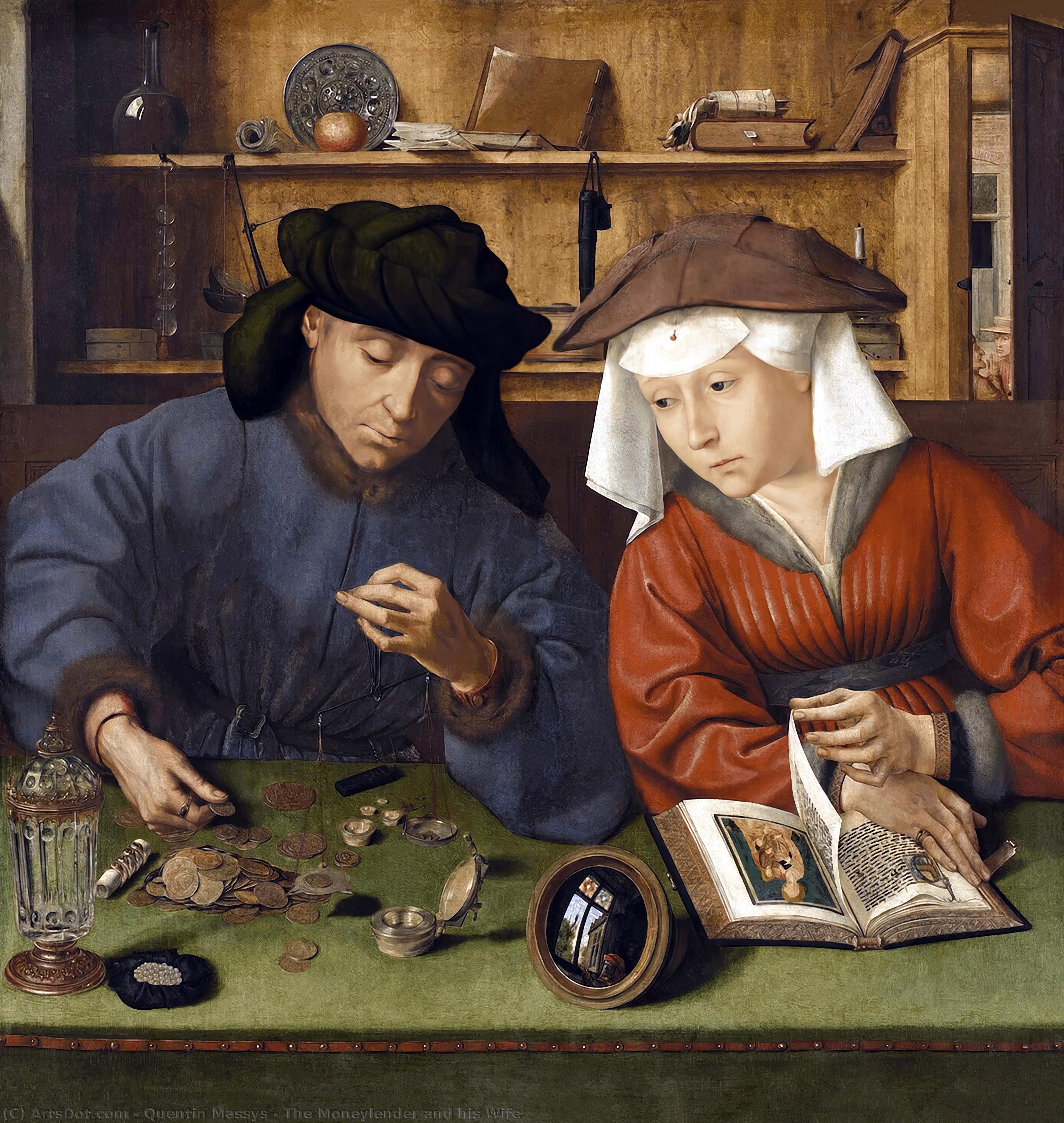
In the quiet intimacy of Quentin Massys’s 1514 masterpiece, The Moneylender and his Wife, we are invited to step across the threshold of time and into a world of profound domesticity and silent narrative. This oil on panel work, currently preserved in the hallowed halls of the Musée du Sobornik in the Louvre, serves as a breathtaking exemplar of the Antwerp School’s mastery. At first glance, the scene presents a…

To stand before this portrait is to step directly into the vibrant intellectual currents of the early sixteenth century. Quentin Massys has captured not merely a likeness, but an entire state of being—the profound concentration of a Renaissance mind at work. The subject, Erasmus of Rotterdam, radiates the quiet authority of scholarship. Dressed in the somber black attire typical of learned men of his era, he is seated amidst the…

Quentin Massys’s *The Moneylender and His Wife*, painted in 1514, stands as a pivotal work within the burgeoning Antwerp School—a movement that decisively reshaped Northern European painting during the High Renaissance. More than just a portrait of a wealthy merchant family, it embodies a complex interplay of observation, satire, and humanist ideals, reflecting the anxieties and aspirations of its time.

In the quiet, hallowed atmosphere of the Staatliche Museen Berlin, there exists a window into the spiritual heart of the sixteenth century. Quentin Massys’ “The Virgin Enthroned,” completed around 1525, is far more than a mere religious portrait; it is a profound meditation on grace and the intersection of the earthly and the divine. As a cornerstone of the Antwerp School, this masterpiece captures a pivotal moment in art history…

The portrait presents a frontal, bust-length view of Christ, positioned centrally against a dark, undifferentiated background. The subject's face is illuminated by a soft, diffused light that defines the contours of the nose, the jawline, and the orbital sockets. A golden halo, composed of fine, radiating lines, emanates from behind the head, creating a sharp contrast with the deep tones of the backdrop. The hair is rendered in long, wavy…

The painting is a portrait of an elderly woman, depicted from just above the waist up. She is presented with striking and exaggerated facial features, including a large head, a prominent nose with nostrils that flare upward, and a face covered in deep wrinkles and pocked textures. Her neck appears long and thin, and she possesses a prominent wart on her right cheek. The subject wears a substantial, elaborately embroidered…

Step closer to the panel and observe the sheer honesty of the skin. There is no attempt here to soften the features or hide the ravages of time. We see a face marked by deep wrinkles, pocked textures, and a prominent wart on the right cheek. The nose is short, with nostrils that flare upward, while the lips remain thin and pinched. It is a heavy, visceral depiction of humanity.…

To gaze upon this exquisite detail from Quentin Massys’s 1514 masterpiece, The Moneylender and His Wife, is to be invited across the threshold of a meticulously preserved moment in time. It is not merely a fragment of paint on panel; it is a concentrated jewel box of Northern Renaissance life, rich with unspoken narratives and dazzling technical mastery. The scene, captured from the legendary work housed at the Musée du…

To gaze upon this detail from Quentin Massys's The Moneylender and his Wife is to be invited across the threshold of a meticulously preserved moment in time. It is not merely a fragment of paint on panel; it is a concentrated jewel box of Northern Renaissance life, rich with unspoken narratives and dazzling technical mastery. The scene, captured from the masterpiece housed in the Musée du Louvre, draws the eye…
 The Adoration of the Magi1526 · Metropolitanski muzej umetnosti
12
 St Anne Altarpiece (detail)1507 · Musées Royaux des Beaux-Arts
13
 St Anne Altarpiece (left wing)1507 · Musées Royaux des Beaux-Arts
14
 The Moneylender and his Wife (detail)1514 · Louvre
15
 St Anne Altarpiece1507 · Musées Royaux des Beaux-Arts
16
 St Anne Altarpiece (central panel)1507 · Musées Royaux des Beaux-Arts
17
 Diptych - Christ and the Virgin
18
 Saint Mary Magdalene1515 · Philadelphia Museum of Art
19
 Saint John the Baptist1511 · Kraljevski muzej lepih umetnosti v Antwerpu
20
 Christ1529 · Metropolitanski muzej umetnosti
21
 The Deathbed of Saint Anne1509 · Kraljevi muzeji lepih umetnosti na Belgiji
22
 Saint Mary of Egypt1515 · Philadelphia Museum of Art
23
 Jacob Obrecht1496 · Kimbell Art Museum
24
 A Bagpiper1513 · Yale University Art Gallery
25
 Christ the Saviour1529 · Muzej Prado
26
 Madonna and Child1530 · Mauritshuis
27
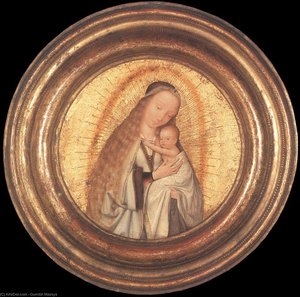 Virgin with the ChildRockox House
28
 Mary with Child (Copy after a lost original)1512 · Bavarske državne slikopisne zbirke
29
 The Refusal of the Offering of Joachim1509 · Kraljevi muzeji lepih umetnosti na Belgiji
30
 Jesus Among the Doctors1509 · National Museum of Ancient Art
31
 Portrait of a man1517 · Staatliche Kunsthalle Karlsruhe
32
 Saint John and the Women at the Tomb of Christ1509 · National Museum of Ancient Art
33
 Virgin and Child1520 · Museum Boijmans Van Beuningen
34
 Madonna and Child1490 · Narodni muzej v Varšavi
35
 Portrait of Pieter Gillis1517 · Galleria Nazionale d'Arte Antica
36
 Lamentation of Christ1501 · Narodni muzej v Varšavi
37
 Saint Jerome1512 · Philadelphia Museum of Art
38
 The Virgin in prayer1529 · Muzej Prado
39
 Saint John1511 · Kraljevski muzej lepih umetnosti v Antwerpu
40
 Head of a Mourning Woman1500 · Gemäldegalerie
41
 Head of a Mourning Woman1500 · Gemäldegalerie
42
 Man of Sorrows1500 · Bavarske državne slikopisne zbirke
43
 Virgin and Child Enthroned1490 · Kunsthandel P. de Boer
44
 Salome is given the head of John the Baptist1511 · Kraljevski muzej lepih umetnosti v Antwerpu
45
 The Seven Sorrows of the Virgin1500 · Kraljevi muzeji lepih umetnosti na Belgiji
46
 Rem Altar: Saint Roch with the Angel (Reverse: Saint Anne Selbdritt)1518 · Bavarske državne slikopisne zbirke
47
 Rem Altarpiece: Mary with Child1518 · Bavarske državne slikopisne zbirke
48
 Rem Altar: Holy Trinity ("Throne of Grace")1518 · Bavarske državne slikopisne zbirke
49
 Rem Altarpiece: Martyrdom of Saint Sebastian (Reverse: Saint Luke)1518 · Bavarske državne slikopisne zbirke
50
 Two Old Men in Prayer1515
51
 Presentation at the Temple1509 · National Museum of Ancient Art
52
 The Lamentation1510 · Narodna galerija Kanade
53
 Salvator Mundi (Christ Blessing)1512 · Muzej lepih umetnosti
54
 Dead Christ1530 · Yale University Art Gallery
55
 The Rest on the Flight into Egypt1513 · Worcester Art Museum
56
 Desiderius Erasmus (1466-1536)1517 · Kraljeva zbirka
57
 The Virgin and Child1512 · Museum of Fine Arts Ghent (MSK)
58
 Christ Salvator Mundi and Mary at Prayer1505 · Kraljevski muzej lepih umetnosti v Antwerpu
59
 Portrait of an old woman1510
60
 Portrait of Petrus Aegidius (1486-1533)1514
61
 The Lamentation1512 · Onze-Lieve Vrouwekathedraal
62
 Portrait of a man1508 · Kunsthandel P. de Boer
63
 St Anne Altarpiece1507 · Kraljevi muzeji lepih umetnosti na Belgiji
64
 The purchase agreement1510 · Gemäldegalerie
65
 Madonna and Child with the lamb.1513 · The National Museum in Poznań
66
 Portrait of a Humanist1512 · Musée des Beaux-Arts de Strasbourg
67
 Saint Elizabeth of Portugal1524 · Gemäldegalerie
68
 Portrait of Don Manuel de Menens1530
69
 Saint Jerome in his cell1524 · Kunsthistorisches Museum
70
 Christ Driving the Money-changers from the Temple1520 · Kraljevski muzej lepih umetnosti v Antwerpu
71
 Portrait of een geestelijke (twijfelachtig geïdentificeerd als Jean Carondelet)1525 · Barber Institute of Fine Arts
72
 An Allegory of Folly1528
73
 The Two Tax Collectors1530 · Gemäldegalerie
74
 Mourning Woman from a Lamentation1520 · Gemäldegalerie
75
 Portrait of a man with a letter in his hand1520 · Gemäldegalerie
76
 Virgin and Child with Saints Elizabeth and John the Baptist1522
77
 Portrait of An Old Man1524
78
 Crucifixion1520 · Narodna galerija Kanade
79
 Christ carrying the cross1505 · National Museum of Ancient Art
80
 Calvary1505 · National Museum of Ancient Art
81
 Madonna and Child1520 · Detroit Institute of Arts
82
 Portrait of a Canon1510 · Liechtenstein Museum
83
 Man with Glasses1523 · Städelsches Kunstinstitut und Städtische Galerie
84
 Anne and Joachim Present Their Goods to the Temple1509 · Kraljevi muzeji lepih umetnosti na Belgiji
85
 Mary Magdalene1505 · Detroit Institute of Arts
86
 John the Baptist and St Agnes1520 · Wallraf-Richartz-Museum
87
 Ecce Homo (detail)1526 · Dogejeva palača
88
 The Crucifixion1515 · National Gallery
89
 Ecce Homo (detail)1526 · Dogejeva palača
90
 Ecce Homo1526 · Dogejeva palača
91
 Virgin and Child1529 · Mauritshuis
92
 Workshop of )1500
93
 Our Lady of Sorrows1500 · National Museum of Ancient Art
94
 St John Altarpiece (detail)1507 · Koninklijk Museum voor Schone Kunsten
95
 St John Altarpiece (right wing)1507 · Koninklijk Museum voor Schone Kunsten
96
 St John Altarpiece (left wing)1507 · Koninklijk Museum voor Schone Kunsten
97
 Peter Gillis1517
98
 Portrait of Cornelia Sandrin1514 · Oldenburg State Museum for Art and Cultural History
99
 Christ on the Cross with Donors (detail)1520 · Museum Mayer van den Bergh
100
 Portrait of a Woman1520 · Metropolitanski muzej umetnosti
The four subjects that come back most often in these originals, each with its finest example.
The 8 museums that hold the most of the paintings on this page.
| Museum | City | Works by Quentin Massys the Elder | Paintings from this list |
|---|---|---|---|
 Gemäldegalerie |
Berlin | 8 | Head of a Mourning Woman, Head of a Mourning Woman, The purchase agreement |
 Kraljevski muzej lepih umetnosti v Antwerpu |
Antverp | 7 | Christ as Salvator Mundi, Saint John the Baptist, Saint John |
 Bavarske državne slikopisne zbirke |
München | 7 | Mary with Child (Copy after a lost original), Man of Sorrows, Rem Altar: Saint Roch with the Angel (Reverse: Saint Anne Selbdritt) |
 National Museum of Ancient Art |
Lisabon | 6 | Jesus Among the Doctors, Saint John and the Women at the Tomb of Christ, Presentation at the Temple |
 Kraljevi muzeji lepih umetnosti na Belgiji |
Bruselj | 6 | The Deathbed of Saint Anne, The Refusal of the Offering of Joachim, The Seven Sorrows of the Virgin |
 Musées Royaux des Beaux-Arts |
Bruselj | 6 | St Anne Altarpiece (detail), St Anne Altarpiece (left wing), St Anne Altarpiece |
 Louvre |
Pariz | 5 | The Moneylender and his Wife, The Moneylender and his Wife (detail), The Moneylender and his Wife (detail) |
 Koninklijk Museum voor Schone Kunsten |
Antverp | 7 | St John Altarpiece (detail), St John Altarpiece (right wing), St John Altarpiece (left wing) |
Pick a decade to see the original that defines it.

In this 1496 portrait, we find ourselves in the presence of Jacob Obrecht, a man whose life was defined by the precision of musical notation and the solemnity of the liturgy. The sitter is captured in a three-quarter pose, his hands clasped in a gesture of quiet contemplation or perhaps prayer. There is a stillness here that feels intentional, as if the subject has paused mid-thought to acknowledge the viewer.…
The portrait presents a frontal, bust-length view of Christ, positioned centrally against a dark, undifferentiated background. The subject's face is illuminated by a soft, diffused light that defines the contours of the nose, the jawline, and the orbital sockets. A golden halo, composed of fine, radiating lines, emanates from behind the head, creating a sharp contrast with the deep tones of the backdrop. The hair is rendered in long, wavy…
In the quiet, hallowed atmosphere of the Staatliche Museen Berlin, there exists a window into the spiritual heart of the sixteenth century. Quentin Massys’ “The Virgin Enthroned,” completed around 1525, is far more than a mere religious portrait; it is a profound meditation on grace and the intersection of the earthly and the divine. As a cornerstone of the Antwerp School, this masterpiece captures a pivotal moment in art history…

To gaze upon this depiction of the Madonna and Child is to step directly into the hushed reverence of the High Renaissance. It is more than just a portrait; it is a profound meditation on maternal love, divine connection, and enduring devotion. The composition centers with breathtaking tenderness on the Virgin Mary cradling the infant Jesus. Her posture speaks of serene acceptance, while the gentle interaction—the kiss upon her cheek…
An Old Woman ('The Ugly Duchess') (1513). The Moneylender and his Wife (1514) and Portrait of Erasmus of Rotterdam (1517) come next.
47 years old: An Old Woman ('The Ugly Duchess') dates from 1513, and Quentin Massys the Elder was born in 1466.
An Old Woman ('The Ugly Duchess'), The Moneylender and his Wife, Portrait of Erasmus of Rotterdam, The Moneylender and his Wife, The Virgin Enthroned, Christ as Salvator Mundi, The Ugly Duchess, A Grotesque Old Woman (also known as The Ugly Duchess), The Moneylender and his Wife (detail) and The Moneylender and his Wife (detail). The ranking above gives each one's year and museum.
Our catalog holds 147 works by Quentin Massys the Elder, dated from 1490 to 1530.
Mostly in Gemäldegalerie (Berlin), Kraljevski muzej lepih umetnosti v Antwerpu (Antverp) and Bavarske državne slikopisne zbirke (München). The museum table above lists them all.
In 1510s: 38 of the 100 works on this page were made then, An Old Woman ('The Ugly Duchess') among them.
On this page, the earliest is Madonna and Child (1490) and the latest Madonna and Child (1530).
Woman (17), Man (16) and Child (8), across the 100 works on this page.
Oil On Panel, for 35 of the 100 works on this page.
Northern renaissance, judging by the originals on this page.
Head of a Mourning Woman, Head of a Mourning Woman and The purchase agreement: the Gemäldegalerie, Berlin holds 7 of the works on this page.
Yes, as a reproduction: the original stays in its museum, but any painting on this page can be painted by hand for you, made to order one at a time, from the painting's own page.
V živahni, cveteti pokrajini nizozemskih deželskih dežel šestnadentodecetnega stoletja malo kdo ime odmeva z tako temeljno pomembnostjo kot Quentin Massys. Massys, ki ga pogosto označujejo za pionirja Antverpske šole, je bil slikar, ki je premostil vrzel med natančno, duhovno predano tradicijo zgodnje nizozemske umetnosti in razvijajočim se humanizmom severne renesanse. Rodil se je okoli leta 1466 v Leuvnu, v Belgiji, njegovo zgodnje življenje pa ostaja tapiserija legend in zgodovinskih fragmentov. V zgodovini umetnosti pogosto šepetajo, da je preden je kdajsploh posegel za fin brus, prejel usposobljenje za kovačja železa – podrobnost, ki daje globoko, taktilno težino njegovi kasnejši obvladljivosti tekstur in materialov. Ta ozadje v obdelavi kovine je verjetno v njem vzbudilo edinstevo spoštovanje do fizičnega sveta, kar mu je omogočilo, da je s nepreverljivo natančnostjo prikazal sijaj svila, hladen blisk kovanca in izluženo kožo človeštva.
Ko se je okoli leta 1490 preselil iz akademske atmosfere Leuvna v živahno komercialno središče Antverpa, je Massys v tkanino flamenskega slikarstva začel vpletati svojo lastno, ločeno nit. Njegova zgodnja izobraževanja, morda pod vodstvom Dirka Boutsa, so ga povezala z linijo mojstrov, kot sta Hans Memling in Rogier van der Weyden. Od teh predhodnikov je podarila predanost verisimilitudi – iskanju resničnosti v predstavitvi. Vendar pa Massys ni bil le navadni imitator. Čeprav je ohranil izstopajočo podrobnost, značilno za njegove prednate, je svoje delo napolnil z novo, razvijajočo se vitalnostjo in voljo raziskovanja kompleksnosti človeškega stanja skozi versko dostojnost ter prodoren družbeni komentar.
Massysova briljantnost leži v njegovi izjemni sposobnosti navigiranja med dvema očitno neskladoma svetovoma: svetom svetega in svetom profanega. Na eno stran njegove religiozne kompozicije služijo kot globoke meditacije o veri. V delih, kot je Krist na križu z donatorji, zajame surov, čutni gravitacijski pritisk razpotezanosti, pri čemer uporablja občutljivost visoke renesanse, da predstavi sceno, ki je hkrati globoko ganjajoča in tehnično brezhibna. Njegova sposobnost prikazovanja božanstva skozi prizmo človeškega trpljenja je omogočila, da so njegove religiozne teme odmevale z vizceralno intimnostjo, s čimer je duhovno učinil oprijemljivo za gledalca.
Nasprotno pa je bil Massys mojster satiričnega žanra, ki je s svojim črtečom predrl ogled v spreminjajoče se družbene morale njegove dobe. Imel je ostre oko za človeške napake in pogosto ustvarjal scene, ki so združevale realizem z subtilnim, posmehljivim duhom. Ta dvojnost je morda najbolj očitna v njegovem pristopu k portretiranju in žanrskemu slikarstvu, kjer se je lahko premiknil od spokojne lepote Device in otroka do bolj kompleksnih, moralno plastnih prikazov sodobnega življenja. Njegovo del je pogosto raziskovalo teme pohlepe, oholosti in napetosti med materialno bogastvom in duhovno čistostjo, zaradi česar je postal predhodnik velikih žanrskih slikarjev, ki so sledili v prihodnjih stoletjih.
Zgodovinskega pomena Quentina Massysa ni mogoče precej podceniti; bil je katalizator umetniške revolucije v Antverpu. Z uvedbo novih motivov in tehnik, hkrati pa z ohranjenostjo v bogatih tradicijah svoje domovine, je postavil temelj za šolo slikarstva, ki bo skozi celo šestnadentodecetno stoletje vladala v Flandriji. Njegov vpliv lahko sledimo skozi razvoj severnoevropske umetnosti, saj je pavedil pot bolj ekspresivnemu, opazovalnemu slogu, ki je sprejel kompleksnost modernizirajočega se sveta.
Danes Massysa spominjamo ne le kot vrhunskega rokodelca, temveč kot pripovedovalca, ki je zajel dušo ene dobe. Njegova dediščina je ohranjena v trajni moči njegove podobe:
Preko njegovih rok sta bila duhovno in zemljijsko pripeljena v enoten, zaprepadajoč dialog, kar mu je zagotovilo mesto med resničnimi mojstrivami severne renesanse.


