A Venetian Master of Sensuality: The Life and Art of Palma Vecchio
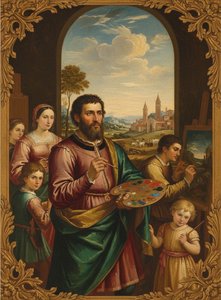
Jacopo Negretti, known to history as Palma Vecchio – “Palma the Elder” – emerged from the artistic landscape of early 16th-century Venice as a pivotal figure bridging the High Renaissance and the burgeoning Mannerist styles. Born around 1480 in Serina Alta near Bergamo, his career unfolded entirely within the vibrant Republic of Venice, a city already steeped in artistic innovation. While documented records are sparse regarding his earliest training, it’s believed he may have initially apprenticed under Andrea Previtali before gravitating towards the revolutionary approaches of Giovanni Bellini, and ultimately, the captivating worlds created by Giorgione and Titian. Palma's arrival in Venice coincided with a period of intense artistic competition; alongside Lorenzo Lotto, he quickly established himself as a formidable talent, absorbing the lessons of his predecessors while forging his own distinctive path.Early Influences and the Development of a Unique Style
The initial stages of Palma’s career reveal a clear debt to Giovanni Bellini's refined technique and devotional style. However, it was the groundbreaking work of Giorgione – with its poetic atmosphere and enigmatic narratives – that truly ignited his artistic imagination. He swiftly embraced Giorgione’s use of color, light, and composition, infusing his own paintings with a similar sense of lyrical beauty. Yet, Palma wasn't merely an imitator; he possessed a unique gift for rendering the human form with a sensual grace and a captivating realism that set him apart. As Titian rose to prominence, Palma continued to evolve, demonstrating a remarkable ability to synthesize diverse influences into a harmonious and compelling visual language. This period saw the emergence of two primary themes in his oeuvre: the *sacra conversazione*, or holy conversation scenes, and half-length portraits of idealized women, often speculated to be depictions of Venice’s celebrated courtesans.The Allure of Myth and the Venetian Portrait
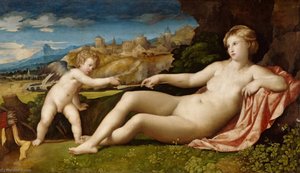
Palma Vecchio became renowned for his ability to imbue classical mythology with a distinctly Venetian sensibility. His pastoral scenes are not simply recreations of ancient tales; they are vibrant celebrations of beauty, love, and earthly pleasure, set against lush landscapes teeming with life. These works catered to the tastes of wealthy Venetian patrons who sought art that reflected their sophisticated lifestyles and appreciation for sensual delights. Simultaneously, his portraits – particularly those of women – captivated audiences with their exquisite detail and psychological depth. He developed a signature type: blonde beauties possessing an alluring gaze and a subtle air of mystery. The identity of these sitters remains largely unknown, fueling speculation about their connection to the city’s demimonde. His mastery of color—transparent glazes that created luminous effects—was particularly celebrated, though sadly, many of these delicate layers deteriorated over time. The sheer painterly capacity in his handling of paint and color is often cited as a defining characteristic of his work.Major Achievements and Artistic Legacy
Among Palma’s most significant achievements are the six paintings commissioned for the church of Santa Maria Formosa in Venice, centered around the *St. Barbara Altarpiece*. This monumental composition showcases his skill in depicting complex narratives and harmonious groupings of figures. His later works demonstrate a mastery of *contrapposto* – the elegant balance of opposing forces in a figure’s pose – and a refined palette that exudes dignity and grace. While he initially embraced influences from Central Italy, including Michelangelo, Palma ultimately forged a style uniquely his own. He was commissioned to paint a main altar at Sant'Elena in Venice in 1525, marking a significant milestone in his career. However, his sudden death in 1528 at the age of approximately 47 left numerous works unfinished, completed by his workshop and pupils. Despite this premature end, Palma Vecchio’s influence on Venetian painting was profound. He served as an important link between the High Renaissance masters like Titian and Giorgione and the emerging Mannerist generation, inspiring artists such as Bonifazio Pitati and Giovanni Busi.Historical Significance and Rediscovery
For centuries, Palma Vecchio's work remained somewhat overshadowed by his more celebrated contemporaries. However, in recent decades, there has been a growing appreciation for his unique contributions to Venetian art. Scholars have reassessed attributions previously assigned to Giorgione and Titian, recognizing the distinctive qualities of Palma’s style. His paintings are now celebrated for their sensual beauty, technical brilliance, and ability to capture the spirit of Renaissance Venice. He represents a fascinating intersection of artistic influences, bridging the gap between generations and offering a compelling glimpse into the cultural values and aesthetic sensibilities of his time. Palma Vecchio stands as a testament to the enduring power of Venetian painting—a master whose work continues to captivate and inspire audiences today.Vprašanja in odgovori
Koliko umetnin umetnika Palma Il Vecchio je na voljo za ogled?
Na strani Vsi umetniški slogi si lahko ogledate 28 umetnin del umetnika Palma Il Vecchio.
Katere barve je Palma Il Vecchio najpogosteje uporabljal/a?
Uporabo barv v delih umetnika Palma Il Vecchio, navedenih na ta spletna stran, lahko raziskujete na njegovi strani Genom palete.
Ali obstaja kronološki pregled dela umetnika Palma Il Vecchio?
Kronika umetnika Palma Il Vecchio je kronološki časovnica, ki s pomočjo drljanja prikazuje dela umetnika v kronološkem vrstnem redu, razdeljena v poglavja po obdobjih njegove kariere.
Kje so dela umetnika Palma Il Vecchio, razvrščena po tematikah?
Atlas motivov umetnika Palma Il Vecchio je stran, ki razvršča umetnikova dela glede na njihove teme.
Kje so dela umetnika Palma Il Vecchio organizirana po barvah?
Stran Spektralni indeks razvršča dela umetnika Palma Il Vecchio po barvah.
Ali obstaja celoten seznam umetnin umetnika Palma Il Vecchio?
Vsa dela umetnika Palma Il Vecchio na platformi ta spletna stran si lahko ogledate na njegovi strani Vsi umetniški slogi.
V katerem zgodovinskem obdobju je delal/a Palma Il Vecchio?
Palma Il Vecchio je delal v obdobju Renaissance. To obdobje umetnikovo dejavnost umešča v zgodovinski okvir.