Portret Morris Graves

Slike avtorja Morris Graves: 30 najbolj znanih del skozi oči galerije

Posodobljeno oktober 2026 · uvrščeno glede na naš skoraj priljubljenosti (iskanja, obiske in naročila za vsako delo) · 32 del v našem katalogu avtorja Morris Graves

Kratek opis

Izpostavljeno v galeriji je najbolj znano sliko umetnika Morris Graves, ki je Bird Singing in the Moonlight (1938). Crow, Surf and Moon (1943) in Logged Mountains (1943) dopolnjujeta trijo, ki jo prepozna vsak pogled. Od 32 del avtorja Morris Graves v našem katalogu galerija spodaj predstavlja 30 najbolj znanih; vsako je original z letom nastanka, pripadajočim mu muzejem in opisom tistega, kar ga dela edinstavnim.

1910 – 2001, Fox Največ del: Art Museum

Top 10 slik umetnika Morris Graves v galeriji

3
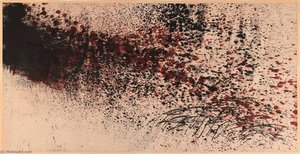
Logged Mountains (1943) avtorja Morris Graves

Logged Mountains

1943 · Smithsonian American Art Museum, Washington, D.C.

The Logged Mountains painting by Morris Graves is a thought-provoking artwork that showcases the artist's skill in combining natural elements with artistic expression. Created in 1943, this oil on canvas painting measures 66 x 92 cm and is currently housed at the Smithsonian American Art Museum in the United States. Artist Background Morris Graves was an American artist known for his delicate and contemplative drawings that capture the essence of…

Slikarska dela umetnika Morris Graves, uvrščena od 11 do 30

Muzeji, ki hranijo originala umetnika Morris Graves

3 muzejev, ki vsebujo največ slik na tej strani.

Muzej Mesto Sloga Morris Graves Slike iz tega seznama
Art Museum, SeattleArt Museum Seattle 6 Crow, Surf and Moon, Bird in the Night, Sea, Fish and Constellation
The Phillips Collection, Washington, D.C.The Phillips Collection Washington, D.C. 3 Surf and Bird, Young Gander Ready for Flight, August Still Life
Smithsonian American Art Museum, Washington, D.C.Smithsonian American Art Museum Washington, D.C. 1 Logged Mountains

Morris Graves, ena značilna slika na desetletje

Delo po desetletjih

Izberite desetletje, da si ogledate original, ki ga opredeljuje.

Slike umetnika Morris Graves: odgovori galerije

Katero sliko avtorja Morris Graves je najbolj znana med vsemi?Razkriti odgovor

Bird Singing in the Moonlight (1938). Zatem sledeta Crow, Surf and Moon (1943) in Logged Mountains (1943).

Koliko je bil Morris Graves let, ko je dokončal Bird Singing in the Moonlight?Razkriti odgovor

28 let: delo Bird Singing in the Moonlight iz leta 1938, Morris Graves pa je bil/a rojen/a leta 1910.

Katera je 10 najboljjših slik umetnika Morris Graves?Razkriti odgovor

Bird Singing in the Moonlight, Crow, Surf and Moon, Logged Mountains, Surf and Bird, Snake and Moon, Wheelbarrow, Bird in the Night, Sea, Fish and Constellation, Bird in the Spirit in Nestling. Zgornja lestica prikazuje leto nastanka in muzej za vsako delo.

Koliko dzieł stworzył Morris Graves?Razkriti odgovor

Naš katalog vsebuje 32 del avtorja Morris Graves, datiranih od 1934 do 1988.

Kje so razpostavljena najbolj znana originala umetnika Morris Graves?Razkriti odgovor

Večini v Art Museum (Seattle), The Phillips Collection (Washington, D.C.) in Smithsonian American Art Museum (Washington, D.C.). Zgoraj navedena tabela muzejev vsebuje njihov celoten seznam.

Kdaj je Morris Graves ustvaril svoja najbolj znana slika?Razkriti odgovor

V obdobju 1940s: 11 od 30 del na tej strani je bilo izdelovanih takrat, med njimi pa Crow, Surf and Moon.

Kateri so najstarejši in najmlajši znanii dela umetnika Morris Graves?Razkriti odgovor

Na tej strani je najstarejše delo iz Wheelbarrow (1934) in najstarejše iz Summer Still Life (1988).

Katera originalna dela umetnika Morris Graves ima v svoji zbirki Art Museum?Razkriti odgovor

Crow, Surf and Moon, Bird in the Night in Sea, Fish and Constellation: v muzeju Art Museum, Seattle se nahaja 6 del z te strani.

Morris Graves: umetnik

The Visionary of the Pacific Northwest

In the mist-shrouded landscapes where the rugged beauty of Oregon meets the contemplative stillness of the Puget Sound, the spirit of Morris Graves found its eternal home. Born in 1910, Graves was an artist who did not merely observe the world but sought to pierce through its physical veil to reveal the consciousness beneath. As a cornerstone of the Northwest School, his work emerged from a profound intimacy with nature—a landscape steeped in both wild resilience and a quiet, almost spiritual, grace. His journey was one of self-directed discovery, eschewing traditional academic rigor for a life lived in deep conversation with the elements: the flight of a bird, the delicate curve of a petal, and the shifting light of a coastal morning.

Eastern Echoes and the Mystic's Eye

The essence of Graves’s artistry was deeply intertwined with his fascination with Eastern aesthetics and Zen Buddhism. A formative voyage to Japan in the early 1930s left an indelible mark on his soul, instilling a reverence for simplicity, suggestion, and the beauty of the ephemeral. This influence manifested in a unique symbolic vocabulary where animals—most notably birds—served not as mere biological subjects but as metaphors for the human psyche and the fragility of existence. Through his mastery of texture and light, he developed a language that was both intimate and universal, characterized by:

  • Symbolic Motifs: The recurring use of birds, flowers, and chalices to represent spiritual vessels and the essence of life.
  • Atmospheric Depth: A technique that captures the ethereal, misty quality of the Northwest through delicate washes and shadows.
  • Philosophical Resonance: An integration of Eastern meditative principles into the very structure of his compositions.

His ability to blend these elements allowed him to create works like Folded Wings Memory the Moon Weeping, which haunt the viewer with their sense of isolation and transcendence.

A Legacy of Light and Shadow

Throughout his prolific career, Graves’s evolution was marked by a transition from delicate, contemplative drawings to more complex, abstract expressions. His breakthrough in 1942 at New York's Museum of Modern Art cemented his position as a leading figure of American Modernism, standing alongside contemporaries such as Mark Tobey. Even as he moved toward the abstractions of the machine age in later years, his work remained anchored in a deep-seated respect for quietude and the natural order. Pieces such as Hibernation and Logged Mountains stand as testaments to his ability to capture the tension between the organic world and the encroaching modern era. His legacy remains that of a true mystic, an artist who transformed the damp, grey atmosphere of the Pacific Northwest into a luminous window onto the infinite.