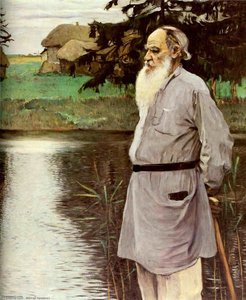
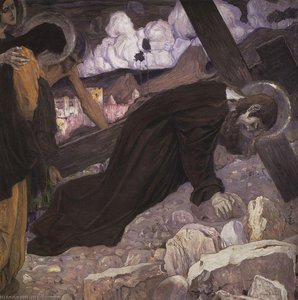
Saint Russia
Saint Russia is an oil on canvas work by Mikhail Nesterov. The artist executed this piece between 1901 and 1905. It remains part of the permanent collection at the State Russian Museum in the Russian Federation.
Kratek opis
Saint Russia je slika umetnika Mihail Nesterov, ki pritegne največ pogledov. Nato se pogled smeri k Self-Portrait (1918) in Saint Sergius' labours (right part of the triptych) (1896). Med 158 dela umetnika Mihail Nesterov v našem katalogu so ta 100 najbolj znana; vsako je edinstven original, predstavljen z letnico nastanka, muzejem in razlogom za njegovo nečasenost.
Saint Russia is an oil on canvas work by Mikhail Nesterov. The artist executed this piece between 1901 and 1905. It remains part of the permanent collection at the State Russian Museum in the Russian Federation.
The artwork is titled Self-Portrait and was created by the artist Mikhail Nesterov. This specific piece is a monochrome portrait that focuses on a self-representation of the artist. The work was produced in 1918.
A solitary figure moves through a landscape of winter. Dressed in a long coat and hat, a man resembling a monk or priest carries a child in his arms. The scene is set upon a street lined with buildings, where the urban architecture meets a heavy, white blanket of snow. In the background, the presence of a dog and other distant figures adds a sense of lived-in movement to the…
Mikhail Nesterov produced Solovki in 1917. The work provides a representation of the Solovki islands located in Russia. This landscape captures a specific geographic setting through a lens of quietude and natural scale.
In this 1940 work, titled Portrait of Vera Mukhina, the artist Mikhail Nesterov captures a moment of quiet intensity. The painting focuses on the likeness of Vera Mukhina, a woman who lived from 1889 to 1953. It is a study of character and presence, rendered during a period when the artist and his subject had recently become acquainted, having met in the autumn of 1939.
In the quietude of Mikhail Nesterov’s 1909 masterpiece, St. Mark the Apostle, we are invited into a moment of profound spiritual contemplation. The painting presents a striking portrait of the Apostle, depicted with deep, soulful features and a dignified beard, seated in a state of meditative repose upon a rugged rock. Set against a lush, natural backdrop that suggests a secluded garden or a sacred grove, the composition breathes with…
The scene before us is Autumn, a landscape that captures a specific, quiet moment in the changing seasons. Mikhail Nesterov, a painter who sought to translate the very essence of the Russian soul onto canvas, brings this seasonal transition to life through his unique vision. The work, created in 1906, invites a sense of stillness into the viewer's space, as if the air itself has paused to breathe.
The scene unfolds through the Portrait of Olga Nesterova (Woman in a Riding Habit), a work that captures a quiet, suspended moment in time. Mikhail Nesterov brings this figure to life, presenting a woman who exists within a landscape of soft light and natural textures. She stands poised, her presence defined by the elegant lines of her riding habit, a garment that speaks to a specific way of life and…
Youth of Saint Sergiy Radonezhsky is a painting by Mikhail Nesterov. The canvas captures a quiet moment of grace, a stillness held within the brushstrokes of a man who sought the essence of the Russian soul. Nesterov, born in Ufa, Russia, in 1862, spent his life translating the unseen into the visible. His hand moved between the heavy weight of realism and the light, ethereal touch of symbolism.
In "Old painter" by Mikhail Nesterov, the viewer enters a quiet studio where time seems to pause. The composition centers entirely on an elderly artist, whose intense focus anchors the scene as he works upon a large canvas. He sits at his easel, caught in a moment of profound concentration. In the background, a classical sculpture rests in the shadows, acting as a silent focal point that draws the eye…
Četiri teme, ki se v teh originalih najpogosteje ponavljajo, vsaka z svojim vrhunskim primerom.
4 muzejev, ki vsebujo največ slik na tej strani.
| Muzej | Mesto | Sloga Mihail Nesterov | Slike iz tega seznama |
|---|---|---|---|
| Varšava | 3 | Nun, Sea view., Landscape study | |
| Moskva | 7 | Philosopher | |
| Bratislava | 1 | Nuns | |
| Jerevan | 1 | A Litte Fox |
Izberite desetletje, da si ogledate original, ki ga opredeljuje.
In "Old painter" by Mikhail Nesterov, the viewer enters a quiet studio where time seems to pause. The composition centers entirely on an elderly artist, whose intense focus anchors the scene as he works upon a large canvas. He sits at his easel, caught in a moment of profound concentration. In the background, a classical sculpture rests in the shadows, acting as a silent focal point that draws the eye…
A solitary figure moves through a landscape of winter. Dressed in a long coat and hat, a man resembling a monk or priest carries a child in his arms. The scene is set upon a street lined with buildings, where the urban architecture meets a heavy, white blanket of snow. In the background, the presence of a dog and other distant figures adds a sense of lived-in movement to the…
In the quietude of Mikhail Nesterov’s 1909 masterpiece, St. Mark the Apostle, we are invited into a moment of profound spiritual contemplation. The painting presents a striking portrait of the Apostle, depicted with deep, soulful features and a dignified beard, seated in a state of meditative repose upon a rugged rock. Set against a lush, natural backdrop that suggests a secluded garden or a sacred grove, the composition breathes with…
The artwork is titled Self-Portrait and was created by the artist Mikhail Nesterov. This specific piece is a monochrome portrait that focuses on a self-representation of the artist. The work was produced in 1918.
In Wayfarer, Mikhail Nesterov presents a quiet rural scene that invites a moment of stillness. Painted about 1921, the work centers on a subtle human connection set against a natural backdrop. An elderly woman and a young boy occupy the space, caught in a contemplative exchange that feels both private and significant. There is a sense of shared thought between them, a quietude that suggests the passing of experience from…
In this medium close-up portrait of V.G.Chertkov, Mikhail Nesterov captures the sitter reclining within the heavy embrace of a large, cushioned chair. The perspective is a direct, eye-level view that pulls the viewer into an intimate space with the man. His clothing is rendered in deep blacks and browns, anchoring the figure against a textured background of muted blues and teals. The arrangement is formal, yet the realistic and expressive…
In this 1940 work, titled Portrait of Vera Mukhina, the artist Mikhail Nesterov captures a moment of quiet intensity. The painting focuses on the likeness of Vera Mukhina, a woman who lived from 1889 to 1953. It is a study of character and presence, rendered during a period when the artist and his subject had recently become acquainted, having met in the autumn of 1939.
Saint Russia. Zatem sledeta Self-Portrait (1918) in Saint Sergius' labours (right part of the triptych) (1896).
Saint Russia, Self-Portrait, Saint Sergius' labours (right part of the triptych), Solovki, Portrait of Vera Mukhina, St. Mark the Apostle, Autumn, Portrait of Olga Nesterova (Woman in a Riding Habit), Youth of Saint Sergiy Radonezhsky in Old painter. Zgornja lestica prikazuje leto nastanka in muzej za vsako delo.
Naš katalog vsebuje 158 del avtorja Mihail Nesterov, datiranih od 1875 do 1940.
Večini v Narodni muzej v Varšavi (Varšava), Tretyakovska galerija (Moskva) in Slovenska narodna galerija (Bratislava). Zgoraj navedena tabela muzejev vsebuje njihov celoten seznam.
V obdobju 1900s: 29 od 100 del na tej strani je bilo izdelovanih takrat, med njimi pa St. Mark the Apostle.
Na tej strani je najstarejše delo iz Portrait of M. M. Nesterova, the artist's mother (1875) in najstarejše iz Portrait of Vera Mukhina (1940).
Religious (18), Portraits (14) in Women (13), na 100 delih na tej strani.
Oil On Canvas, za 12 od 100 del na tej strani.
Symbolist painting, glede na originala na tej strani.
Nun, Sea view. in Landscape study: v muzeju Narodni muzej v Varšavi, Varšava se nahaja 3 del z te strani.
Mihail Vasiljevič Nesterov, rojen 31. maja 1862 v Ufi, Rusija, ni bil zgolj slikar, temveč vizualni pesnik ruske duše. Izšel je iz močno patriarhalne in trgovsko usmerjene družine, kjer so umetniški nagibi presenetljivo negovali; ljubezen očeta do zgodovine in literature je v njem sprožila željo po prenosu zgodb in čustev na platno. To zgodnje spodbujanje ga je leta 1874 popeljalo v Moskvo, kjer se je vpisal na Voskresensko realno šolo – ključni korak, ki ga je usmeril na pot k temu, da postane eden najpomembnejših ruskih simbolističnih slikarjev. Formalna umetnostna izobrazba se je začela leta 1877 na Moskovski šoli za slikanje, kiparstvo in arhitekturo, kjer je študiral pod priznanimi umetniki, kot so Pavel Sorokin, Illarion Prjanisnikov in Vasilij Perov – slednji se je izkazal za še posebej vpliveno figuro. Že v teh oblikovalnih letih je bil Nesterovov talent očiten, saj je začel razstavljati svoja dela s šolo že leta 1879. Kratek in nezadovoljiv čas na Imperialni akademiji za likovno umetnost ga je spodbujal k vrnitvi v Moskvo in nadaljnjemu študiju pod Aleksejem Savrasovom, ki je utrdil njegovo umetniško podlago. Te zgodnje izkušnje so mu vlile mešanico realizma in naraščajoče občutljivosti za vzdušje ter čustveno globino, kar bi značilno zaznamovalo njegov zrel slog.
Nesterov je dosegel prelom s sliko Puščevnik (1889), ki je takoj odmevala pri javnosti in kritiki. Njen nakup Pavla Tretyakova, priznanega zbiratelja in ustanovitelja Tretjakovske galerije, ni bil le finančna transakcija, temveč potrditev Nesterovovega rastočega umetniškega glasu. Ta nakup mu je omogočil obsežno potovanje po Evropi – Avstriji, Nemčiji, Franciji in Italiji –, ki mu je razširilo obzorja in ga izpostavilo različnim umetnostnim tradicijam. Vendar se je šele po vrnitvi v Rusijo začel oblikovati njegov pravi poklic. Globoko se je poglobil v monumentalni projekt: serijo del, posvečenih življenju svete Sergija Radoneškega, duhovne figure, ki bi skoraj pol stoletja dominirala njegove ustvarjalne energije. Ta zaveza ni bila zgolj umetniška; bilo je globoko raziskovanje ruske duhovnosti in asketizma – hrepenenje po smislu, ki je v tistem času prežemalo rusko kulturo. Hkrati se je Nesterov spoprijemal s kompleksnimi tokovi ruskega umetniškega prizorišča, uskladil se z Peredvižniki (Potniki), znanimi po svojih realističnih upodobitvah družbenih vprašanj, in Mir Iskusstva (Svet umetnosti), skupino, ki je zagovarjala estetizem in simbolizem. Ta dvojna pripadnost odraža inherentno napetost v njegovem delu – mešanico realizma, zasidranega v ruskem življenju, in eterične kakovosti, ki namiguje na globlje duhovne resnice.
Naročilo za dekoracijo katedrale sv. Vladimirja v Kijevu leta 1890 je označilo še en prelom, saj se je Nesterov potopil v svet bizantinske umetnosti in versike ikonografije. Čeprav je izpolnil svoje obveznosti, je pogosto subtilno vlival svojo osebno umetniško ekspresijo v svoje prispevke – dokaz njegove neodvisne duše. To obdobje ga je soočilo z omejitvami naročniškega dela v primerjavi z lastno ustvarjalno vizijo, boj, ki bi se nadaljeval skozi njegovo kariero. Poleg verskih tem je Nesterov blestel v portretiranju in ujel podobe pomembnih osebnosti, kot so Ivan Iljin, Ivan Pavlov in Sergej Judin. Njegov portret Ivana Pavlova (1935), za katerega je prejel Stalinovo nagrado leta 1941, stoji kot močan dokaz njegove sposobnosti posredovati ne le fizični videz, temveč tudi intelektualno globino in karakter. Skozi svojo kariero se je Nesterovov slog razvijal od zgodnjega realizma k bolj liričnemu in simboličnemu pristopu, za katerega so značilne prikrite barve, mehke poteze čopiča in vzdušje tihe kontemplacije. Njegove pokrajine so pogosto služile kot ozadja za duhovne zgodbe, zamegljujoč meje med zemeljskim in božanskim. Prizadeval se je posneti ne le to, kar je videl, temveč tudi tisto, kar je bilo pod površjem – notranje življenje in duhovne boj svojih subjektov.
Mihail Nesterov je umrl v Moskvi 18. oktobra 1942 in za seboj pustil bogato umetniško zapuščino, ki še naprej navdaja občudovanje in razmislek. Njegovo delo predstavlja edinstveno sintezo ruskega realizma, simbolizma in verskega žara. Ni zgolj upodabljal prizore; poskušal je ujeti bistvo ruske duše – njeno hrepenenje po duhovnem smislu in njeno povezanost z zemljo. Njegove slike niso le podobe, ki jih je treba občudovati, temveč okna v svet vere, kontemplacije in globoke čustvene globine. Vpliv Nesterova je mogoče opaziti v delih naslednjih generacij ruskih umetnikov, ki so se prizadevali raziskati podobne teme duhovnosti in nacionalne identitete. Njegova sposobnost vlivanja vsakdanjih prizorov s simbolično težo in njegova mojstrska uporaba barve in svetlobe še naprej odmevata v občinstvu danes.
Tukaj so nekateri ključni kosi, ki definirajo Nesterovovo umetniško pot:
Nesterovov umetniški razvoj je oblikovalo več ključnih vplivov: Vasilij Perov, katerega realističen pristop k družbenim temam je odmeval pri Nesterovem zgodnjem delu; Aleksej Savrasov, ki ga je usmerjal pri izboljšanju njegove tehnike in razumevanju slikanja pokrajine; in Pavel Tretyakov, katerega sponzorstvo je zagotovilo ključno podporo in priznanje. Končno Mihail Vasiljevič Nesterov stoji kot velika figura v ruski umetnostni zgodovini – slikar, ki si je upal raziskati globine človeškega duha in te raziskave prevesti v slike trajne lepote in moči.