Portret Mojster Mateo

44 najbolj znanih slik umetnika Mojster Mateo, vsaka popolnoma edinstvena

Posodobljeno oktober 2026 · uvrščeno glede na naš skoraj priljubljenosti (iskanja, obiske in naročila za vsako delo) · 44 del v našem katalogu avtorja Mojster Mateo

Kratek opis

The disappeared façade at the end of the Camino (1211) je slika avtorja Mojster Mateo, ki pritegne največ pogledov; original se nahaja v muzeju The Catedral de Santiago Foundation, Santiago de Compostela. Nato se pogled smeri k Base of the mullion of the Portico of Glory (1188) in Trinity of the Portico of Glory (1188). Med 44 dela umetnika Mojster Mateo v našem katalogu so ta 44 najbolj znana; vsako je edinstven original, predstavljen z letnico nastanka, muzejem in razlogom za njegovo nečasenost.

1161 – 1217 Romanesque Največ del: The Catedral de Santiago Foundation

10 najboljjših slik umetnika Mojster Mateo skozi oči galerije

2
Base of the mullion of the Portico of Glory (1188) avtorja Mojster Mateo

Base of the mullion of the Portico of Glory

1188 · Stone · The Catedral de Santiago Foundation, Santiago de Compostela

To stand before the Portico of Glory is to witness a profound shift in the language of stone. This specific base of the mullion, carved around 1188, offers a glimpse into the transition from the rigid forms of the Romanesque to a more fluid, naturalistic sensibility. Here, the stone does not merely exist; it breathes. The sculptor, Master Mateo, utilized a technique known as trabajo vivo, layering limestone to create…

3
Trinity of the Portico of Glory (1188) avtorja Mojster Mateo

Trinity of the Portico of Glory

1188 · Stone · The Catedral de Santiago Foundation, Santiago de Compostela

Divine Presence in Stone The capital features God the Father holding the Christ child upon his lap. Above them, the Holy Spirit takes form as a dove at the peak of the composition. Angels surround these central figures, carrying incense burners to complete the celestial scene. This sculptural arrangement uses the trabajo vivo technique, layering stone slabs to create textures that mimic flesh and fabric. The result is a sense…

4
Statue-column of king David (1188) avtorja Mojster Mateo

Statue-column of king David

1188 · Stone · The Catedral de Santiago Foundation, Santiago de Compostela

In the hallowed atmosphere of the Santiago Cathedral, where history and spirituality converge, stands a figure of profound majesty: the Statue-column of King David. Carved by the legendary Master Mateo around 1188, this Romanesque masterpiece is far more than a mere architectural ornament; it is a window into the soul of the twelfth century. The sculpture captures the biblical monarch in a moment of eternal resonance, seated upon a cross-frame…

5
The Glory, Central Arch, Portico of Glory (1211) avtorja Mojster Mateo

The Glory, Central Arch, Portico of Glory

1211 · Stone · The Catedral de Santiago Foundation, Santiago de Compostela

The Glory, Central Arch, Portico of Glory is a sculptural work by Master Mateo. It forms a primary component of the Portico of Glory, located at the Cathedral of Santiago de Compostela in Spain. This specific section of the portal was part of a complete three-piece set that reached its conclusion in 1211. The work is currently held at The Catedral de Santiago Foundation in Santiago de Compostela.

6
The Elders holding instruments, Central Arch, Portico of Glory (1211) avtorja Mojster Mateo

The Elders holding instruments, Central Arch, Portico of Glory

1211 · Stone · The Catedral de Santiago Foundation, Santiago de Compostela

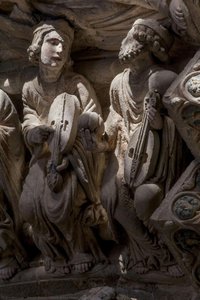
Within the sacred shadows of the Portico of Glory, a profound scene unfolds in stone. The Elders holding instruments, Central Arch, Portico of Glory emerges from the limestone, appearing as if caught in a moment of eternal preparation. This work, created by the hands of Master Mateo, brings the figures of the Apocalypse into a tangible, breathing presence. They sit amidst the radial archivolts, their bodies leaning toward one another…

8
Saint Matthew, Central Arch, Portico of Glory (1211) avtorja Mojster Mateo

Saint Matthew, Central Arch, Portico of Glory

1211 · Stone · The Catedral de Santiago Foundation, Santiago de Compostela

The stone breathes under the soft, diffuse light of the cathedral, revealing a figure caught in a moment of eternal devotion. Here, within the central arch of the Portico of Glory, Saint Matthew sits with a quiet, heavy presence. He is a winged presence, his form emerging from the granite with a startling sense of life. He leans over a desk, his knees supporting the weight of his task, as…

9
Saint Luke, Central Arch, Portico of Glory (1211) avtorja Mojster Mateo

Saint Luke, Central Arch, Portico of Glory

1211 · Stone · The Catedral de Santiago Foundation, Santiago de Compostela

The limestone relief of Saint Luke, carved around 1211, occupies a central position within the Portico of Glory at the Cathedral of Santiago de Compostela in Spain. The figure is depicted reclining on his right side, a posture that suggests both physical repose and deep introspection. In his left hand, he holds a book, while his head rests upon a lamb, a direct reference to his role as an Evangelist…

10
Arma Christi, Central Arch, Portico of Glory (1211) avtorja Mojster Mateo

Arma Christi, Central Arch, Portico of Glory

1211 · Stone · The Catedral de Santiago Foundation, Santiago de Compostela

The relief known as Arma Christi, Central Arch, Portico of Glory is a sculptural work by the artist Master Mateo. This specific piece is situated within the Central Arch of the Portico of Glory. It was created in 1211. The work is part of a larger architectural and sculptural program located at the Santiago de Compostela Cathedral in Galicia, Spain.

Slavna platna umetnika Mojster Mateo, od številk 11 do 44

11Santo dos Croques of the Portico of Glory (1200) avtorja Mojster MateoSanto dos Croques of the Portico of Glory1200 · The Catedral de Santiago Foundation 12Saint Matthew (1200) avtorja Mojster MateoSaint Matthew1200 · The Catedral de Santiago Foundation 13Statues of David and Solomon (1188) avtorja Mojster MateoStatues of David and Solomon1188 · The Catedral de Santiago Foundation 14Portico de la Gloria (1168) avtorja Mojster MateoPortico de la Gloria1168 · Cathedral 15Portico de la Gloria (detail) (1168) avtorja Mojster MateoPortico de la Gloria (detail)1168 · Cathedral 16Portico de la Gloria (1168) avtorja Mojster MateoPortico de la Gloria1168 · Cathedral 17Portico de la Gloria (detail) (1168) avtorja Mojster MateoPortico de la Gloria (detail)1168 · Cathedral 18Right arch of the Portico of Glory. Iconography of the condemned (1188) avtorja Mojster MateoRight arch of the Portico of Glory. Iconography of the condemned1188 · The Catedral de Santiago Foundation 19Right arch of the Portico of Glory (1188) avtorja Mojster MateoRight arch of the Portico of Glory1188 · The Catedral de Santiago Foundation 20Left arch of the Portico of Glory (1188) avtorja Mojster MateoLeft arch of the Portico of Glory1188 · The Catedral de Santiago Foundation 21Right columns of the central arch of the Portico of Gloryh (1188) avtorja Mojster MateoRight columns of the central arch of the Portico of Gloryh1188 · The Catedral de Santiago Foundation 22Saint Marcus, Central Arch, Portico of Glory (1211) avtorja Mojster MateoSaint Marcus, Central Arch, Portico of Glory1211 · The Catedral de Santiago Foundation 23Saint John, Central Arch, Portico of Glory (1211) avtorja Mojster MateoSaint John, Central Arch, Portico of Glory1211 · The Catedral de Santiago Foundation 24Ordo Prophetarum, The counter facade, Portico of Glory (1211) avtorja Mojster MateoOrdo Prophetarum, The counter facade, Portico of Glory1211 · The Catedral de Santiago Foundation 25The Sybil, The counter facade, Portico of Glory (1211) avtorja Mojster MateoThe Sybil, The counter facade, Portico of Glory1211 · The Catedral de Santiago Foundation 26Right arch of the Portico of Glory. Iconography of the blessed (1211) avtorja Mojster MateoRight arch of the Portico of Glory. Iconography of the blessed1211 · The Catedral de Santiago Foundation 27Detail of the Elders, Central Arch, Portico of Glory (1211) avtorja Mojster MateoDetail of the Elders, Central Arch, Portico of Glory1211 · The Catedral de Santiago Foundation 28Tribune of Portico of Glory (1211) avtorja Mojster MateoTribune of Portico of Glory1211 · The Catedral de Santiago Foundation 29Angels, The Tribune, Portico of Glory (1211) avtorja Mojster MateoAngels, The Tribune, Portico of Glory1211 · The Catedral de Santiago Foundation 30Portico of Glory (1211) avtorja Mojster MateoPortico of Glory1211 · The Catedral de Santiago Foundation 31Keystones from Portico of the Glory (1211) avtorja Mojster MateoKeystones from Portico of the Glory1211 · The Catedral de Santiago Foundation 32Detail Maiestas Domini of The Portico of Glory (1211) avtorja Mojster MateoDetail Maiestas Domini of The Portico of Glory1211 · The Catedral de Santiago Foundation 33Arma Christi, Central Arch, Portico of Glory (1211) avtorja Mojster MateoArma Christi, Central Arch, Portico of Glory1211 · The Catedral de Santiago Foundation 34The Just, Central Arch, Portico of Glory (1211) avtorja Mojster MateoThe Just, Central Arch, Portico of Glory1211 · The Catedral de Santiago Foundation 35Detail of the Elders, Central Arch, Portico of Glory (1211) avtorja Mojster MateoDetail of the Elders, Central Arch, Portico of Glory1211 · The Catedral de Santiago Foundation 36Detail of the Blessed, Central Arch, Portico of Glory (1211) avtorja Mojster MateoDetail of the Blessed, Central Arch, Portico of Glory1211 · The Catedral de Santiago Foundation 37Central Arch of The Portico of Glory (1211) avtorja Mojster MateoCentral Arch of The Portico of Glory1211 · The Catedral de Santiago Foundation 38Organistrum, Central Arch, Portico of Glory (1211) avtorja Mojster MateoOrganistrum, Central Arch, Portico of Glory1211 · The Catedral de Santiago Foundation 39Drawing José Vega y Verdugo (1656-1657) Archivo de la Catedral (1657) avtorja Mojster MateoDrawing José Vega y Verdugo (1656-1657) Archivo de la Catedral1657 · The Catedral de Santiago Foundation 40Left arch of the Portico of Glory. Iconography (1188) avtorja Mojster MateoLeft arch of the Portico of Glory. Iconography1188 · The Catedral de Santiago Foundation 41Estatuas-columna de dos profetas procedentes de la desaparecida fachada exterior del Pórtico de la Gloria\n\n- Isaac (1188) avtorja Mojster MateoEstatuas-columna de dos profetas procedentes de la desaparecida fachada exterior del Pórtico de la Gloria\n\n- Isaac1188 · The Catedral de Santiago Foundation 42Rose window (1200) avtorja Mojster MateoRose window1200 · The Catedral de Santiago Foundation 43Stony choir reconstruction (1211) avtorja Mojster MateoStony choir reconstruction1211 · The Catedral de Santiago Foundation 44Lintels Central Arch of The Portico of Glory (1188) avtorja Mojster MateoLintels Central Arch of The Portico of Glory1188 · The Catedral de Santiago Foundation

Motivi, ki so očarali Mojster Mateo

Četiri teme, ki se v teh originalih najpogosteje ponavljajo, vsaka z svojim vrhunskim primerom.

Muzeji, ki hranijo originala umetnika Mojster Mateo

2 muzejev, ki vsebujo največ slik na tej strani.

Muzej Mesto Sloga Mojster Mateo Slike iz tega seznama
The Catedral de Santiago Foundation, Santiago de CompostelaThe Catedral de Santiago Foundation Santiago de Compostela 40 The disappeared façade at the end of the Camino, Base of the mullion of the Portico of Glory, Trinity of the Portico of Glory
Cathedral, Santiago de CompostelaCathedral Santiago de Compostela 4 Portico de la Gloria, Portico de la Gloria (detail), Portico de la Gloria

Mojster Mateo skozi desetetja: vsak unikatni original za vsako obdobje

Delo po desetletjih

Izberite desetletje, da si ogledate original, ki ga opredeljuje.

Slike umetnika Mojster Mateo: vprašanja za galerijo

Katero je najbolj znano delo umetnika Mojster Mateo?Razkriti odgovor

The disappeared façade at the end of the Camino (1211), The Catedral de Santiago Foundation, Santiago de Compostela. Zatem sledeta Base of the mullion of the Portico of Glory (1188) in Trinity of the Portico of Glory (1188).

Pri kateri dobe je Mojster Mateo ustvaril The disappeared façade at the end of the Camino?Razkriti odgovor

50 let: delo The disappeared façade at the end of the Camino iz leta 1211, Mojster Mateo pa je bil/a rojen/a leta 1161.

Katera desetina slik avtorja Mojster Mateo je najbolj znana?Razkriti odgovor

The disappeared façade at the end of the Camino, Base of the mullion of the Portico of Glory, Trinity of the Portico of Glory, Statue-column of king David, The Glory, Central Arch, Portico of Glory, The Elders holding instruments, Central Arch, Portico of Glory, Voussoirs with the punishment of lust, Saint Matthew, Central Arch, Portico of Glory, Saint Luke, Central Arch, Portico of Glory in Arma Christi, Central Arch, Portico of Glory. Zgornja lestica prikazuje leto nastanka in muzej za vsako delo.

Koliko je znanih del avtorja Mojster Mateo?Razkriti odgovor

Naš katalog vsebuje 44 del avtorja Mojster Mateo, datiranih od 1188 do 1211.

Kje si lahko ogledate najslavnejše originale umetnika Mojster Mateo?Razkriti odgovor

Večini v The Catedral de Santiago Foundation (Santiago de Compostela) in Cathedral (Santiago de Compostela). Zgoraj navedena tabela muzejev vsebuje njihov celoten seznam.

V katerem obdobju je Mojster Mateo ustvaril svoja najbolj znana dela?Razkriti odgovor

V obdobju 1210s: 24 od 44 del na tej strani je bilo izdelovanih takrat, med njimi pa The disappeared façade at the end of the Camino.

Katero znano sliko je naslikal Mojster Mateo najprej in katero najpozdneje?Razkriti odgovor

Na tej strani je najstarejše delo iz Base of the mullion of the Portico of Glory (1188) in najstarejše iz The disappeared façade at the end of the Camino (1211).

Katere teme je Mojster Mateo najprej ravnate?Razkriti odgovor

Sculpture (6), Medieval art (5) in Stone (4), na 44 delih na tej strani.

S katerimi materiali je Mojster Mateo najpogosteje slikal?Razkriti odgovor

Stone, za 11 od 44 del na tej strani.

Kateri umetniški slog predstavlja delo umetnika Mojster Mateo?Razkriti odgovor

Romanesque, glede na originala na tej strani.

Katere originale Mojster Mateo lahko vidim v muzeju The Catedral de Santiago Foundation?Razkriti odgovor

The disappeared façade at the end of the Camino, Base of the mullion of the Portico of Glory in Trinity of the Portico of Glory: v muzeju The Catedral de Santiago Foundation, Santiago de Compostela se nahaja 40 del z te strani.

Mojster Mateo: portret umetnika

Duša Santiagojeve slore

Mojster Mateo, kipar, whose ime ostaja venzmra, kljub njegove monumentalne prispevka k katedrali v Santiago de Compostela, stoji kot ena izmed najbolj spoštovanih postav romanske umetnosti v Španiji. Rodil se je okoli leta 1161 v Galiciji, čeprav so natančni podatki o njegovem življenju redki, je Mateojeva dediščina temeljita zasnovana na njegovem nepremagljivem dosežku: Portico de la Gloria. Ta zaprejščujoča arhitekturna čaestica domine fasadi katedrale in personificira duhovno vročino twelfth stoletja. Kot kipar se je pojavil v obdobju, ki so zaznamovale močna religijska predanost in umetniška inovacija, v svet, kjer je zgolj pot do Santiagoja že bila transformativno potovanje za tisoče duš.

Njegovo največje del se je začelo oblikovati okoli leta 1188, ko je bil naličen naligo, da bi nadzoroval ustvarjanje trojnih preboja, ki se bo postal njegov magnum opus. Sam projekt katedrale je bil zasnovan že desetletja prej, pod vodstvom kralja Alfonse VIII in z močjo izjemnega verskega pomena tega mesta. V tem svetem je Mojster Mateo ne le rezbaril kamen; on mu je vdihnil življenje. Njegov prispevek k Portico de la Adamant je bil božanski podjem, ki je strukturno nujnost spremil v teološko pripoved, ki še vedno očarjava romje in zgodovinske raziskovalce.
Sinfonija v kamnu: Tehnika in slog

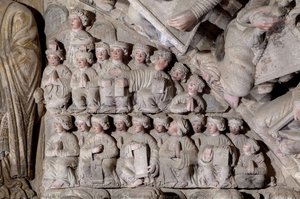
Matejeva skulpturalna estetika je značilna zaradi izjemnega realizma, ki predstavlja globoko odklon od prejšnjih, bolj strogih romanskih konvencij. Medtem ko so se njegovi sodobniki pogosto zanašali na stilizirane, ploščate figure, je Mojster Mateo skrbno študiral človeško anatomijo in kompleksno vedenje draperij, pri čemer je dosegel presunljivo natančnost v svojih prikazih. Njegovo mojstvo rezbarjenja apnenca je bilo neprimerljivo, zlasti skozi uporabo tehnike, znane kot trabajo vivo. Ta metoda je vključevala plastno disusunje kamnenskih plošč za ustvarjanje tekstriranih površin, ki so imitirale videz sluznice in tkanine, s čimer so statičnemu mediju podali občutek gibanja in vitalnosti.

Ta inovativni pristop mu je omogočil premostitev vrzine med zemeyskim in božimskim. Ob opazovanju njegovega dela lahko vidimo, kako je večno mojsko uporabil svetlobo in senco za poudarjanje globine svojih reliefov. Njegova sposobnost manipulacije kamnom, da bi nakazil mehkobo svetnikovih oblačil ali mišično napetost biblijskih postaci, je njegovo hantstvo dvignila na raven sofisticiranosti, ki se je v srednjem veku redko pojavljala. Ta tehnična briljantnost je zagotovila, da njegove figure niso bile le simboli, temveč opoljčene prisotnosti v vhodu katedrale.

Portico de la Gloria: Pričevilo o veri

Portico de la Gloria služi kot vrhunsko pričevilo Mateojeve umetniške in duhovne vizije. Njegove centralne plošče prikazujejo globoke scene iz evangelijov—vključnoj Jelovstvo, Annunciacijo in Križanje—razporejene tako, da gledalca vodijo skozi sveto zgodovino. Ikonografija je obsežna in kompleksna, ter vključuje:

  • Centralni lok: z ikonografskimi osebami, kot je svet Lucej, kjer zapletena romanska skulptura prikazuje globok religijski simbolizem.
  • Levi lok: mojstrovski prikaz španskega reliefnega rezbarjenja iz 12. stoletja, ki prikazuje podrobne biblijske zapovedi.
  • Desni lok: izpostav zapletene lepote, ki dokazuje njegovo sposobnost upravljanja kompleksne arhitekturne in skulpturalne integracije.

S temi deli je Mojster Mateo dosegel stopnjo zgodovinskega pomena, ki presega obdobje njegovega rojstva. Preoblikoval je romanski slog v smer vzrastajoče elegance gotike in pustil dediščino, ki ostaja srčni utrip Santiago de Compostela. Njegovo del stoji kot trajna premostitev med srednjem checklistom in večnošću, kar zagotavlja, da tudi stoletja po njegovi smrti leta 1217 njegova kamnena simfonija še vedno budi občutek čudenja.