Portret Mojster Francke

19 najbolj znanih slik umetnika Mojster Francke, galerijska izbira

Posodobljeno november 2026 · uvrščeno glede na naš skoraj priljubljenosti (iskanja, obiske in naročila za vsako delo) · 19 del v našem katalogu avtorja Mojster Francke

Kratek opis

Med vsemi originali, ki jih je pustil Mojster Francke, je najbolj znan Dormition of the Mother of God from Barbara altar from the Kalanti church in Finland (1415), ki se nahaja v kolekciji Narodni muzej v Finski, Helsinki. Takoj za njima sta Adoration of the Magi (1426) in Birth of Jesus (1424). Naš katalog vsebuje 19 del umetnika Mojster Francke; galerija je ohranila 19 del, ki jih svet najbolj oboževa, odlikovanih z datumom nastanka, pripadajočim muzajem in zgodbojo.

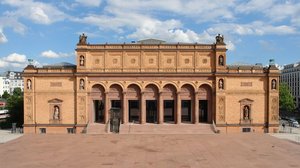
1380 – 1435, Spodnje Porenje Gothic Največ del: Hamburger Kunsthalle

10 najboljših slik umetnika Mojster Francke: izbira galerije

1
Dormition of the Mother of God from Barbara altar from the Kalanti church in Finland (1415) avtorja Mojster Francke

Dormition of the Mother of God from Barbara altar from the Kalanti church in Finland

1415 · Tempera On Panel · Narodni muzej v Finski, Helsinki

The Dormition of the Mother of God from Barbara altar from the Kalanti church in Finland is a significant component of the larger Saint Barbara Altarpiece. Created by the North German artist Master Francke, this specific work belongs to a larger Virgin Mary cycle that spans the corpus and the inner wings of the altarpiece. The subject matter focuses on the profound theological narrative of Mary's death and her subsequent…

2
Adoration of the Magi (1426) avtorja Mojster Francke

Adoration of the Magi

1426 · Tempera On Panel · Hamburger Kunsthalle, Hamburg

The painting is a depiction of the Adoration of the Magi, a scene centered on Mary holding her baby Jesus in her arms. She is surrounded by a gathering of twelve people, some of whom stand in close proximity to the viewer while others are positioned further away in the composition. The scene is further detailed by the presence of two chairs, one located near the left side and another…

3
Birth of Jesus (1424) avtorja Mojster Francke

Birth of Jesus

1424 · Oil On Panel · Hamburger Kunsthalle, Hamburg

In the quiet, hallowed atmosphere of the early fifteenth century, a masterpiece emerged that would capture the spiritual fervor of the late Gothic era. Master Francke, the enigmatic Dutch virtuoso known as Frater Francke, crafted his Birth of Jesus in 1424 with a profound sense of theatricality and devotion. This is not merely a depiction of a stable scene; it is a cosmic event rendered on wood. The painting commands…

4
The Martyrdom of Saint Thomas of Canterbury (1426) avtorja Mojster Francke

The Martyrdom of Saint Thomas of Canterbury

1426 · Tempera · Hamburger Kunsthalle, Hamburg

A Moment of Violent Devotion The scene unfolds with a heavy, dramatic tension, capturing the precise moment of Saint Thomas Becket's death within the cathedral. Four knights surround the Archbishop, their presence defined by the cold steel of a sword and the weight of a shield. There is a palpable sense of movement in the composition, as if the air itself has thickened with the gravity of the act. The…

5
The Entombment (1430) avtorja Mojster Francke

The Entombment

1430 · Tempera On Panel · Hamburger Kunsthalle, Hamburg

The artwork is titled The Entombment, a work executed by the artist Master Francke. This specific piece functions as a panel from the St. Thomas Altar. It originated from St. John's Church in Hamburg, Germany. The painting is a religious composition that depicts the deposition of Christ following the crucifixion.

6
Resurrection of Christ (1430) avtorja Mojster Francke

Resurrection of Christ

1430 · Hamburger Kunsthalle, Hamburg

In the profound stillness of the early fifteenth century, a moment of eternal victory was captured on panel by the hand of Master Francke. The Resurrection of Christ is not merely a depiction of a biblical event; it is a visceral experience of triumph over the shadows of mortality. As the eye meets the central figure of Jesus, one is immediately struck by the sheer kinetic energy of his ascent.…

7
Adoration of the Child (1426) avtorja Mojster Francke

Adoration of the Child

1426 · Tempera On Panel · Hamburger Kunsthalle, Hamburg

In the quiet, hallowed atmosphere of the early fifteenth century, a profound moment of divine intimacy was captured by the hand of Master Francke. His masterpiece, Adoration of the Child, dating to approximately 1426, serves as a breathtaking window into the spiritual fervor of the North German Gothic tradition. The scene unfolds with a tender, almost breathless reverence, as the Virgin Mary cradles the infant Jesus, lifting him toward the…

8
The Mocking of Saint Thomas of Canterbury (1426) avtorja Mojster Francke

The Mocking of Saint Thomas of Canterbury

1426 · Hamburger Kunsthalle, Hamburg

In the evocative scene of The Mocking of Saint Thomas of Canterbury, we are transported back to the visceral intensity of the early 15th century. Created around 1426 by the enigmatic North German master known as Frater Francke, this work captures a moment of profound tension and spiritual confrontation. The composition centers on a figure draped in a striking red robe, mounted upon a noble white horse, caught in the…

9
The Women at the Cross (fragment) (1435) avtorja Mojster Francke

The Women at the Cross (fragment)

1435 · Tempera On Panel · Hamburger Kunsthalle, Hamburg

The fragment captures a moment of profound grief, centering on the Virgin Mary and a group of women gathered in sorrow. They are draped in long gowns, their heads covered by veils, their postures reflecting the weight of loss following the death of Jesus Christ. In the background, a horse and a smaller group of figures suggest a larger, more complex narrative unfolding beyond this immediate circle of lamentation. Scattered…

Izbor umetnika Mojster Francke se nadaljuje, od 11 do 19

Motivi, ki so očarali Mojster Francke

Četiri teme, ki se v teh originalih najpogosteje ponavljajo, vsaka z svojim vrhunskim primerom.

Muzeji, ki hranijo originala umetnika Mojster Francke

4 muzejev, ki vsebujo največ slik na tej strani.

Muzej Mesto Sloga Mojster Francke Slike iz tega seznama
Hamburger Kunsthalle, HamburgHamburger Kunsthalle Hamburg 9 Adoration of the Magi, Birth of Jesus, The Martyrdom of Saint Thomas of Canterbury
Narodni muzej v Finski, HelsinkiNarodni muzej v Finski Helsinki 1 Dormition of the Mother of God from Barbara altar from the Kalanti church in Finland
Museum der bildenden Künste, LeipzigMuseum der bildenden Künste Leipzig 1 Vir Dolorum (Man of Sorrows)
Narodni muzej v Varšavi, VaršavaNarodni muzej v Varšavi Varšava 1 Holy trinity

Mojster Francke desetletje za desetletjem: originali, ki definira vsako od njih

Delo po desetletjih

Izberite desetletje, da si ogledate original, ki ga opredeljuje.

Vprašanja zbirateljev o slikah umetnika Mojster Francke

Za katero delo je Mojster Francke najbolj znan/a?Razkriti odgovor

Dormition of the Mother of God from Barbara altar from the Kalanti church in Finland (1415), Narodni muzej v Finski, Helsinki. Zatem sledeta Adoration of the Magi (1426) in Birth of Jesus (1424).

Koliko je bil Mojster Francke let, ko je nastalo delo Dormition of the Mother of God from Barbara altar from the Kalanti church in Finland?Razkriti odgovor

35 let: delo Dormition of the Mother of God from Barbara altar from the Kalanti church in Finland iz leta 1415, Mojster Francke pa je bil/a rojen/a leta 1380.

Katera je deset najbolj znanih slik umetnika Mojster Francke?Razkriti odgovor

Dormition of the Mother of God from Barbara altar from the Kalanti church in Finland, Adoration of the Magi, Birth of Jesus, The Martyrdom of Saint Thomas of Canterbury, The Entombment, Resurrection of Christ, Adoration of the Child, The Mocking of Saint Thomas of Canterbury, The Women at the Cross (fragment) in Barbara Altar, inside the wing. Zgornja lestica prikazuje leto nastanka in muzej za vsako delo.

Koliko slik je pustil Mojster Francke?Razkriti odgovor

Naš katalog vsebuje 19 del avtorja Mojster Francke, datiranih od 1415 do 1435.

V katerih muzejih so razložena remek dela umetnika Mojster Francke?Razkriti odgovor

Večini v Hamburger Kunsthalle (Hamburg), Narodni muzej v Finski (Helsinki) in Museum der bildenden Künste (Leipzig). Zgoraj navedena tabela muzejev vsebuje njihov celoten seznam.

V katerih letih je Mojster Francke naslikal svoja najbolj znana dela?Razkriti odgovor

V obdobju 1420s: 6 od 19 del na tej strani je bilo izdelovanih takrat, med njimi pa Adoration of the Magi.

Kakšna sta prva in zadnja znana originala umetnika Mojster Francke?Razkriti odgovor

Na tej strani je najstarejše delo iz Dormition of the Mother of God from Barbara altar from the Kalanti church in Finland (1415) in najstarejše iz The Women at the Cross (fragment) (1435).

Katere teme je Mojster Francke najpogosteje izbiral?Razkriti odgovor

People (3), Mary (3) in Man (3), na 19 delih na tej strani.

Katero tehniko je Mojster Francke najpogosteje uporabljal?Razkriti odgovor

Tempera On Panel, za 5 od 19 del na tej strani.

Kateri umetniški slog pripada Mojster Francke?Razkriti odgovor

Gothic, glede na originala na tej strani.

Katera dela umetnika Mojster Francke so razstavljena v muzeju Hamburger Kunsthalle?Razkriti odgovor

Adoration of the Magi, Birth of Jesus in The Martyrdom of Saint Thomas of Canterbury: v muzeju Hamburger Kunsthalle, Hamburg se nahaja 9 del z te strani.

Mojster Francke: življenje in delo

Mojster žalostne pobožnosti: Dediščina Frater Francka

Johannes Francke, znan kot Frater Francke, predstavlja ključno figuro v razvijajoči se umetniški pokrajini 15. stoletne Nemčije – posebej znotraj živahne gotike v Hamburgu. Čeprav so biografski podatki še vedno nekoliko skrivnostni, preživela dokumentacija potrjuje njegovo vključenost v monumentalne religiozne naročila skozi njegovo življenje, kar je utrdilo njegov ugled med najbolj izpolnjene slikarje oltarjev tistega obdobja.
  • Zgodnje življenje in usposabljanje: Natančnih informacij o Franckovih oblikovalnih letih je malo. Vendar pa se je okoli leta 1380 pojavil v Zutphens, verjetno pa je svoje prvo umetniško usposabljanje prejel znotraj takrat prevladujočega cechovnega sistema – stebena kamna srednjoveškega okrajstva, kjer so podčrtavanja spodbudila tehnično mojstvo ob hkrati duhovni predanosti.
  • Hamburg inrojstvo Jezusa (1424): Franckova kariera je v resnici cvetela v Hamburgu, kjer je pridobil pogodbo za izdelavo oltarja za cerkev svete Katarine. Ta ambiciozen projekt – »Roditev Jezusa«, zaključen leta 1424 – izvaja njegove slogovne občutke: intenzivna rdeča barva prevladuje v kompoziciji, kar izraža globoko čustvo in izpostavlja simbolične elemente, povezane s Kristovo božansko utjeljenje. Slikovina prikazuje natančno podrobnost in mojstorsko uporabo barv, kar odraža takratno gotsko estetiko.
Franckova umetniška tvorba se je razvijala dlje od tega edičnega mojstra. Čeprav z gotovostjo ne obstaja veliko del, ki bi mu bila nedvomno pripisana – kar je pogosta izziv, s katerim se soočajo zgodovinarji pri rekonstrukcijo umetniških linij – se znanstveni konsenzus sklanja k njegovemu prispevku v Leipzigu in še enem izstopajočem delu, ki se nahaja v Hamburgovem Kunsthalleju. Te slike kažejo nadaljnjo vključenost v gotične tehnike, ki jih odlikujejo stilizirane figure in bogata uporaba zlata – značilnosti takratnega verskega navdušenja.
  • Tehnika in slog: Frančkov umetniški slog je trdno zakoreninjen v konvencijah gotičnega slikarstva. S spretnostjo je uporabljal tempero na leseni podlagi, s čimer je dosegel svetlobne barve in teksturno bogastvo. Njegove priredbe biblijskih scen so prepojene z dramatičnimi čustvi in psihološko globino, pri čemer predaja ekspresivno gestikulacijo in izraža duhovno kontemplacijo.
  • Vpliv in dediščina: Frančkova dela so globoko vplivala na naslednje generacije umetnikov v Hamburgu in širše. Podprl je gotični slog in ga vzpostavil kot prevladujoč vizualni jezik za religiozno umetnost svojega časa. Njegova natančna pozornost do podrobnosti in čustvena prikazovanje biblijskih zgodb še vedno odmevajo pri današnjih gledalci, s čim je zagotovil svoj položaj trajnega simbola pobožnosti in umetniške odličnosti.

Izstopajoča dosežba: Barbara oltar

Morda Frančkova najbolj slavna dosežba je »Barbara oltar«, naročen za cerkev svete Barbare v Hamburgu okoli leta 1430. To monumentalno umetniško del – spomen njegove umetniške spretnosti – vključuje kompleksno pripoved o mučeništvu svete Barbare in uteleša nagnjenost gotične tradicije k veličastnosti in simboličnemu predstavitvi. Intrikatni skulpturalni elementi oltra, v kombinaciji z živopisno polikromijo, poudarjajo Frančkovo mojstvo tako v vizualnih umetnostih kot v ročnem delu.

Zgodovinski pomen

Frančkov prispevek k nemški umetniški zgodovini je nepodvden. Predstavlja ključno povezavo med srednjovečnimi umetnostnimi tradicijami in razvijajočo se gibanjem renesanse – prehodno obdobje, ki ga zaznamuje obnovljeni interes za klasične ideale ob trajni religiozni predanosti. Njegovi oltarji stojijo kot močna vizualna izražanja vere, ki odražajo duhovne skrbi njegove dobe in oblikujejo estetsko občutljivost hamburškega umetniškega okolja za prihodnja stoletja.