


1


Posodobljeno oktober 2026 · uvrščeno glede na naš skoraj priljubljenosti (iskanja, obiske in naročila za vsako delo) · 45 del v našem katalogu avtorja Georges Kars
Kratek opis
Izpostavljeno v galeriji je najbolj znano sliko umetnika Georges Kars, ki je Standing female nude with drapery (1904). Reader (1911) in Sitting Man (1910) dopolnjujeta trijo, ki jo prepozna vsak pogled. Od 45 del avtorja Georges Kars v našem katalogu galerija spodaj predstavlja 44 najbolj znanih; vsako je original z letom nastanka, pripadajočim mu muzejem in opisom tistega, kar ga dela edinstavnim.


 Sunday on the Periphery1920 · Narodna galerija v Pragi
12
 Three Acts1926 · Moravska galerija v Brnu
13
 Woman with a Parrot1926 · Narodna galerija v Pragi
14
 Nude in a Landscape1926
15
 A woman in an armchair1923
16
 Portrait of the painter Utrillo1926
17
 Nude Woman1933
18
 Odalisque1929
19
 Woman with gray shawl1930 · Centre Pompidou
20
 Woman dressing1929 · Chazen Museum of Art
21
 Self-portrait1929 · Musée d'Art Moderne et Contemporain de Strasbourg
22
 Woman with parrot1929
23
 The pupil at the easel1938 · Centre Pompidou
24
 The Dotted Dress1939 · Musée d'Art Moderne et Contemporain de Strasbourg
25
 Portrait of Madame Kars1940 · Musée d'Art Moderne et Contemporain de Strasbourg
26
 Portrait of Richard Prè1939 · Musée d'Art Moderne et Contemporain de Strasbourg
27
 Red odalisque1940 · Centre Pompidou
28
 My friend Pre and the tiger hunt1939 · Centre Pompidou
29
 Flowers and Monkeys1945 · Musée d'Art Moderne et Contemporain de Strasbourg
30
 Three Nudes
31
 Man with Horses (Ploughing)1910
32
 Bunch of Flowers1910
33
 Still life with Japonaiserie1909
34
 Nu assis
35
 In the Park1906
36
 Female Nude1912
37
 Cubist Still Life1912
38
 Woman in an Armchair1912
39
 Network Management1932 · Moravska galerija v Brnu
40
 White House1933 · Narodna galerija v Pragi
41
 View of Tosca1935 · Moravska galerija v Brnu
42
 Prague1939 · Musee d'Art Moderne de Troyes
43
 Landscape around Mallorca
44
 Landscape in Southern France
6 muzejev, ki vsebujo največ slik na tej strani.
| Muzej | Mesto | Sloga Georges Kars | Slike iz tega seznama |
|---|---|---|---|
 Narodna galerija v Pragi |
Praga | 6 | Portrait of Otto Gutfreund, Self-Portrait, Wrapping Lemons |
 Musée d'Art Moderne et Contemporain de Strasbourg |
Strazburg | 6 | Sitting nude, Self-portrait, The Dotted Dress |
 Centre Pompidou |
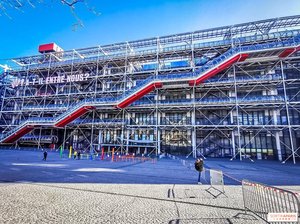
Pariz | 4 | Woman with gray shawl, The pupil at the easel, Red odalisque |
 Moravska galerija v Brnu |
Brno | 3 | Three Acts, Network Management, View of Tosca |
 Chazen Museum of Art |
Madison | 1 | Woman dressing |
 Musee d'Art Moderne de Troyes |
Troyes | 1 | Prague |
Izberite desetletje, da si ogledate original, ki ga opredeljuje.
Standing female nude with drapery (1904). Zatem sledeta Reader (1911) in Sitting Man (1910).
24 let: delo Standing female nude with drapery iz leta 1904, Georges Kars pa je bil/a rojen/a leta 1880.
Standing female nude with drapery, Reader, Sitting Man, Landscape on Mallorca, Portrait of Otto Gutfreund, Self-Portrait, Wrapping Lemons, The Artist's Wife, Portrait of Richard Weiner in Sitting nude. Zgornja lestica prikazuje leto nastanka in muzej za vsako delo.
Naš katalog vsebuje 45 del avtorja Georges Kars, datiranih od 1904 do 1945.
Večini v Narodna galerija v Pragi (Praga), Musée d'Art Moderne et Contemporain de Strasbourg (Strazburg) in Centre Pompidou (Pariz). Zgoraj navedena tabela muzejev vsebuje njihov celoten seznam.
V obdobju 1920s: 13 od 44 del na tej strani je bilo izdelovanih takrat, med njimi pa The Artist's Wife.
Na tej strani je najstarejše delo iz Standing female nude with drapery (1904) in najstarejše iz Flowers and Monkeys (1945).
Portrait of Otto Gutfreund, Self-Portrait in Wrapping Lemons: v muzeju Narodna galerija v Pragi, Praga se nahaja 6 del z te strani.
George Kars, a name perhaps less familiar than many of his contemporaries within the School of Paris, nevertheless represents a profoundly evocative and quietly powerful voice in early twentieth-century European art. Born Jiří Karpeles in Kralupy, Czech Republic, in 1880 (though some sources cite 1882), Kars’s life was a tapestry woven with threads of migration, artistic apprenticeship, and a deep engagement with the shifting landscapes of his time. His journey culminated in a distinctive style—a haunting blend of realism, symbolism, and a palpable sense of melancholy—that captured the spirit of a generation grappling with war, displacement, and the complexities of modern identity. His work is not merely depictions of scenes; it’s an exploration of human experience filtered through a uniquely sensitive lens.
Kars's early artistic education began in Munich, where he studied under Heinrich Knirr and Franz von Stuck, absorbing the influence of German Expressionism. However, his true artistic awakening occurred during a period spent in Madrid, Spain, between 1905 and 1907. It was here that he encountered the works of Juan Gris, Velázquez, and Goya – masters who instilled in him an appreciation for meticulous observation, masterful composition, and a profound understanding of light and shadow. The Spanish sun seemed to imbue his palette with a newfound vibrancy, while the techniques of these Old Masters provided a framework for his own evolving style. This period marked a crucial shift; Kars began to develop his signature approach – a deliberate layering of observation and emotion.
Paris, in 1908, became the crucible where Kars truly forged his artistic identity. He settled in Montmartre, immersing himself in the vibrant, often turbulent, atmosphere of the Parisian art scene. He befriended figures like Suzanne Valadon, Maurice Utrillo, and Apollinaire, absorbing their creative energy and navigating the revolutionary currents of Cubism and Fauvism. Yet, despite his engagement with these avant-garde movements, Kars never fully abandoned his roots. His work retained a strong connection to realism, particularly in his depictions of landscapes and portraits – often imbued with a sense of quiet introspection.
The First World War dramatically altered the course of Kars’s life. He served on the Galician front, experiencing firsthand the horrors of trench warfare. Captured by the Russians and held as a prisoner of war for nearly two years, he endured unimaginable hardship and witnessed scenes of profound suffering. This experience profoundly shaped his artistic vision, imbuing his later works with a pervasive sense of loss, isolation, and the fragility of human existence. The trauma of war became a recurring theme in his oeuvre, manifesting not through explicit depictions of violence, but rather through subtle gestures, melancholic expressions, and a haunting atmosphere of quiet despair.
Kars’s artistic output can be broadly categorized into two primary areas: landscapes and nudes. His landscapes are not simply representations of natural beauty; they are imbued with a deeply personal resonance, reflecting his own sense of displacement and longing for home. He frequently depicted the rugged terrain of Eastern Europe – the rolling hills of Bohemia, the stark beauty of the Black Sea coast – capturing their essence with remarkable precision and sensitivity. His use of color is particularly noteworthy—often muted and earthy tones punctuated by flashes of vibrant hue, creating a sense of both tranquility and unease.
His nudes are equally compelling, but they deviate significantly from the idealized representations prevalent in academic art. Kars’s figures are often rendered with a palpable vulnerability, their faces etched with sadness or contemplation. He eschewed overt sexuality, instead focusing on capturing the essence of human emotion and the quiet dignity of the body. His portraits, particularly those created during his time in Paris, reveal an uncanny ability to capture the inner lives of his subjects – their hopes, fears, and unspoken desires. The “Head of Menshikov (study)” exemplifies this skill, offering a glimpse into the soul of a man through subtle gestures and nuanced expressions.
Following the First World War, Kars’s artistic focus shifted dramatically. The devastation of Europe, coupled with his own experiences as a prisoner of war, fueled a profound sense of empathy for refugees and displaced persons. He began to produce a series of poignant works depicting individuals seeking shelter from the horrors of conflict – often children, their faces bearing the marks of hardship and loss. These paintings, collectively known as “refugee art,” are among his most moving and emotionally resonant creations.
The drawings and sketches produced during this period—particularly those created in Switzerland after 1942—are characterized by a remarkable economy of line and a hauntingly realistic portrayal of human suffering. He captured the vulnerability and resilience of these displaced individuals with an almost unbearable tenderness, conveying their plight through subtle gestures, averted gazes, and expressions of quiet despair. The “Woman in an Armchair” is a particularly powerful example of this artistic impulse – a study in loneliness and isolation.
George Kars’s career was tragically cut short by his suicide in Geneva in February 1945, shortly after the end of World War II. Despite his relatively brief period of activity as an artist, he left behind a significant body of work that continues to resonate with viewers today. His paintings are characterized by their emotional depth, technical skill, and a unique ability to capture the spirit of a troubled era.
Kars’s inclusion in the School of Paris—a group of artists who developed their style in Paris after returning from serving in World War I—solidifies his place within a pivotal moment in modern art history. While he never achieved widespread fame during his lifetime, his work is now recognized for its quiet power and profound emotional honesty. His legacy lies not only in the beauty of his paintings but also in his willingness to confront difficult subjects – war, displacement, and human suffering—with unflinching sensitivity and artistic integrity. The establishment of the Museu Municipal de Tossa del Mar in 1935, alongside Rafael Benet, Enric Casanovas and Alberto del Castillo, further cements his contribution to Catalan art.

