Portret El Lissitzky

Slike avtorja El Lissitzky: 71 najbolj znanih del skozi oči galerije

Posodobljeno november 2026 · uvrščeno glede na naš skoraj priljubljenosti (iskanja, obiske in naročila za vsako delo) · 71 del v našem katalogu avtorja El Lissitzky

Kratek opis

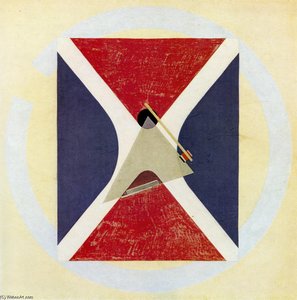
Za oči galerije je najbolj znano sliko umetnika El Lissitzky delo Kestnermappe Proun, Rob. Levnis and Chapman GmbH Hannover #7 (1923), katere original visi v muzeju Museu Coleção Berardo, Lisabon. Proun 4 B (1920) in Beat the Whites with the Red Wedge (1920) dopolnjujeta trijo, ki jo prepozna vsak pogled. Od 71 del avtorja El Lissitzky v našem katalogu galerija spodaj predstavlja 71 najbolj znanih; vsako je original z letom nastanka, pripadajočim mu muzejem in opisom tistega, kar ga dela edinstavnim.

1890 – 1941, Počinok Konstruktivizem Največ del: Museu Coleção Berardo

Top 10 slik umetnika El Lissitzky v galeriji

1
Kestnermappe Proun, Rob. Levnis and Chapman GmbH Hannover #7 (1923) avtorja El Lissitzky

Kestnermappe Proun, Rob. Levnis and Chapman GmbH Hannover #7

1923 · Litografija · Museu Coleção Berardo, Lisabon

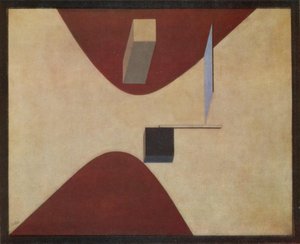
Geometrija revolucije V gorhotni atmosferi leta 1923 je El Lissitzky rodil vizualni jezik, ki bo za vedno spremenil pot sodobne umetnosti. Ta litografija, globok izpodobe legendarnega portfelja Kestnermappe Proun, stoji kot monumentalno spomenstvo radikalnim načelom suprematizma. To je bilo obdobje, ki so ga opredelile potresne premike v politiki in tehnologiji, ko so umetniki sklanjali platno iz težkih verig reprezentacije. Lissitzky, s svojo edinstveno izkušnjo v arhitekturi in tehničnem načrtovanju, ni…

2
Proun 4 B (1920) avtorja El Lissitzky

Proun 4 B

1920 · Acrylic On Canvas · Thyssen-Bornemisza Museum, Madrid

A Universe in Miniature: Decoding El Lissitzky’s *Proun 4 B* El Lissitzky's *Proun 4 B*, created in 1920, isn’t simply a painting; it’s a visual manifesto of a new era. Emerging from the turbulent aftermath of revolution and war, this work embodies the core tenets of Constructivism – an art movement dedicated to reflecting modern industrial society and forging a path toward a utopian future. Measuring 70 x 55 cm…

3
Beat the Whites with the Red Wedge (1920) avtorja El Lissitzky

Beat the Whites with the Red Wedge

1920 · Painting

To stand before "Beat the Whites with the Red Wedge" is not merely to observe a painting; it is to confront a manifesto rendered in pigment and form. This seminal work by El Lissitzky, dating from 1920, pulses with the raw, electrifying energy of a world undergoing seismic shifts. It is an artifact steeped in the fervor of post-revolutionary Russia, where art was not considered a mere decoration but a…

4
Proun (1923) avtorja El Lissitzky

Proun

1923 · Oil

El Lissitzky's 1923 painting, *Proun*, isn’t merely a composition of shapes; it’s an architectural manifesto rendered in pigment and line. This seminal work from the heart of the Russian Constructivist movement pulsates with a revolutionary energy, inviting us to reconsider our relationship with space, form, and perception. The piece immediately commands attention with its bold simplicity – a predominantly yellow field punctuated by vibrant red and stark black geometric forms.…

5
To all the children (1920) avtorja El Lissitzky

To all the children

1920 · Ink On Paper

In the turbulent landscape of 1920, amidst the fervent energy of the Russian Revolution, El Lissitzky birthed a visual language that would forever alter the trajectory of modern design. His work, "To all the children," is not merely an arrangement of shapes but a bold declaration of Constructivist ideals. At first glance, the piece presents a striking, minimalist aesthetic, dominated by a monumental, thick sans-serif letter ‘P’ that commands the…

6
Proun 19D (1922) avtorja El Lissitzky

Proun 19D

1922 · Akril na platnu

El Lissitzkyjev *Proun 19D*, ustvarjen leta 1922, ni le slika; je fragment revolucionarne vizije. Izhajajoč iz strasti post-revolucionne Rusije, ta delo izraža duh Konstruktivizma in Suprematizma, hkrati pa presega preprosto kategorizacijo. Predstavlja se kot dinamično interakcijo geometričnih oblik – ravnine, kote in krogi – suspendirane v polju janožute barve. Kompozicija ni reprezentativna na tradicionalni način; bolj pa čuti kot razmetana arhitekturna skica, načrt za novo svetovni red, poslikan z barvami,…

7
Proun 30 (1920) avtorja El Lissitzky

Proun 30

1920 · Painting

A gray square anchors the composition, heavy and unmoving. It is a solid weight in an otherwise weightless void. Two triangles intersect this central plane, their edges sharp and precise. One is larger, pressing against the left, while a smaller form cuts through the space. The palette is stripped to its bones: grays, blacks, and whites. There is no warmth here, only the cold logic of the line. The shapes…

8
Kestnermappe Proun, Rob. Levnis and Chapman GmbH Hannover #5 (1923) avtorja El Lissitzky

Kestnermappe Proun, Rob. Levnis and Chapman GmbH Hannover #5

1923 · Litografija · Museu Coleção Berardo, Lisabon

In the turbulent landscape of 1923, as the world grappled with the seismic shifts of the post-war era, El Lissitzky birthed a visual language that would forever alter the trajectory of modernism. His Kestnermappe Proun, Rob. Levnis and Chapman GmbH Hannover #5 is not merely a lithograph; it is a profound manifesto of the Constructivist spirit. This striking black and white composition serves as a window into a period where…

9
Wendingen (1921) avtorja El Lissitzky

Wendingen

1921 · Litografija · MoMA - Muzej moderne umetnosti, New York City

Wendingen El Lissitzkyja, ustvarjeno leta 1921, predstavlja osupljiveh primer early abstract art, globoko zakorenjen v konstruktivističkih in suprematističnih gibanjih. To delo ni le preprosta slika, temveč vizualna izrazitost naslovnice nizozemske revije "Wendingen", ki je bila posvečena sodobni arhitekturi in dizajnu. Delo to personificira Lissitzkyjev vizionarski koncept "Proun", ki si je postavljal namen zdeljati arhitekturo, tehniko in umetnost v enotno, dinamično vizualno izrazitost.

10
Cover of the book 'Teyashim' ('Four billy goats') (1922) avtorja El Lissitzky

Cover of the book 'Teyashim' ('Four billy goats')

1922 · Ink On Paper

El Lissitzky's “Cover of the book ‘Teyashim’ ('Four billy goats')", created in 1922, stands as a cornerstone of Constructivist art—a movement that sought to liberate visual language from representational constraints and forge a new aesthetic rooted in functionality and geometric abstraction. More than just a decorative element for a children's book, it embodies the spirit of its time: a fervent belief in the transformative power of art to reshape society…

Slikarska dela umetnika El Lissitzky, uvrščena od 11 do 71

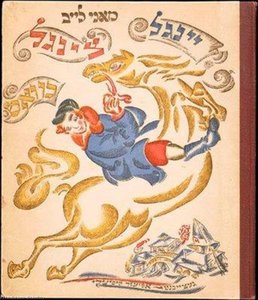
11Kestnermappe Proun, Rob. Levnis and Chapman GmbH Hannover #2 (1923) avtorja El LissitzkyKestnermappe Proun, Rob. Levnis and Chapman GmbH Hannover #21923 · Museu Coleção Berardo 12Proun 8 avtorja El LissitzkyProun 8 13The Constructor (1924) avtorja El LissitzkyThe Constructor1924 14Cover of the avant guard periodical 'Vyeshch' (1922) avtorja El LissitzkyCover of the avant guard periodical 'Vyeshch'1922 15Proun (1925) avtorja El LissitzkyProun1925 16Kestnermappe Proun, Rob. Levnis and Chapman GmbH Hannover #3 (1923) avtorja El LissitzkyKestnermappe Proun, Rob. Levnis and Chapman GmbH Hannover #31923 · Museu Coleção Berardo 17Kestnermappe Proun, Rob. Levnis in Chapman GmbH Hannover #6 (1923) avtorja El LissitzkyKestnermappe Proun, Rob. Levnis in Chapman GmbH Hannover #61923 · Museu Coleção Berardo 18Cover of Broom (1923) avtorja El LissitzkyCover of Broom1923 19Preliminary sketch for a poster (1920) avtorja El LissitzkyPreliminary sketch for a poster1920 20Proun 19D (1920) avtorja El LissitzkyProun 19D1920 · MoMA - Muzej moderne umetnosti 21Proun G.B.A. (1923) avtorja El LissitzkyProun G.B.A.1923 · Kunstmuseum Den Haag 22Basic Calculus (1928) avtorja El LissitzkyBasic Calculus1928 23Catalog cover (1923) avtorja El LissitzkyCatalog cover1923 24Proun 43 avtorja El LissitzkyProun 43 25Proun 1 C (1919) avtorja El LissitzkyProun 1 C1919 26Proun 8 Stellungen (Proun 8 Positions) (1923) avtorja El LissitzkyProun 8 Stellungen (Proun 8 Positions)1923 · Narodna galerija Kanade 27Book cover for 'Suprematic tale about two squares' (1920) avtorja El LissitzkyBook cover for 'Suprematic tale about two squares'1920 28Proun 23, No.6 (1919) avtorja El LissitzkyProun 23, No.61919 29Proun 5 A (1919) avtorja El LissitzkyProun 5 A1919 30Kestnermappe Proun, Rob. Levnis and Chapman GmbH Hannover #4 (1923) avtorja El LissitzkyKestnermappe Proun, Rob. Levnis and Chapman GmbH Hannover #41923 · Museu Coleção Berardo 31Gray cube (1919) avtorja El LissitzkyGray cube1919 32Proun (1923) avtorja El LissitzkyProun1923 33Portrait of a Man (1912) (1912) avtorja El LissitzkyPortrait of a Man (1912)1912 34Iron in clouds', for Strastnoy Boulevard (1925) avtorja El LissitzkyIron in clouds', for Strastnoy Boulevard1925 35Cover for 'Good!' by Vladimir Mayyakovsky (1927) avtorja El LissitzkyCover for 'Good!' by Vladimir Mayyakovsky1927 36Proun R.V.N. 2 (1923) avtorja El LissitzkyProun R.V.N. 21923 37Cover to 'For the voice' by Vladimir Mayakovsky (1920) avtorja El LissitzkyCover to 'For the voice' by Vladimir Mayakovsky1920 38The Fire Came and Burnt the Stick (1919) avtorja El LissitzkyThe Fire Came and Burnt the Stick1919 · Judovski muzej 39Tatlin at Work avtorja El LissitzkyTatlin at Work 40Flying Sun (1916) avtorja El LissitzkyFlying Sun1916 41There is over (1920) avtorja El LissitzkyThere is over1920 42Untitled (1920) avtorja El LissitzkyUntitled1920 · Solomon R. Guggenheim Museum 43Lenin Tribune (1920) avtorja El LissitzkyLenin Tribune1920 44The Stick Came and Beat the Dog (1919) avtorja El LissitzkyThe Stick Came and Beat the Dog1919 · Judovski muzej 45New Man (1923) avtorja El LissitzkyNew Man1923 46Composition, slumber avtorja El LissitzkyComposition, slumber 47l.n.31 (1924) avtorja El Lissitzkyl.n.311924 48Flying to earth from a distance (1920) avtorja El LissitzkyFlying to earth from a distance1920 49Proun 1E (City) (1920) avtorja El LissitzkyProun 1E (City)1920 · National Art Museum of Azerbaijan 50Chair for the exhibition (1928) avtorja El LissitzkyChair for the exhibition1928 51Four (arithmetic) actions (1928) avtorja El LissitzkyFour (arithmetic) actions1928 52Father Bought a Kid for Two Zuzim (1919) avtorja El LissitzkyFather Bought a Kid for Two Zuzim1919 · Judovski muzej 53Insert the red and clear on black (1920) avtorja El LissitzkyInsert the red and clear on black1920 54Reminiscence of Ravenna (1914) avtorja El LissitzkyReminiscence of Ravenna1914 55Proun 1 A, Bridge I (1919) avtorja El LissitzkyProun 1 A, Bridge I1919 56The Ox Came and Drank the Water (1919) avtorja El LissitzkyThe Ox Came and Drank the Water1919 · Judovski muzej 57Proun 99 (1924) avtorja El LissitzkyProun 991924 · Yale University Art Gallery 58Book cover for 'Ingle-Tsingl-Khvat' by Mani Leib (1918) avtorja El LissitzkyBook cover for 'Ingle-Tsingl-Khvat' by Mani Leib1918 59All for the front! All for Victory! avtorja El LissitzkyAll for the front! All for Victory! 60Composition (1920) avtorja El LissitzkyComposition1920 61Announcer (1923) avtorja El LissitzkyAnnouncer1923 62Book cover for 'Chad Gadya' by El Lissitzky (1919) avtorja El LissitzkyBook cover for 'Chad Gadya' by El Lissitzky1919 · MoMA - Muzej moderne umetnosti 63Beat all the scattered (1920) avtorja El LissitzkyBeat all the scattered1920 64Merz' Magazine Layout (1924) avtorja El LissitzkyMerz' Magazine Layout1924 65Vive la Commune 1871 avtorja El LissitzkyVive la Commune 1871Museum Folkwang 66Central Park of Culture and Leisure Sparrow Hills avtorja El LissitzkyCentral Park of Culture and Leisure Sparrow Hills 67The Cat Came and Devoured the Kid (1919) avtorja El LissitzkyThe Cat Came and Devoured the Kid1919 · Judovski muzej 68Proun 30 T avtorja El LissitzkyProun 30 T 69Proun G7 (1923) avtorja El LissitzkyProun G71923 70Proun Interpenetrating Planes avtorja El LissitzkyProun Interpenetrating Planes 71Proun 3 A avtorja El LissitzkyProun 3 A

Slavna platna umetnika El Lissitzky, razdeljena po obdobjih

Motivi, ki so očarali El Lissitzky

Četiri teme, ki se v teh originalih najpogosteje ponavljajo, vsaka z svojim vrhunskim primerom.

Muzeji, ki hranijo originala umetnika El Lissitzky

8 muzejev, ki vsebujo največ slik na tej strani.

Muzej Mesto Sloga El Lissitzky Slike iz tega seznama
Museu Coleção Berardo, LisabonMuseu Coleção Berardo Lisabon 6 Kestnermappe Proun, Rob. Levnis and Chapman GmbH Hannover #7, Kestnermappe Proun, Rob. Levnis and Chapman GmbH Hannover #5, Kestnermappe Proun, Rob. Levnis and Chapman GmbH Hannover #2
Judovski muzej, New YorkJudovski muzej New York 5 The Fire Came and Burnt the Stick, The Stick Came and Beat the Dog, Father Bought a Kid for Two Zuzim
MoMA - Muzej moderne umetnosti, New York CityMoMA - Muzej moderne umetnosti New York City 3 Wendingen, Proun 19D, Book cover for 'Chad Gadya' by El Lissitzky
Thyssen-Bornemisza Museum, MadridThyssen-Bornemisza Museum Madrid 1 Proun 4 B
Kunstmuseum Den Haag, HaagKunstmuseum Den Haag Haag 1 Proun G.B.A.
Narodna galerija Kanade, OttawaNarodna galerija Kanade Ottawa 1 Proun 8 Stellungen (Proun 8 Positions)
Solomon R. Guggenheim Museum, New YorkSolomon R. Guggenheim Museum New York 1 Untitled
National Art Museum of Azerbaijan, BakuNational Art Museum of Azerbaijan Baku 1 Proun 1E (City)

El Lissitzky, značilna dela vsakega leta

17 let umetnosti umetnika El Lissitzky, od 1912 do 1928: galerija jih spremlja leto za letom, skozi njihova najboljša originalna dela.

Delo po letih

Izberite leto in oglej originale.

Slike umetnika El Lissitzky: odgovori galerije

Katero sliko avtorja El Lissitzky je najbolj znana med vsemi?Razkriti odgovor

Kestnermappe Proun, Rob. Levnis and Chapman GmbH Hannover #7 (1923), Museu Coleção Berardo, Lisabon. Zatem sledeta Proun 4 B (1920) in Beat the Whites with the Red Wedge (1920).

Koliko je bil El Lissitzky let, ko je dokončal Kestnermappe Proun, Rob. Levnis and Chapman GmbH Hannover #7?Razkriti odgovor

33 let: delo Kestnermappe Proun, Rob. Levnis and Chapman GmbH Hannover #7 iz leta 1923, El Lissitzky pa je bil/a rojen/a leta 1890.

Katera je 10 najboljjših slik umetnika El Lissitzky?Razkriti odgovor

Kestnermappe Proun, Rob. Levnis and Chapman GmbH Hannover #7, Proun 4 B, Beat the Whites with the Red Wedge, Proun, To all the children, Proun 19D, Proun 30, Kestnermappe Proun, Rob. Levnis and Chapman GmbH Hannover #5, Wendingen in Cover of the book 'Teyashim' ('Four billy goats'). Zgornja lestica prikazuje leto nastanka in muzej za vsako delo.

Koliko dzieł stworzył El Lissitzky?Razkriti odgovor

Naš katalog vsebuje 71 del avtorja El Lissitzky, datiranih od 1912 do 1928.

Kje so razpostavljena najbolj znana originala umetnika El Lissitzky?Razkriti odgovor

Večini v Museu Coleção Berardo (Lisabon), Judovski muzej (New York) in MoMA - Muzej moderne umetnosti (New York City). Zgoraj navedena tabela muzejev vsebuje njihov celoten seznam.

Kdaj je El Lissitzky ustvaril svoja najbolj znana slika?Razkriti odgovor

V obdobju 1920: 16 od 71 del na tej strani je bilo izdelovanih takrat, med njimi pa Proun 4 B.

Kateri so najstarejši in najmlajši znanii dela umetnika El Lissitzky?Razkriti odgovor

Na tej strani je najstarejše delo iz Portrait of a Man (1912) (1912) in najstarejše iz Basic Calculus (1928).

Kateri motivi so bili za El Lissitzky najbolj značilni?Razkriti odgovor

Geometric abstraction (21), Russian art (14) in Geometric shapes (12), na 71 delih na tej strani.

Pri katerem medijem je El Lissitzky delal največ?Razkriti odgovor

Acrylic On Canvas, za 23 od 71 del na tej strani.

S katerim umetnostnim slogom je povezan El Lissitzky?Razkriti odgovor

Konstruktivizem, glede na originala na tej strani.

Katera originalna dela umetnika El Lissitzky ima v svoji zbirki Museu Coleção Berardo?Razkriti odgovor

Kestnermappe Proun, Rob. Levnis and Chapman GmbH Hannover #7, Kestnermappe Proun, Rob. Levnis and Chapman GmbH Hannover #5 in Kestnermappe Proun, Rob. Levnis and Chapman GmbH Hannover #2: v muzeju Museu Coleção Berardo, Lisabon se nahaja 6 del z te strani.

El Lissitzky: umetnik

The Life and Art of El Lissitzky

Born Lazar Markovich Lissitzky on November 23, 1890, the man who would become known as El Lissitzky entered a world of quiet tradition in Pochinok. This small Jewish community lay about 50 kilometers southeast of Smolensk in the Russian Empire. His father, Mordukh Zalmanovich Lissitzky, was a man of letters and travel, a well-educated agent who moved through the world with a command of English and German. This linguistic breadth and the family's connections to the broader European landscape would eventually mirror the expansive, restless energy of the artist himself. Whether called Elizar Lissitzky or Lasar Markowitsch Lissitzky, he was a figure of immense variety, refusing to be confined to a single medium or a single purpose.

His creative output was a vast and restless thing. He was a painter and an illustrator, but he also worked as a designer, a printmaker, and a photographer. His mind moved toward the structural, leading him into the realms of architecture and the precise demands of typography. He was a man of the new era, a Russian and Soviet artist who sought to build something tangible from the abstract ideas of his time. His life was a constant movement between the roles of an intellectual explorer and a practical craftsman, a duality that defined his many contributions to the visual language of the twentieth century.

Early Life, Family and Training

The foundations of his life were laid in the small Russian town of Pochinok, but his early years were marked by movement. Between 1891 and 1898, his family resided in Vitebsk, a place that would later influence his understanding of cultural identity. By 1899, he had moved to Smolensk to live with his grandfather, where he attended City School 1. It was during these formative years that his innate talent first met formal guidance; at age 13, he began receiving instruction from Yury Pen, a teacher who recognized the potential in the young student.

Ambition often meets the resistance of rigid systems. In 1909, he sought entry into the St. Petersburg Academy of Arts, yet his application was rejected. This refusal was likely the result of the restrictive Jewish quota imposed by the Tsarist regime, a barrier that diverted his path away from the traditional Russian academies. Instead of yielding to this setback, he turned his gaze toward Germany. He enrolled at the Darmstadt Polytechnic Institute to study architectural engineering, a discipline that would forever lend a structural logic to his later visual experiments. He spent five years there, working as a bricklayer to sustain himself and spending his vacations visiting local Jewish historical sites to study their forms and decorations.

His time in Germany was defined by academic rigor and a deep engagement with the physical world. He did not merely study theory; he immersed himself in the practicalities of construction and design. This period of intense training concluded in 1914, when he graduated cum laude from the Darmstadt Polytechnic. He returned to Russia not just as a student of art, but as a trained engineer, carrying with him a precise understanding of space and structure that would eventually redefine the boundaries of modern design.

The Suprematist Period and Unovis

The trajectory of his creative life shifted profoundly when he encountered Kazimir Malevich. This meeting drew him into the orbit of Suprematism, a movement that sought to strip art of all representational burdens. In 1919, an invitation arrived from Marc Chagall, who asked him to join the faculty of the Vitebsk Popular Art School. It was within this educational setting that he became a member of the Suprematist group UNovis, or the Affirmers of New Art. He did not merely follow the established paths of his peers; instead, he sought to expand the very boundaries of what these geometric forms could achieve.

He began to develop a distinct series of works that he called Proun, a term derived from the Russian phrase proyekt utverzhdenya novogo, meaning project for the affirmation of the new. These were not simple paintings, but rather investigations into how space and form might interact. He executed his first Proun in 1919, marking the start of a period where he blended the principles of graphic arts with architectural thought. His work during these years moved away from the flat planes of pure abstraction toward a more complex, three-dimensional understanding of the world.

Constructivism and Social Engagement

By 1920, Lissitzky had moved beyond the purely spiritual inquiries of his earlier years to embrace the structured, purposeful energy of Constructivism. He sought to transform the artist from a solitary dreamer into an active agent for change, a concept he understood as das zielbewußte Schaffen, or goal-oriented creation. This conviction drew him into the heart of the Soviet educational system, where he taught at the Vkhutemas technical school alongside Vladimir Tatlin. Here, the focus shifted toward how art might function within a modern, industrial society, moving from the canvas into the realm of practical, social utility.

His work became deeply intertwined with the political pulse of the era. He dedicated much of his energy to designing exhibition displays and propaganda works that sought to communicate the ideals of the new state. In one striking instance, he produced a poster in 1941 that rallied the people to construct more tanks to fight against Nazi Germany. Even in his earlier, more abstract compositions, the political subtext was often clear. His 1920 work, Beat the Whites with the Red Wedge, utilized sharp geometric forms to engage with the tensions of the time, offering a visual play on an antisemitic slogan to support the revolutionary cause.

Technique and Style

Lissitzky’s hand moved between the precision of an engineer and the intuition of a painter. He sought to bridge the gap between the physical world and the abstract, often exploring how technology and the human experience might intersect through visual form. This was most evident in his Proun works, which functioned as a complex fusion of graphic arts, architectural forms, photography, and painting. These compositions were not merely static images but investigations into space and structure. He often utilized lithography to achieve his effects, a technique that allowed for durable prints and a wide range of tonal variations that gave his geometric shapes a sense of depth and weight.

His approach to design was marked by a restless experimentation with production techniques and stylistic devices that would eventually define the visual language of the 20th century. He brought a sharp, innovative eye to typography, book design, and photomontage, treating the printed page as a site for architectural construction. Even as he embraced the radical geometries of the avant-garde, his work remained quietly tethered to his roots, incorporating elements of traditional Jewish typography, art, and architecture into his modern compositions. This blend of the ancient and the industrial allowed him to navigate the tension between cultural memory and the rapid pace of a changing society.

International Activity and Cultural Exchange

The borders of the Russian avant-garde could not contain his restless spirit. Between 1921 and 1925, he moved through the heart of Europe, wandering through Paris, Belgium, Italy, and Switzerland. During these years abroad, he acted as a cultural ambassador to the Weimar Republic, carrying the radical ideas of his homeland into the West. He did not merely observe these foreign landscapes; he actively shaped their visual discourse by contributing to art magazines and publishing books that challenged traditional ways of seeing. His presence in these centers of thought ensured that the energy of the revolution was felt far beyond the borders of the Soviet Union.

His work in Berlin was particularly significant. In 1922, he designed the Constructivists' exhibition at the Galerie van Diemen, an endeavor that brought the structural logic of his movement to a new audience. This period of intense exchange was marked by collaborations that bridged different artistic circles. In 1924, he worked with Kurt Schwitters on the periodical Merz, a partnership that merged different approaches to graphic design and composition. Through these connections, his influence began to travel even further. He met Lászlo Moholy-Nagy, a meeting that proved vital, as Moholy-Nagy helped carry his concepts across Western Europe and into the United States, ensuring his ideas would take root in the burgeoning modernism of the West.

Later Years and Death

The final years of Lissitzky’s life were marked by the heavy shadows of global conflict and personal frailty. As the world descended into the chaos of war, his focus remained tethered to the social and political realities of his time. Even as his health began to fail, he continued to produce work that addressed the immediate needs of the state. In 1941, he produced a Soviet propaganda poster calling for the construction of more tanks to combat the Nazi invasion of Russia. This final effort reflected a commitment to the practical application of art, even as the very structures of society he had sought to redesign were being threatened by war.

The struggle against illness eventually took its toll. Lissitzky died of tuberculosis in Moscow on December 30, 1941. He was 51 years old at the time of his passing. His death occurred shortly after the invasion of his country, a period of immense upheaval that coincided with the end of his creative output. He left behind a legacy of design and abstraction that had already crossed many borders, but his own life was cut short by the intersection of biological and historical forces.

Legacy and Enduring Influence

The ripples of his creative energy reached far beyond the borders of the Soviet Union, touching the very foundations of the Bauhaus and the Constructivist movements. He did not merely paint; he reimagined how humans interact with the space around them and the messages they consume. His experiments with typography and advertising transformed the way information was structured, turning the printed page into a dynamic field of force. Through his exhibition designs, he taught viewers that an environment could be a structured experience rather than a static room of objects.

This vision of art as a tool for social and visual transformation continues to shape our understanding of communication today. His ability to bridge the gap between the abstract and the functional left a blueprint for generations of designers. To ensure this history remained intact, the Lissitzky Foundation was established in 2014 by the artist's heirs, the Van Abbemuseum, and various scholars. This effort preserves his complex history and ensures that his investigations into form and space remain accessible to those studying the evolution of modern design.

Where to See the Works Today

The physical traces of his vision are scattered across many continents, held within institutions that sought to preserve the radical energy of the early twentieth century. In Lisbon, the Museu Coleção Berardo maintains a significant presence of his output, housing six of his works. Across the Atlantic, the collections in New York City offer two distinct ways to encounter his legacy; the Museum of Modern Art holds two pieces, while The Jewish Museum contains five. These works allow a viewer to see the evolution of his graphic and abstract language within the context of major international collections.

His influence also remains anchored in Europe and Russia. The Museum Folkwang in Essen holds a single work, a quiet reminder of his reach into the German artistic landscape. In Russia, his presence is felt in the Taganrog Art Museum and the Novokuznetsk Art Museum, where his contributions to the avant-garde are kept. These various repositories ensure that his experiments with space and form continue to be studied by those tracing the history of modern design.