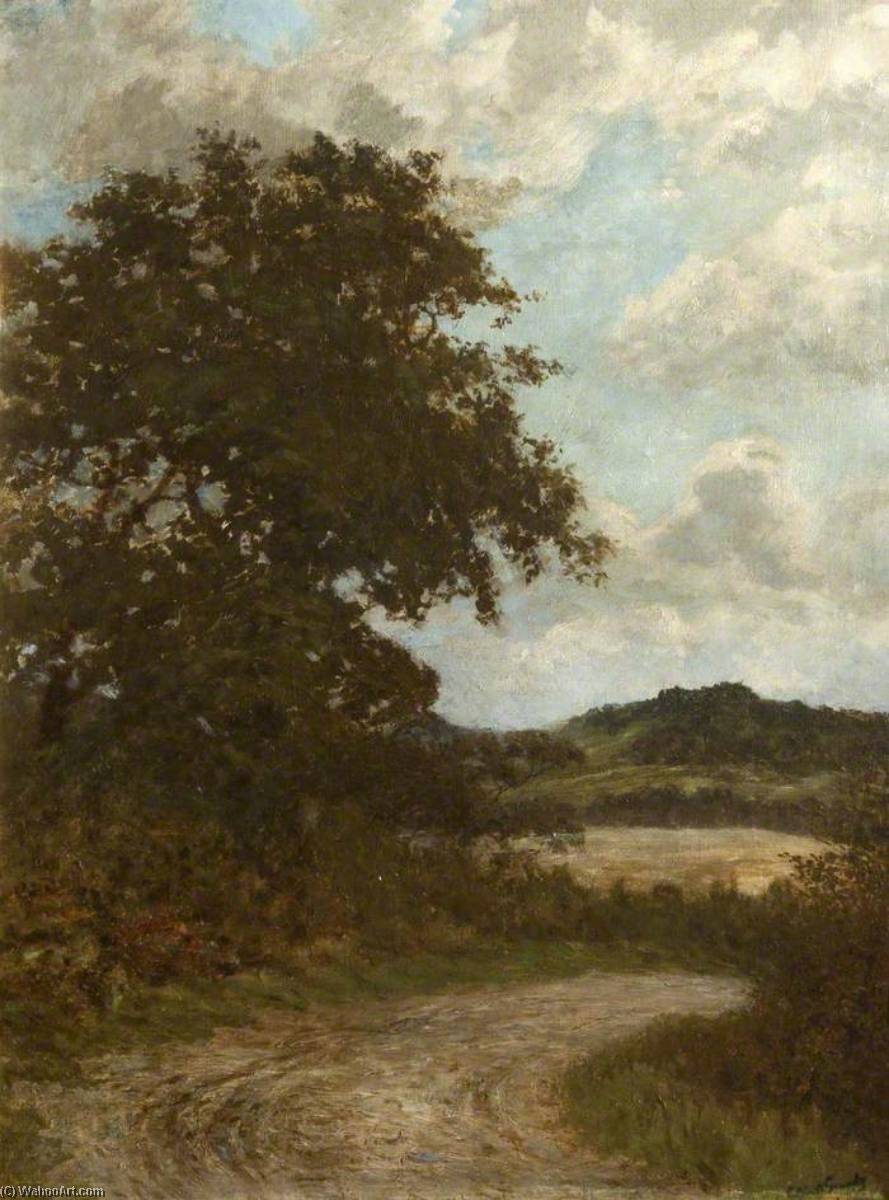
Kratek opis
Dawn (1900) je slika avtorja Cuthbert Cartwright Grundy, ki pritegne največ pogledov; original se nahaja v muzeju Grundy Art Gallery, Blackpool. Nato se pogled smeri k The Old Millhouse, Milnthorpe (1900) in The End of the Village. Med 15 dela umetnika Cuthbert Cartwright Grundy v našem katalogu so ta 15 najbolj znana; vsako je edinstven original, predstavljen z letnico nastanka, muzejem in razlogom za njegovo nečasenost.
10 najboljjših slik umetnika Cuthbert Cartwright Grundy skozi oči galerije
Autumn
The painting Autumn by Cuthbert Cartwright Grundy is a stunning representation of the fall season, showcasing the artist's skill in capturing the essence of nature. Created in 1919, this oil on canvas piece measures 111 x 86 cm and is currently housed at the Harris Museum - Art Gallery in Preston, United Kingdom. A Closer Look at the Painting The scene features two trees, one on the left side and…
Slavna platna umetnika Cuthbert Cartwright Grundy, od številk 11 do 15
Motivi, ki so očarali Cuthbert Cartwright Grundy
Četiri teme, ki se v teh originalih najpogosteje ponavljajo, vsaka z svojim vrhunskim primerom.
Landscape 2 delo
Hills 2 delo
Tranquility 2 delo
Atmospheric 2 delo
Muzeji, ki hranijo originala umetnika Cuthbert Cartwright Grundy
5 muzejev, ki vsebujo največ slik na tej strani.
| Muzej | Mesto | Sloga Cuthbert Cartwright Grundy | Slike iz tega seznama |
|---|---|---|---|
| Blackpool | 4 | Dawn, The Old Millhouse, Milnthorpe, View from My Window | |
| Newcastle upon Tyne | 1 | Plas Mawr, Conwy | |
| Preston | 1 | Autumn | |
| Rochdale | 1 | Fresh and Breezy | |
| Bristol | 1 | A Study, A Grassy Bank, with Trees |
Cuthbert Cartwright Grundy skozi desetetja: vsak unikatni original za vsako obdobje
Delo po desetletjih
Izberite desetletje, da si ogledate original, ki ga opredeljuje.
Slike umetnika Cuthbert Cartwright Grundy: vprašanja za galerijo
Katero je najbolj znano delo umetnika Cuthbert Cartwright Grundy?Razkriti odgovor
Dawn (1900), Grundy Art Gallery, Blackpool. Zatem sledeta The Old Millhouse, Milnthorpe (1900) in The End of the Village.
Pri kateri dobe je Cuthbert Cartwright Grundy ustvaril Dawn?Razkriti odgovor
54 let: delo Dawn iz leta 1900, Cuthbert Cartwright Grundy pa je bil/a rojen/a leta 1846.
Katera desetina slik avtorja Cuthbert Cartwright Grundy je najbolj znana?Razkriti odgovor
Dawn, The Old Millhouse, Milnthorpe, The End of the Village, Plas Mawr, Conwy, View from My Window, Autumn, Landscape, Coming Rain, Undisturbed in Elterwater. Zgornja lestica prikazuje leto nastanka in muzej za vsako delo.
Koliko je znanih del avtorja Cuthbert Cartwright Grundy?Razkriti odgovor
Naš katalog vsebuje 15 del avtorja Cuthbert Cartwright Grundy, datiranih od 1900 do 1937.
Kje si lahko ogledate najslavnejše originale umetnika Cuthbert Cartwright Grundy?Razkriti odgovor
Večini v Grundy Art Gallery (Blackpool), Laing Art Gallery (Newcastle upon Tyne) in Harris Museum - Art Gallery (Preston). Zgoraj navedena tabela muzejev vsebuje njihov celoten seznam.
V katerem obdobju je Cuthbert Cartwright Grundy ustvaril svoja najbolj znana dela?Razkriti odgovor
V obdobju 1900s: 2 od 15 del na tej strani je bilo izdelovanih takrat, med njimi pa Dawn.
Katero znano sliko je naslikal Cuthbert Cartwright Grundy najprej in katero najpozdneje?Razkriti odgovor
Na tej strani je najstarejše delo iz Dawn (1900) in najstarejše iz View from My Window (1937).
Katere teme je Cuthbert Cartwright Grundy najprej ravnate?Razkriti odgovor
Landscape (2), Hills (2) in Tranquility (2), na 15 delih na tej strani.
Katere originale Cuthbert Cartwright Grundy lahko vidim v muzeju Grundy Art Gallery?Razkriti odgovor
Dawn, The Old Millhouse, Milnthorpe in View from My Window: v muzeju Grundy Art Gallery, Blackpool se nahaja 4 del z te strani.
Cuthbert Cartwright Grundy: portret umetnika
Cuthbert Cartwright Grundy: A Vision of Northumberland
Cuthbert Cartwright Grundy (1846 – 1946) remains a relatively obscure figure in the annals of British watercolor painting, yet his landscapes hold a quiet beauty and profound connection to the rugged terrain of Northumberland. Born into a family steeped in artistic tradition—his father was a noted sculptor—Grundy’s early life fostered an appreciation for visual art that would shape his lifelong dedication to capturing the spirit of Northern England. While biographical details remain sparse, archival records indicate he pursued formal training at Slade School of Art in London, honing his skills under influential instructors and absorbing the stylistic currents of Impressionism and Neo-Romanticism prevalent during his formative years.- Early Influences: Grundy’s artistic sensibilities were undeniably shaped by the Romantic movement's fascination with sublime landscapes and emotional expression. Artists like Turner and Constable served as beacons, demonstrating how watercolor could convey grandeur and evoke powerful feelings.
- Northumberland Obsession: From around 1890 onwards, Grundy established his studio in Kirkcudbrightshire, Scotland, but Northumberland became the focal point of his artistic endeavors. He tirelessly documented the dramatic coastline, rolling hills, and picturesque villages of Northumberland with meticulous detail and sensitivity.
A Distinctive Watercolor Style
Grundy’s technique distinguished him from many of his contemporaries. Unlike looser Impressionists who prioritized fleeting effects of light, Grundy favored a deliberate layering process—often applying multiple washes to build up tonal depth and texture. He meticulously observed the nuances of color and atmosphere, striving for accuracy while simultaneously imbuing his paintings with an emotional resonance. His palette leaned towards muted greens, blues, and browns, reflecting the subdued hues of Northumberland’s landscape. Notably, Grundy employed a technique known as ‘grisaille,’ applying thin washes of gray to establish tonal values before adding color—a method that allowed him to achieve remarkable realism and compositional control.- Detailed Observation: Grundy's approach mirrored the scientific rigor championed by Victorian naturalists; he meticulously documented geological formations, plant life, and animal behavior.
- Emotional Resonance: Despite his technical precision, Grundy’s paintings are imbued with a palpable sense of tranquility and contemplation. He sought to convey not merely what he saw but how he felt—a testament to the power of art as a vehicle for emotional expression.