Portret Alfred Roll

49 najbolj znanih slik umetnika Alfred Roll, galerijska izbira

Posodobljeno november 2026 · uvrščeno glede na naš skoraj priljubljenosti (iskanja, obiske in naročila za vsako delo) · 50 del v našem katalogu avtorja Alfred Roll

Kratek opis

Med vsem originalom, ki ga je Alfred Roll pustil, je najbolj znan Portrait de Mme Roll. Takoj za njima sta Retour du bal in The feast of Silenus (1871). Naš katalog vsebuje 50 del umetnika Alfred Roll; galerija je ohranila 49 del, ki jih svet najbolj oboževa, odlikovanih z datumom nastanka, pripadajočim muzajem in zgodbojo.

1845 – 1919, nekdanje 8. pariško okrožje Največ del: Petit Palais

10 najboljših slik umetnika Alfred Roll: izbira galerije

1
Portrait de Mme Roll avtorja Alfred Roll

Portrait de Mme Roll

Oil On Canvas

The portrait depicts a woman, identified as Madame Roll, positioned in a vertical orientation. She is situated slightly off-center within a domestic interior, appearing to stand near a window. The figure is rendered with a muted color palette, primarily composed of blacks, grays, and browns. Subtle ochre and muted red tones appear in the highlights and the background. Her attire is formal, and her expression remains serene with a slight…

2
Retour du bal avtorja Alfred Roll

Retour du bal

Oil On Canvas · Musée d'Arts de Nantes, Nantes

The air in the room feels heavy with the scent of perfume and the soft rustle of silk as two women move through an opulent interior. We watch them from behind, catching only the graceful curve of their backs and the sweeping lines of their attire. They are poised, perhaps caught in a moment of transition between the excitement of a social gathering and the quietude of their private quarters.…

3
The feast of Silenus (1871) avtorja Alfred Roll

The feast of Silenus

1871 · Oil On Canvas · Museum of Fine Arts Ghent (MSK), Gent

The feast of Silenus emerges from the brush of Alfred Philippe Roll, a painter whose life spanned the transformative decades of the late nineteenth century. Born in the former 8th arrondissement of Paris, France, in 1845, Roll carries the weight of a changing era within his lineage. He remains a figure of the French tradition, having departed this world in 1919. This specific work, The feast of Silenus, captures a…

4
Marianne Orfrey, Green Crier (1880) avtorja Alfred Roll

Marianne Orfrey, Green Crier

1880 · Oil On Canvas · Musée des Beaux-Arts de Pau, Pau

In this 1880 oil on canvas, we find ourselves standing at eye-level with a solitary woman, a street vendor whose presence commands a quiet, stoic dignity. She is positioned slightly off-center, a choice that lends a sense of naturalism to the vertical composition. There is a certain weight to her figure, anchored by the heavy folds of her skirt and the rounded, organic form of the basket she carries. The…

5
July 14, 1880, Inauguration of the Monument to the République (1882) avtorja Alfred Roll

July 14, 1880, Inauguration of the Monument to the République

1882 · Oil · Petit Palais, Pariz

The canvas depicts a dense, wide-angle view of a Parisian square during a large-scale public celebration. In the center of the composition, a monument rises toward a sky filled with fluttering flags. The scene is populated by a vast, diverse crowd of figures that extend from the immediate foreground into the distance. These people are rendered with varied postures, some standing in groups and others moving through the space. The…

6
Henri Rochefort (Victor-Henri, marquis de Rochefort-Luçay, 1831-1913), journalist, politician and writer (1879) avtorja Alfred Roll

Henri Rochefort (Victor-Henri, marquis de Rochefort-Luçay, 1831-1913), journalist, politician and writer

1879 · Oil On Canvas · Carnavalet Museum, Pariz

The portrait emerges from a period of transition in French art, moving away from the rigid constraints of academic tradition toward a more grounded, empathetic realism. The visible layering of paint suggests a preoccupation with the authentic human form rather than an idealized version of it. There is a palpable sense of the man's internal life, a quiet intensity that lingers in the way the light interacts with his features.…

7
Woman and bull (1885) avtorja Alfred Roll

Woman and bull

1885 · Oil · National Museum of Fine Arts, Buenos Aires

The air feels heavy and still within this shadowed woodland, where the light filters through a dense canopy in soft, dappled patches. A nude woman rests in an intimate, quiet moment, her pale skin glowing against the deep, earthy tones of the surrounding meadow. Beside her, the muscular form of a bull emerges from the darkness, its presence a powerful counterpoint to her vulnerability. There is a profound sense of…

8
Alsatian and Lorrainer (1891) avtorja Alfred Roll

Alsatian and Lorrainer

1891 · Oil · Museum of the French Revolution, Vizille

In the work Alsatian and Lorrainer by Alfred Philippe Roll, the composition is structured as a tight, intimate close-up of two female figures. The primary subject is positioned in the foreground, presented in a sharp profile facing toward the left side of the frame. Behind her, a second woman is partially visible, also oriented toward the left. This overlapping arrangement creates a sense of depth within the narrow field of…

9
Portrait of Thaulow and His Wife (1890) avtorja Alfred Roll

Portrait of Thaulow and His Wife

1890 · Oil On Canvas · Petit Palais, Pariz

In this intimate oil on canvas, Alfred Philippe Roll presents Portrait of Thaulow and His Wife. Painted about 1890, the work captures a quiet moment between a man and a woman. The subjects are likely the artist's acquaintances, Thaulow and his wife, rendered with a sense of naturalism that suggests a close proximity to the figures. There is a palpable sense of companionship in the way they are positioned together.

10
Portrait of Jane Hading (1890) avtorja Alfred Roll

Portrait of Jane Hading

1890 · Oil On Canvas · Petit Palais, Pariz

The portrait presents a woman seated centrally within a luxurious interior. She is positioned in a vertical orientation, wearing a sleeveless black gown that features shimmering, light-colored patterns suggestive of sequins or embroidery. A large, dark, textured element, resembling a fur mantle or heavy drapery, surrounds the upper portion of her chair. Her skin is rendered with smooth, luminous textures, and her reddish-brown hair is styled softly around her face.…

Izbor umetnika Alfred Roll se nadaljuje, od 11 do 49

11André Manaut (1890) avtorja Alfred RollAndré Manaut1890 · Municipal museum (Saverne) 12Au trot (1888) avtorja Alfred RollAu trot1888 · Municipal museum (Saverne) 13Adolphe Alphand (1888) avtorja Alfred RollAdolphe Alphand1888 · Petit Palais 14Centenary of the Estates General at the Neptune Basin (May 3, 1889) (1889) avtorja Alfred RollCentenary of the Estates General at the Neptune Basin (May 3, 1889)1889 15Exodus (1893) avtorja Alfred RollExodus1893 · Petit Palais 16Louise Cattel, wet nurse (1894) avtorja Alfred RollLouise Cattel, wet nurse1894 · Palais des Beaux-Arts de Lille 17Alexandre Dumas fils (1895) avtorja Alfred RollAlexandre Dumas fils1895 · Musée des Beaux-Arts 18Roll Painting (1900) avtorja Alfred RollRoll Painting1900 · Petit Palais 19Portrait de Mme Henriette Roll (1900) avtorja Alfred RollPortrait de Mme Henriette Roll1900 · Municipal museum (Saverne) 20Nu couché (1900) avtorja Alfred RollNu couché1900 · Musée d'Art Moderne et Contemporain de Strasbourg 21In Summer, Woman with Dog (1909) avtorja Alfred RollIn Summer, Woman with Dog1909 · Petit Palais 22Sketch for the Petit Palais, south gallery: Apotheosis (central ceiling) (1909) avtorja Alfred RollSketch for the Petit Palais, south gallery: Apotheosis (central ceiling)1909 · Petit Palais 23Sketch for the Petit Palais, south gallery: Poetry - Drama (1910) avtorja Alfred RollSketch for the Petit Palais, south gallery: Poetry - Drama1910 · Petit Palais 24Sketch for the Petit Palais, south gallery: Fantastic Music (1911) avtorja Alfred RollSketch for the Petit Palais, south gallery: Fantastic Music1911 · Petit Palais 25Sketch for the South Gallery of the Petit Palais: Apotheosis (central ceiling) (1913) avtorja Alfred RollSketch for the South Gallery of the Petit Palais: Apotheosis (central ceiling)1913 · Petit Palais 26The Big Bed (1912) avtorja Alfred RollThe Big Bed1912 · Municipal museum (Saverne) 27Bourgeoisie (1913) avtorja Alfred RollBourgeoisie1913 · Municipal museum (Saverne) 28Portrait of Miss Amélie Diéterle, in 1913. Title : In June, Amélie Diéterle. (1913) avtorja Alfred RollPortrait of Miss Amélie Diéterle, in 1913. Title : In June, Amélie Diéterle.1913 · Petit Palais 29The Tea Cup (1918) avtorja Alfred RollThe Tea Cup1918 · Municipal museum (Saverne) 30CHEMIN SOUS BOIS avtorja Alfred RollCHEMIN SOUS BOIS 31July 14, 1880, Inauguration of the Monument to the Republic (1881) avtorja Alfred RollJuly 14, 1880, Inauguration of the Monument to the Republic1881 · Petit Palais 32Esquisse pour La fête nationale du 14 juillet 1880 (1881) avtorja Alfred RollEsquisse pour La fête nationale du 14 juillet 18801881 · Municipal museum (Saverne) 33Sketch for the Hôtel de Ville de Paris: Art, Movement, Work, Lights (1897) avtorja Alfred RollSketch for the Hôtel de Ville de Paris: Art, Movement, Work, Lights1897 · Petit Palais 34The Vigil under the Arc de Triomphe (1903) avtorja Alfred RollThe Vigil under the Arc de Triomphe1903 · Musée Victor Hugo 35The Wave (1911) avtorja Alfred RollThe Wave1911 · Petit Palais 36Sketch for the Petit Palais, south gallery: Fantastic Music (1911) avtorja Alfred RollSketch for the Petit Palais, south gallery: Fantastic Music1911 · Petit Palais 37Peder Severin Kröyer (1851-1909) avtorja Alfred RollPeder Severin Kröyer (1851-1909)Nationalmuseum 38Petite République (1907) avtorja Alfred RollPetite République1907 · Municipal museum (Saverne) 39La grève de mineurs avtorja Alfred RollLa grève de mineurs 40Portrait de Léon Bourgeois avtorja Alfred RollPortrait de Léon Bourgeois 41PORTRAIT DE JEUNE FILLE avtorja Alfred RollPORTRAIT DE JEUNE FILLE 42Portrait de jeune femme avtorja Alfred RollPortrait de jeune femme 43L'Exécution d'un trompette sous la Commune avtorja Alfred RollL'Exécution d'un trompette sous la CommuneCarnavalet Museum 44Les baigneuses Panneau décoratif (Ancien titre) avtorja Alfred RollLes baigneuses Panneau décoratif (Ancien titre) 45Bathers avtorja Alfred RollBathersMusée des Beaux-Arts de Dijon 46Chevaux à l'écurie avtorja Alfred RollChevaux à l'écurie 47Manda Lamétrie, fermière (1887) avtorja Alfred RollManda Lamétrie, fermière1887 · Musée d'Orsay 48The Young Republic (1908) avtorja Alfred RollThe Young Republic1908 · Musée d'Orsay 49The Striker's Wife avtorja Alfred RollThe Striker's WifeMusee Baron Martin

Slavna platna umetnika Alfred Roll, razdeljena po obdobjih

Motivi, ki so očarali Alfred Roll

Četiri teme, ki se v teh originalih najpogosteje ponavljajo, vsaka z svojim vrhunskim primerom.

Muzeji, ki hranijo originala umetnika Alfred Roll

8 muzejev, ki vsebujo največ slik na tej strani.

Muzej Mesto Sloga Alfred Roll Slike iz tega seznama
Petit Palais, ParizPetit Palais Pariz 16 July 14, 1880, Inauguration of the Monument to the République, Portrait of Thaulow and His Wife, Portrait of Jane Hading
Municipal museum (Saverne), SaverneMunicipal museum (Saverne) Saverne 8 André Manaut, Au trot, Portrait de Mme Henriette Roll
Carnavalet Museum, ParizCarnavalet Museum Pariz 2 Henri Rochefort (Victor-Henri, marquis de Rochefort-Luçay, 1831-1913), journalist, politician and writer, L'Exécution d'un trompette sous la Commune
Musée d'Orsay, ParizMusée d'Orsay Pariz 2 Manda Lamétrie, fermière, The Young Republic
Musée d'Arts de Nantes, NantesMusée d'Arts de Nantes Nantes 1 Retour du bal
Museum of Fine Arts Ghent (MSK), GentMuseum of Fine Arts Ghent (MSK) Gent 1 The feast of Silenus
Musée des Beaux-Arts de Pau, PauMusée des Beaux-Arts de Pau Pau 1 Marianne Orfrey, Green Crier
National Museum of Fine Arts, Buenos AiresNational Museum of Fine Arts Buenos Aires 1 Woman and bull

Alfred Roll desetletje za desetletjem: originali, ki definira vsako od njih

Delo po desetletjih

Izberite desetletje, da si ogledate original, ki ga opredeljuje.

Vprašanja zbirateljev o slikah umetnika Alfred Roll

Za katero delo je Alfred Roll najbolj znan/a?Razkriti odgovor

Portrait de Mme Roll. Zatem sledeta Retour du bal in The feast of Silenus (1871).

Katera je deset najbolj znanih slik umetnika Alfred Roll?Razkriti odgovor

Portrait de Mme Roll, Retour du bal, The feast of Silenus, Marianne Orfrey, Green Crier, July 14, 1880, Inauguration of the Monument to the République, Henri Rochefort (Victor-Henri, marquis de Rochefort-Luçay, 1831-1913), journalist, politician and writer, Woman and bull, Alsatian and Lorrainer, Portrait of Thaulow and His Wife in Portrait of Jane Hading. Zgornja lestica prikazuje leto nastanka in muzej za vsako delo.

Koliko slik je pustil Alfred Roll?Razkriti odgovor

Naš katalog vsebuje 50 del avtorja Alfred Roll, datiranih od 1871 do 1918.

V katerih muzejih so razložena remek dela umetnika Alfred Roll?Razkriti odgovor

Večini v Petit Palais (Pariz), Municipal museum (Saverne) (Saverne) in Carnavalet Museum (Pariz). Zgoraj navedena tabela muzejev vsebuje njihov celoten seznam.

V katerih letih je Alfred Roll naslikal svoja najbolj znana dela?Razkriti odgovor

V obdobju 1880s: 9 od 49 del na tej strani je bilo izdelovanih takrat, med njimi pa Marianne Orfrey, Green Crier.

Kakšna sta prva in zadnja znana originala umetnika Alfred Roll?Razkriti odgovor

Na tej strani je najstarejše delo iz The feast of Silenus (1871) in najstarejše iz The Tea Cup (1918).

Katere teme je Alfred Roll najpogosteje izbiral?Razkriti odgovor

Woman (19), Man (8) in Skin tones (5), na 49 delih na tej strani.

Katero tehniko je Alfred Roll najpogosteje uporabljal?Razkriti odgovor

Oil On Canvas, za 17 od 49 del na tej strani.

Katera dela umetnika Alfred Roll so razstavljena v muzeju Petit Palais?Razkriti odgovor

July 14, 1880, Inauguration of the Monument to the République, Portrait of Thaulow and His Wife in Portrait of Jane Hading: v muzeju Petit Palais, Pariz se nahaja 16 del z te strani.

Alfred Roll: življenje in delo

Duša Trojnostranice: Umetniška pot Alfred Philippe Roll

V živopavnem, nenehno spreminjajočem se okolju konice 19. stoletja v Franciji je malo umetnikov tako ganč capturealo pul changing nation kot Alfred Philippe Roll. Rodjen v Parizu leta 1846, je Roll izstopil iz prestižnih dvoran École des Beaux-Arts, kot učenec, ki ga je oblikovala stroga akademska tradicija mojstrov, kot so Jean-Léon Gérôme, Léon Bonnat in Charles-François Daubigny. Njegova zgodnja leta so bila zaznamovana z romantično senzibilnostjo, stilsko obdobjem, ko so njegovi platna dišala z veličastnostjo in slikovitostjo, značilno za tisto dobo. V tej oblikovalni fazi je njegovo delo pogosto odmevalo po široki čustveni globini bolonjske tradicije in razvijajočem se realizmu Gustava Courbeta, kar je ustvarjalo nežno napetost med klasičnim idealom lepote in surovim opazovanjem.

Pot Rollove kariere je nepopravno spremenilo turbulentno morje zgodovine. Franco-pruska vojna, med katero je služil kot milicijski poročnik, je v njegovo perspektivo vplinila globoko razumevanje človeške odpornosti in družbenih prevratov. To obdobje konflikta je delovalo kot krčelj, ki je izpilil njegov pogled iz čisto romantičnega smeri proti bolj zakorenjenemu, empatičnemu realizmu. Njegovo 1875 masterpiece, Poplave v Tulozı, stoji kot nepozabno spominjanje na to prehodno obdobje; z zajetjem neposredne trpljenja in krhkosti življenja med naravno katastrofo se je premaknil izven zgolj dekorativnosti in se vkljubil v kolektivno psiho francijskega naroda. To delo, ki zdaj terja v Musée Malraux, je napovedilo njegov prihod kot umetnika, sposobnega globokega vizualnega pripovedovanja.

Od romantizma do surovosti realizma

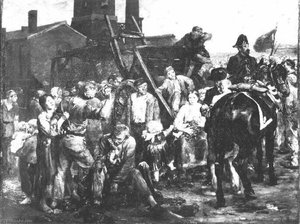
Ko so se odpele desetletja, je Rollov čopič začel odhajati svoje romantičirane robove in namesto tega objel grit in resnico naturalistične gibanja. Postal je slikar ljudi, ki je svojo pozornost usmeril v socio-politično dinamiko Trojnostranice. Ta evolucija ni bila zgolj stilistična, temveč globoko ideološka. Želel je dokumentirati avtentično človeško izkušnjo, zlasti težave in triumfe delovnega razreda. Njegova ključna slika, Stička kopalcev (1880), ostaja eno njegovih najpomembnejših dosežkov, ki ga je katapultiralo v višje sloje francijskega sveta umetnosti. V tem delu ni le prikazal delovnih nemirov; človeško je podal težave, v oblike vplivajoč digniteto, ki je odjekoval daleč 넘어 iz zidov galerij.

Ta predanost socialnemu realizmu je Rollu omogočila, da se je z izjemno spretnostjo navigiral skozi kompleksnost svojega obdobja. Njegov repertoar je vključeval:

  • Urbane pokrajine: natančni prikazi parizkega življenja in spreminjajočega se obraza mesta.
  • Intimne portrete: študije, ki so odražale nianse buržojske in delovniškega identiteta.
  • Socialne narrative: obsežne kompozicije, ki so obravnavale sodobne politične in socialne vprašanja.

Njegova sposobnost združevanja tehnične natančnosti, ki jo je pridobil pri svojih akademskih mentorjih, z progresivnim, skoraj dokumentarističnim pristopom k tematikam, ga je naredila v ključni glas francijske umetnosti. Ni bil le opazovalec življenja, temveč kronikar njegovih najbolj nujnih transformacij.

Dediščina in zgodovinski pomen

Rollova dediščina je opredeljena z njegovo vlogo mostu med starim svetom akademske tradicije in novim svetom socialnega angažmaja. Kot so-utrjevalec Société Nationale des Beaux-Arts je igral ključno vlogo pri preoblikovanju institucionalne pokrajine francijske umetnosti, s čimer je zagovarjal prostor, kjer so lahko soobstojovali različni slogi. Njegovo del ostaja vitalen zgodovinski zapis, ki zajema esencijo Francije, ujetega med odmeve romantizma in kruto realnost industrializacije ter socialnih reform.

S svojo obvladovanjem svetlobe, teksture in kompozicije je Roll zagotovil, da so težave in lepota vsakodnevnega življenja postali nesmrtni. Ne glede na to, ali skozi razlegene vidike regije Champagne ali somber tone delovnega stavka, njegova umetnost še vedno vabi gledalce v globok dialog s preteklostjo. Ostaja pomembna figura za vsakogar, ki želi razumeti srčni utrip 19. stoletne Francije — umetnik, ki je svet gledal ne le tistega, kot je bil videti, temveč tistega, kot je bil čutiti.