La Fête Dieu
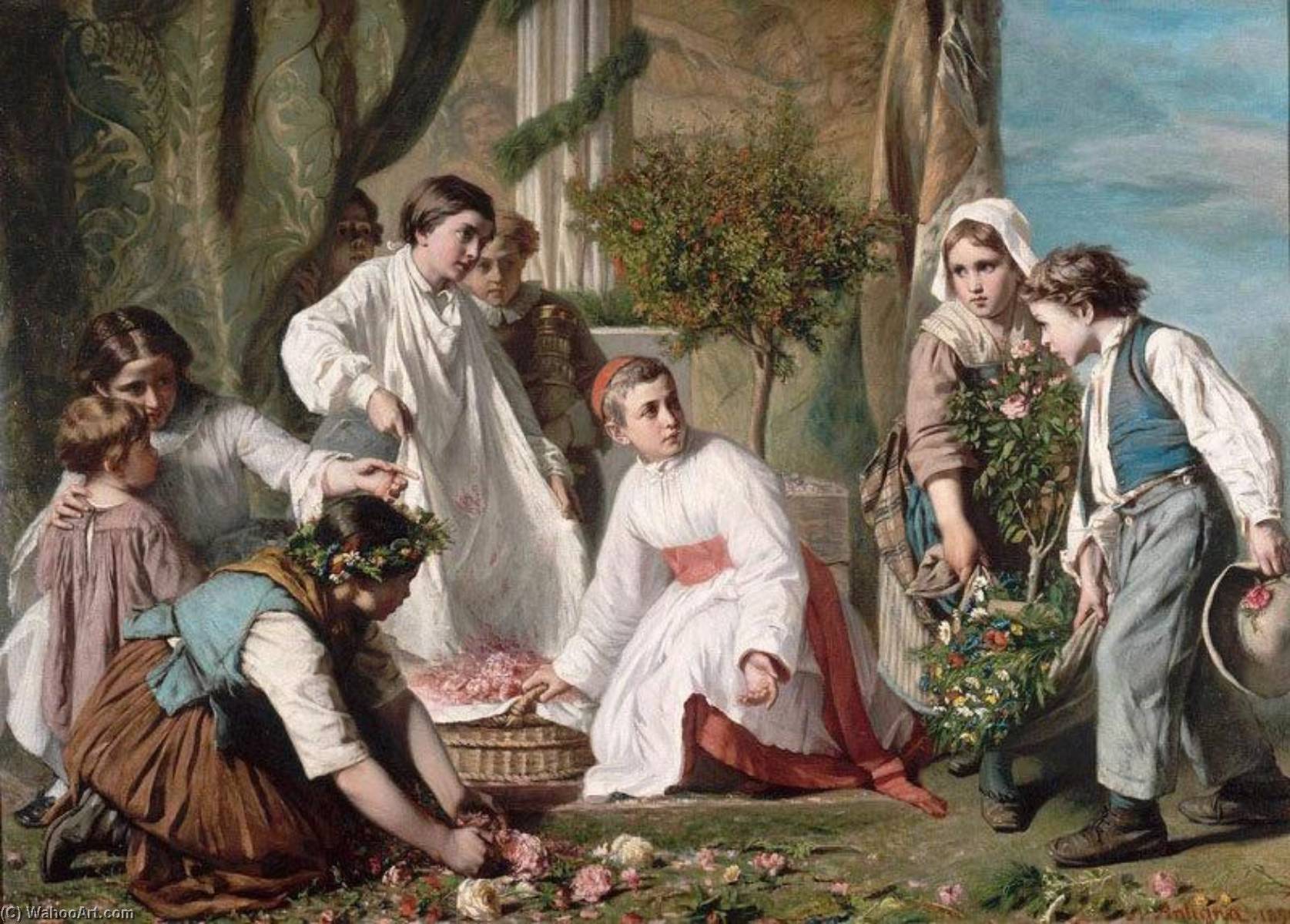
The oil on canvas titled La Fête Dieu was painted by Alexandre Antigna in 1855. This work measures 55 x 76 3/4 inches (140 x 195 cm). It captures a moment of preparation, where the weight of tradition meets the lightness of youth.
Kratek opis
Med vsem originalom, ki ga je Alexandre Antigna pustil, je najbolj znan La Fête Dieu. Takoj za njima sta The Lightning (1848) in L'Eclair. Naš katalog vsebuje 21 del umetnika Alexandre Antigna; galerija je ohranila 21 del, ki jih svet najbolj oboževa, odlikovanih z datumom nastanka, pripadajočim muzajem in zgodbojo.
The oil on canvas titled La Fête Dieu was painted by Alexandre Antigna in 1855. This work measures 55 x 76 3/4 inches (140 x 195 cm). It captures a moment of preparation, where the weight of tradition meets the lightness of youth.
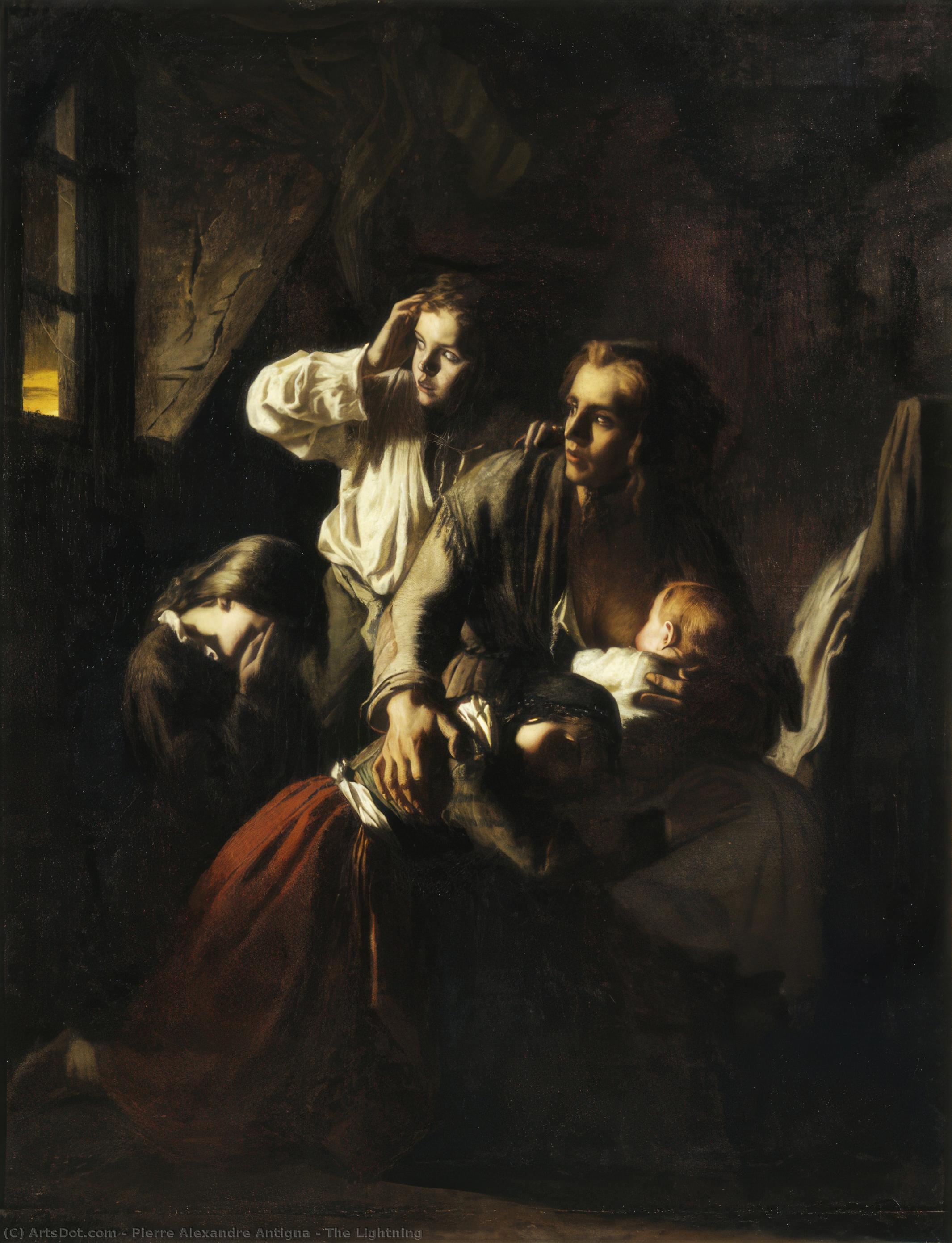
“The Lightning,” painted in 1848 by the French artist Pierre Alexandre Antigna, is more than just a depiction of a family huddled together during an electrical storm; it’s a poignant meditation on vulnerability, familial love, and the raw power of nature. Antigna, a key figure in Parisian Realism, masterfully captures a fleeting moment of intense emotion within a dimly lit interior, drawing the viewer into a scene brimming with both…
The oil on canvas titled L'Eclair was painted in 1848. This tableau captures a singular moment of tension. Alexandre Antigna, born in Orléans, France, in 1817, rendered the scene with a steady hand. The pigment settles into the weave of the fabric, holding a fragment of a storm within its fibers.
The air feels heavy with the scent of dry hay and sun-warmed earth as a group of children whirl in a rhythmic circle. They move through a wide, rural landscape, their small figures caught in a moment of pure, uninhibited joy. The composition pulls the eye into a continuous loop, following the sweep of outstretched arms and the swirling motion of colorful skirts. Reds, blues, and whites flash against the…
The sketch depicts a young girl captured in mid-stride, her body leaning slightly forward into the direction of her movement. She is positioned off-center to the right, creating a sense of momentum as she walks. Her head is tilted downward, eyes fixed upon an open book held in her outstretched hands. The figure is rendered from the mid-thigh upward, focusing the viewer's attention on the interaction between her posture and…
The light falls from the upper left, casting soft shadows across a gathering of Aragonese people. They sit upon weathered stone steps, framed by the deep green of a grapevine. A woman holds an infant, her chemise a bright white against the earthy tones of the scene. Beside them, a young boy cradles a musical instrument, his small hands poised in a moment of stillness. The air feels heavy with…
This oil painting presents a close-up portrait of a young girl, focusing tightly on her head and hands. The subject is positioned in a direct, eye-level view, her chin resting upon her hands in a pensive posture. A headscarf wraps around her face, creating organic folds that frame her features. The lighting originates from the upper left, casting shadows across her face and highlighting the specific expression in her eyes.…
A solitary woman rests in a dimly lit, rustic interior, her form surrendered to sleep. Positioned slightly to the left of center, she is balanced by the large, circular silhouette of a spinning wheel to the right. The composition is vertical, drawing the eye to the heavy, nocturnal atmosphere of the room. Deep, earthy tones of umber and sienna dominate the space, creating a sense of profound stillness. A sharp…
The oil painting titled Gypsy Girl presents a quiet, heavy moment captured on canvas. This work is the creation of Alexandre Antigna, an artist who emerged from the city of Orléans, France. Born in 1817, Antigna brings a specific, focused gaze to the subjects he encounters, often finding the weight of existence in the faces of those living on the margins of society.
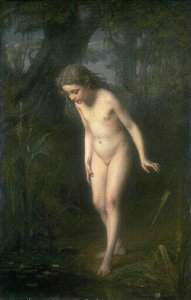
is an oil on canvas by the French painter Alexandre Antigna. The work presents a nude female figure wading into a body of water. This central subject is situated within a dense forest setting, where the natural environment forms a dark, enveloping backdrop around the form.
Četiri teme, ki se v teh originalih najpogosteje ponavljajo, vsaka z svojim vrhunskim primerom.
6 muzejev, ki vsebujo največ slik na tej strani.
| Muzeji | Mesto | Sloga Alexandre Antigna | Slike iz tega seznama |
|---|---|---|---|
| Pariz | 2 | The Lightning, L'Eclair | |
| Orléans | 2 | Aragonese of Anso, The Fire | |
| Limoux | 1 | Circle of children | |
| Worcester | 1 | Head of a Girl | |
| Saint-Brieuc | 1 | The sleeping spinner | |
| Gent | 1 | Gypsy Girl |
Izberite desetletje, da si ogledate original, ki ga opredeljuje.
“The Lightning,” painted in 1848 by the French artist Pierre Alexandre Antigna, is more than just a depiction of a family huddled together during an electrical storm; it’s a poignant meditation on vulnerability, familial love, and the raw power of nature. Antigna, a key figure in Parisian Realism, masterfully captures a fleeting moment of intense emotion within a dimly lit interior, drawing the viewer into a scene brimming with both…
The air feels heavy with the scent of dry hay and sun-warmed earth as a group of children whirl in a rhythmic circle. They move through a wide, rural landscape, their small figures caught in a moment of pure, uninhibited joy. The composition pulls the eye into a continuous loop, following the sweep of outstretched arms and the swirling motion of colorful skirts. Reds, blues, and whites flash against the…
The light falls from the upper left, casting soft shadows across a gathering of Aragonese people. They sit upon weathered stone steps, framed by the deep green of a grapevine. A woman holds an infant, her chemise a bright white against the earthy tones of the scene. Beside them, a young boy cradles a musical instrument, his small hands poised in a moment of stillness. The air feels heavy with…
La Fête Dieu. Zatem sledeta The Lightning (1848) in L'Eclair.
La Fête Dieu, The Lightning, L'Eclair, Circle of children, Girl striding out reading a book, Aragonese of Anso, Head of a Girl, The sleeping spinner, Gypsy Girl in Miroir des bois. Zgornja lestica prikazuje leto nastanka in muzej za vsako delo.
Naš katalog vsebuje 21 del avtorja Alexandre Antigna, datiranih od 1848 do 1872.
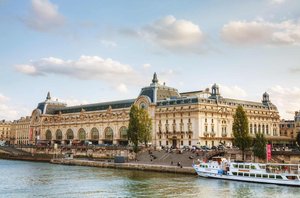
Večini v Musée d'Orsay (Pariz), Musée des Beaux-Arts (Orléans) in musée Petiet de Limoux (Limoux). Zgoraj navedena tabela muzejev vsebuje njihov celoten seznam.
V obdobju 1850s: 3 od 21 del na tej strani je bilo izdelovanih takrat, med njimi pa Circle of children.
Na tej strani je najstarejše delo iz The Lightning (1848) in najstarejše iz Aragonese of Anso (1872).
Woman (8), Children (4) in Girl (4), na 21 delih na tej strani.
Oil On Canvas, za 15 od 21 del na tej strani.
Romanticism, glede na originala na tej strani.
The Lightning in L'Eclair: v muzeju Musée d'Orsay, Pariz se nahaja 2 del z te strani.
V srcu devetnajestega stoletja Francije, obdobja, ki so ga opredelili globoki socialni prevrati in premikajoči se umetniške paradigme, se je Jean Pierre Alexandre Antigna pojavil kot slikar nepremočne empatije. Rodjen v Orléansu leta 1817, je bila njegova zgodnja umetniška pot zakorenjena v tradicionalnih pokrajinah njegove mladosti, oblikovani pod budno nadzorom lokalnega slikarja Françoisa Salmona. Vendar pa je privlač Pariža bila neodmijna. Po vstopu v prestižno École Nationale Supérieure des Beaux-Arts leta 1837 se je Antigna našel v svetu akademske rigoroznosti, kjer je študiral pod mojmi, kot sta Sébastien Norblin de la Gourdaine in znameniti Paul Delaroche. Te zgodnje leta so bila zaznamovana s fokusom na religiozne teme in formalno portretiranje, v skladu z ustanovljenimi slogovnimi konvencijami tistega obdobja.
Vendar se prava metamorfoza Antignaove duše ni zgodila v pozlačenih dvoranah akademije, temveč v senčastih, ozkih ulicah Île Saint-Louis. Živet med revnimi četrtmi Pariza je postal pričevalec surovih, neizklenjenih borcev mestnega prepihnega prebivalstva. Ta globoka izpostavljenost človeški tragičnosti je delovala kot katalizator, ki ga je odmaknil od idealizirane religijske ikonografije proti gritli, neustrašnemu realizmu. Ko je revolucija leta 1848 preletela skozi Francijo, je Antigna že v celoti sprejel slog, ki je skušal dokumentirati težo obstoja. Njegova platna so začela pulsirati s težkimi bremeni in tiho odpornostjo tistih, ki so bili na manjkaviščenju družbe, predstavljena z teksturno čustvenostjo črt in emocionalno globino, ki je pritegnila pozornost parižkega Salona.
Ko se je njegova kariera razvijala, se je Antignaov umetniški vidik razširil iz urbanih omej Pariza. Podpiran z neoničnim zanimanjem za človeško kondicijo in naravni svet, se je odpravil na obsežna potovanja skozi hrbate pokrajine Bretanije in živahna območja Španije. Ta potovanja so mu omogočila zlitje njegovega socialnega zavesti z nastajajočim naturalizmom. Okoli leta 1860 je njegovo delo začelo odražati natančno opazovanje narave, kjer so atmosfere pokrajine postale tako pomembna tema kot ljudje, ki jih ta narava obdaja. Ne glede na to, ali je zajemal dramatično napetost nevihte ali tiho dostojnost kmetskega delovca, je njegova tehnika ostala zakorenjena v občutku globokega sočutja.
Njegovo znanje je uradno prepoznala francoska država, ko je leta 1861 prejel Legion of Honor, mejnik, ki je utrdil njegov položaj med pomembnimi figurami njegove generacije. Tudi ko se je njegov slog razvijal vmešano v bolj naturalistične prikaze, je jedro njegovega dela ostalo raziskovanje ranljivosti in moči. Notable dela, kot je Lightning, prikazujejo to dvojnost, kjer družina, ki se zbrana v električni nevihti, služi kot ganč meditacija o družinski ljubezni sredi zastrašujoče moči narave. Skozi uporabo svetlobe, senče in tekstur impasto, je Antigna naredil več kot le slikanje scen; zajel je samo esenco preživetja.
Zgodovinski pomen Pierre Alexandre Antigna leži v njegovi sposobnosti, da je premostil razporeditev med romantično čustvenostjo in realistično resnico. Ni zgolj opazoval revščine; vnesel je v njo dostojnost, ki je izzivala družbene hierarhije obdobja. Njegovo življenje, ki se je končalo v Parizu leta 1878, je pustilo za sobą opus, ki služi kot vitalen vizualni zapis devetnajestega stoletja francoskega življenja. Njegov vpliv lahko vidimo v načini, na katerem je uporabljal naslednje elemente za dvig svojih motivov:
Danes se Antigna ne spominja le kot slikar scen, temveč kot sočutni glas svojega obdobja, umetnik, ki je pogledal v temo mestnih borcev in našel trajno svetlobo človeškega duha.