The Historical Imperative of Authentication: From Renaissance Workshops to Modern Forensics
Fine art authentication is a process that ensures the integrity of artworks, preserves cultural heritage, and maintains trust in the art market. By combining traditional methods, scientific advancements, and emerging AI and Blockchain technologies, a...
The desire to possess a piece of history, a tangible link to the creative spirit of another age, has always been intertwined with the equally compelling need for assurance – the certainty that what one holds is genuinely the work of the master it purports to be. This quest for authentication isn’t merely a modern preoccupation born from a thriving art market; its roots stretch back to the very foundations of artistic patronage and workshop practice. During the Renaissance, when artists like Botticelli were introducing young men to the seven liberal arts (as depicted in his iconic painting), establishing authorship was often a matter of familial lineage within established guilds and workshops. Apprenticeships served as verifiable chains of transmission, and stylistic consistency within a master’s oeuvre provided a crucial benchmark. However, even then, the allure of imitation proved potent, and early forms of connoisseurship – relying on discerning eyes and accumulated knowledge – began to emerge.
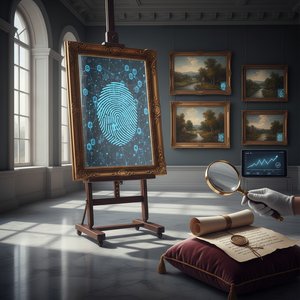
As art collecting expanded beyond aristocratic circles in subsequent centuries, so too did the sophistication of forgery. The 19th century witnessed a surge in imitations, prompting a greater emphasis on documentation: exhibition records, salon catalogues, and letters referencing specific works became increasingly vital pieces of evidence. Yet, these paper trails were often susceptible to manipulation. The advent of scientific analysis in the 20th century – pigment analysis, X-radiography revealing underdrawings, and more recently, techniques examining canvas weave and brushstroke patterns – revolutionized the field. Today, even AI and blockchain technologies are being explored as potential tools for verifying authenticity, creating immutable records of an artwork’s history.
The Rise of Reproduction: Expanding Access & Challenging Notions of Originality
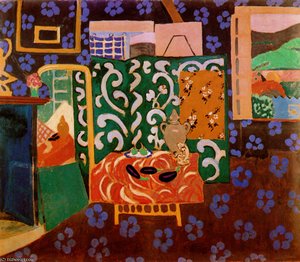 Intérieur aux aubergines Technique mixte sur toile Grenoble, musée des Beaux-Arts
Explore Henri Matisse’s ‘Intérieur aux Aubergines’! A vibrant Fauvist masterpiece showcasing geometric forms & bold colors. Discover this iconic 1911 painting's legacy.
While authentication focuses on identifying the ‘original,’ the parallel story is that of reproduction – a practice that has simultaneously challenged and democratized access to art. For centuries, copies served as essential tools for artists themselves; studies after Old Masters were foundational to their training. But the development of printing technologies in the 15th and 16th centuries allowed for wider dissemination of images, albeit often lacking the nuance and texture of the original. The true turning point came with the advent of photography, which offered a remarkably accurate visual record.
However, it was the rise of oil painting reproduction in the 20th and 21st centuries that fundamentally altered the landscape. No longer limited to simple copies, skilled artists began creating handmade reproductions – paintings meticulously crafted on canvas, capturing not just the image but also the *feeling* of the original work. This practice sparked debate about the very definition of ‘originality.’ Is a faithful reproduction devoid of artistic merit? Or does it represent a valuable opportunity to bring masterpieces within reach of a broader audience? Henri Matisse’s “Intérieur aux Aubergines,” with its vibrant Fauvist colors and bold geometric forms, exemplifies a work that benefits from skilled replication, allowing admirers worldwide to experience its energy firsthand. The key lies in the quality of execution – a handmade oil painting, unlike a mechanical print, retains the visible brushstrokes, textures, and depth that define a true artwork.
Decoding the Craft: What Defines a Museum-Quality Handmade Oil Painting?
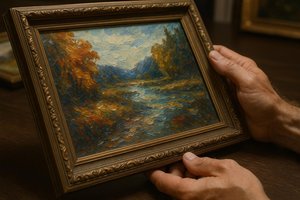 F.A.Q.: Handmade Oil Paintings – Authenticity, Longevity & Uniqueness for Elite Collectors
delivers authentic, handmade oil paintings crafted by skilled artists. Discover the unique quality, provenance & customization options trusted by elite collectors worldwide. Invest in art that lasts a lifetime.
The distinction between a mere copy and a museum-quality reproduction hinges on artistry and materials. A truly exceptional handmade oil painting isn’t simply about replicating an image; it's about recreating the *experience* of the original. This begins with the canvas – 100% cotton, primed to receive the oils with optimal texture and longevity. The paints themselves must be professional-grade, chosen for their pigment purity and archival qualities. But perhaps most importantly, it requires a skilled artist—one who understands not just color mixing but also the techniques of the original master.
Consider Pierre-Auguste Renoir’s “Lucie Berard (Child in White).” To faithfully reproduce this Impressionist masterpiece demands an understanding of broken brushwork, subtle light effects, and the delicate rendering of fabric. The artist must layer colors with precision, building depth and luminosity through countless glazes. At OriginalUniqueArt, we prioritize matching artists to styles – ensuring that each reproduction is undertaken by someone with a deep appreciation for the original’s aesthetic principles. A preview photo approval system further guarantees customer satisfaction, allowing for adjustments before shipment.
Patina, Provenance, and the Subtle Language of Age in Art Valuation
Patina ( pə-TEE-nə or PAT-ih-nə) is a thin layer that variously forms on the surface of copper, brass, bronze, and similar metals and metal alloys (tarnish produced by oxidation or other chemical processes), or certain stones and wooden furniture (s...
Beyond technical skill, discerning collectors understand that value extends beyond the canvas itself. Provenance – the documented history of ownership – is a critical factor in establishing authenticity and desirability. A clear chain of custody, tracing back to reputable sources, adds significant weight to an artwork’s claim. Equally important is the subtle language of age: the *patina* that develops over time—the delicate surface textures, minor craquelure (fine cracks), and even the slight discoloration of varnish.
Patina isn't merely a sign of wear; it’s a testament to an artwork’s journey through history. It speaks to its exposure to light, humidity, and handling—a unique fingerprint that distinguishes it from a newly created reproduction. While reproductions can skillfully mimic these effects, they lack the genuine depth and complexity of time-earned patina. Understanding this nuance is crucial for collectors seeking investment-grade pieces.
Customization & Commissioned Works: A New Era of Artistic Patronage
The modern art market also embraces customization – a revival of the historical tradition of artistic patronage. Collectors are increasingly commissioning bespoke reproductions, tailored to their specific preferences in size, orientation, and framing style. More ambitious projects involve transforming personal photographs into oil paintings, rendered in the style of a chosen master. This requires not just technical skill but also an understanding of composition, color theory, and the artist’s unique aesthetic voice.
The ability to request artworks not listed on standard catalogs further expands access and empowers collectors to realize their vision. Free digital mockups ensure that results meet expectations before painting begins, offering peace of mind and a collaborative creative process.
The Democratization of Art Appreciation: Empowering Collectors Through Knowledge & Access
Ultimately, the enduring legacy of museum quality art lies in its ability to inspire and enrich lives. By expanding access through high-quality reproductions, providing expert authentication services, and fostering a deeper understanding of artistic techniques and history, OriginalUniqueArt aims to democratize art appreciation. The goal isn’t simply about owning an object; it's about connecting with the creative spirit that transcends time and culture.
Whether you are a seasoned collector seeking investment-grade pieces or a newcomer embarking on your artistic journey, knowledge is paramount. We offer free art consultations to guide style advice, size recommendations, and gift selection. At OriginalUniqueArt, we believe that everyone deserves the opportunity to experience the beauty and power of art—and we’re committed to making that vision a reality.