Early Life & Artistic Foundations: From Sculpture to Photography
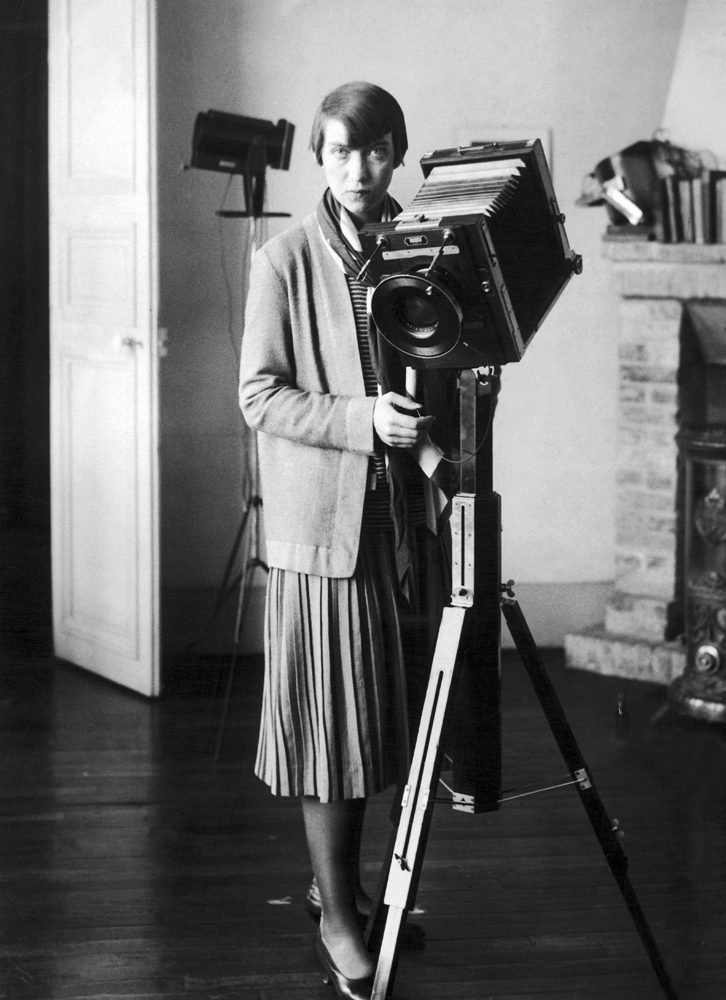 Wikipedia: Berenice Abbott
Berenice Alice Abbott (July 17, 1898 – December 9, 1991) was an American photographer best known for her portraits of cultural figures of the interwar period, New York City photographs of architecture and urban design of the 1930s, and science interp...
Berenice Abbott’s journey toward becoming one of America's most influential photographers was anything but predetermined. Born Bernice Alice Abbott in Springfield, Ohio, in 1898, her early aspirations lay not with the lens, but with form and texture – she initially pursued sculpture, a discipline that would profoundly shape her later visual aesthetic. After studies at The Ohio State University and formative years spent in New York City and Europe, specifically Berlin and Paris during the vibrant 1920s, Abbott found herself immersed in the avant-garde artistic circles of the time. It was in Paris, however, that a pivotal shift occurred. Employed as an assistant to Man Ray, she began to explore the possibilities of photography, initially as a practical skill but quickly evolving into a passionate vocation. This apprenticeship wasn’t merely technical; it exposed her to experimental techniques and a burgeoning modernist sensibility. Yet, Abbott's path truly crystallized with her encounter with Eugène Atget, whose meticulous documentation of Parisian streets and architecture would become a defining influence.
Documenting New York City: A ‘Changing’ Landscape in the 1930s
 Portrait of Anna Wickham
Berenice Abbott's striking portrait of Anna Wickham, captured in 1929, showcases the subject’s quiet dignity. A classic example of documentary photography.
Returning to the United States in 1929, Abbott embarked on what would become her most celebrated project: a systematic photographic survey of New York City. This wasn't simply about capturing iconic landmarks; it was an attempt to chronicle a city undergoing relentless transformation during the tumultuous years of the Great Depression. The metropolis pulsed with contradictions – soaring skyscrapers rising alongside decaying tenements, bustling avenues juxtaposed with quiet, forgotten corners. Abbott’s vision sought to reveal these layers, presenting a portrait of urban life in all its complexity. Unlike many contemporaries focused on artistic abstraction, she embraced clarity and detail, employing large-format cameras to capture the city's architecture with striking precision. Her approach was methodical, almost scientific, yet imbued with a deep sense of empathy for the human stories embedded within the cityscape. This ambitious undertaking, initially self-funded, eventually received support from the Federal Art Project in 1935, culminating in the publication of “Changing New York” (1939), a landmark achievement in documentary photography.
Abbott’s Documentary Approach: Style, Technique, and Social Commentary
Documentary photography usually refers to a popular form of photography used to chronicle events or environments both significant and relevant to history and historical events as well as everyday life. It is typically undertaken as professional photo...
Berenice Abbott's photographic style was characterized by a remarkable clarity and directness. She eschewed the soft-focus romanticism prevalent in pictorialist photography, opting instead for sharp focus, dramatic contrasts, and a rigorous attention to composition. Her use of natural light—often harsh and unforgiving—revealed textures and details that might otherwise go unnoticed. This technical mastery wasn’t merely aesthetic; it served a deeper purpose: to present an unvarnished view of reality. Abbott believed in the power of photography as a tool for social documentation, aiming to capture not just *what* things looked like but also *how* they felt. Her photographs often subtly alluded to the economic hardships and social inequalities of the Depression era, offering a poignant commentary on the human cost of progress. The deliberate framing of her images—often from unusual vantage points—further emphasized the scale and dynamism of the city, highlighting both its grandeur and its vulnerabilities.
Beyond Architecture: Portraits and Scientific Visualization
While best known for her New York City photographs, Abbott’s artistic curiosity extended far beyond architecture. In the 1920s Paris, she established a successful portrait studio, capturing striking likenesses of prominent artists and writers like Jean Cocteau and James Joyce. These portraits, characterized by their psychological depth and technical skill, rivaled those of her mentor, Man Ray. However, it was her later foray into scientific photography that revealed another facet of her remarkable talent. In the 1940s and 50s, collaborating with physicist Marian M. MacInnis, Abbott tackled the challenge of visualizing complex scientific concepts—light refraction, wave patterns, motion—through photographic means. This project, undertaken for the Physical Sciences Study Committee at MIT, required a new level of technical precision and ingenuity. By bridging the gap between art and science, Abbott demonstrated her ability to translate abstract ideas into compelling visual forms, making them accessible and engaging to a wider audience.
Berenice Abbott’s Legacy: An Independent Vision in American Photography
Berenice Abbott stands as a towering figure in the history of American photography, not only for her iconic images but also for her unwavering commitment to an independent artistic vision. She refused to be confined by stylistic trends or commercial pressures, instead forging her own path and defining her own aesthetic principles. Her meticulous documentation of New York City remains a powerful testament to the transformative power of urban life, while her portraits offer intimate glimpses into the minds of creative contemporaries. Perhaps most significantly, Abbott championed the work of Eugène Atget, rescuing his photographs from obscurity and ensuring their lasting recognition. Her dedication to clarity, detail, and social commentary continues to inspire photographers today. OriginalUniqueArt offers a curated selection of Berenice Abbott’s timeless works, allowing you to experience her vision firsthand and bring the spirit of a changing America into your own space.