Baroque Landscape
Landscape (Gillis Van Coninxloo)
Gillis Van Coninxloo (1544–1607) je izdelal Landscape. Spada v smer Baroque Landscape. Izdelano je iz Oil On Copper. Del se nahaja v muzeju Muzej Prado v mestu Madrid, Španija. Dimenzije so 24 × 19 cm.
- Oil On Copper
- 24 × 19 cm
- Muzej Prado, Madrid

 Predogled v realnem okolju

 Ročno izdelano oljno slikarstvo
 Pošlji
 Deli
 Informacijski list


 Prenesi sliko
 Podobni izdelki
 Rentgenski posnetek
 Predvajaj diaporama
 Vprašanja in odgovori

 Statistika
Landscape, na kratek
- Naslov
- Landscape
- Avtor
- Gillis Van Coninxloo (1544–1607)
- Umetnik, rojen v
- Antwerpen, Belgija
- Tehnika
- Oil On Copper
- Dimenzije
- 24 × 19 cm
- Kje je videti
- Muzej Prado, Madrid, Španija
- Gibanje
- Baroque Landscape
- Tema
- landscape, flemish style, baroque art, forest scene, castle architecture, atmospheric perspective
Kaj prikazuje Landscape?
A Flemish Master’s Woodland Reverie: Gillis van Coninxloo's “Landscape”
Gillis van Coninxloo’s “Landscape,” a captivating oil on copper panel, transports the viewer to a realm of serene contemplation within a meticulously rendered Flemish forest. Painted around 1598, this work stands as a pivotal example of the artist’s mastery in capturing the atmospheric depth and intricate detail characteristic of the early 16th-century Golden Age. More than just a depiction of nature, it's an invitation to lose oneself within a carefully constructed world of light, shadow, and subtle symbolism – a testament to van Coninxloo’s profound understanding of both landscape painting and the human experience.
The scene unfolds before us with remarkable realism. A dense thicket of trees dominates the foreground, their leaves rendered with an almost obsessive attention to detail; each vein, each curl of bark, is painstakingly observed and faithfully reproduced. These trees aren’t merely static elements; they create a palpable sense of depth, drawing the eye into the heart of the forest. Beyond them, a modest collection of buildings – likely farmhouses or small dwellings – nestles amongst the foliage, suggesting a quiet rural existence. The architecture is understated yet solid, reflecting a pragmatic approach to building within this natural setting. In the distance, a formidable castle rises above the horizon, its imposing silhouette anchoring the composition and hinting at notions of power, protection, and perhaps even isolation.
The Alchemy of Light and Shadow: Technique and Style
Van Coninxloo’s technical skill is immediately apparent in his masterful use of oil on copper. This medium allowed for a remarkable level of detail and luminosity – the surface retains a subtle sheen that enhances the richness of the colors and creates an almost three-dimensional effect. The artist employs a technique known as “chiaroscuro,” skillfully manipulating light and shadow to sculpt the forms and create a dramatic sense of depth. Notice how the sunlight filters through the trees, dappling the ground in pools of brightness while simultaneously casting deep shadows beneath the foliage. This interplay of light and dark isn’t merely decorative; it imbues the scene with a palpable atmosphere – a feeling of both tranquility and mystery.
Stylistically, “Landscape” aligns itself with the Flemish tradition of landscape painting, yet van Coninxloo departs from some of the more rigid conventions of the time. While influenced by the Northern Mannerist style—characterized by its emphasis on detail and symbolic imagery—he introduces a greater sense of naturalism and emotional resonance. The composition is carefully balanced, creating a harmonious whole that invites contemplation. The muted color palette – dominated by greens, browns, and grays – contributes to the overall feeling of serenity and timelessness.
A Window into 16th-Century Life and Belief
To fully appreciate “Landscape,” it’s important to consider its historical context. Painted during a period of religious upheaval and political instability in the Netherlands, this work reflects both the anxieties and the enduring values of the era. The castle, for instance, can be interpreted as a symbol of authority – whether representing secular power or divine protection. The humble dwellings nestled within the forest suggest a connection to the land and a reverence for rural life. Furthermore, the dense woodland itself has long been associated with themes of solitude, introspection, and the spiritual realm.
Interestingly, this painting was originally housed in the Museo del Prado in Madrid, Spain, a testament to its enduring appeal across national boundaries. The artist’s biography reveals a fascinating journey – from Antwerp to Germany and eventually Amsterdam—reflecting the shifting political landscape of the time. His work served as a bridge between artistic styles, incorporating elements of Mannerism while embracing the burgeoning realism of the Dutch Golden Age.
A Timeless Masterpiece: Reproduction and Inspiration
Reproductions of “Landscape” capture only a fraction of its original impact. The subtle nuances of light, texture, and atmosphere are difficult to replicate fully, but OriginalUniqueArt’s hand-painted reproductions strive to honor the artist's vision with remarkable fidelity. This piece offers an exceptional opportunity for interior designers seeking to evoke a sense of tranquility and connection to nature – imagine it adorning a study or a living room, providing a focal point that invites contemplation. Collectors will find “Landscape” to be a valuable addition to any art collection, representing a significant moment in the history of Flemish landscape painting.
For further exploration, we encourage you to visit the linked resources:
V katerem muzeju se nahaja Landscape?
Muzej Prado
Madrid, Španija
Zgodovina Muzeja Prado Korenine Muzeja Prado so tesno povezane z špansko kraljevsko zbirko, katere zgodovina sega vse do 18. stoletja. To, kar se je začelo kot vizija za naturalno zgodovino v kabinetu pod Ferdinandom VII., se je sčasoma spremenilo v posvečeno svetišče slikarstva in kiparstva.


Visokoresolucijske slike dela Landscape
Javna lastnina: umetnik je umrl leta 1607.
Gillis Van Coninxloo, Landscape, Muzej Prado. Javna lastnina
Odgovori na vprašanja o Landscape
Kje je danes razstavljeno "Landscape" avtorja Gillis Van Coninxloo?
Originalno delo "Landscape" avtorja Gillis Van Coninxloo se nahaja v muzeju Muzej Prado, Madrid, Španija. Reprodukcija omogoča, da ta sklad prikazujete tudi v svojem domu.
S katero tehniko je bila izdelana skladba "Landscape" avtorja Gillis Van Coninxloo?
Tehnika za delo "Landscape" avtorja Gillis Van Coninxloo je Oil On Copper. Različice imajo za namen natančno prikazati videz te tehnike.
Kakšnih je originalnih dimenzij "Landscape"?
Zabeležene dimenzije dela "Landscape" avtorja Gillis Van Coninxloo so 24 x 19 cm. Reprodukcije je mogoče naročiti v drugih velikostih, ob čemer se ohranijo iste proporcije.
Kaj prikazuje "Landscape" avtorja Gillis Van Coninxloo?
"Landscape" avtorja Gillis Van Coninxloo prikazuje: landscape, flemish style, baroque art, forest scene, castle architecture, atmospheric perspective, detailed rendering.
Ali je "Landscape" v javni domeni?
Status avtorskih pravic za "Landscape" avtorja Gillis Van Coninxloo: del je v javni domeni – avtorska pravica je zastarela. To določa, ali se lahko reprodukcije slike izdelujejo prosto.
Kdo je ustvaril "Landscape"?
"Landscape" pripisujemo Gillis Van Coninxloo.
V kateri umetniški smer spada "Landscape" avtorja Gillis Van Coninxloo?
"Landscape" je del umetniškega sloga Baroque Landscape, ki predstavlja umetniško tradicijo, v katero je delo vključeno.
V katero obdobje kariere Gillis Van Coninxloo pripada delo "Landscape"?
"Landscape" predstavlja Late Baroque umetnika Gillis Van Coninxloo.
Ali je delo "Landscape" avtorja Gillis Van Coninxloo v javni lastini in zakaj?
Del "Landscape" avtorja Gillis Van Coninxloo je v javni domeni – avtorska pravica je zastarela. Avtorske pravice se izračunajo od smrti umetnika, pri čemer je Gillis Van Coninxloo umrl leta 1607.
O umetniku, Gillis Van Coninxloo
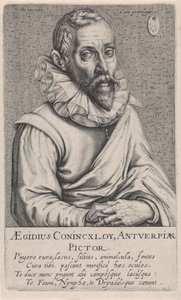
1544–1607, Belgija
Gillis Van Coninxloo
G master zelenega kraljestva Gillis Van Coninxloo stoji kot ključna figura v evoluciji severne slikovnostne umetnosti, saj služi kot vitalni most med zapletenimi manierističnimi tradicijami in razvijajočo se atmosferno globino early baroka. Born v mestu Antwerp, v Belgiji, je bilo njegovo življenje tesno prepleteno z bogato umetniško dediščino Nizozemske. Kot sin slikarja je bil potopljen v svet, kjer sta bila vrhunsko znanje in opazovanje narave ključna. Njegova zgodnja izobrazba pod mojmi, kot so Pieter Coecke van Aelst mlajši in Lenaert Kroes, mu je zagotovila strogo podlago, vendar je bil prav čas dela v delavnici Gillis Mostaert tisti, ki je njegov talent resnično dopustil cvetoči, mu omogočilo prispevanje k profesionalnim delom, medtem ko je izpilščal svojo edinstveno vizijo.
O Gillis Van Coninxloo Znomena dela umetnika Gillis Van Coninxloo
Tudi dela avtorja Gillis Van Coninxloo
 Jonah Preaching to the Ninevites1583
 Woodland with Saint Jerome1583
 Landscape with the judgment of Midas1598
 Landscape with the Judgement of Paris1610
Eseji o delu Landscape
 Masterpieces of Jan van Goyen: Top 25 Iconic Dutch LandscapesExplore 25 iconic Jan van Goyen landscapes from the Dutch Golden Age. Discover these tonal masterpieces on OriginalUniqueArt.com.
 Chiaroscuro & Shadows: The High-Impact Power of Moonlight in Masterpiece LandscapesMaster the drama of chiaroscuro and moonlight in classical landscapes. Explore the power of light and shadow now.
 Masterpieces of Nature: The Top 25 Artworks by Jacob van RuisdaelExplore 25 iconic Jacob van Ruisdael landscapes. Discover the soul of Dutch Golden Age art. Explore the full collection online at OriginalU…