Northern Renaissance · 1505
Forest scenes (Gerard David, 1505)
Gerard David (1460–1523) je izdelal Forest scenes. Zajema obdobje iz leta 1505. Spada v smer Northern Renaissance. Izdelano je iz Oil On Panel. Del se nahaja v muzeju Rijksmuseum v mestu Amsterdam, Nizozemska. Dimenzije so 90 × 31 cm.
- 1505
- Oil On Panel
- 90 × 31 cm
- Rijksmuseum, Amsterdam

 Predogled v realnem okolju

 Ročno izdelano oljno slikarstvo
 Pošlji
 Deli
 Informacijski list


 Prenesi sliko
 Podobni izdelki
 Rentgenski posnetek
 Predvajaj diaporama
 Vprašanja in odgovori

 Statistika
Forest scenes, na kratek
- Naslov
- Forest scenes
- Avtor
- Gerard David (1460–1523)
- Umetnik, rojen v
- Oudewater, Nizozemska
- Datum
- 1505
- Tehnika
- Oil On Panel
- Dimenzije
- 90 × 31 cm
- Kje je videti
- Rijksmuseum, Amsterdam, Nizozemska
- Gibanje
- Northern Renaissance
- Tema
- forest landscape, northern europe, detailed nature, woodland scene, religious symbolism, oil painting style
Kaj prikazuje Forest scenes?
A Woodland Reverie: Gerard David’s “Forest Scenes”
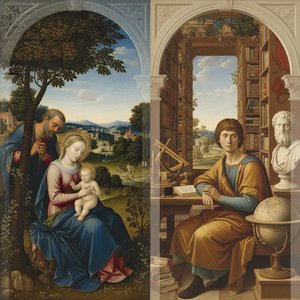
Gerard David's "Forest Scenes," painted in 1505, isn’t merely a depiction of trees and streams; it’s an immersion into the heart of Northern Renaissance contemplation. This diptych, a masterful exploration of light, shadow, and perspective, offers a profound glimpse into the artistic sensibilities of a pivotal figure often overshadowed by his more flamboyant contemporaries. David, working in the burgeoning art centers of Bruges and Antwerp, crafted a work that speaks to both the earthly beauty of nature and the spiritual yearning characteristic of the era.
The painting immediately draws the eye with its dramatic lighting – a strong directional light illuminates the foreground, casting long, evocative shadows that deepen the sense of enclosure within the woodland. This technique, reminiscent of the Flemish masters, isn’t simply about realism; it's a deliberate orchestration of atmosphere. The composition is carefully balanced between two distinct panels. To the left, a small stone building with a thatched roof nestles amongst the trees, hinting at human presence and suggesting a connection between the natural world and domestic life. The right panel flows with a stream, its movement subtly guiding the viewer’s eye through the landscape. The overall effect is one of serene depth – a space that feels both familiar and profoundly mysterious.
Northern Renaissance Realism and Artistic Innovation
“Forest Scenes” exemplifies the Northern Renaissance style in its meticulous attention to detail and its commitment to realistic representation. David’s brushwork is remarkably fine, particularly evident in the rendering of the foliage – each leaf, branch, and texture painstakingly rendered with a level of precision rarely seen in Southern European art at the time. However, it's not merely imitation; David subtly departs from purely observational painting. He employs a flattened perspective, characteristic of the Northern style, creating a sense of depth without resorting to the complex aerial perspective favored by Italian artists. This choice contributes to the painting’s slightly dreamlike quality, as if peering into an idealized version of the forest.
Furthermore, David's use of color is particularly noteworthy. He masterfully employs a palette dominated by warm browns, deep greens, and touches of gold – colors that evoke the richness and warmth of autumn light filtering through the trees. The layering of thin glazes of oil paint builds up luminosity and depth, creating a sense of tactile realism. This technique, combined with his skillful manipulation of light and shadow, elevates the painting beyond a simple landscape depiction into a powerful expression of mood and atmosphere.
Symbolism and Emotional Resonance
Beyond its technical brilliance, “Forest Scenes” is rich in symbolic meaning. The small building suggests human resilience and connection to the land – a reminder of humanity’s place within the natural world. The stream, flowing steadily onward, can be interpreted as a symbol of time, life, or perhaps even the soul's journey. The overall mood is one of tranquility and solitude, inviting contemplation and introspection. It’s a scene that speaks to the human desire for escape from the pressures of daily life and offers a glimpse into a world of peace and beauty.
David’s choice to present this scene as a diptych adds another layer of complexity. The division between the two panels suggests a duality – perhaps representing opposing forces, or different aspects of the same experience. The forest itself can be seen as a metaphor for the human psyche, with its hidden depths and potential for both beauty and darkness. “Forest Scenes” is not just a landscape; it’s an invitation to explore the mysteries within ourselves and in the world around us.
A Timeless Masterpiece – Reproduction Options
Reproductions of Gerard David's "Forest Scenes" offer a remarkable opportunity to bring this iconic work into your home or office. Available in a range of sizes, from smaller prints suitable for adorning a wall to larger canvases that command attention, these reproductions faithfully capture the painting’s rich colors, intricate details, and evocative atmosphere. Crafted on high-quality materials – canvas, metal, or acrylic glass – each reproduction is designed to last for generations, ensuring that you can enjoy this timeless masterpiece for years to come.
V katerem muzeju se nahaja Forest scenes?
Rijksmuseum
Amsterdam, Nizozemska
Zgodovina in korenine muzeja Rijksmuseum Rijksmuseum predstavlja narodni muzej Nizozemske, katerega korenine so tesno prepletene z motežnimi leti, ki so sledila Francoski revoluciji. Institucija je bila ustanovljena v Den Hasi 19. novembra 1798, ko je obdobje političih prevratov oblikovalo zgodnji razvoj njegove kolekcije.


Visokoresolucijske slike dela Forest scenes

Javna lastnina: umetnik je umrl leta 1523.
Druge velikosti, izrezave in citiranje →Gerard David, Forest scenes (1505), Rijksmuseum. Javna lastnina
Odgovori na vprašanja o Forest scenes
Kje lahko vidim originalno delo "Forest scenes" avtorja Gerard David?
Del "Forest scenes" avtorja Gerard David je razstavljen v muzeju Rijksmuseum, Amsterdam, Nizozemska. Navedba muzeja se nanaša na originalno delo, ne pa na reprodukcije.
Kateri je datum nastanka dela "Forest scenes" avtorja Gerard David?
"Forest scenes" izvira iz 1505. Ta datum delo situira v okvir Gerard Davidove kariere in obdobja, v katerem je nastalo.
Z kakšno tehniko je izdelano "Forest scenes"?
Gerard David je za delo "Forest scenes" uporabil/a tehniko Oil On Panel. Ta tehnika opredeljuje materialno naravo izvirnega dela.
Kakšna je dejanska velikost dela "Forest scenes" avtorja Gerard David?
Zabeležene dimenzije dela "Forest scenes" avtorja Gerard David so 90 x 31 cm. Reprodukcije je mogoče naročiti v drugih velikostih, ob čemer se ohranijo iste proporcije.
Kaj prikazuje "Forest scenes" avtorja Gerard David?
Tematika v delu "Forest scenes" avtorja Gerard David vključuje forest landscape, northern europe, detailed nature, woodland scene, religious symbolism, oil painting style, diptych artwork, ki skupaj predstavljajo vsebino umetninškega dela.
Ali je "Forest scenes" v javni domeni?
V zvezi z avtorskimi pravicami je "Forest scenes" v v javni domeni – avtorska pravica je zastarela.
Kateremu umetniku je "Forest scenes" pripisano?
Delo "Forest scenes" je ustvaril Gerard David. Informacije na tej strani opisujejo izvirno delo umetnika Gerard David.
V kateri umetniški smer spada "Forest scenes" avtorja Gerard David?
"Forest scenes" avtorja Gerard David pripada gibanju Northern Renaissance. To gibanje zagotavlja slogovni kontekst dela.
V katero obdobje kariere Gerard David pripada delo "Forest scenes"?
"Forest scenes" predstavlja Mature Period umetnika Gerard David.
O umetniku, Gerard David

1460–1523, Nizozemska
Gerard David
Gerard David: Mojster Flandrijske Svetlobe Gerard David, rojen okoli leta 1460 v Oudewaterju na Nizozemskem, je ena najzanimivejših osebnosti zgodnjega nizozemskega slikarstva. Njegovo življenje je obdano z meglo, saj so arhivski zapisi fragmentarni in nejasni. Za razliko od nekaterih sodobnikov, katerih življenja so dobro dokumentirana, Davidova osebna zgodba ostaja skromna, kar omogoča, da njegove slike govorijo namesto njega. Vendar pa je znano, da je imel uspešno kariero in je verjetno vodil delavnice v Antwerpnu in Brugah – pomembnih umetniških centrih renesanse.
Tudi dela avtorja Gerard David
 Cambisovo sodišče1498
 Žitev na Kana1500
 The Judgment of Cambyses (detail)1498
 Triptych with the Nativity1505
Eseji o delu Forest scenes
 From Pixels to Paint: Transforming Digital Memories into Timeless Oil MasterpiecesDiscover the art of transforming digital photos into bespoke oil masterpieces. From custom portraits to historical 'period shifts,' our aca…
 The Northern Renaissance: A Masterclass in Hyper-Realism, Oil Innovation, and Symbolic DepthExplore the profound mastery of Northern Renaissance art. Discover the technical brilliance of Flemish oil painting, the intricate symbolis…
 Gerard David: Bridging Late Medieval Tradition with Early Renaissance HumanismExplore the captivating world of Gerard David, a pivotal figure bridging late medieval artistry with the Early Renaissance. Discover his in…