Aztec Empire
Flute (Azteški Imperij)
Azteški Imperij (1300–1521) je izdelal Flute. Spada v smer Aztec Empire. Izdelano je iz Acrylic On Canvas. Del se nahaja v muzeju Metropolitanski muzej umetnosti v mestu New York, Združene države Amerike.
- Acrylic On Canvas
- Metropolitanski muzej umetnosti, New York

 Predogled v realnem okolju

 Ročno izdelano oljno slikarstvo
 Pošlji
 Deli
 Priročnik


 Prenesi sliko
 Podobni izdelki
 Rentgenski posnetek
 Predvajaj diaporama
 Vprašanja in odgovori

 Statistika
Flute: ključne informacije
- Naslov
- Flute
- Avtor
- Azteški Imperij (1300–1521)
- Umetnik, rojen v
- Tenochtitlan, Mexico
- Tehnika
- Acrylic On Canvas
- Kje je videti
- Metropolitanski muzej umetnosti, New York, Združene države Amerike
- Gibanje
- Aztec Empire
- Tema
- flute, aztec, ancient, culture, symbolism, mesoamerica
Kaj prikazuje Flute?
The Echoing Voice of Stone: An Exploration of the Aztec Flute
Within the vast tapestry of Aztec artistry lies a deceptively simple instrument – the flute, often referred to as *uilacapitztli* (meaning “flute-head”). More than just a musical device, this clay vessel, meticulously crafted and imbued with symbolic resonance, offers a poignant window into the spiritual beliefs, artistic traditions, and cultural values of one of Mesoamerica’s most sophisticated civilizations. Recovered from archaeological sites across Mexico, these flutes – often adorned with depictions of animals, deities, or geometric patterns – are not merely relics of the past; they are tangible echoes of a vibrant society that flourished for centuries before succumbing to Spanish conquest.
The creation of an *uilacapitztli* was a deliberate and carefully considered process. Typically fashioned from unfired clay, these flutes were meticulously shaped by hand, reflecting a remarkable level of skill and artistry. The most common form is a cylindrical vessel with a distinctive bird-shaped head – the ‘head’ representing the feathered serpent Quetzalcoatl, a central deity associated with music, knowledge, and creation. Smaller versions, often resembling frogs or turtles, were also produced, suggesting their use in children's toys or as ritual objects for specific ceremonies. The intricate carvings that adorn these flutes – stylized representations of jaguars, serpents, birds, and geometric designs – are not merely decorative; they carry profound symbolic meaning, reflecting the Aztec worldview and their connection to the natural world.
A Symphony of Symbolism
The symbolism embedded within each *uilacapitztli* is a rich testament to Aztec cosmology. The bird-shaped head, prominently featured on many instruments, directly references Quetzalcoatl, whose association with music and the wind suggests a connection between sound, spirituality, and communication with the divine. Animal motifs – particularly jaguars and serpents – were frequently linked to powerful deities and represented concepts such as strength, fertility, and transformation. Geometric patterns, often repeating spirals or zigzags, may have symbolized cycles of time, cosmic order, or the interconnectedness of all things. The choice of animal or symbol likely depended on the specific purpose for which the flute was intended – whether for ceremonial use, entertainment, or even as a gift.
Furthermore, the clay itself held significance. Clay was considered a sacred material, representing earth and fertility—a fundamental element in Aztec beliefs. The act of shaping the clay into an instrument was therefore imbued with ritualistic importance, transforming a mundane substance into a conduit for spiritual expression. It’s believed that these flutes were not simply played; they were *sung* – their sounds carefully controlled to evoke specific emotions and connect with the spirit world.
A Legacy in Sound and Form
The *uilacapitztli* stands as a powerful reminder of the Aztec Empire’s artistic sophistication and its deep connection to spirituality. While much remains unknown about the precise melodies produced by these instruments, their enduring presence speaks volumes about the importance of music within Aztec society. These flutes were not merely objects; they were vessels for storytelling, ritual performance, and spiritual communion.
Today, high-quality reproductions of these ancient instruments are available, offering a unique opportunity to experience the beauty and artistry of Aztec craftsmanship. When selecting a reproduction, consider the materials used – authentic clay or durable ceramics that capture the texture and feel of the original. The level of detail in the carvings will also reflect the quality of the piece, ensuring it accurately represents the intricate symbolism of the ancient *uilacapitztli*. Owning such a reproduction is not simply acquiring an artifact; it’s embracing a tangible link to a remarkable civilization and allowing its resonant voice to echo through time.
V katerem muzeju se nahaja Flute?
Metropolitanski muzej umetnosti
New York, Združene države Amerike
Zgodovina in korenine Metropolitanskega muzeja umetnosti Metropolitanski muzej umetnosti se je rodil iz vizije, ki so jo delili poslovni vodje, finančniki ter vrhunski umetniki in misleci. Po ustanovitvi leta 1870 je institucija iskala stalni dom, ki bi pregledal nenehno rastočo zbirko pridobljenih umetniških del. Preden se je muzej dokončno udomovil na svoji trenutni lokaciji, je bil na kratko prisrčen v posestju Douglas Mansion na West 14th Street.


Flute v visoki ločljivosti

Azteški Imperij, Flute, Metropolitanski muzej umetnosti. Javna lastnina
Digitalni strokovnjak preveri barve v primerjavi z originalnim slikarstvom in popravlja datoteko, da bi dosledno odražala umetnikovo črtico.
Kupite sliko visoke ločljivostiVprašanja o Flute
Od kod prihajajo obiskovalci dela "Flute" avtorja Azteški Imperij?
Za delo "Flute" je na voljo stran Statistika pregledov. Ta prikazuje mesečno število obiskov tega dela in drugih del umetnika, s razdelitvijo po državah in jezikih.
Kateremu umetniku je "Flute" pripisano?
"Flute" pripisujemo Azteški Imperij.
S kakšnimi pseudonimi ali alternativnimi imeni je znan/a Azteški Imperij?
Azteški Imperij se pojavlja tudi pod imeni Imperije Aztekov.
Kakšen karakter v prostor prinaša "Flute" avtorja Azteški Imperij?
Zaradi svoje Calm vzdušnosti je delo "Flute" primerno za Living Room.
Kakšna je priporočena nastavitev tiska za "Flute" avtorja Azteški Imperij?
Za "Flute" priporočamo tiskanje v velikosti Medium in z orientacijo Landscape.
Kaj pojasnjuje status avtorskih pravic za "Flute" avtorja Azteški Imperij?
"Flute" avtorja Azteški Imperij je v javni domeni – avtorska pravica je zastarela. Avtorske pravice se izračunajo od smrti umetnika, ki je umrl leta 1521.
Kje bi morala biti razpostavljena reprodukcija dela "Flute" avtorja Azteški Imperij?
Format Landscape dela "Flute" avtorja Azteški Imperij priporočamo za Living Room. Format in prostor skupaj pomagata pri izbiri optimalne postavnitve reprodukcije.
Ali je pravno dovoljeno reproducirati delo "Flute" avtorja Azteški Imperij, ki se nahaja v muzeju Metropolitanski muzej umetnosti?
Originalno delo "Flute" se nahaja v Metropolitanski muzej umetnosti, njegova avtorska pravica pa je v javni domeni – avtorska pravica je zastarela.
Kakšna je barvna paleta dela "Flute"?
Barve dela "Flute" tvorijo Pastels paleto. Ta klasifikacija opisuje prevladujoče barvne družine.
O umetniku, Azteški Imperij

1300–1521, Mexico
Azteški Imperij
Eho kamenja: Istrajevanje umetnosti in dediščina aztekskega imperija Ime „Aztek“ – izvedeno iz nahuatljskega besedka *ātl-ce-tlācati–tlān*, kar pomeni „ljudi mnogih oblik“ – spominja na ogromno, zapleteno imperije, ki je več stoletij dominiralo Mesoameriki. Aztekci niso bili le vojniki in osvajači; bili so izjemno umetniški ljudje, ki so v vsako okrogje svojega življenja tkali zapleteno lepoto – od monumentalne arhitekture do delikatnega delovanja z perjičami, od svetišča ritualjev do vsakdanjskih predmetov. Njihova umetnost ni bila le dekorativa; bila je živahna jezikovna struktura, ki je prenašala verjetnosti, politična moč, zgodovni narativi in družbeni hierarhični sistem v družbo, ki je bila hkrati strogo strukturirana in neverjetno inovativna. Rojeni na začetku 14.
Tudi dela avtorja Azteški Imperij
 Mosaic of a Double-headed Serpent1521
 Head from a Figure, Xochipilli Macuilxochitl1521
 Figure1521
 Serpent Labret with Articulated Tongue

Eseji o delu Flute
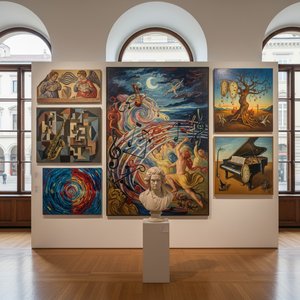 Harmonies on Canvas: Exploring the Visual Representation of Music in Art HistoryExplore the fascinating history of music's visual representation in art! From ancient symbolism to modern abstraction, discover how artists…
 Feathered Visions: A Historical & Artistic Exploration of Birds in PaintingExplore the rich history of birds in painting! Discover symbolism, artistic movements & master artists like Audubon. High-quality reproduct…
 25 Must-See Masterpieces at The Met: A Journey Through Art HistoryExplore 25 iconic treasures from The Met, from Pollock to Rembrandt. Discover museum-quality art on OriginalUniqueArt.com.