

1

The Slave Market, Constantinople
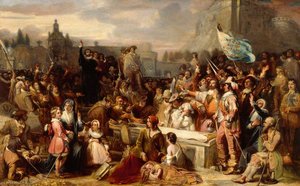
The painting titled The Slave Market, Constantinople is a work by the artist William Allan. This specific piece was created about 1838. The canvas measures 129 x 198 cm.

Aktualizované november 2026 · zoradené podľa našej miery popularity (vyhľadávanie, návštevy a objednávky pre každou prácu) · 56 dielov umelca William Allan v našom katalógu
Stručne povedané
Z hľadiska galérie je najznámejším obrazom umelca William Allan dielo The Slave Market, Constantinople (1838), ktorého originál visí v Scottish National Gallery v meste Edinburgh. The Signing of the National Covenant in Greyfriars Kirkyard, Edinburgh (1838) a Tartar Robbers Dividing Spoil (1817) dopĺňajú trojicu, ktorú pozná každé oko. Z 56 diel umelca William Allan v našom katalógu prezentuje galéria nižšie 48 najznámejších, z ktorých je každá originál s uvedeným rokom vzniku, múzeom a unikátnosťou.
The painting titled The Slave Market, Constantinople is a work by the artist William Allan. This specific piece was created about 1838. The canvas measures 129 x 198 cm.

The oil painting titled The Signing of the National Covenant in Greyfriars Kirkyard, Edinburgh is a work by the artist William Allan. Created in 1838, this piece depicts the historical event of the signing of the National Covenant within the Greyfriars Kirkyard in Edinburgh. The scene captures a specific moment of religious and political significance in Scottish history.

The scene unfolds in Tartar Robbers Dividing Spoil, a work painted by William Allan around 1817. Within the shadows of a cavernous space, the tension of a sudden encounter hangs heavy in the air. The composition centers on the interaction between two men, their presence illuminated against the dark, textured stone of their surroundings. Every brushstroke captures a moment of high drama, frozen in time as the figures negotiate their…

This large-scale oil painting, created in 1824, presents a crowded and dynamic street scene reminiscent of a public disturbance or uprising. The composition is defined by a diagonal thrust, driven by a central group of people and a horse, which creates a sense of instability and movement. Within this chaotic scene, numerous figures are engaged in various actions; some are seen falling, others are gesturing, and many are observing the…

The air inside the room feels thick with the scent of woodsmoke and spilled ale. Shadows dance across the walls, cast by the flickering light of candles and the glowing embers of a fireplace. In this crowded, rustic space, a lively chaos unfolds as figures press together in a moment of boisterous celebration. There is a sense of movement in every corner; some guests lean in to share a whispered…

This black and white pen and ink drawing presents a study of form and gesture, focusing on a single male figure depicted in profile. The subject is a gentleman dressed in formal attire, including a hat and a coat, and he is shown holding what appears to be a walking stick or cane. The composition is characterized by its simplicity, placing the figure against a neutral background to emphasize the…

An older gentleman sits anchored at a desk, his presence filling the frame with a heavy, quiet gravity. The light falls across his features with a dramatic intensity, carving deep shadows into the folds of his coat and the lines of his face. He gazes outward, his eyes meeting the viewer in a direct, intimate connection that feels almost intrusive, as if we have stumbled upon a private moment of…

This work, titled Study for 'The Murder of David Rizzio', was painted by William Allan in 1833. It offers a glimpse into the artist's process, capturing a moment of intense preparation for a larger historical scene. The piece reflects the specific interests of an artist deeply engaged with the dramatic narratives of the nineteenth century.

The air thickens with the weight of a historical drama in The Murder of David Rizzio. Painted by William Allan in 1833, this work captures a moment of profound betrayal and royal tragedy. The scene freezes the violent 1566 assassination of David Rizzio, the Italian secretary to Mary Queen of Scots. Chaos erupts within the palace, a sudden fracture in the order of the court that leaves the viewer suspended…

 Matthew Hardie, Violin Maker1822
12
 Matthew Hardie (1755–1826), Violin Maker1822 · Škótska národná galéria portrétov
13
 William Hey (1736–1819)1815 · Leeds General Infirmary
14
 The Black Dwarf1831 · Scottish National Gallery
15
 Sir Walter Scott in His Study with His Dog 'Maida'1831 · Abbotsford House
16
 William Blackwood (1776–1834), Publisher1830 · Škótska národná galéria portrétov
17
 Sir Walter Scott (1771–1832), Novelist and Poet – Gala Day at Abbotsford1827 · Škótska národná galéria portrétov
18
 Sir Walter Scott with One of his Daughters1826 · Škótska národná galéria portrétov
19
 Sir Walter Scott, 1st Bt1831 · National Portrait Gallery
20
 The Facade of Abbotsford, seen through the Entrance Gate1832 · Scottish National Gallery
21
 The Shepherd's Grace1835
22
 The Bride of Abydos (from the poem by Byron)1836
23
 The Stirrup Cup1836 · Royal Scottish Academy of Art - Architecture
24
 Heroism and Humanity1840
25
 The Battle of Waterloo1843 · English Heritage
26
 The Recovery of the Stolen Child1841
27
 Sir Walter Scott (1771–1832), Novelist and Poet1844
28
 The Visit of Queen Victoria and Prince Albert to Hawthornden, 14 September 18421844 · Škótska národná galéria portrétov
29
 William Henry Murray (1790–1852), Actor and Manager of Theatre Royal, Edinburgh1848 · Škótska národná galéria portrétov
30
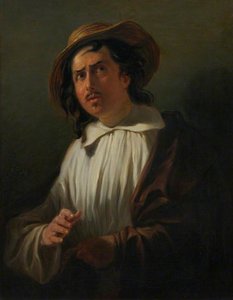 William Henry Murray (1790–1852), Actor and Manager of Theatre Royal, Edinburgh, as 'Paul Pry' (Crombie Sketchbook, fo.4)1843 · Škótska národná galéria portrétov
31
 An Officer of the 18th Regiment of (Light) Dragoons (Hussars), c.18151840
32
 Sir Walter Scott Dictating to His Daughter, Anne, in the Armoury at Abbotsford1844 · The National Trust For Scotland
33
 Highland Gillie and His Pony1850 · The Stirling Smith Art Gallery - Museum
34
 Frederick William Robert Stewart (1805–1872), Viscount Castlereagh, Later 4th Marquess of Londonderry, Wearing Hunting Costume1823 · National Trust
35
 Fair Maid of Perth
36
 The Ballad of Old Robin Gray1826
37
 The Battle of Bannockburn1850 · Royal Scottish Academy of Art - Architecture
38
 Bude harbour, DevonNational Maritime Museum
39
 Fair Maid of PerthUniversity of Edinburgh Fine Art Collection
40
 Field of Waterloo
41
 Christmas Eve
42
 The Battle of Cape St Vincent, 14 February 1797National Maritime Museum
43
 Mr Mackay of the Edinburgh Theatre as Baillie Nicol JarvieAbbotsford House
44
 James Russell, the ActorAbbotsford House
45
 The Bashkirs1814 · Hermitáž
46
 The Murder of David Rizzio1833 · Scottish National Gallery
47
 The Orphan1838 · Royal Collection
48
 Frontier Guards (Circassian Prince on Horseback Selling Two Boys)1814 · Hermitáž
Štyri témy, ktoré sa v týchto origináloch najčastejšie vracajú, každá s jej najvychybenejším príkladom.
8 múzeá, v ktorých sa nachádza najviac obrazov z tejto stránky.
| Múzeá | Mesto | Diela umelca William Allan | Obrazy z tohto zoznamu |
|---|---|---|---|
 Škótska národná galéria portrétov |
Edinburgh | 8 | James Hogg (1770–1835), Poet (The Ettrick Shepherd) (The Ettrick Shepherd's House Heating or The Celebration of his Birthday), Matthew Hardie (1755–1826), Violin Maker, William Blackwood (1776–1834), Publisher |
 Scottish National Gallery |
Edinburgh | 7 | The Slave Market, Constantinople, Compositional Sketch for 'Death of the Regent Moray', Study for 'The Murder of David Rizzio' |
 Royal Scottish Academy of Art - Architecture |
Edinburgh | 3 | Self Portrait, The Stirrup Cup, The Battle of Bannockburn |
 Abbotsford House |
Malvern | 3 | Sir Walter Scott in His Study with His Dog 'Maida', Mr Mackay of the Edinburgh Theatre as Baillie Nicol Jarvie, James Russell, the Actor |
 National Maritime Museum |
Londýn | 2 | Bude harbour, Devon, The Battle of Cape St Vincent, 14 February 1797 |
 Hermitáž |
Petrohrad | 2 | The Bashkirs, Frontier Guards (Circassian Prince on Horseback Selling Two Boys) |
 The Company of Merchants of The City of Edinburgh |
Edinburgh | 1 | John Robertson |
 Leeds General Infirmary |
Leeds | 1 | William Hey (1736–1819) |
Vyberte si dekádu a pozrite si originál, ktorý ju definuje.
The scene unfolds in Tartar Robbers Dividing Spoil, a work painted by William Allan around 1817. Within the shadows of a cavernous space, the tension of a sudden encounter hangs heavy in the air. The composition centers on the interaction between two men, their presence illuminated against the dark, textured stone of their surroundings. Every brushstroke captures a moment of high drama, frozen in time as the figures negotiate their…
This large-scale oil painting, created in 1824, presents a crowded and dynamic street scene reminiscent of a public disturbance or uprising. The composition is defined by a diagonal thrust, driven by a central group of people and a horse, which creates a sense of instability and movement. Within this chaotic scene, numerous figures are engaged in various actions; some are seen falling, others are gesturing, and many are observing the…
The painting titled The Slave Market, Constantinople is a work by the artist William Allan. This specific piece was created about 1838. The canvas measures 129 x 198 cm.


The Slave Market, Constantinople (1838), Scottish National Gallery, Edinburgh. Nasledujú The Signing of the National Covenant in Greyfriars Kirkyard, Edinburgh (1838) a Tartar Robbers Dividing Spoil (1817).
56 rokov: The Slave Market, Constantinople vzniklo v roku 1838 a William Allan sa narodil/a v roku 1782.
The Slave Market, Constantinople, The Signing of the National Covenant in Greyfriars Kirkyard, Edinburgh, Tartar Robbers Dividing Spoil, Compositional Sketch for 'Death of the Regent Moray', James Hogg (1770–1835), Poet (The Ettrick Shepherd) (The Ettrick Shepherd's House Heating or The Celebration of his Birthday), Joseph Mallord William Turner, Self Portrait, Study for 'The Murder of David Rizzio', The Murder of David Rizzio a John Robertson. Vyššie uvedené hodnotenie uvádza rok a múzeu pre každé z nich.
Náš katalóg obsahuje 56 diel od umelca William Allan z perioda od 1803 do 1850.
Väčšinou v Škótska národná galéria portrétov (Edinburgh), Scottish National Gallery (Edinburgh) a Royal Scottish Academy of Art - Architecture (Edinburgh). Tabuľka múzeí vyššie ich všetky uvádza.
V období 1830s: 16 z 48 diel na tejto stránke bolo vytvorených vtedy, pričom The Slave Market, Constantinople z nich.
Na tejto stránke je najstaršie dielo z John Robertson (1803) a najnovšie z Highland Gillie and His Pony (1850).
Men (5), Historical scene (4) a People (3), v rámci 48 diel na tejto stránke.
Oil On Canvas, pre 7 z 48 diel na tejto stránke.
Romanticism, podľa originálov na tejto stránke.
James Hogg (1770–1835), Poet (The Ettrick Shepherd) (The Ettrick Shepherd's House Heating or The Celebration of his Birthday), Matthew Hardie (1755–1826), Violin Maker a William Blackwood (1776–1834), Publisher: múzeá Škótska národná galéria portrétov, Edinburgh uchovávajú 8 z diel na tejto stránke.
Sir William Allan (1782–1850) predstavuje kľúčovú postać škótskeho umenia 19. storočia, majstra historickej maľby, ktorý dokázal majstrovsky skombinovať precízny realizmus s evokatívnym citom pre drámu. Narodený v významnej obchodníckej rodine v Edinburghu, jeho umelecká cesta bola v mnohom sebavedomá a smerovala ju skôr osobná vášeň než formálne inštrukcie; kŕmil ju skorý kontakt s rozkvitajúcou umeleckou scénou a neskôr ho sprevádzal mentor Sir Henry Raeburn, jedna z najvýznamnejších postáv škotského osvetlenia. Allanovo dielo presahuje hranice bežného portrétneho malíkarstva; je to živá tapiséria utkaná z vlákien škótskej kultúry, ruskej intrigy a romantického ducha jeho éry. Jeho odkaz presahuje samotné jednotlivé obrazy, pretože formoval identitu Národnej galérie Školska a ovplyvňoval generácie umelcov, ktorí nasledovali jeho kroky.
Allanove formatívne roky boli hlboko ponorené do tradícií edinburghských umeleckých kruhov. Hoci jeho formálne vzdelanie bolo obmedzené, nesie si v sebe vplyvy Johna Grahama z Academy Trustees, spolu s technikami Davida Wilkieho a Alexandra Georgea Frasera. Táto skorá expozícia v нём vyvinula hlbokú vážnosť k detailu a kompozíciám – vlastnostiam, ktoré neskôr definovali jeho nezamenný štýl. Kľúčovým momentom bolo uznanie talentu zo strany Raeburnovho, ktorý mu ponúkol vedenie a naučil ho zachytávať nielen podobnosť, ale aj charakter a emóciu. Tento prepojenie so škótskym osvetlením hlboko formovalo Allanovu umeleckú víziu, zdôrazňujúc pozorovanie, intelektuálnu zvedavosť a túžbu reprezentovať svet s presnosťou a jemnosťou.
Zlomovým okamihom v Allanovej kariére bolo jeho rozhodnutie odcestovať do Ruska v roku 1805. Poháňaný fascináciou východnými kultúrami a hľadom po umeleckej inšpiráciu, sa vydal na dlhú cestu, ktorá mala zásadný dopad na jeho tvorbu. Allan sa ponoril do každodenného života Kozákov, čerkesov a Tatarov, pričom metikulosne dokumentoval ich zvyky, odevy a sociálne interakcie. Nešlo o pouhé skicovanie; aktívne sa zapojoval do týchto komunít, získaval ich dôveru a získal prístup k scenám, ktoré boli pre západných umelcov v tom čase takmer neviditeľné. Táto imersívna skúsenosť vyústila v sériu obrazov, ktoré ponúkli bezprecedentný pohľad na ruskú spoločnosť – tému, ktorú eurójske umenie v tej dobe ešte neskutočne málo preskúmalo.
Medzi jeho najslávnejšie diela z tohto obdobia patria „Čerkeské väzňky“, dojímavý obraz skupiny žien čakajúcich na svoj osud, a „Ruskí roľníci počas sviatka“, ktorý zachytáva živú energiu vidieckeho oslavy. Tieto maľby sú výnimočné nielen svojou technickou zručnosťou, ale aj empatickým zobrazením marginalizovaných komunít. Allanov prístup bol revolučný; snažil sa tieto kultúry reprezentovať s rešpektom a pochopením, čím prekročil stereotypné zobrazenia, ktoré sa často nachádzali v predchádzajúcich dielach.
Allanov umelecký štýl je charakteristický pozoruhodným prepojením realizmu a romantizmu. Ovládal výnimočnú schopnosť vykresľovať textúry – od hrubej vlny kozáckych odevov až po trblietavý povrch čerkeskej šperkov – s ohromujúcou detailnosťou. Jeho kompozície sú často dynamické, využívajú dramatické osvetlenie a starostlivo usporiadané postavy na vytvorenie pocitu pohybu a príbehu. Farba hrá v jeho tvorbe kľúčovú úlohu; nepoužíva ju len ako dekoračný prvok, ale ako nástroj na vyjadrenie nálady a atmosféry.
Kľúčové diela, ako napríklad „Portrét Johna Rennyho“, exemplifikujú jeho schopnosť zachytiť podobnosť aj osobnosť svojich subjektov. Autoportrét, nakreslený neskôr v jeho živote, odhaľuje zamyslený pohľad a jemné uvedomenie si vlastného starnutia. „Balada o starom Robine Grayovi“, dojímavé zobrazenie starého muža spomínajúceho si svoju minulosť, demonštruje Allanovu schopnosť vyvolať emócie prostredníctvom gest a výrazov. Tieto maľby, spolu s ďalšími dielami uloženými v Národnej galérii Školska, dokazujú pozoruhodnú evolúciu jeho umeleckého štýlu – od raných vplyvov Johna Opieho k zrelému a nuancovanému prístupu.
Vplyv Sir Williama Allana na škartske umenie presahuje jeho individuálne úspechy. Zohral vitalnú úlohu pri založení Národnej portrétnej galérie v Šklovensku, pričom významne prispel k jej zbierke a formoval jej identitu ako pokladnice škótskeho umeleckého dedičstva. Jeho práca pomohla pozdvihnúť status škótneho malírstva v širšom európskom kontexte a vyzvala vtedajšie predstavy o tom, čo tvorí „vážne“ umenie.
Allanov odkaz sa odráža aj v dielach nasledujúcich generácií škských umelcov. Dokázal dôležitosť štúdia miestnej kultúry a tradícií, čím povzbudil autentickejšiu reprezentáciu Školska na plátne. Jeho oddanosť detailu, schopnosť zachytiť emóciu a ochota skúmať netradičné témy nás inšpirujú aj dnes. Trvalá príťažlivosť Allanových obrazov nespočíva len v ich technickej brilancii, ale najmä v ich hlbokom vhľade do ľudskej kondície a bohatého tkaniva škótskeho aj ruského života.

