Portrét Salvator Rosa

Obrazy umelca Salvator Rosa: 100 najznámejších výtvarných diel prostretých pohľadom galérie

Aktualizované november 2026 · zoradené podľa našej miery popularity (vyhľadávanie, návštevy a objednávky pre každou prácu) · 274 dielov umelca Salvator Rosa v našom katalógu

Stručne povedané

Z hľadiska galérie je najznámejším obrazom umelca Salvator Rosa dielo The Baptism of the Eunuch (1660), ktorého originál visí v Chrysler Museum of Art v meste Norfolk. Pythagoras vychádzajúci z podsvetia (1662) a Landscape with St Jerome (1670) dopĺňajú trojicu, ktorú pozná každé oko. Z 274 diel umelca Salvator Rosa v našom katalógu prezentuje galéria nižšie 100 najznámejších, z ktorých je každá originál s uvedeným rokom vzniku, múzeom a unikátnosťou.

1615 – 1673, Neapol Baroque style Najviac diel: Bavarské štátne múzeá výtvarného umenia

Top 10 obrazov umelca Salvator Rosa v galérii

1
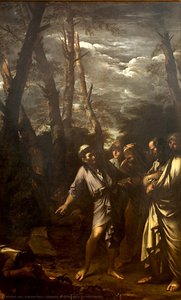
The Baptism of the Eunuch (1660) od Salvator Rosa

The Baptism of the Eunuch

1660 · Oil On Canvas · Chrysler Museum of Art, Norfolk

In "The Baptism of the Eunuch" by Salvator Rosa, a profound moment of spiritual transformation unfolds within a rugged landscape. Created in 1660, the scene captures the precise instant of a man's rebirth through water. A figure, dressed in a white robe, receives the sacrament from another person. This act of baptism occurs amidst a natural setting where rocks rise from the earth, grounding the sacred event in a physical,…

2
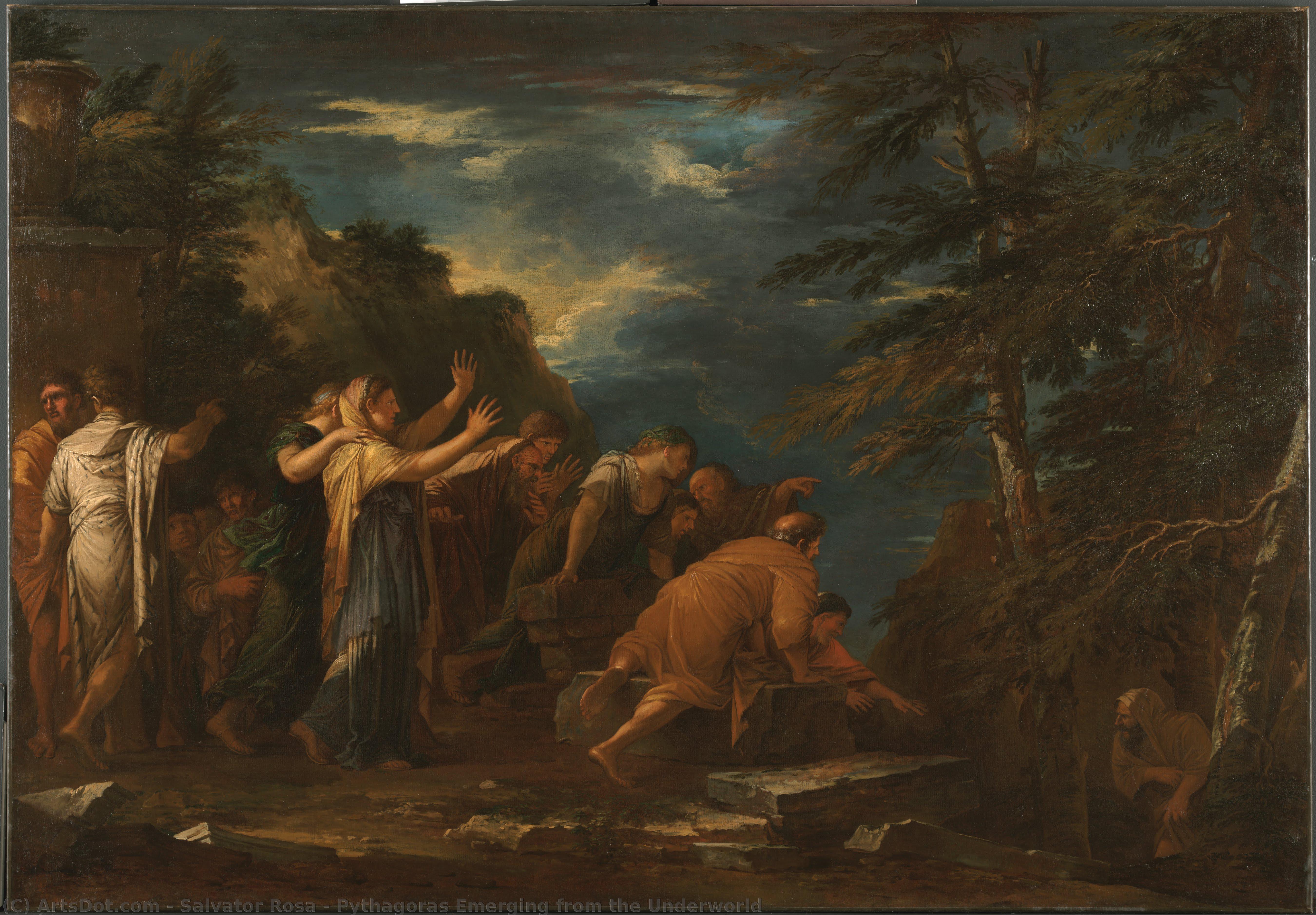
Pythagoras vychádzajúci z podsvetia (1662) od Salvator Rosa

Pythagoras vychádzajúci z podsvetia

1662 · Olej na plátne · Kimbell Art Museum, Fort Worth

Pythagoras Emerging from the Underworld – Salvator Rosa’s Baroque Vision Salvator Rosa’s “Pythagoras Emerging from the Underworld” stands as a testament to the baroque artistic spirit—a dramatic fusion of philosophical contemplation and visceral naturalism. Painted in 1662, this monumental canvas depicts Pythagoras, revered Greek philosopher and mathematician, ascending from Hades alongside two women, symbolizing enlightenment and spiritual rebirth amidst darkness. The scene unfolds within a richly textured landscape reminiscent of…

3
Landscape with St Jerome (1670) od Salvator Rosa

Landscape with St Jerome

1670 · Oil On Canvas · Musée Condé, Chantilly

A rugged, mountainous gorge dominates the vertical composition, creating a sense of isolation through deep, narrow canyons. The landscape is defined by jagged, irregular rock faces and the skeletal, tangled branches of overhanging trees. Earthy tones of ochre, deep brown, and muted green establish a somber atmosphere, while a luminous patch of sky at the top center provides a sharp contrast to the shadows below. Within this untamed environment, a…

4
Head of a Man with a Turban (1652) od Salvator Rosa

Head of a Man with a Turban

1652 · Oil On Canvas · Birmingham Museum and Art Gallery, Birmingham

A single light source strikes the left side of a weathered face, carving it out of a heavy, ink-black void. The man’s gaze is steady, meeting the viewer with a quiet, stoic intensity. He wears a voluminous turban, its cream and ochre folds catching the light, revealing the coarse texture of the cloth. Deep shadows swallow the right side of his head, merging his beard and the nape of his…

5
Tobias and the Angel (1662) od Salvator Rosa

Tobias and the Angel

1662 · Oil On Canvas · Musée Condé, Chantilly

The canvas holds a vertical tension, a sudden movement between the heavens and the earth. A celestial figure descends, cutting through a darkness that feels heavy and thick. This is the moment of intervention, where the divine enters the realm of the mortal. Light does not merely illuminate; it strikes. It catches the curve of a reaching hand and the pale skin of a kneeling figure, leaving the rest of…

6
Return of Astrea (1642) od Salvator Rosa

Return of Astrea

1642 · Oil On Canvas · Kunsthistorisches Museum, Viedeň

A heavy, weathered stone structure anchors the left side of the canvas, its crumbling edges catching the light. Beside it, a gnarled tree leans into the frame, its dark branches reaching like fingers toward a vast, cloud-filled sky. In the lower foreground, rustic figures move through the shadows of the ruins. A man in white and blue stands amidst the earthy tones of ochre and sienna. Above this earthly realm,…

7
Daniel in the Lion's Den (1662) od Salvator Rosa

Daniel in the Lion's Den

1662 · Oil On Canvas · Musée Condé, Chantilly

Salvator Rosa painted Daniel in the Lion's Den as a profound exercise in religious art. This oil on canvas work emerged after 1662, a period when the artist sought to expand his reputation beyond the rugged landscapes for which he was known. The composition belongs to a larger, cohesive cycle of five thematically linked Biblical stories. These paintings were executed for Carlo de' Rossi, intended to decorate a private chapel…

8
Crucifixion of Polyclitus (1650) od Salvator Rosa

Crucifixion of Polyclitus

1650 · Oil · Národné múzeum vo Varšave, Varšava

In this dramatic Baroque oil painting, we find ourselves witnessing a moment of profound martyrdom. The composition is built upon a restless diagonal, pulling the eye from a crowded, agitated group of figures in the lower left toward the central figure of Polyclitus, suspended upon the cross in the upper right. The landscape is not a place of peace; it is a rugged, mountainous terrain of craggy rocks and turbulent…

9
Jesus carrying the cross (1667) od Salvator Rosa

Jesus carrying the cross

1667 · Oil · Musée Condé, Chantilly

A heavy, wooden cross dominates the composition, its diagonal thrust cutting through a turbulent scene of physical and spiritual struggle. Christ is caught in a moment of intense exertion, his body strained under the burden of the timber. Around him, a crowd of onlookers and tormentors creates a sense of claustrophobic chaos. The arrangement of figures is agitated, driving the eye across the canvas in a series of sharp, conflicting…

10
Witches at their Incantations (1646) od Salvator Rosa

Witches at their Incantations

1646 · Oil On Canvas · National Gallery, Londýn

The shadows deepen as we encounter Witches at their Incantations, a work that pulls the viewer into a dark, nocturnal ritual. Painted by Salvator Rosa about 1646, the scene captures a gathering of figures caught in the midst of a witches' sabbath. This macabre assembly unfolds beneath a heavy, cloud-covered sky, where the line between the human and the monstrous begins to blur. It is a moment of profound unrest,…

Obrazy umelca Salvator Rosa, usporiadané od 11 do 100

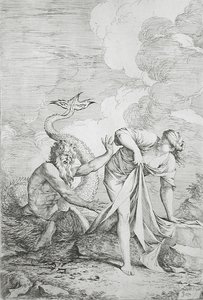
11Group of Warriors (1644) od Salvator RosaGroup of Warriors1644 · Bavarské štátne múzeá výtvarného umenia 12Self-Portrait as Philosopher of Silence (1641) od Salvator RosaSelf-Portrait as Philosopher of Silence1641 · National Gallery 13Landscape with Bather (1660) od Salvator RosaLandscape with Bather1660 · Yale University Art Gallery 14Saint John the Baptist Baptizing Christ in the Jordan (1655) od Salvator RosaSaint John the Baptist Baptizing Christ in the Jordan1655 · Kelvingrove Art Gallery and Museum 15Jeremie pulled from the cistern (1622) od Salvator RosaJeremie pulled from the cistern1622 · Musée Condé 16Armed Robbers in Rocky Countryside (1644) od Salvator RosaArmed Robbers in Rocky Countryside1644 · Bavarské štátne múzeá výtvarného umenia 17Jonah Preaching to the People of Niniveh (1645) od Salvator RosaJonah Preaching to the People of Niniveh1645 · Statens Museum For Kunst 18Prometheus on the Rock (1644) od Salvator RosaPrometheus on the Rock1644 · Bavarské štátne múzeá výtvarného umenia 19Mountain Landscape (1644) od Salvator RosaMountain Landscape1644 · Bavarské štátne múzeá výtvarného umenia 20Landscape with Saint Anthony Abbot and Saint Paul the Hermit (1662) od Salvator RosaLandscape with Saint Anthony Abbot and Saint Paul the Hermit1662 · Scottish National Gallery 21Study for 'Il Genio di Rosa' od Salvator RosaStudy for 'Il Genio di Rosa' 22Astraea Leaves The Earth (1665) od Salvator RosaAstraea Leaves The Earth1665 · Kunsthistorisches Museum 23An Evangelist (1635) od Salvator RosaAn Evangelist1635 · Izraelské múzeum 24The War People of Gideon (1644) od Salvator RosaThe War People of Gideon1644 · Bavarské štátne múzeá výtvarného umenia 25Allegory of Study (1647) od Salvator RosaAllegory of Study1647 · John and Mable Ringling Museum of Art 26Scenes of Witchcraft: Night (1640) od Salvator RosaScenes of Witchcraft: Night1640 · Cleveland Museum of Art 27Scenes of Witchcraft: Evening (1640) od Salvator RosaScenes of Witchcraft: Evening1640 · Cleveland Museum of Art 28Scenes of Witchcraft: Day (1640) od Salvator RosaScenes of Witchcraft: Day1640 · Cleveland Museum of Art 29Scenes of Witchcraft: Morning (1640) od Salvator RosaScenes of Witchcraft: Morning1640 · Cleveland Museum of Art 30A Philosopher (1643) od Salvator RosaA Philosopher1643 · Kedleston Hall 31The Founding of Thebes (1645) od Salvator RosaThe Founding of Thebes1645 · Statens Museum For Kunst 32The Martyrdom of Saint Januarius and his Fellows (1650) od Salvator RosaThe Martyrdom of Saint Januarius and his Fellows1650 · Städel Museum 33Head of a Philosopher, called 'Democritus' (1659) od Salvator RosaHead of a Philosopher, called 'Democritus'1659 34Bandits robbing Travellers (1656) od Salvator RosaBandits robbing Travellers1656 · Knole House 35Anchorites Tempted by Demons (1660) od Salvator RosaAnchorites Tempted by Demons1660 · Galleria Nazionale d'Arte Antica 36Three Marys at the Tomb (1665) od Salvator RosaThree Marys at the Tomb1665 · John and Mable Ringling Museum of Art 37Christ expelling the Money Changers from the Temple (1664) od Salvator RosaChrist expelling the Money Changers from the Temple1664 · Attingham Park 38The Angel Leaving the House of Tobias (1662) od Salvator RosaThe Angel Leaving the House of Tobias1662 39Cavalieri in Marcia (1673) od Salvator RosaCavalieri in Marcia1673 40Self-Portrait (1650) od Salvator RosaSelf-Portrait1650 · Detroit Institute of Arts 41Saint Simon the Apostle (1673) od Salvator RosaSaint Simon the Apostle1673 · Georgia Museum of Art 42Landscape with Armed Men (1640) od Salvator RosaLandscape with Armed Men1640 · Los Angeles County Museum of Art 43St. Francis in Ecstasy od Salvator RosaSt. Francis in EcstasyThe Phillips Collection 44Fall of the Giants od Salvator RosaFall of the Giants 45Saint Humphrey (Onuphrius) (1660) od Salvator RosaSaint Humphrey (Onuphrius)1660 · Minneapolis Institute of Art 46Landscape with an "Arco Naturale" (1651) od Salvator RosaLandscape with an "Arco Naturale"1651 · Statens Museum For Kunst 47Odysseus and Nausicaa (1655) od Salvator RosaOdysseus and Nausicaa1655 · Los Angeles County Museum of Art 48Sleeping Warrior (1644) od Salvator RosaSleeping Warrior1644 · Bavarské štátne múzeá výtvarného umenia 49Ceres and Phytalus (1662) od Salvator RosaCeres and Phytalus1662 · Los Angeles County Museum of Art 50Witches at their Incantations od Salvator RosaWitches at their Incantations 51A Cavalry Battle (1652) od Salvator RosaA Cavalry Battle1652 · Auckland Art Gallery Toi o Tāmaki 52Desolate Landscape with Two Figures (1662) od Salvator RosaDesolate Landscape with Two Figures1662 · Scottish National Gallery 53Landscape with Mercury and the Dishonest Woodman (1652) od Salvator RosaLandscape with Mercury and the Dishonest Woodman1652 · National Gallery 54Landscape with Warriors (1644) od Salvator RosaLandscape with Warriors1644 · Bavarské štátne múzeá výtvarného umenia 55Landscape with Armed Men (1640) od Salvator RosaLandscape with Armed Men1640 · Los Angeles County Museum of Art 56Glaucus and Scylla (1661) od Salvator RosaGlaucus and Scylla1661 · Los Angeles County Museum of Art 57The Raising of Lazarus od Salvator RosaThe Raising of LazarusMusée Condé 58Still Life (1673) od Salvator RosaStill Life1673 · Bavarské štátne múzeá výtvarného umenia 59Youth with An Effigy of Diana of Ephesus (1657) od Salvator RosaYouth with An Effigy of Diana of Ephesus1657 · Royal Collection 60River Landscape with Apollo and the Cumean Sibyl (1655) od Salvator RosaRiver Landscape with Apollo and the Cumean Sibyl1655 · Wallace Collection 61Rocky Landscape with a Huntsman and Warriors (1670) od Salvator RosaRocky Landscape with a Huntsman and Warriors1670 · Louvre 62The Finding of Moses (1650) od Salvator RosaThe Finding of Moses1650 · Kimbell Art Museum 63Bandits on a Rocky Coast (1656) od Salvator RosaBandits on a Rocky Coast1656 · Metropolitné múzeum umenia 64Standing Warror with Shield (1657) od Salvator RosaStanding Warror with Shield1657 · Los Angeles County Museum of Art 65Saint John the Baptist Revealing Christ to the Disciples (1655) od Salvator RosaSaint John the Baptist Revealing Christ to the Disciples1655 · Kelvingrove Art Gallery and Museum 66Pythagoras and the Fisherman (1662) od Salvator RosaPythagoras and the Fisherman1662 · Staatliche Museen zu Berlin 67Rocky Landscape (1644) od Salvator RosaRocky Landscape1644 · Bavarské štátne múzeá výtvarného umenia 68A Pass with Travellers attacked by Bandits (1627) od Salvator RosaA Pass with Travellers attacked by Bandits1627 · Knole House 69Bay in a Calm Sea (1644) od Salvator RosaBay in a Calm Sea1644 · Bavarské štátne múzeá výtvarného umenia 70Sea Storm (1644) od Salvator RosaSea Storm1644 · Bavarské štátne múzeá výtvarného umenia 71Sea Bay with Rocky Coast (1644) od Salvator RosaSea Bay with Rocky Coast1644 · Bavarské štátne múzeá výtvarného umenia 72Landscape with Riders (1644) od Salvator RosaLandscape with Riders1644 · Bavarské štátne múzeá výtvarného umenia 73Sea Storm (1644) od Salvator RosaSea Storm1644 · Bavarské štátne múzeá výtvarného umenia 74Mountain Landscape (1644) od Salvator RosaMountain Landscape1644 · Bavarské štátne múzeá výtvarného umenia 75Rocky Coast at a Bay (1644) od Salvator RosaRocky Coast at a Bay1644 · Bavarské štátne múzeá výtvarného umenia 76Bay by Turbulent Sea (1644) od Salvator RosaBay by Turbulent Sea1644 · Bavarské štátne múzeá výtvarného umenia 77Seastorm (1644) od Salvator RosaSeastorm1644 · Bavarské štátne múzeá výtvarného umenia 78Wild rocky landscape (1644) od Salvator RosaWild rocky landscape1644 · Bavarské štátne múzeá výtvarného umenia 79Sea bay with castle ruins (1644) od Salvator RosaSea bay with castle ruins1644 · Bavarské štátne múzeá výtvarného umenia 80Coastal Landscape with Castle (1644) od Salvator RosaCoastal Landscape with Castle1644 · Bavarské štátne múzeá výtvarného umenia 81Lucrezia as Poetry (1641) od Salvator RosaLucrezia as Poetry1641 · Wadsworth Atheneum Museum of Art 82Evening Landscape (1640) od Salvator RosaEvening Landscape1640 83Harbour with Ruins (1640) od Salvator RosaHarbour with Ruins1640 · Szépművészeti Múzeum 84St John Preaching (1660) od Salvator RosaSt John Preaching1660 · York Art Gallery 85Rocky Landscape with Figures (1660) od Salvator RosaRocky Landscape with Figures1660 86The Finding of Moses (1660) od Salvator RosaThe Finding of Moses1660 · Detroit Institute of Arts 87The Return of the Prodigal Son (1660) od Salvator RosaThe Return of the Prodigal Son1660 · Národná galéria Kanady 88A Seaport (1651) od Salvator RosaA Seaport1651 · Statens Museum For Kunst 89Southern Harbour (1651) od Salvator RosaSouthern Harbour1651 · Statens Museum For Kunst 90Rocky landscape with figures (1651) od Salvator RosaRocky landscape with figures1651 91Landscape with figures (1651) od Salvator RosaLandscape with figures1651 92Landscape with Tower and Boat (1660) od Salvator RosaLandscape with Tower and Boat1660 · Musée Condé 93Christ resurrected od Salvator RosaChrist resurrectedMusée Condé 94the Witches' Sabbath (1654) od Salvator Rosathe Witches' Sabbath1654 · Museum of Fine Arts, Houston 95Glaucus and Scylla (1661) od Salvator RosaGlaucus and Scylla1661 · Art Gallery of South Australia 96Diogenes Throwing Away His Drinking Cup. (1651) od Salvator RosaDiogenes Throwing Away His Drinking Cup.1651 · Statens Museum For Kunst 97Wooded Landscape (1650) od Salvator RosaWooded Landscape1650 98Portrait of the Artist's Wife Lucrezia (1657) od Salvator RosaPortrait of the Artist's Wife Lucrezia1657 · Galleria Nazionale d’Arte Antica 99Diogenes Casting away his Cup (1650) od Salvator RosaDiogenes Casting away his Cup1650 · Museum of Fine Arts, Houston 100Landscape with a Wide River, Waterfall and Three Figures (1665) od Salvator RosaLandscape with a Wide River, Waterfall and Three Figures1665 · John and Mable Ringling Museum of Art

Slávne obrazy umelca Salvator Rosa podľa jednotlivých období

Motívy, ktoré zaujali Salvator Rosa

Štyri témy, ktoré sa v týchto origináloch najčastejšie vracajú, každá s jej najvychybenejším príkladom.

Múzeá, ktoré uchovávajú originály umelca Salvator Rosa

8 múzeá, v ktorých sa nachádza najviac obrazov z tejto stránky.

Múzeá Mesto Diela umelca Salvator Rosa Obrazy z tohto zoznamu
Bavarské štátne múzeá výtvarného umenia, MníchBavarské štátne múzeá výtvarného umenia Mních 21 Group of Warriors, Armed Robbers in Rocky Countryside, Prometheus on the Rock
Musée Condé, ChantillyMusée Condé Chantilly 9 Landscape with St Jerome, Tobias and the Angel, Daniel in the Lion's Den
Statens Museum For Kunst, KodaňStatens Museum For Kunst Kodaň 10 Jonah Preaching to the People of Niniveh, The Founding of Thebes, Landscape with an "Arco Naturale"
Los Angeles County Museum of Art, Los AngelesLos Angeles County Museum of Art Los Angeles 7 Landscape with Armed Men, Odysseus and Nausicaa, Ceres and Phytalus
Cleveland Museum of Art, ClevelandCleveland Museum of Art Cleveland 5 Scenes of Witchcraft: Night, Scenes of Witchcraft: Evening, Scenes of Witchcraft: Day
National Gallery, LondýnNational Gallery Londýn 7 Witches at their Incantations, Self-Portrait as Philosopher of Silence, Landscape with Mercury and the Dishonest Woodman
John and Mable Ringling Museum of Art, SarasotaJohn and Mable Ringling Museum of Art Sarasota 4 Allegory of Study, Three Marys at the Tomb, Landscape with a Wide River, Waterfall and Three Figures
Kunsthistorisches Museum, ViedeňKunsthistorisches Museum Viedeň 4 Return of Astrea, Astraea Leaves The Earth

Salvator Rosa, jeden ikonický obraz na každé desaťročie

Diela podľa dekád

Vyberte si dekádu a pozrite si originál, ktorý ju definuje.

Obrazy umelca Salvator Rosa: odpovede galérie

Ktorý obraz od Salvator Rosa je najznámejší zo všetkých?Odhaľte odpoveď

The Baptism of the Eunuch (1660), Chrysler Museum of Art, Norfolk. Nasledujú Pythagoras vychádzajúci z podsvetia (1662) a Landscape with St Jerome (1670).

Koľko rokov mal/a Salvator Rosa pri dokončeni diela The Baptism of the Eunuch?Odhaľte odpoveď

45 rokov: The Baptism of the Eunuch vzniklo v roku 1660 a Salvator Rosa sa narodil/a v roku 1615.

Ktorých 10 najlepších obrazov má Salvator Rosa?Odhaľte odpoveď

The Baptism of the Eunuch, Pythagoras vychádzajúci z podsvetia, Landscape with St Jerome, Head of a Man with a Turban, Tobias and the Angel, Return of Astrea, Daniel in the Lion's Den, Crucifixion of Polyclitus, Jesus carrying the cross a Witches at their Incantations. Vyššie uvedené hodnotenie uvádza rok a múzeu pre každé z nich.

Koľko diel vytvoril/a Salvator Rosa?Odhaľte odpoveď

Náš katalóg obsahuje 274 diel od umelca Salvator Rosa z perioda od 1627 do 1673.

Kde visia najznámejšie originály umelca Salvator Rosa?Odhaľte odpoveď

Väčšinou v Bavarské štátne múzeá výtvarného umenia (Mních), Musée Condé (Chantilly) a Statens Museum For Kunst (Kodaň). Tabuľka múzeí vyššie ich všetky uvádza.

Kedy vytvoril/a Salvator Rosa svoje najznámejšie obrazy?Odhaľte odpoveď

V období 1640s: 36 z 100 diel na tejto stránke bolo vytvorených vtedy, pričom Return of Astrea z nich.

Aké sú najskoršie a najneskoršie známe diela umelca Salvator Rosa?Odhaľte odpoveď

Na tejto stránke je najstaršie dielo z A Pass with Travellers attacked by Bandits (1627) a najnovšie z Cavalieri in Marcia (1673).

K akým témamam sa Salvator Rosa najčastejšie vracia?Odhaľte odpoveď

Sky (45), People (38) a Figures (32), v rámci 100 diel na tejto stránke.

V akom médiu tvoril/a Salvator Rosa najčastejšie?Odhaľte odpoveď

Oil On Canvas, pre 69 z 100 diel na tejto stránke.

S ktorým smerom je spojený/á umenec Salvator Rosa?Odhaľte odpoveď

Baroque style, podľa originálov na tejto stránke.

Aké originály umelca Salvator Rosa má v zbierkach Bavarské štátne múzeá výtvarného umenia?Odhaľte odpoveď

Group of Warriors, Armed Robbers in Rocky Countryside a Prometheus on the Rock: múzeá Bavarské štátne múzeá výtvarného umenia, Mních uchovávajú 21 z diel na tejto stránke.

Salvator Rosa: umelec

Early Life, Family and Training

In the outskirts of Naples, specifically in Arenella, Salvator Rosa enters the world. The date of his birth remains a point of historical debate, falling on either June 20 or July 21, 1615. He is born into a family of distinct lineages; his mother, Giulia Greca Rosa, belongs to one of the Greek families of Sicily, while his father, Vito Antonio de Rosa, works as a land surveyor. The shadow of Vesuvius looms over his early years, a geological presence that will eventually shape his visual language.

Conflict defines his path toward a vocation. His father, seeking a more stable and traditional life for his son, intends for Salvator Rosa to enter the priesthood or pursue a career as a lawyer. The convent of the Somaschi Fathers is the destination prepared for him. However, the boy's interests pull elsewhere. He turns away from the religious life to pursue the arts in secret. Under the quiet tutelage of his maternal uncle, Paolo Greco, he begins to master the fundamentals of his craft. This clandestine training continues as he moves toward the guidance of Francesco Fracanzano, absorbing the technical foundations that will later allow him to challenge the established aesthetic norms of the Baroque era.

Artistic Career in Naples, Rome and Florence

The trajectory of Rosa's career shifts with the political and social tides of 17th-century Italy. In 1635, he leaves his native Naples for Rome, entering the undisputed art center of the era. He returns to Naples in 1637, but his presence in the city becomes increasingly volatile. By 1648, the artist is forced to flee Naples entirely after becoming involved in a failed uprising against the Spanish rulers. This period of rebellion marks a definitive break from his early years.

His subsequent movement takes him to Florence. This second period in the city offers a different kind of engagement. Beyond the studio, Rosa immerses himself in the intellectual and sensory life of the Florentine circles. He spends his hours playing music, writing poetry, and studying Stoic philosophy. This multifaceted existence informs the depth of his later output, as his interests in the written word and philosophical thought begin to intersect with his visual practice.

Technique and Style

Rosa’s brushwork rejects the polished surfaces and idealized forms that defined much of the Baroque era. Instead, he embraces an unorthodox and extravagant style, favoring the raw and the untamed. He masters chiaroscuro, utilizing the dramatic interplay of light and shadow to sculpt form and mood. This technique does more than define shapes; it creates a sense of tension across the canvas. His landscapes are not idyllic retreats for contemplation but are instead characterized as wild and rugged. Turbulent skies and jagged, rocky terrain dominate his compositions, reflecting a fascination with the volatile power of nature.

The subject matter often moves away from the common religious scenes of his contemporaries. He frequently selects obscure and esoteric subjects drawn from the Bible, mythology, and the lives of philosophers. This intellectual rigor transforms the landscape from a mere backdrop into a central, active participant in the narrative. In his hands, the environment becomes a stage for moral and philosophical inquiry. He often depicts the human figure as marginal, dwarfed by the immense and often hostile scale of the natural world.

Key Works and Masterpieces

The canvas often becomes a site of intense psychological inquiry. In the 1641 work Self-Portrait as Philosopher of Silence, held at the National Gallery, London, the artist confronts the viewer through a lens of quietude. This piece functions as a meditation on wisdom, utilizing a dark, contemplative atmosphere to establish his identity. Similarly, his 1645 Self-Portrait as a Philosopher at the National Gallery, London, reinforces this persona of the thinking man, moving away from mere representation toward an expression of intellectual rigor.

Nature in Rosa's hands is rarely a peaceful backdrop; it is a turbulent force. Around 1640, Ruins in a Rocky Landscape emerged, a work now in the Cleveland Museum of Art that utilizes classical ruins and iridescent light to suggest a world in flux. This ruggedness extends into his mythological and allegorical compositions. The 1662 Pythagoras Emerging from the Underworld, located at the Kimbell Art Museum, Fort Worth, uses dramatic landscape composition to bridge the gap between the physical and the metaphysical. In the same vein, the 1664 Democrito E Protagora at the Hermitage Museum, Saint Petersburg, employs a philosophical allegory set within a dramatic landscape.

Even religious narratives undergo a transformation under his brush. The Baptism of the Eunuch, created in 1660 and held at the Chrysler Museum of Art, Norfolk, infuses the biblical scene with high drama. His ability to navigate these diverse subjects—from the mythological to the sacred—defines his output.

Legacy and Influence

The impact of Salvator Rosa ripples through the evolution of Baroque art. His departure from the idealized, orderly landscapes of his contemporaries creates a friction that shifts the direction of 17th-century painting. This influence moves through the decades, reaching into the works of later artists like Luca Giordano. He does not merely paint scenery; he constructs a visual language of turbulence that persists long after his death.

His romanticised landscapes and history paintings exert a heavy presence from the 17th century well into the early 19th century. These works act as prototypes for the romantic landscape, trading the "picturesque" classical views for something far more volatile. Instead of calm, pastoral retreats, he presents a wild and often hostile nature. This shift in perspective anticipates the emotional intensity that would later define the Romantic movement.

The legacy of his vision is found in the tension between the human figure and the untamed wilderness. By centering the landscape as a primary subject rather than a mere backdrop for religious or mythological narratives, he alters the hierarchy of genres. His rugged, rocky terrains and stormy skies provide a blueprint for an aesthetic of the sublime, where nature is a force of awe and introspection rather than a controlled garden.

Where to See the Works Today

The physical remnants of Rosa’s restless career are scattered across the major art capitals of Europe and the Americas. In Saint Petersburg, the Hermitage Museum preserves his early precision in the 1640 Portrait of a Man. Across the continent, the Louvre in Paris maintains a presence through his 1652 Heroic Battle. These works anchor his presence in the great institutional collections of the 17th century.

The artist's philosophical and mythological preoccupations find their way into specialized collections as well. The National Gallery in London holds his 1645 Self-Portrait as a Philosopher, a work that captures his intense engagement with intellectual thought. In Fort Worth, the Kimbell Art Museum houses Pythagoras Emerging from the Underworld, a 1662 composition that highlights his ability to merge myth with dramatic landscape. Meanwhile, the Metropolitan Museum of Art in New York contains his 1656 Bandits on a Rocky Coast, a piece that reflects the rugged, untamed nature he favored.