Portrét Max Weber

Obrazy umelca Max Weber: 75 najznámejších výtvarných diel prostretých pohľadom galérie

Aktualizované október 2026 · zoradené podľa našej miery popularity (vyhľadávanie, návštevy a objednávky pre každou prácu) · 76 dielov umelca Max Weber v našom katalógu

Stručne povedané

Z hľadiska galérie je najznámejším obrazom umelca Max Weber dielo Gauguin Girl (1907). Figures in a Landscape (1911) a Woman Reading (1916) dopĺňajú trojicu, ktorú pozná každé oko. Z 76 diel umelca Max Weber v našom katalógu prezentuje galéria nižšie 75 najznámejších, z ktorých je každá originál s uvedeným rokom vzniku, múzeom a unikátnosťou.

1881 – 1961, Białystok Cubism Najviac diel: The Phillips Collection

Top 10 obrazov umelca Max Weber v galérii

Obrazy umelca Max Weber, usporiadané od 11 do 75

Slávne obrazy umelca Max Weber podľa jednotlivých období

Motívy, ktoré zaujali Max Weber

Štyri témy, ktoré sa v týchto origináloch najčastejšie vracajú, každá s jej najvychybenejším príkladom.

Múzeá, ktoré uchovávajú originály umelca Max Weber

8 múzeá, v ktorých sa nachádza najviac obrazov z tejto stránky.

Múzeá Mesto Diela umelca Max Weber Obrazy z tohto zoznamu
The Phillips Collection, Washington, D.C.The Phillips Collection Washington, D.C. 5 High Noon, Colonial Bowl, Rabbi
Brooklynský múzeum, BrooklynBrooklynský múzeum Brooklyn 2 The Visit, The Cellist
John and Mable Ringling Museum of Art, SarasotaJohn and Mable Ringling Museum of Art Sarasota 1 Untitled (Still Life)
Museum of Fine Arts, BostonMuseum of Fine Arts Boston 1 Path in the Woods
Whitney Museum of American Art, New YorkWhitney Museum of American Art New York 1 Adoration of the Moon
Art Institute of Chicago, ChicagoArt Institute of Chicago Chicago 1 Still Life
Metropolitné múzeum umenia, New YorkMetropolitné múzeum umenia New York 1 Pacific Coast
Smithsonian American Art Museum, Washington, D.C.Smithsonian American Art Museum Washington, D.C. 1 Summer

Max Weber, jeden ikonický obraz na každé desaťročie

Diela podľa dekád

Vyberte si dekádu a pozrite si originál, ktorý ju definuje.

Obrazy umelca Max Weber: odpovede galérie

Ktorý obraz od Max Weber je najznámejší zo všetkých?Odhaľte odpoveď

Gauguin Girl (1907). Nasledujú Figures in a Landscape (1911) a Woman Reading (1916).

Koľko rokov mal/a Max Weber pri dokončeni diela Gauguin Girl?Odhaľte odpoveď

26 rokov: Gauguin Girl vzniklo v roku 1907 a Max Weber sa narodil/a v roku 1881.

Ktorých 10 najlepších obrazov má Max Weber?Odhaľte odpoveď

Gauguin Girl, Figures in a Landscape, Woman Reading, Untitled (Still Life), Path in the Woods, untitled (1109), untitled (2416), untitled (5652), untitled (8675) a untitled (7238). Vyššie uvedené hodnotenie uvádza rok a múzeu pre každé z nich.

Koľko diel vytvoril/a Max Weber?Odhaľte odpoveď

Náš katalóg obsahuje 76 diel od umelca Max Weber z perioda od 1907 do 1952.

Kde visia najznámejšie originály umelca Max Weber?Odhaľte odpoveď

Väčšinou v The Phillips Collection (Washington, D.C.), Brooklynský múzeum (Brooklyn) a John and Mable Ringling Museum of Art (Sarasota). Tabuľka múzeí vyššie ich všetky uvádza.

Kedy vytvoril/a Max Weber svoje najznámejšie obrazy?Odhaľte odpoveď

V období 1940s: 5 z 75 diel na tejto stránke bolo vytvorených vtedy, pričom Untitled (Still Life) z nich.

Aké sú najskoršie a najneskoršie známe diela umelca Max Weber?Odhaľte odpoveď

Na tejto stránke je najstaršie dielo z Gauguin Girl (1907) a najnovšie z Pacific Coast (1952).

K akým témamam sa Max Weber najčastejšie vracia?Odhaľte odpoveď

Nude figures (3), Melancholy mood (2) a American art (2), v rámci 75 diel na tejto stránke.

S ktorým smerom je spojený/á umenec Max Weber?Odhaľte odpoveď

Cubism, podľa originálov na tejto stránke.

Aké originály umelca Max Weber má v zbierkach The Phillips Collection?Odhaľte odpoveď

High Noon, Colonial Bowl a Rabbi: múzeá The Phillips Collection, Washington, D.C. uchovávajú 5 z diel na tejto stránke.

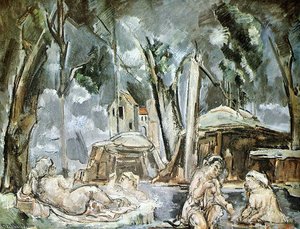
Max Weber: umelec

Early Life and the Seeds of Modernism

Max Weber, born in Białystok, Poland in 1881, embarked on a journey that would indelibly mark the landscape of American art. His formative years were steeped in the traditions of Orthodox Judaism, a heritage that would later profoundly influence his artistic expression. The family’s emigration to Brooklyn, New York, when Weber was just ten years old, proved pivotal. This relocation thrust him into a vibrant, rapidly changing society—a crucible where Old World roots and New World aspirations collided. It was at the Pratt Institute in Brooklyn that Weber first formally engaged with art, studying under the influential Arthur Wesley Dow. Dow’s unwavering belief in innovative artistic approaches – rejecting traditional perspective and embracing simplified forms – coupled with his exposure to Japanese aesthetics and connections to Paul Gauguin, ignited within Weber a nascent modernist sensibility. This encounter would prove transformative, shaping his artistic vision for decades to come.

The Parisian Awakening and Introduction of Cubism

In 1905, Weber ventured to Europe, specifically Paris, the epicenter of avant-garde thought. His initial studies at the Académie Julian served as merely a stepping stone; it was his immersion in the city’s artistic milieu that truly propelled him forward. He forged friendships with Henri Rousseau, whose evocative depictions of nature captivated him, and found himself drawn into the orbit of luminaries like Henri Matisse and Pablo Picasso—artists who were bravely dismantling established conventions of representation. Weber frequented Gertrude Stein's salon, a legendary gathering place for artists, writers, and intellectuals, absorbing the latest currents in poetry and art theory. This exposure to the School of Paris fundamentally altered his artistic trajectory. The influence of Picasso’s groundbreaking Cubist explorations – fracturing objects into geometric planes and presenting multiple viewpoints simultaneously – became particularly significant. Weber eagerly embraced these radical ideas, experimenting with fragmented compositions and bold color palettes that would characterize his early works.

Bold Early Paintings: Chinese Restaurant and Beyond

Weber's artistic output during the formative years of 1905-1915 is marked by a remarkable fusion of stylistic influences. His painting *Chinese Restaurant* (1915), exemplifies this approach, skillfully blending Cubist fragmentation with expressive brushwork to convey a sense of disorientation and unease—a reflection of the anxieties prevalent in the era. Simultaneously, he absorbed inspiration from Gauguin’s Polynesian landscapes and symbolism, incorporating elements of flattened perspective and vibrant hues reminiscent of Tahitian art. These stylistic choices underscore Weber's commitment to pushing artistic boundaries while simultaneously honoring his Jewish heritage.

Critical Reception and Artistic Evolution

The 1911 exhibition at the 291 Gallery, organized by Alfred Stieglitz, presented Weber with an unprecedented challenge—and a devastating blow. His paintings were subjected to what many consider “one of the most merciless critical whippings” ever endured by an American artist. Critics dismissed his work as “brutal,” “vulgar,” and utterly devoid of artistic merit. The public struggled to comprehend the radical departure from representational norms, rejecting Weber’s daring experimentation with form and color. This harsh judgment fueled a period of introspection and spurred him toward a more nuanced artistic path. Recognizing the importance of fostering dialogue within the art community, Weber championed the cause of modernist art in America, advocating for its acceptance by mainstream audiences.

Legacy and Recognition

Weber's unwavering dedication to his craft ultimately yielded considerable acclaim. By the 1940s and 50s, his expressionist figurative paintings were attracting significant attention from collectors and critics alike. A major retrospective at the Jewish Museum in 1982 solidified Weber’s place in art history, recognizing him as a pivotal figure in the genesis of American Modernism—a testament to his enduring vision and artistic courage. His work continues to inspire artists today, demonstrating that true innovation requires boldness, perseverance, and an unwavering belief in one's own creative convictions.

Všetky 76 diela od Max Weber →
