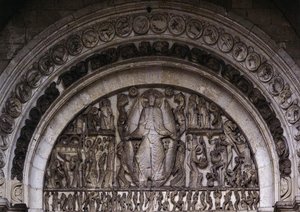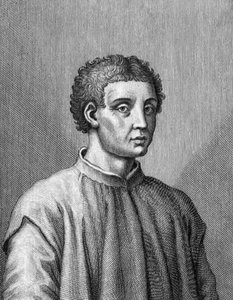
High Medieval: original voices

96 Famous High Medieval Artists Who Shaped the Movement

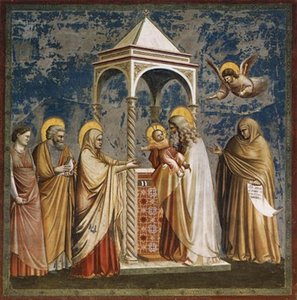
Giotto Di Bondone (1267–1337) is the most famous High Medieval artist, whose singular vision gave us Č. 19 Scény zo života Krista: 3. Predostavenie Krista v chráme and Madonna v Majestáte (Ognissanti Madonna). Next stand Duccio Di Buoninsegna, Cimabue, Zhao Mengfu and Zhu Xi. These 96 artists, from Xu Daoning (born 970) to Huang Gongwang (born 1269), came from 24 countries.

Our selection. Artists whose works our catalogue attaches to High Medieval, in the order of our fame ranking. Artists born after 1955 with no Wikidata identifier stay out until verified. The Wikipedia figure counts our 32 languages with an article on the artist.

  1. Č. 19 Scény zo života Krista: 3. Predostavenie Krista v chráme by Giotto Di Bondone1Giotto Di Bondone
  2. Stories of the Passion (Maestà, verso) by Duccio Di Buoninsegna2Duccio Di Buoninsegna
  3. Madonna and Child Enthroned (Maesta) by Cimabue3Cimabue

In brief

High Medieval in brief

  • 96Artists
  • 970–1269Years of birth
  • 24Countries of birth
  • 3Women
  • 3Living artists
  • 1 429Works in our catalogue
Cities with most births
Kyoto (12), Hangzhou (5), Siena (4), Kaifeng (3)

One artist at a time

96 High Medieval Artists and their signature works

1of 96

Giotto Di Bondone

Talian Born in Florencia Proto-renesancia Wikipedia in 31/32 languages

Giotto Di Bondone

Giotto Di Bondone sa objavil vśród vlnivých pahorkov v blízkosti talianske Florencie okolo roku 1267. Narodený vo florencianskej Italii ako syn kovára menom Bondone, Giotto Di Bondone si svoje rané roky v pamäti ľudí nesie v podobe legendy o pastiercovi. V období medzi rokmi 1297 a 1300 pôsobil v Rme, čo bol čas, kedy sa jeho umenie stretlo s monumentálnym rozmerom náboženských centier tohto veľkomesta.

Pupil of Cimabue #3 · Teacher of Pietro Cavallini #84

Signature works · The 100 signature works

2of 96

Duccio Di Buoninsegna

Talianska Born in Siena Sienská škola, Trecento gotika Wikipedia in 31/32 languages

Duccio Di Buoninsegna

Narodený v talianskej Siene okolo roku 1255, Duccio Di Buoninsegna prežíval život hlboko prepojený s náboženským a občianskym pulzovaním Toskánska. The Virgin and Child with Saints Dominic and Aurea (1312). Narodený v talianskej Siene okolo roku 1255 alebo 1256, Duccio Di Buoninsegna pochádil z rodu, ktorý zásadným spôsobom formoval jeho identitu.

Pupil of Cimabue #3

Signature works · The 100 signature works

3of 96

Cimabue

Taliančania Born in Florencia Byzantský & Renesančný Wikipedia in 28/32 languages

Cimabue

Narodený vo Florencii v Itálii okolo roku 1240, mladý muž, ktorý sa neskôr stal známy ako Cimabue, vstúpil do sveta, kde tradície Bizantínu stále pevne držali v náručí ducha umenia. Následoval Križovník v San Domenico v Arezzo, datovaný okolo roku 1270, kde sa zdá, že telo Krista pod ťažkou váhou vlastnej agónie poklesá.

Signature works · The 100 signature works

4of 96

Zhao Mengfu

Čínsky Born in Huzhou Literatírske maľby; Pejzážna maľba Wikipedia in 18/32 languages

Zhao Mengfu

Zhao Mengfu (1254–1322) predstavuje monumentálnu postavu v umení dynastie Yuan a je možno ho považovať za otca modernej čínskej krajinárskej maľby. Ako potomek šľachtilkej rodu dynastie Song bol jeho skorý život poznačený privilegiovaním, ale zároveň ho formovali turbulentné politické časy – mongolské dobytie zásadne zmenilo kultúrnu krajinu Číny.

Signature works · The 100 signature works

5of 96

Zhu Xi

Čínsky Wikipedia in 31/32 languages

Zhu Xi

Zhu Xi bol čínskym filozofom, historikom, politikom, poetom a kaligrafom éry Južnej Song. Počas svojho života Zhu Xi niekoľkokrát pôsobil ako vládny úradník, vrátane obdobia, keď bol prefektolem vojenského obvodu Nankang, kde obnovil Akadémiu v jaskyni Bieleho jelmenu. Okrem svojich filozofických zásahov bol Zhu Xi aj majstrom kaligrafie.

Signature works · The 100 signature works

6of 96

Ma Yuan

čínsky Born in Hangzhou škola Ma-Xia, dynastia Song Wikipedia in 19/32 languages

Ma Yuan

Aby sme pochopili krajinárstvo dynastie Jahnovej Song, musíme sa pozrieť na to, ako Ma Yuan pracoval s prázdnotou. V díelach ako Učenec obchádzajúci vodopád je ink wash (tónovanie atramentom) vrstvený s precíznosťou, pričom sa využívajú jemné tónové gradácie na vybudovanie hĺbky a atmosféry bez toho, aby sa relied na ťažké obrysy.

Signature works · The 100 signature works

7of 96

Guo Xi

Čínsky Born in Yancheng Maľba krajiny zo severnej dynastie Song Wikipedia in 16/32 languages

Guo Xi

Guo Xi (郭熙), narodený okolo roku 1020 v meste Yancheng v čínskom provincii Jiangsu, pochádza z rodiny hlboko zakorenenou v konfuciánskej učenosti – tradície, ktorá zásadne formovala jeho umelecké vnímanie. Guo Xiho prínos pre čínske umenie je neoddeliteľne spjatý s rozkvitajúcim hnutím krajinárskej maľby počas dynastie Severných Songov.

Signature works · The 100 signature works

8of 96

Emperor Huizong of Song

Chinese Born in Kaifeng Song Dynasty; Slender Gold calligraphy Wikipedia in 19/32 languages

Emperor Huizong of Song

As noted by contemporary artists like Zeng Fanzhi, the profound beauty found in his compositions—such as the serene stillness of Listening to the Qin —continues to resonate, offering a moment of meditative peace that transcends the turbulent history of his life.

Signature works · The 100 signature works

9of 96

Muqi

Chinese Born in Sichuan Chan painting Wikipedia in 14/32 languages

Muqi

Natural Simplicity: His legendary Six Persimmons remains perhaps the most iconic example of Chan painting, where the weight, texture, and subtle translucency of the fruit are rendered with an almost miraculous economy of line.

Signature works · The 100 signature works

10of 96

Guido Da Siena

Francúzska Born in Taliansko Stredobočná architektúra/design Wikipedia in 17/32 languages

Guido Da Siena

Villard de Honnecourt, postava zahalená v intrigujúcej máte, predstavuje jedného z najvýznamnejších, no zároveň najzáhadnejších umelcov 13. storočia vo Francúzsku. Narodený okolo roku 1230 v Picardii – regióne preslávnom svojou umeleckou vitalitou počas tohto obdobia – Villardov odkaz spočíva takmer výlučne na jeho pozoruhodnom „skicovníku“, alebo albume, ktorý je dnes uložený v Národnej knižnici vo Francúzsku v Paríži.

Signature works · The 100 signature works

11of 96

Bonaventura Berlinghieri

Talianska Born in Lucca Byzantský štýl Wikipedia in 14/32 languages

Bonaventura Berlinghieri

Bonaventura Berlinghieri, významný taliansky maliar z Lucca voateľ, rozkvitol počas 13. storočia (1210–1287). Jeho otec, Berlinghiero Berlinghieri, spolu s bratmi Baronom a Marcom Berlingherim, boli tiež nadanými umelcami. Svätý Francis z Assisi (1235), objednané dielo pre kostol San Francesco v Pescii vo Taliansku, patrí medzi najstaršie zobrazenia svätého Francisca, ktorý bol kanonizovaný v roku 1228.

Signature works · The 100 signature works

12of 96

Master Mateo

Spanish Romanesque Sculpture

Master Mateo

While his contemporaries often relied on stylized, flat figures, Mateo meticulously studied human anatomy and the complex behavior of drapery, achieving an astonishing accuracy in his depictions. His mastery of limestone carving was unparalleled, particularly through his use of a technique known as trabajo vivo.

Signature works · The 100 signature works

13of 96

Giovanni Pisano

Taliansky Born in Piza Prepojenie gotiky a rímskeho štýlu

Giovanni Pisano

Giovanni Pisano sa v roku 1248 vynoril z umeleckého kováča, ktorým bola talianska Pisa. Jeho skoré spolupráce s Nicolom na významných dielach, ako je kazateľnica v katedrála v Siene (1265–1268) a fontána Fontana Maggiore v Perugi (dokončená v roku 1278), odhaľujú nepoprúditeľnú ovládnosť formy, ktorú odzdedil z otcových rúk.

Signature works · The 100 signature works

14of 96

Mi Fei

Čínsky Born in Ťiang-su Umenie dynastie Song Wikipedia in 17/32 languages

Mi Fei

Mi Fei, čínsky maliar, básnik a kaligraf, sa narodil v roku 1051 v meste Taiyuan počas éry dynastie Song. Táto jedinečná technika mu vynesla povesť jedného z štyh najväčších kaligrafov éry dynastie Song, vedľa umelcov ako Su Shi, Hung Tingjian a Cai Xian. Zhao Mengfu: Jazdeci vedúci biachovola (Indianapolis Museum of Art, jedväbek) – toto dielo demonštruje vplyv Mi Feiho na nasledujúce generácie umelcov.

Signature works · The 100 signature works

16of 96

Li Gonglin

Born in Tongcheng Song Dynasty painting Wikipedia in 9/32 languages

Li Gonglin

Li Gonglin’s painting style is often described as a deliberate revival of earlier traditions, particularly those of the Five Dynasties period (907-960). He consciously rejected the prevailing trends of his time – the opulent and decorative styles favored by many court painters. Li Gonglin, formally known as Longmian Jushi (meaning “Old Man with the Dragon Face”), and bearing the style name Boshi, stands as a towering figure in the landscape of Chinese painting during the Northern Song dynasty.

Signature works · The 100 signature works

17of 96

Ma Lin

Čínsky Born in Baoding Technika 'bez kostry' (boneless) Wikipedia in 7/32 languages

Ma Lin

Zhao Mengfu: Jazdci vedúci bieleho konia – objavte ďalšieho významného umelca z rovnakého obdobia. Tenshō Shūbun: Horská krajina – ocenite vplyv čínskeho umenia na japonských maliarov.

Signature works · The 100 signature works

19of 96

Gislebertus

French Romanesque Sculpture

Gislebertus

While biographical details remain scarce, scholars believe he was trained at Cluny Abbey, arguably the epicenter of European monastic art and intellectual life at the time. While his roots are firmly planted in the Romanesque tradition of Cluny, his expressive power and narrative complexity hint at the burgeoning naturalism that would later define Gothic art.

Signature works · The 100 signature works

20of 96

Badīʿ Az-Zaman Abu L-ʿIzz Ibn IsmāʿĪl Ibn Ar-Razāz Al-Jazarī

Muslim Born in Jazirat Ibn Omar Islamic Golden Age Engineering

Badīʿ Az-Zaman Abu L-ʿIzz Ibn IsmāʿĪl Ibn Ar-Razāz Al-Jazarī

He represents a pivotal figure in the Golden Age of Islam, a period characterized by intellectual flourishing and groundbreaking innovation across diverse fields.

Signature works · The 100 signature works

21of 96

Giunta Pisano

Italian Born in Pisa Renaissance style Wikipedia in 10/32 languages

Giunta Pisano

The Crucifix of San Raniero demonstrates this perfectly, showcasing the artist’s ability to convey both physical pain and spiritual anguish with astonishing realism. Byzantine Influence: His early works show clear traces of Byzantine iconography, particularly in the composition and rendering of Christ’s figure. Artists like the Master of the Blue Crucifixes, the Master of the Treasury, and Vicino da Pistoia are believed to have been influenced by his work.

Signature works · The 100 signature works

22of 96

Xia Gui

Song dynasty Born in Hangzhou Wikipedia in 16/32 languages

Xia Gui

The surviving works of Xia Gui include various genres, such as small album leaves and hand scrolls. Notable examples of his work include: His influence extended far beyond his own era, impacting the Japanese master Sesshū Tōyō, who was influenced by Xia's idiom and made studies of his landscape fans. While much of his life remains unknown, he served in the Imperial Painting Academy during the reign of Emperor Ningzong.

Signature works · The 100 signature works

23of 96

Nicola Pisano

taliansky Born in Apúlia románsky štýl

Nicola Pisano

Nicola Pisano (okolo 1220/1225 – okolo 1284) predstavuje monumentálnu postać talianske sochárskej histórie, uznávanú nielen pre jeho umeleckú zručnosť, ale fundamentalne ako progenitor toho, čo sa neskôr stalo známym ako moderná sochárska tvorba. Historické záznamy naznačujú, že miestom narodenia Nicola Pisana bola Apúlia, hoci definitívne detaily zostávajú nejasné. Vyrastal v rodine prepojenej s cirkevnou elitou katedrál v Siene, kde jeho otec, Petrus de Apulia, pôsobil ako katedrálny architekt.

Signature works · The 100 signature works

24of 96

Li Tang

Song dynasty Born in Meng Prefecture Academy-style landscape Wikipedia in 15/32 languages

Li Tang

They strike the silk or paper like a chisel hitting wood, carving out the rugged textures of the natural world. Through this precision, his approach became the foundation for what is recognized as the academy-style landscape of the Southern Song. Southern Song painters Xia Gui and Ma Yuan studied his compositions and techniques, absorbing his approach to space and form.

Where to see The physical remnants of Li Tang's brushwork reside primarily within major institutional collections.

Signature works · The 100 signature works

25of 96

Qian Xuan

Chinese Born in Wuxing District Fur and feathers painting; Song realism blended with archaic Tang style Wikipedia in 12/32 languages

Qian Xuan

Similarly, his ability to interpret the styles of predecessors, such as his breathtaking Landscape in the Style of Ni Zan, demonstrates a deep reverence for the lineage of Chinese art and an ability to weave historical continuity into his own unique vision.

Signature works · The 100 signature works

28of 96

Herrad of Landsberg

Wikipedia in 16/32 languages

Herrad of Landsberg

Herrad of Landsberg, a woman of noble Alsatian lineage, emerged not merely as a religious leader but as one of the most significant polymaths of the Middle Ages. Though she passed away on July 25, 1195, after twenty-eight years of influential leadership, her voice remains audible through the surviving pages of her Garden.

Signature works · The 100 signature works

30of 96

Joannes Koulix

Byzantine Born in standardized city name Manuscript illumination

Joannes Koulix

Creating such a masterpiece demanded immense patience and skill. The tempera paint had to be applied in thin layers, allowing each layer to dry completely before adding the next. It is not merely a beautiful object but also a valuable historical document, offering insights into the religious beliefs, artistic conventions, and technological skills of 12th-century Byzantium.

Signature works · The 100 signature works

32of 96

Villard De Honnecourt

French Gothic architecture

Villard De Honnecourt

He clearly drew upon the established traditions of medieval architecture, particularly the Cistercian style prevalent in northern France. However, he also incorporated elements from other sources: the writings of classical mathematicians like Euclid, the techniques employed by medieval workshops, and perhaps even contemporary innovations in engineering.

Signature works · The 100 signature works

33of 96

Fujiwara No Sadanaga

Japanese Born in Kyoto Waka poetry

Fujiwara No Sadanaga

His verse often explores themes of impermanence, the beauty of transience, and the emotional resonance of natural imagery. His most famous poem, included in the renowned Hyakunin Isshu anthology, vividly depicts mist rising over dew-kissed pines on an autumn evening—a motif that resonated deeply with later artists and poets. Though Jakuren’s life was tragically cut short in 1202—before the completion of the Shin Kokin Wakashū—his legacy endured.

Signature works · The 100 signature works

34of 96

Zhang Zeduan

Chinese Empire Born in Zhucheng shan shui Wikipedia in 15/32 languages

Zhang Zeduan

Zhang Zeduan’s technical precision helped define the early development of shan shui, the foundational Chinese landscape art style. His approach moved beyond mere representation to establish a structural language for depicting the natural and built environments. Zhang Zeduan’s influence is measured by the sheer volume of iterations his themes have inspired.

Where to see Tracing the physical presence of Zhang Zeduan's output requires looking toward two major institutions in East Asia.

Signature works · The 100 signature works

35of 96

Sū Hànchén

Chinese Born in Kaifeng Song Dynasty painting

Sū Hànchén

His subjects were often drawn from domestic life – children at play, women engaged in scholarly pursuits or gentle pastimes. These weren’t idealized representations; rather, they felt remarkably real, capturing fleeting moments of joy, contemplation, and connection. Although Su Hanchen’s surviving oeuvre is relatively small, his influence on subsequent generations of Chinese painters is undeniable.

Signature works · The 100 signature works

37of 96

Gaddo Gaddi

Italian Born in Florence Gothic Art

Gaddo Gaddi

The Coronation of the Virgin: A breathtaking mosaic situated over the interior door of the Florence Cathedral, dated to approximately 1307, which stands as a testament to his ability to marry spiritual grandeur with technical precision.

Signature works · The 100 signature works

38of 96

Huang Gongwang

Yuan dynasty Born in Changzhou Literati painters (wenrenhua) Wikipedia in 12/32 languages

Huang Gongwang

Huang Gongwang’s approach to the landscape was a deliberate departure from the rigid conventions of the era's Academy. Rather than adhering to the formal structures of his contemporaries, he sought a more personal expression of the natural world. His approach moved away from the rigid conventions of the imperial academies, favoring instead a personal, scholarly expression.

Signature works · The 100 signature works

40of 96

Meliore Of Jacopo

Italian Medieval Italian art

Meliore Of Jacopo

This work, depicting Christ alongside the Virgin, Saint Peter, Saint Paul, and Saint John the Evangelist, represents a significant departure from his earlier geometric roots, embracing a style that is reminiscent of the great Cimabue. Christ the Redeemer and Four Saints: A profound example of his ability to weave complex theological narratives through balanced, sacred imagery. By integrating the geometric discipline of the Master of the Bigallo Crucifix with the more expressive, proto-Renaissance techniques seen in the works of Cimabue, Meliore helped pave the way for the dramatic innovations that would later define Florentine art.

Signature works · The 100 signature works

42of 96

Philippe le Bel

French Born in Fontainebleau

Philippe le Bel

His efforts to consolidate royal power, though often controversial—particularly his suppression of the Knights Templar and conflicts with the papacy—laid the groundwork for a more unified and centralized France.

Signature works · The 100 signature works

45of 96

Kuo, River

Chinese Born in Hangzhou Song Dynasty Science & Philosophy

Kuo, River

Born in the vibrant landscape of Hangzhou around 1031, the historical figure was a true polymath, often likened to a Chinese Leonardo da Vinci. The foundations of this intellectual and creative prowess were laid in the fertile soil of the Song Dynasty’s golden age. While history often remembers the name Shen Kuo as the towering intellectual giant of the Song Dynasty—a man whose mind spanned the celestial mechanics of the stars and the magnetic pull of the earth—the contemporary artistic identity of River Kuo breathes new life into this ancestral legacy.

Signature works · The 100 signature works

46of 96

Arnolfo Di Cambio

Čínsky Born in Colle Val d'Elsa Maľba dynastie Yuan

Arnolfo Di Cambio

Narodený v Colle Val D'Elsa okolo roku 1245, prežil život v období hlbokých umeleckých transformácií, čo mu umožnilo nasávat veľkoleposť rímskej antiky a zároveň pioniersky vytvárať nové formy, ktoré definovali gotickú estetiku na stáročia. Jeho rané učenictvo pod maestrami ako Nicola Pisano mu poskytlo neoceniteľný základ, čo je obzvlášť patrné v jeho práci na mramorovej ambone pre Duomo v Siene medzi rokmi 1265 a 1268.

Signature works · The 100 signature works

47of 96

Muhammad Ibn Ammar

Britská Born in Silves Botanická ilustrácia

Muhammad Ibn Ammar

Muhammad Ibn Ammar, známy aj ako abū bakr muḥammad ibn ʿammār ibn al-ḥusayn ibn ʿammār al-quḍā'ī, bol významným arabským poetom a maliarom zo Silves vtedajšej Portugalska, narodeným v roku 1031. Ibn Ammarov vzostup do funkcie viziera v taife Sevilly predstavoval zásadný zlom v jeho kariére.

Signature works · The 100 signature works

53of 96

Hemachandra

Born in Dhandhuka Wikipedia in 10/32 languages

Hemachandra

Hemachandra was a prolific scholar and monk of the Śvetāmbara school of Jainism. Born in Dhandhuka, India, he was a man of immense intellect, earning the title kalikālasarvajña, meaning "the knower of all knowledge in his times." His vast contributions spanned numerous disciplines, including mathematics, history, philosophy, poetry, and grammar.

Signature works · The 100 signature works

54of 96

Bolesław Iv The Curly

Polish Born in Krakow Medieval Art

Bolesław Iv The Curly

In the turbulent landscape of twelfth-century Poland, where the echoes of the Piast dynasty's greatness still resonated, Bolesław IV the Curly emerged not merely as a ruler, but as a transformative force. Following the untimely passing of his elder brothers, Leszek and Casimir, Bolesław ascended to the dukedom of Masovia, stepping into a political arena fraught with tension and the looming shadow of his half-brother, Władysław II the Exile.

Signature works · The 100 signature works

55of 96

Fujiwara No Koreyuki

Japanese Born in Zama Heian calligraphy & poetry

Fujiwara No Koreyuki

He is best known for his exquisite calligraphy on scrolls featuring poems from the Wakan Roeishu, a renowned anthology of Japanese and Chinese verses compiled in the early eleventh century. These were not simply copies; Koreyuki imbued each character with a subtle energy, demonstrating mastery over brushstroke variation and spatial composition.

Signature works · The 100 signature works

56of 96

Adelhog

German Born in Hildesheim Medieval Art

Adelhog

Cultural Connectivity: Through his education in Toulouse, he acted as a conduit for French artistic influences within the German ecclesiastical tradition. Patronage of Visual Identity: His oversight of the minting process helped establish a cohesive visual brand for the Hildesheim diocese, emphasizing themes of purity and strength. While much of his early education remains shrouded in the mists of time, historical records point toward his training at the Toulouse Cathedral in France.

Signature works · The 100 signature works

57of 96

Urtu Saqaltu

Khitan Born in Beijing Literati painting, Confucian tradition

Urtu Saqaltu

Chucai’s artistic style is most accurately described as “literati painting,” a genre deeply rooted in Chinese tradition. The use of gold leaf – particularly evident in works like “Landscape with Tower” – added an element of luxury and spiritual significance, elevating the paintings beyond mere representations of the world to symbolic expressions of higher ideals. Perhaps his most significant contribution was persuading Genghis Khan to adopt a strategy of incorporating Chinese administrators and artisans into the conquered territories – a decision that proved instrumental in consolidating Mongol control over vast swathes of China.

Signature works · The 100 signature works

58of 96

Fernando Martins De Bulhões

Portuguese Born in Lisbon Religious Art

Fernando Martins De Bulhões

This image symbolizes his deep love for Christ and his role as a protector of children. The artistic representations serve not only to commemorate his life but also to convey the core values he embodied: faith, humility, charity, and unwavering love for God and humanity. In 1946, Pope Pius XII bestowed upon him the title of “Doctor of the Church,” a prestigious honor reserved for saints whose writings and teachings have had a significant influence on Catholic theology.

Signature works · The 100 signature works

60of 96

Master Of Bigallo

Italian Proto-Renaissance

Master Of Bigallo

Operating primarily around Florence during a period of immense artistic ferment, this anonymous artist stands as a pivotal figure bridging the late Gothic and early Renaissance, yet stubbornly resisting easy categorization. Pinpointing the exact dates of his career is challenging, though scholars generally place his activity between 1215/20 and 1265. Despite remaining anonymous, the Master of the Bigallo’s contribution to Italian art is undeniable.

Signature works · The 100 signature works

61of 96

Master Of Cabestany

Italian Romanesque

Master Of Cabestany

What sets the Master of Cabestany apart is not merely the quality of his work—though that is undeniably exceptional—but also its surprisingly broad geographic distribution. Despite the distances involved, a remarkable consistency in style binds these works together—a testament to the Master’s strong artistic vision and perhaps his direct involvement in overseeing key aspects of each project. The Master of Cabestany did not emerge from a vacuum.

Signature works · The 100 signature works

62of 96

Hōgen En’I

Japanese Born in Kyoto Yamato-e & Emakimono

Hōgen En’I

His era was one of profound transition, where the rugged energy of the Kamakura period met the refined aesthetic sensibilities of the Yamato-e tradition. His ability to blend the sacred with the beautiful, and the historical with the poetic, set a standard for the emakimono tradition that few could ever hope to reach.

Signature works · The 100 signature works

65of 96

Benedetto Antelami

Born in Lombardy Romanesque

Benedetto Antelami

The technical prowess displayed by Antelami reflects a pivotal moment in medieval art history. This evolution is evident in masterpieces such as the Deposition from the Cross, where dramatic relief carving and poignant religious scenes showcase a burgeoning Gothic influence. Whether carving the intricate Histories of the Virgin or the symbolic History of Borgo, Antelami utilized a multi-layered arrangement to guide the viewer’s eye through sacred timelines, turning architectural surfaces into epic tapestries of stone.

Signature works · The 100 signature works

67of 96

Qingmao Gulin

Chinese Born in Leying Zen Calligraphy, Wanshi-ha Poetry

Qingmao Gulin

Wanshi-ha Poetry Movement: Qingmao Gulin was an integral part of the Wanshi-ha poetry movement, known for its unique writing style influenced by the Sōtō monk-poet Hongzhi Zhengjue. Elegance and Beauty: Despite the boldness of his strokes, his calligraphy is also celebrated for its elegance and beauty, serving as an inspiration to subsequent generations of artists. He not only produced stunning works of art but also contributed significantly to the intellectual and artistic landscape of his time through his involvement in the Wanshi-ha poetry movement.

Signature works · The 100 signature works

68of 96

Hildegard von Bingen

German

Hildegard von Bingen

Between 1158 and 1163, she composes Liber Vitae Meritorum. This preoccupation with moral struggle extends into her musical compositions, specifically the morality play Ordo Virtutum. A number of scholars consider her to be the founder of scientific natural history in Germany.

Signature works · The 100 signature works

70of 96

Filippo Rusuti

Italian Roman School

Filippo Rusuti

Filippo Rusuti (c. 1255 – c. 1325) stands as a cornerstone figure in the late thirteenth-century Roman school, an artistic movement that irrevocably transformed European painting and cemented Rome’s position as a center for artistic innovation. The career of Filippo Rusuti spanned nearly four decades, a period that witnessed a dramatic shift in artistic styles and techniques within Italy.

Signature works · The 100 signature works

71of 96

Toba Sōjō

Francúz Born in Toba Realizmus Wikipedia in 10/32 languages

Toba Sōjō

Toba Sōjō, známy aj pod menom Kakuyū, bol japonský umelec-mních narodený v roku 1053, syn Minamoto no Takakuni. Jeho cesta bola hlboko prepojená s duchovným životom, keďže sa stal vysokým kniežnym svetcom budinizmu Tendai a v roku 1138 vystúpil na pozíciu 48. zasua (hlavného kňaza) sekty Tendai.

Signature works · The 100 signature works

74of 96

Yi Yuanji

Chinese Born in Changsha Northern Song Dynasty Wikipedia in 7/32 languages

Yi Yuanji

In the vibrant artistic landscape of the Northern Song Dynasty, few names resonate with as much specialized brilliance as Yi Yuanji. Born in the scenic region of Changsha, Hunan, around the year 1000, this master painter emerged from a cultural milieu deeply influenced by the contemplative depths of Buddhist philosophy and the organic aesthetics of Daoism. The Emperor Yingzong himself was so moved by Yi's prowess that he commissioned a monumental work titled The Picture of a Hundred Gibbons.

Signature works · The 100 signature works

75of 96

Nicolas Of Verdun

Flemish [Gothic art](https://www.britannica.com/art/Gothic-art)[Romanesque art](https://www.britannica.com/art/Romanesque-art)[Mosan school](https://www.britannica.com/topic/Mosan-school)

Nicolas Of Verdun

Around 1205, Nicolas turned his attention to Cologne Cathedral, undertaking the creation of the Shrine of the Three Kings—a reliquary intended to house the bones of the biblical Magi. The figures of the prophets, with their supple drapery and individualized features, represent a significant departure from earlier Romanesque conventions. Nicolas of Verdun’s impact on medieval art extends far beyond his individual creations.

Signature works · The 100 signature works

76of 96

Wuxue Zuyuan

Chinese Born in Hangzhou Zen Buddhist ink art and calligraphy

Wuxue Zuyuan

His works, such as the Calligraphy of a Seven-character Line About the Seven Deities of Good Fortune, demonstrate an exquisite command of East Asian calligraphy, where every stroke carries the weight of spiritual intention and Taoist influence.

Signature works · The 100 signature works

79of 96

Liu Songnian

Chinese Born in Hangzhou Southern Song Dynasty Wikipedia in 7/32 languages

Liu Songnian

Furthermore, Liu was influenced by other artists like Gion Nankai, a prominent Nanga painter who brought a more expressive and emotionally charged approach to landscape painting.

Signature works · The 100 signature works

80of 96

Master of Taüll

Born in Roda de Isábena Wikipedia in 7/32 languages

Master of Taüll

The name of the person who painted the walls of Sant Climent remains lost to time, leaving only the title of the Master of Taüll to mark their presence. The focus remained on the central figure, a Christ in Majesty, seated upon a throne and surrounded by the symbols of the four Evangelists.

Signature works · The 100 signature works

83of 96

Fujiwara Nobuzane

Japanese Born in Kyoto Nise-e, Yamato-e, Kamakura period Wikipedia in 8/32 languages

Fujiwara Nobuzane

In his approach to painting, Nobuzane utilized a technique that favored clarity and psychological depth over mere decoration. These lines were often filled with dense masses of color, particularly when depicting the heavy, stiff robes of the nobility. Portrait of Emperor Go-Toba: An example of his engagement with the highest levels of Japanese leadership.

Signature works · The 100 signature works

84of 96

Pietro Cavallini

Talianska Born in Rím Rímsky naturalizmus

Pietro Cavallini

Narodený okolo roku 1240 v Ríme, jeho život zostáva zahalený relatívnou neistotou – historické záznamy uvádzajú, že sa podpisoval ako pictor romanus, čo naznačuje jeho hlboké prepojenie s bazilikou Svätého Pavla mimo Murí, kde začal svoju svetlú kariéru.

Signature works · The 100 signature works

85of 96

Naumburg Master

French High Gothic Wikipedia in 10/32 languages

Naumburg Master

He was active in the towns of Noyon, Amiens, and Reims around 1225, absorbing the High Gothic style that defined the era. By around 1230, he was working at Mainz Cathedral. In these portraits, such as those of Margrave Eckard II of Meissen and his consort Uta von Ballenstedt, the stone takes on a human quality.

Where to see Tracing the physical remains of his hand requires traveling across several locations.

Signature works · The 100 signature works

86of 96

Li Jie

Chinese Born in Xinzheng Tribal Art Wikipedia in 9/32 languages

Li Jie

Jie’s paintings are infused with Buddhist iconography—lotuses symbolizing purity and enlightenment, dragons representing imperial power and auspiciousness—reflecting the dominant religious beliefs of his era. However, these symbols transcend mere decoration; they serve as vehicles for conveying spiritual truths—a hallmark of Daoist art alongside Buddhist principles. Pulleyblank and Alexander Vovin arguing for a profound connection between Jie’s name ("jie") and Proto-Yeniseian (qeˀt/s), “stone.” This hypothesis posits that the root qeˀt/s underlies the ethnonym itself—a daring proposition that suggests Jie's art reflects an awareness of linguistic structures predating Chinese civilization.

Signature works · The 100 signature works

88of 96

Margaritone d'Arezzo

Italian Born in Arezzo Byzantine influence Wikipedia in 8/32 languages

Margaritone d'Arezzo

Born around 1240 in Arezzo, Tuscany, his life is shrouded in mystery, known primarily from a single documentary mention dating back to 1262. The very fact that Giorgio Vasari dedicated space to him in The Lives of the Artists, though often colored by inaccuracies regarding chronology, underscores Margarito’s importance within the local art historical consciousness. His work was largely forgotten until its rediscovery by Giorgio Vasari in the 16th century.

Signature works · The 100 signature works

91of 96

Su Hanchen

Song dynasty Born in Kaifeng Wikipedia in 7/32 languages

Su Hanchen

Su Hanchen lived during the Song dynasty, a period of significant change in China. Born in Kaifeng, he spent much of his life in Zhejiang. His talent was recognized early by the imperial court, where he served as a Painter-in-Attendance for Emperor Huizong.

Signature works · The 100 signature works

92of 96

Xu Daoning

Chinese Born in Xi'an Northern Song Dynasty Wikipedia in 7/32 languages

Xu Daoning

Daoning’s artistic journey was profoundly shaped by Li Cheng (李成, 919–967), one of the most celebrated landscape painters of the Mid-Song period. His early works, such as “ Snow-covered Mountains ” (雪山), demonstrate this clear influence; the composition is characterized by broad washes of ink, suggesting vast distances and an ethereal quality. Daoning deeply admired Li Cheng's masterful use of atmospheric perspective – the subtle gradations of color and tone that create a sense of depth and distance – and meticulously emulated his techniques.

Signature works · The 100 signature works

93of 96

Zhao Boju

Chinese Blue-and-green landscape painting Wikipedia in 6/32 languages

Zhao Boju

Zhao Boju’s brushwork was defined by a meticulous precision that bridged the gap between different eras of Chinese tradition. He was a practitioner of the blue-and-green landscape style, a method that relied on the application of mineral pigments to create a sense of depth and permanence.

Signature works · The 100 signature works

95of 96

Ren Renfa

Born in China Tang dynasty style Wikipedia in 6/32 languages

Ren Renfa

Ren Renfa was an expert of irrigation works, artist, and a government official of the Yuan dynasty. Born in Qinglong Town, Songjiang, he also served as a hydrological engineer, where his work included dredging an area in what is now Beijing to improve the water supply and leading a team to build embankments after the Yellow River burst its banks.

Signature works · The 100 signature works

Signature works

Signature High Medieval works

  1. Č. 19 Scény zo života Krista: 3. Predostavenie Krista v chráme by Giotto Di Bondone

    Č. 19 Scény zo života Krista: 3. Predostavenie Krista v chráme

    Giotto Di Bondone

    1304 · Scrovegnijá kaplnína, Padova

  2. Stories of the Passion (Maestà, verso) by Duccio Di Buoninsegna

    Stories of the Passion (Maestà, verso)

    Duccio Di Buoninsegna

    1308 · Museo dell'Opera del Duomo, Siena

  3. Madonna and Child Enthroned (Maesta) by Cimabue

    Madonna and Child Enthroned (Maesta)

    Cimabue

    1285

  4. The Mind Landscape of Xie Youyu (Youyu qiu he 幼輿丘壑 ) by Zhao Mengfu

    The Mind Landscape of Xie Youyu (Youyu qiu he 幼輿丘壑 )

    Zhao Mengfu

    1287

  5. Thatched Hut Hand Scroll by Zhu Xi

    Thatched Hut Hand Scroll

    Zhu Xi

  6. The Football Players by Ma Yuan

    The Football Players

    Ma Yuan

    1207 · Cleveland Museum of Art

  7. Early Spring by Guo Xi

    Early Spring

    Guo Xi

    1072 · Národné palácové múzeum v Taipei

  8. Summer Mountain by Emperor Huizong of Song

    Summer Mountain

    Emperor Huizong of Song

    1250

A timeline

High Medieval through its signature works

  1. 1055
  2. 1072
  3. 1085
  4. 1124
  5. 1180
  6. 1201
  7. 1205
  8. 1207
  9. 1235
  10. 1235
  11. 1250
  12. 1265
  13. 1270
  14. 1279

Figures

The figures

Every name

List of 96 famous High Medieval artists, every name

  1. 1Giotto Di BondoneGiotto Di BondoneTalian · 1267–1337
  2. 2Duccio Di BuoninsegnaDuccio Di BuoninsegnaTalianska · 1255–1319
  3. 3CimabueCimabueTaliančania · 1240–1302
  4. 4Zhao MengfuZhao MengfuČínsky · 1254–1322
  5. 5Zhu XiZhu XiČínsky · 1130–1200
  6. 6Ma YuanMa Yuančínsky · 1160–1225
  7. 7Guo XiGuo XiČínsky · 1020–1090
  8. 8Emperor Huizong of SongEmperor Huizong of SongChinese · 1082–1135
  9. 9MuqiMuqiChinese · 1210–1269
  10. 10Guido Da SienaGuido Da SienaFrancúzska · 1230–1290
  11. 11Bonaventura BerlinghieriBonaventura BerlinghieriTalianska · 1210–1287
  12. 12Master MateoMaster MateoSpanish · 1161–1217
  13. 13Giovanni PisanoGiovanni PisanoTaliansky · 1248–1318
  14. 14Mi FeiMi FeiČínsky · 1051–1107
  15. 15Lorenzo MaitaniLorenzo MaitaniItalian · 1255–1330
  16. 16Li GonglinLi Gonglin1049–1106
  17. 17Ma LinMa LinČínsky · 1180–1256
  18. 18Yi Kyu-BoYi Kyu-BoKorean · 1168–1241
  19. 19GislebertusGislebertusFrench · 1120–1135
  20. 20Badīʿ Az-Zaman Abu L-ʿIzz Ibn IsmāʿĪl Ibn Ar-Razāz Al-JazarīBadīʿ Az-Zaman Abu L-ʿIzz Ibn IsmāʿĪl Ibn Ar-Razāz Al-JazarīMuslim · 1136–1206
  21. 21Giunta PisanoGiunta PisanoItalian · 1190–1260
  22. 22Xia GuiXia GuiSong dynasty · 1195–1224
  23. 23Nicola PisanoNicola Pisanotaliansky · 1230–1284
  24. 24Li TangLi TangSong dynasty · 1050–1130
  25. 25Qian XuanQian XuanChinese · 1235–1305
  26. 26Matthew ParisMatthew ParisEnglish · 1200–1259
  27. 27Jingdezhen Ceramic KilnJingdezhen Ceramic KilnChinese · born 1004
  28. 28Herrad of LandsbergHerrad of Landsberg1130–1196
  29. 29Fujiwara No Teika, Fujiwara No SadaieFujiwara No Teika, Fujiwara No SadaieJapanese · 1162–1241
  30. 30Joannes KoulixJoannes KoulixByzantine · born 1101
  31. 31Břetislav IBřetislav ICzech · 1002–1055
  32. 32Villard De HonnecourtVillard De HonnecourtFrench · 1200–1266
  33. 33Fujiwara No SadanagaFujiwara No SadanagaJapanese · 1139–1202
  34. 34Zhang ZeduanZhang ZeduanChinese Empire · 1085–1145
  35. 35Sū HànchénSū HànchénChinese · 1094–1172
  36. 36Saigyō HōshiSaigyō HōshiJapanese · 1118–1190
  37. 37Gaddo GaddiGaddo GaddiItalian · 1240–1312
  38. 38Huang GongwangHuang GongwangYuan dynasty · 1269–1354
  39. 39Rai KuniyukiRai KuniyukiJapanese · 1219–1298
  40. 40Meliore Of JacopoMeliore Of JacopoItalian · 1255–1285
  41. 41Guan DaoshengGuan DaoshengChinese · 1262–1319
  42. 42Philippe le BelPhilippe le BelFrench · 1268–1314
  43. 43Coppo di MarcovaldoCoppo di MarcovaldoItalian · 1225–1276
  44. 44Fujiwara No Tadaie(Teika)Fujiwara No Tadaie(Teika)Japanese · 1033–1091
  45. 45Kuo, RiverKuo, RiverChinese · 1031–1095
  46. 46Arnolfo Di CambioArnolfo Di CambioČínsky · 1245–1310
  47. 47Muhammad Ibn AmmarMuhammad Ibn AmmarBritská · 1031–1086
  48. 48Zheng YuanZheng Yuan1056–1093
  49. 49Sakyō No Daibu AkisukeSakyō No Daibu AkisukeAmerican · 1090–1155
  50. 50Magnus Sigurdsson Or Sigurd HaraldssonMagnus Sigurdsson Or Sigurd HaraldssonNorwegian · 1115–1155
  51. 51Kamo No ShigeyasuKamo No ShigeyasuJapanese · 1119–1191
  52. 52Fujiwara no TameyoriFujiwara no TameyoriJapanese · 1128–1201
  53. 53HemachandraHemachandra1088–1172
  54. 54Bolesław Iv The CurlyBolesław Iv The CurlyPolish · 1138–1173
  55. 55Fujiwara No KoreyukiFujiwara No KoreyukiJapanese · 1139–1175
  56. 56AdelhogAdelhogGerman · 1170–1190
  57. 57Urtu SaqaltuUrtu SaqaltuKhitan · 1190–1244
  58. 58Fernando Martins De BulhõesFernando Martins De BulhõesPortuguese · 1195–1231
  59. 59Lanxi DaolongLanxi DaolongChinese · 1213–1278
  60. 60Master Of BigalloMaster Of BigalloItalian · born 1218
  61. 61Master Of CabestanyMaster Of CabestanyItalian · 1130–1180
  62. 62Hōgen En’IHōgen En’IJapanese · 1240–1300
  63. 63Issan IchineiIssan IchineiChinese · 1247–1317
  64. 64Xianyu ShuXianyu ShuChinese · 1256–1301
  65. 65Benedetto AntelamiBenedetto Antelami1150–1230
  66. 66Saionji KinhiraSaionji KinhiraJapanese · 1264–1315
  67. 67Qingmao GulinQingmao GulinChinese · 1262–1329
  68. 68Hildegard von BingenHildegard von BingenGerman · 1098–1179
  69. 69FachangFachangChinese · 1210–1269
  70. 70Filippo RusutiFilippo RusutiItalian · 1255–1325
  71. 71Toba SōjōToba SōjōFrancúz · 1053–1140
  72. 72Memmo di FilippuccioMemmo di FilippuccioItalian · 1263–1326
  73. 73Su DongpoSu DongpoChinese · 1037–1101
  74. 74Yi YuanjiYi YuanjiChinese · 1000–1064
  75. 75Nicolas Of VerdunNicolas Of VerdunFlemish · 1130–1205
  76. 76Wuxue ZuyuanWuxue ZuyuanChinese · 1226–1286
  77. 77Buonamico BuffalmaccoBuonamico Buffalmacco1262–1340
  78. 78Lombard MasterLombard MasterItalian · 1096–1160
  79. 79Liu SongnianLiu SongnianChinese · 1174–1224
  80. 80Master of TaüllMaster of Taüll1100–1199
  81. 81Wen TongWen TongSong dynasty · 1018–1079
  82. 82Wang XiWang XiChinese · 1096–1119
  83. 83Fujiwara NobuzaneFujiwara NobuzaneJapanese · 1176–1266
  84. 84Pietro CavalliniPietro CavalliniTalianska · 1240–1330
  85. 85Naumburg MasterNaumburg MasterFrench · 1200–1300
  86. 86Li JieLi JieChinese · 1035–1110
  87. 87Dietisalvi di SpemeDietisalvi di Speme1201–1291
  88. 88Margaritone d'ArezzoMargaritone d'ArezzoItalian · 1240–1290
  89. 89Gao KegongGao KegongChinese · 1248–1310
  90. 90Cui BaiCui BaiChinese · 1000–1074
  91. 91Su HanchenSu HanchenSong dynasty · 1101–1161
  92. 92Xu DaoningXu DaoningChinese · 970–1052
  93. 93Zhao BojuZhao BojuChinese · 1120–1182
  94. 94Fujiwara no TakanobuFujiwara no TakanobuJapanese · 1142–1205
  95. 95Ren RenfaRen Renfa1254–1327
  96. 96KōkeiKōkei

Questions

Your questions

Other movements

Famous artists of other movements

Other periods

Famous artists across the periods

Discover more

More artists to discover