Portrét George Catlin

100 najznámejších obrazov od umelca George Catlin, každý jedinečný

Aktualizované november 2026 · zoradené podľa našej miery popularity (vyhľadávanie, návštevy a objednávky pre každou prácu) · 908 dielov umelca George Catlin v našom katalógu

Stručne povedané

Say-say-gon, Hail Storm, War Chief (1845) je obrazom umelca George Catlin, ktorý priťahuje najviac pohľadov; originál sa nachádza v múzeu Smithsonian American Art Museum, Washington, D.C.. Potom sa pohľad presunie na Sky se ró ka, Second Chief of the Tribe (1834) a Ee mat lá , King Phillip, Second Chief (1838). Z 908 diel umelca George Catlin v našom katalógu je týchto 100 najznámejších; každá z nich je jedinečným originálom prezentovaným s jeho rokom vzniku, múzeom a dôvodom, prečo pretrváva.

1796 – 1872, Wilkes-Barre American romanticism Najviac diel: Smithsonian American Art Museum

Top 10 obrazov umelca George Catlin podľa výberu galérie

1
Say-say-gon, Hail Storm, War Chief (1845) od George Catlin

Say-say-gon, Hail Storm, War Chief

1845 · Oil On Canvas · Smithsonian American Art Museum, Washington, D.C.

George Catlin’s arresting oil on canvas, "Say-say-gon, Hail Storm, War Chief," is far more than a mere portrait; it is a profound historical document rendered with the immediacy of a living memory. Created in 1845, this work plunges the viewer directly into the dramatic confluence of cultures at the American frontier. The subject—a Native American man adorned with feathers and bearing an air of solemn authority—commands attention through his unwavering,…

2
Sky se ró ka, Second Chief of the Tribe (1834) od George Catlin

Sky se ró ka, Second Chief of the Tribe

1834 · Oil On Canvas · Smithsonian American Art Museum, Washington, D.C.

To stand before this portrait of Sky se ró ka, Second Chief of the Tribe, is to encounter not merely paint on canvas, but a profound echo from a bygone era. George Catlin’s masterful rendering captures more than just a likeness; it arrests a moment in time—a moment steeped in dignity, contemplation, and the quiet weight of history. The subject dominates the composition with an undeniable presence. His gaze, seemingly…

3
Ee mat lá , King Phillip, Second Chief (1838) od George Catlin

Ee mat lá , King Phillip, Second Chief

1838 · Oil On Canvas · Smithsonian American Art Museum, Washington, D.C.

Before us rests a profoundly moving portrait, George Catlin’s evocative depiction of Ee mat lá , King Phillip, Second Chief. This 1838 work transcends mere representation; it is a solemn meditation on culture, resilience, and the passing of time. The subject commands attention with an undeniable dignity that seems to emanate from within the very texture of the paint. Catlin has gifted us not just a likeness, but a window…

4
Eeh nís kim, Crystal Stone, Wife of the Chief (1832) od George Catlin

Eeh nís kim, Crystal Stone, Wife of the Chief

1832 · Oil On Canvas · Smithsonian American Art Museum, Washington, D.C.

To stand before George Catlin’s portrait, Eeh nís kim, Crystal Stone, Wife of the Chief, is to step across the threshold of time itself. This 1832 oil painting is far more than a mere likeness; it is a profound historical document rendered with the delicate touch of an artist obsessed with preservation. Catlin, whose life spanned the collision of two worlds—the burgeoning American frontier and the ancient cultures of Native…

5
Steeh tcha kó me co, Great King (called Ben Perryman), a Chief (1834) od George Catlin

Steeh tcha kó me co, Great King (called Ben Perryman), a Chief

1834 · Oil On Canvas · Smithsonian American Art Museum, Washington, D.C.

To stand before George Catlin’s Steeh tcha kó me co, Great King (called Ben Perryman), a Chief is to step across the threshold of time itself. This arresting portrait, executed in 1834, is far more than a mere likeness; it is a profound historical document rendered with the passionate brushstrokes of Romanticism. Catlin, forever drawn to the edges of civilization, captured here the dignity and complex spirit of an Indigenous…

6
Cáh be múb bee, He Who Sits Everywhere, a Brave (1835) od George Catlin

Cáh be múb bee, He Who Sits Everywhere, a Brave

1835 · Oil On Canvas · Smithsonian American Art Museum, Washington, D.C.

To stand before George Catlin’s depiction of Cáh be múb bee, He Who Sits Everywhere, a Brave is to step across the threshold of time and into a world both vividly real and deeply mythic. Painted in 1835, this work transcends mere portraiture; it is an eloquent testament to a vanishing culture, rendered with the passionate intensity characteristic of Romanticism blended seamlessly with meticulous Realism. The central figure commands attention,…

7
Os ce o lá, The Black Drink, a Warrior of Great Distinction (1838) od George Catlin

Os ce o lá, The Black Drink, a Warrior of Great Distinction

1838 · Oil On Canvas · Smithsonian American Art Museum, Washington, D.C.

To stand before George Catlin’s Os ce o lá, The Black Drink, a Warrior of Great Distinction is not merely to observe a painting; it is to step across the threshold of time. This arresting portrait, executed in 1838, captures more than just the likeness of an Indigenous man, believed to be from the Shawnee tribe—it arrests the viewer with the profound weight of cultural memory. Catlin, forever positioned as…

8
Stán au pat, Bloody Hand, Chief of the Tribe (1832) od George Catlin

Stán au pat, Bloody Hand, Chief of the Tribe

1832 · Oil On Canvas · Smithsonian American Art Museum, Washington, D.C.

To stand before George Catlin’s portrait, Stán au pat, Bloody Hand, Chief of the Tribe, is to step across the threshold of time itself. Painted in 1832, this work transcends mere depiction; it is a profound act of witnessing. Catlin, whose life spanned the tumultuous collision between burgeoning American civilization and the ancient ways of the Native American peoples, captured more than just a likeness on canvas. He immortalized a…

9
Wa kon chásh kaw, He Who Comes on the Thunder (1828) od George Catlin

Wa kon chásh kaw, He Who Comes on the Thunder

1828 · Oil On Canvas · Smithsonian American Art Museum, Washington, D.C.

George Catlin’s depiction, *Wa kon chásh kaw, He Who Comes on the Thunder*, is far more than a mere portrait; it is a vibrant, arresting tableau vivant plucked from the heart of a vanishing world. The scene immediately immerses the viewer in the raw energy and profound cultural richness of the American frontier in 1828. At the center stands the principal figure, radiating an almost mythic power. His outstretched arms…

10
Wah chee háhs ka, Man Who Puts All Out of Doors (1835) od George Catlin

Wah chee háhs ka, Man Who Puts All Out of Doors

1835 · Painting · Smithsonian American Art Museum, Washington, D.C.

To stand before George Catlin’s depiction of Wah chee háhs ka, Man Who Puts All Out of Doors is to step across the threshold of time itself. This painting, executed in 1835, is far more than a mere portrait; it is a profound ethnographic document imbued with the raw energy of a culture on the precipice of change. Catlin, forever drawn to the mystery and resilience of Native American life,…

Slávne obrazy umelca George Catlin, čísla 11 až 100

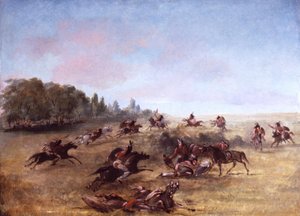
11Né-hee-ó-ee-wóo-tis, Wolf on the Hill, Chief of the Tribe (1832) od George CatlinNé-hee-ó-ee-wóo-tis, Wolf on the Hill, Chief of the Tribe1832 · Smithsonian American Art Museum 12Mún ne o ye, a Woman (1832) od George CatlinMún ne o ye, a Woman1832 · Smithsonian American Art Museum 13Mah táhp ta a, Rushes through the Middle, a Brave (1832) od George CatlinMah táhp ta a, Rushes through the Middle, a Brave1832 · Smithsonian American Art Museum 14A'h tee wát o mee, a Woman (1830) od George CatlinA'h tee wát o mee, a Woman1830 · Smithsonian American Art Museum 15Chin cha pee, Fire Bug That Creeps, Wife of Pigeon's Egg Head (1832) od George CatlinChin cha pee, Fire Bug That Creeps, Wife of Pigeon's Egg Head1832 · Smithsonian American Art Museum 16A'h sha la cóots ah, Mole in the Forehead, Chief of the Republican Pawnee (1832) od George CatlinA'h sha la cóots ah, Mole in the Forehead, Chief of the Republican Pawnee1832 · Smithsonian American Art Museum 17Stu mick o súcks, Buffalo Bull's Back Fat, Head Chief, Blood Tribe (1832) od George CatlinStu mick o súcks, Buffalo Bull's Back Fat, Head Chief, Blood Tribe1832 18Du cór re a, Chief of the Tribe, and His Family (1830) od George CatlinDu cór re a, Chief of the Tribe, and His Family1830 · Smithsonian American Art Museum 19Ish a ró yeh, He Who Carries a Wolf, a Distinguished Brave (1834) od George CatlinIsh a ró yeh, He Who Carries a Wolf, a Distinguished Brave1834 · Smithsonian American Art Museum 20Mun ne pús kee, He Who Is Not Afraid Ko ha túnk a, Big Crow and Nah cóm ee shee, Man of the Bed, Three Young Warriors (1834) od George CatlinMun ne pús kee, He Who Is Not Afraid Ko ha túnk a, Big Crow and Nah cóm ee shee, Man of the Bed, Three Young Warriors1834 · Smithsonian American Art Museum 21Hidatsa Village, Earth covered Lodges, on the Knife River, 1810 Miles above St. Louis (1832) od George CatlinHidatsa Village, Earth covered Lodges, on the Knife River, 1810 Miles above St. Louis1832 · Smithsonian American Art Museum 22Two Comanche Girls (1834) od George CatlinTwo Comanche Girls1834 · Smithsonian American Art Museum 23Náh se ús kuk, Whirling Thunder, Eldest Son of Black Hawk (1832) od George CatlinNáh se ús kuk, Whirling Thunder, Eldest Son of Black Hawk1832 · Smithsonian American Art Museum 24Le sháw loo láh le hoo, Big Elk, Chief of the Skidi (Wolf) Pawnee (1832) od George CatlinLe sháw loo láh le hoo, Big Elk, Chief of the Skidi (Wolf) Pawnee1832 · Smithsonian American Art Museum 25Wash ka mon ya, Fast Dancer, a Warrior (1844) od George CatlinWash ka mon ya, Fast Dancer, a Warrior1844 · Smithsonian American Art Museum 26No ho mun ya, One Who Gives No Attention (1844) od George CatlinNo ho mun ya, One Who Gives No Attention1844 · Smithsonian American Art Museum 27Shón ka ki he ga, Horse Chief, Grand Pawnee Head Chief (1832) od George CatlinShón ka ki he ga, Horse Chief, Grand Pawnee Head Chief1832 · Smithsonian American Art Museum 28Kid á day, a Distinguished Brave (1834) od George CatlinKid á day, a Distinguished Brave1834 · Smithsonian American Art Museum 29Tchán dee, Tobacco, an Oglala Chief (1832) od George CatlinTchán dee, Tobacco, an Oglala Chief1832 · Smithsonian American Art Museum 30Tóh to wah kón da pee, Blue Medicine, a Medicine Man of the Ting ta to ah Band (1835) od George CatlinTóh to wah kón da pee, Blue Medicine, a Medicine Man of the Ting ta to ah Band1835 · Smithsonian American Art Museum 31Hee láh dee, Pure Fountain, Wife of The Smoke (1832) od George CatlinHee láh dee, Pure Fountain, Wife of The Smoke1832 · Smithsonian American Art Museum 32Lay láw she kaw, Goes Up the River, an Aged Chief (1830) od George CatlinLay láw she kaw, Goes Up the River, an Aged Chief1830 · Smithsonian American Art Museum 33Wá nah de túnk ah, Big Eagle (or Black Dog), Chief of the O hah kas ka toh y an te Band (1835) od George CatlinWá nah de túnk ah, Big Eagle (or Black Dog), Chief of the O hah kas ka toh y an te Band1835 · Smithsonian American Art Museum 34Shon ta yi ga, Little Wolf, a Famous Warrior (1844) od George CatlinShon ta yi ga, Little Wolf, a Famous Warrior1844 · Smithsonian American Art Museum 35Big Bend on the Upper Missouri, 1900 Miles above St. Louis (1832) od George CatlinBig Bend on the Upper Missouri, 1900 Miles above St. Louis1832 · Smithsonian American Art Museum 36Battle Between Sioux and Sac and Fox (1848) od George CatlinBattle Between Sioux and Sac and Fox1848 · Smithsonian American Art Museum 37H'co a h'co a h'cotes min, No Horns on His Head, a Brave (1832) od George CatlinH'co a h'co a h'cotes min, No Horns on His Head, a Brave1832 · Smithsonian American Art Museum 38Eé shah kó nee, Bow and Quiver, First Chief of the Tribe (1834) od George CatlinEé shah kó nee, Bow and Quiver, First Chief of the Tribe1834 · Smithsonian American Art Museum 39Fort Pierre, Mouth of the Teton River, 1200 Miles above Saint Louis (1832) od George CatlinFort Pierre, Mouth of the Teton River, 1200 Miles above Saint Louis1832 · Smithsonian American Art Museum 40Lay lóo ah pee ái shee kaw, Grass, Bush, and Blossom, Semicivilized (1830) od George CatlinLay lóo ah pee ái shee kaw, Grass, Bush, and Blossom, Semicivilized1830 · Smithsonian American Art Museum 41Mah kée mee teuv, Grizzly Bear, Chief of the Tribe (1831) od George CatlinMah kée mee teuv, Grizzly Bear, Chief of the Tribe1831 · Smithsonian American Art Museum 42Ha na tá nu maúk, Wolf Chief, Head Chief of the Tribe (1832) od George CatlinHa na tá nu maúk, Wolf Chief, Head Chief of the Tribe1832 · Smithsonian American Art Museum 43Prairie Bluffs Burning (1832) od George CatlinPrairie Bluffs Burning1832 · Smithsonian American Art Museum 44Hard Hickory, an Amiable Man (1831) od George CatlinHard Hickory, an Amiable Man1831 · Smithsonian American Art Museum 45Bread, Chief of the Tribe (1831) od George CatlinBread, Chief of the Tribe1831 · Smithsonian American Art Museum 46On sáw kie, The Sauk, in the Act of Praying (1830) od George CatlinOn sáw kie, The Sauk, in the Act of Praying1830 · Smithsonian American Art Museum 47Ye hów lo gee, The Cloud, a Chief (1838) od George CatlinYe hów lo gee, The Cloud, a Chief1838 · Smithsonian American Art Museum 48Wá hón ga shee, No Fool, a Great Fop (1832) od George CatlinWá hón ga shee, No Fool, a Great Fop1832 · Smithsonian American Art Museum 49Máh to tóh pa, Four Bears, Second Chief in Mourning (1832) od George CatlinMáh to tóh pa, Four Bears, Second Chief in Mourning1832 · Smithsonian American Art Museum 50W'y ee yogh, Man of Sense, a Brave (1832) od George CatlinW'y ee yogh, Man of Sense, a Brave1832 · Smithsonian American Art Museum 51Is sa wáh tám ah, Wolf Tied with Hair, a Chief (1834) od George CatlinIs sa wáh tám ah, Wolf Tied with Hair, a Chief1834 · Smithsonian American Art Museum 52Ru ton ye wee ma, Strutting Pigeon, Wife of White Cloud (1844) od George CatlinRu ton ye wee ma, Strutting Pigeon, Wife of White Cloud1844 · Smithsonian American Art Museum 53Meach o shín gaw, Little White Bear, a Distinguished Brave (1832) od George CatlinMeach o shín gaw, Little White Bear, a Distinguished Brave1832 · Smithsonian American Art Museum 54Mandan Dance (also known as The Last Race, Mandan O-kee-pa Ceremony) (1832) od George CatlinMandan Dance (also known as The Last Race, Mandan O-kee-pa Ceremony)1832 55Tul lock chísh ko, Drinks the Juice of the Stone, in Ball player's Dress (1834) od George CatlinTul lock chísh ko, Drinks the Juice of the Stone, in Ball player's Dress1834 · Smithsonian American Art Museum 56Há-tchoo-túc-knee, Snapping Turtle, a Half-breed (1834) od George CatlinHá-tchoo-túc-knee, Snapping Turtle, a Half-breed1834 · Smithsonian American Art Museum 57White Sand Bluffs, on Santa Rosa Island, Near Pensacola (1835) od George CatlinWhite Sand Bluffs, on Santa Rosa Island, Near Pensacola1835 58Little Wolf (Shon-ta-ye-ga) (1846) od George CatlinLittle Wolf (Shon-ta-ye-ga)1846 59La-dóo-ke-a, Buffalo Bull, a Grand Pawnee Warrior (1832) od George CatlinLa-dóo-ke-a, Buffalo Bull, a Grand Pawnee Warrior1832 · Smithsonian American Art Museum 60Hón-je-a-pút-o, Wife of Bear-catcher (1832) od George CatlinHón-je-a-pút-o, Wife of Bear-catcher1832 · Smithsonian American Art Museum 61Tuch-ee, A Celebrated War Chief of the Cherokees (1834) od George CatlinTuch-ee, A Celebrated War Chief of the Cherokees1834 · Virginia Museum of Fine Arts 62Múk-a-tah-mish-o-káh-kaik, Black Hawk, Prominent Sac Chief (1832) od George CatlinMúk-a-tah-mish-o-káh-kaik, Black Hawk, Prominent Sac Chief1832 · Smithsonian American Art Museum 63The White Cloud, Head Chief of the Iowas (1844) od George CatlinThe White Cloud, Head Chief of the Iowas1844 · National Gallery of Art 64Bird (1839) od George CatlinBird1839 · Smithsonian American Art Museum 65Háw che ke súg ga, He Who Kills the Osages, Chief of the Tribe (1832) od George CatlinHáw che ke súg ga, He Who Kills the Osages, Chief of the Tribe1832 · Smithsonian American Art Museum 66Mó-sho-la-túb-bee, He Who Puts Out and Kills, Chief of the Tribe (1834) od George CatlinMó-sho-la-túb-bee, He Who Puts Out and Kills, Chief of the Tribe1834 · Smithsonian American Art Museum 67Portrait of a Gentleman (1827) od George CatlinPortrait of a Gentleman1827 · Metropolitné múzeum umenia 68Boy Chief - Ojibbeway (1843) od George CatlinBoy Chief - Ojibbeway1843 · National Gallery of Art 69Mounted War Party Scouring a Thicket (1848) od George CatlinMounted War Party Scouring a Thicket1848 · Smithsonian American Art Museum 70See-non-ty-a, an Iowa Medicine Man (1844) od George CatlinSee-non-ty-a, an Iowa Medicine Man1844 · National Gallery of Art 71The Cheyenne Brothers Starting on Their Fall Hunt (1861) od George CatlinThe Cheyenne Brothers Starting on Their Fall Hunt1861 · National Gallery of Art 72Tul lock chísh ko, Drinks the Juice of the Stone (1834) od George CatlinTul lock chísh ko, Drinks the Juice of the Stone1834 · Smithsonian American Art Museum 73Wah pón jee a, The Swan, a Warrior (1830) od George CatlinWah pón jee a, The Swan, a Warrior1830 · Smithsonian American Art Museum 74Nóm ba mon nee, Double Walker, a Brave (1832) od George CatlinNóm ba mon nee, Double Walker, a Brave1832 · Smithsonian American Art Museum 75Naugh háigh hee kaw, He Who Moistens the Wood (1828) od George CatlinNaugh háigh hee kaw, He Who Moistens the Wood1828 · Smithsonian American Art Museum 76Turtle Hunt (1869) od George CatlinTurtle Hunt1869 77Ru-ton-wee-me, Pigeon on the Wing (1844) od George CatlinRu-ton-wee-me, Pigeon on the Wing1844 · Smithsonian American Art Museum 78William Clark (1832) od George CatlinWilliam Clark1832 · National Portrait Gallery 79Peh-tó-pe-kiss, Eagle's Ribs, a Piegan Chief (1832) od George CatlinPeh-tó-pe-kiss, Eagle's Ribs, a Piegan Chief1832 · Smithsonian American Art Museum 80Canoe Race Near Sault Ste. Marie (1837) od George CatlinCanoe Race Near Sault Ste. Marie1837 · Smithsonian American Art Museum 81Elk and Buffalo Grazing among Prairie Flowers, Texas (1848) od George CatlinElk and Buffalo Grazing among Prairie Flowers, Texas1848 · Smithsonian American Art Museum 82Túnk aht óh ye, Thunderer, a Boy, and Wun pán to mee, White Weasel, a Girl (1834) od George CatlinTúnk aht óh ye, Thunderer, a Boy, and Wun pán to mee, White Weasel, a Girl1834 · Smithsonian American Art Museum 83An Old Nayas Indian, His Granddaughter, and a Boy (1875) od George CatlinAn Old Nayas Indian, His Granddaughter, and a Boy1875 · National Gallery of Art 84Mrs. George Catlin (Clara Bartlet Gregory) (1830) od George CatlinMrs. George Catlin (Clara Bartlet Gregory)1830 · Metropolitné múzeum umenia 85Theodore Burr Catlin, in Indian Costume (1840) od George CatlinTheodore Burr Catlin, in Indian Costume1840 · Smithsonian American Art Museum 86Háh nee, The Beaver, a Warrior (1834) od George CatlinHáh nee, The Beaver, a Warrior1834 · Smithsonian American Art Museum 87Pash ee pa hó, Little Stabbing Chief, the Younger, One of Black Hawk's Braves (1832) od George CatlinPash ee pa hó, Little Stabbing Chief, the Younger, One of Black Hawk's Braves1832 · Smithsonian American Art Museum 88Kotz a tó ah, Smoked Shield, a Distinguished Warrior (1834) od George CatlinKotz a tó ah, Smoked Shield, a Distinguished Warrior1834 · Smithsonian American Art Museum 89Eé hee a duck cée a, He Who Ties His Hair Before (1832) od George CatlinEé hee a duck cée a, He Who Ties His Hair Before1832 · Smithsonian American Art Museum 90Three Blackfoot Men (1862) od George CatlinThree Blackfoot Men1862 · National Gallery of Art 91Pash ee pa hó, Little Stabbing Chief, a Venerable Sauk Chief (1835) od George CatlinPash ee pa hó, Little Stabbing Chief, a Venerable Sauk Chief1835 · Smithsonian American Art Museum 92View on the Missouri, Alluvial Banks Falling in, 600 Miles above St. Louis (1832) od George CatlinView on the Missouri, Alluvial Banks Falling in, 600 Miles above St. Louis1832 · Smithsonian American Art Museum 93Two Apachee Warriors and a Woman (1862) od George CatlinTwo Apachee Warriors and a Woman1862 · National Gallery of Art 94Camanchees Lancing a Buffalo Bull (1865) od George CatlinCamanchees Lancing a Buffalo Bull1865 · National Gallery of Art 95Lengua Indians Ascending the Rapids of the Rio Uruguay (1861) od George CatlinLengua Indians Ascending the Rapids of the Rio Uruguay1861 · National Gallery of Art 96Mauhees Encampment (1869) od George CatlinMauhees Encampment1869 · National Gallery of Art 97A Lagoon of the Upper Amazon (1871) od George CatlinA Lagoon of the Upper Amazon1871 · National Gallery of Art 98The Last Race, Mandan O-Kee-Pa Ceremony (1832) od George CatlinThe Last Race, Mandan O-Kee-Pa Ceremony1832 · Smithsonian American Art Museum 99Assinneboine Chief before and after Civilization (1869) od George CatlinAssinneboine Chief before and after Civilization1869 · National Gallery of Art 100Nayas Village at Sunset (1875) od George CatlinNayas Village at Sunset1875 · National Gallery of Art

Slávne obrazy umelca George Catlin podľa jednotlivých období

Motívy, ktoré zaujali George Catlin

Štyri témy, ktoré sa v týchto origináloch najčastejšie vracajú, každá s jej najvychybenejším príkladom.

Múzeá, ktoré uchovávajú originály umelca George Catlin

5 múzeá, v ktorých sa nachádza najviac obrazov z tejto stránky.

Múzeá Mesto Diela umelca George Catlin Obrazy z tohto zoznamu
Smithsonian American Art Museum, Washington, D.C.Smithsonian American Art Museum Washington, D.C. 471 Say-say-gon, Hail Storm, War Chief, Sky se ró ka, Second Chief of the Tribe, Ee mat lá , King Phillip, Second Chief
National Gallery of Art, WashingtonNational Gallery of Art Washington 345 The White Cloud, Head Chief of the Iowas, Boy Chief - Ojibbeway, See-non-ty-a, an Iowa Medicine Man
Metropolitné múzeum umenia, New YorkMetropolitné múzeum umenia New York 4 Portrait of a Gentleman, Mrs. George Catlin (Clara Bartlet Gregory)
Virginia Museum of Fine Arts, RichmondVirginia Museum of Fine Arts Richmond 1 Tuch-ee, A Celebrated War Chief of the Cherokees
National Portrait Gallery, Washington, D.C.National Portrait Gallery Washington, D.C. 1 William Clark

George Catlin naprieč dekádami: jeden jedinečný originál pre každý

Diela podľa dekád

Vyberte si dekádu a pozrite si originál, ktorý ju definuje.

Obrazy umelca George Catlin: otázky pre galériu

Akým najznámejším dielom sa pýta George Catlin?Odhaľte odpoveď

Say-say-gon, Hail Storm, War Chief (1845), Smithsonian American Art Museum, Washington, D.C.. Nasledujú Sky se ró ka, Second Chief of the Tribe (1834) a Ee mat lá , King Phillip, Second Chief (1838).

V akom veku vytvoril/a George Catlin dielo Say-say-gon, Hail Storm, War Chief?Odhaľte odpoveď

49 rokov: Say-say-gon, Hail Storm, War Chief vzniklo v roku 1845 a George Catlin sa narodil/a v roku 1796.

Ktorých desať obrazov George Catlin je najznámejších?Odhaľte odpoveď

Say-say-gon, Hail Storm, War Chief, Sky se ró ka, Second Chief of the Tribe, Ee mat lá , King Phillip, Second Chief, Eeh nís kim, Crystal Stone, Wife of the Chief, Steeh tcha kó me co, Great King (called Ben Perryman), a Chief, Cáh be múb bee, He Who Sits Everywhere, a Brave, Os ce o lá, The Black Drink, a Warrior of Great Distinction, Stán au pat, Bloody Hand, Chief of the Tribe, Wa kon chásh kaw, He Who Comes on the Thunder a Wah chee háhs ka, Man Who Puts All Out of Doors. Vyššie uvedené hodnotenie uvádza rok a múzeu pre každé z nich.

Koľko je známych diel umelca George Catlin?Odhaľte odpoveď

Náš katalóg obsahuje 908 diel od umelca George Catlin z perioda od 1827 do 1871.

Kde možno vidieť najznámejšie originály od George Catlin?Odhaľte odpoveď

Väčšinou v Smithsonian American Art Museum (Washington, D.C.), National Gallery of Art (Washington) a Metropolitné múzeum umenia (New York). Tabuľka múzeí vyššie ich všetky uvádza.

V akom období vytvoril/a George Catlin svoje najznámejšie obrazy?Odhaľte odpoveď

V období 1830s: 72 z 100 diel na tejto stránke bolo vytvorených vtedy, pričom Sky se ró ka, Second Chief of the Tribe z nich.

Ktorý z najslávnejších obrazov autora George Catlin je najstarší a ktorý najnovší?Odhaľte odpoveď

Na tejto stránke je najstaršie dielo z Portrait of a Gentleman (1827) a najnovšie z A Lagoon of the Upper Amazon (1871).

Aké témy obľúbené George Catlin?Odhaľte odpoveď

Indigenous culture (27), Portraiture (27) a Portrait (26), v rámci 100 diel na tejto stránke.

S akými materiálmi mal(a) George Catlin najčastejšie pracuje?Odhaľte odpoveď

Oil On Canvas, pre 69 z 100 diel na tejto stránke.

Do ktorého smeru patrí tvorba umelca George Catlin?Odhaľte odpoveď

American romanticism, podľa originálov na tejto stránke.

Aké originály od George Catlin môžem vidieť v Smithsonian American Art Museum?Odhaľte odpoveď

Say-say-gon, Hail Storm, War Chief, Sky se ró ka, Second Chief of the Tribe a Ee mat lá , King Phillip, Second Chief: múzeá Smithsonian American Art Museum, Washington, D.C. uchovávajú 78 z diel na tejto stránke.

George Catlin: portrét umelca

Rané roky a právnické vzdelanie

George Catlin sa narodil v roku 1796 v Wilkes-Barre v Pensylvánii ako piate z štrnástich dieťaťa. Jeho rané prostredie formovali drsné reality americkej fronteiry, a to najmä prostredníctvom príbehov jeho matky, Polly Suttonovej. Tá prežila zajatie počas indiánskej náravy, čo bol fakt, ktorý mu dodával neustálu, hlboko vnímanú väzbu k pôvodným kultúram, ktoré mal neskôr dokumentovať. Táto osobná história zakorenila jeho záujem o Západ dávno predtým, než vôbec vzal do ruky pukylo pre profesionálne účely.

Jeho cesta však nebola spočiatku smerovaná na plátno. Vo veku 17 rokov nastúpil na právnickú školu Litchfield, aby sa pripravil na právnickú kariéru, čo bol smer, ktorý mu narodilí narzucovali. Nakoniec dosiahol profesionálne uznanie, keď bol v roku 1819 prijatý do advokátskej profesie. Právnický chrobák však nedokázal udržať jeho pozornosť. Advokaciu praktikoval len dva roky, pričom zistil, že súd je len slabou náhradou za jeho skutočné záujmy. Kým však úplne opustil svoje právnické knihy, impulz štúdiou umenia a cestovania sa už stal jeho hlavným životným cieľom.

Expedície a Indiánska galéria

Catlinovo dielo nadobúda svoju váhu vďaka samotnému rozsahu jeho putovania po americkom Zárade. Počas 30. rokov 19. storočia podnikol päť rozsiahlych expedícií, kedy plavbal po rieke Missouri dosiahol až k územiam kmeňov Mandan, Sioux, Blackfeet a Choctaw. Nešlo však o obyčajné štetné výlety za krásami krajiny. Cez tieto krajiny sa pohyboval s jasným cieľom dokumentovať život konkrétnych kmeňov, pričom zbieral nielen maľby, ale aj fyzické artefakty. Táto masívna kumulácia vizuálnych a materiálnych dôkazov nakoniec vytvorila jeho Indiánsku galériu, zbierku presahujúcu 500 pláten.

Práve rozmach tejto kolekcie robí jeho tvorbu historicky významnou. George Catlin nebol len umelcom, ktorý by maľoval z pamäti; on zbieral výsledky svojich ciest do jednej, monumentálnej celistvosti. Tento úsilie o vytvorenie komplexného záznamu o frontejre neskôr rozšíril svoje cestovanie cez Južnú a Strednú Ameriku v období medzi rokmi 1852 a 1857. Jeho zameranie sa však vždy držalo etnografickej reality ľudí, ktorých stretával, pričom dokumentáciu ich zvykov a vzhľadu vždy predpokladala pred prostým zachytávaním krajiniek.

Umelecký štýl a dokumentácia

Catlinov prístup bol poháňaný špecifickou, naliehavou potrebou: dokumentáciou životného štýlu, ktorý podľa jeho presvedčenia neďavol. Neuspokojil sa len obyčajnou karikatúrou alebo povrchnými stereotypmi, ktoré boli v 19. steroku bežné. Namiesto toho sa sústredil na jednotlivca a snažil sa zachytiť osobitnú dôstojnosť kmeňových vodcov a kinetickú energiu, ktorú možno nájsť v tradičných obradoch. Jeho ťah pędzla uprednostňoval dôkladný detail, čím zabezpečil, že textúry rituálnych odevov aj špecifické detaily každodenného života boli zaznamenané s etnografickou presnosťou. Bol to zámerný pokus zachovať esenciu týchto kultúr skôr, než ich západná expansió nenávratne zmenila.

Vizuálna sila jeho diela spočíva v bohatom využití farieb a detailnom environmentálnom kontexte. Subjekty málokedy malí len tak v izolácii; namiesto toho ich umiestňoval do rozpracovaných pozadí, ktoré poskytovali nevyhnutné situčné informácie. Tieto prostredia často zahŕňali špecifické krajiny, tipi alebo rituálne predmety, ktoré zakotvovali jeho subjekty v ich skutočnom prostredí. Tým, že do svojich dielov zahrnul tieto prvky, prekročil hranice jednoduchého portrétu a vytvoril komplexnú vizuálnu kroniku americkej fronteiry. Jeho schopnosť vykresliť atmosféru scény – od prachu na prerastine až po štruktúru táborovej osady – premenila jeho maľby na historické dôkazy, nie len na estetické cvičenia.

  • Mó-sho-la-túb-bee, He Who Puts Out and Kills, Chief of the Tribe (1834)
  • Ball-play of the Choctaw--Ball Up (1850)

Kľúčové diela a významné maľby

Catlinovo umenie funguje skôr ako vizuálna kronika konkrétnych, prežitých okamihov než ako pouhá portrétna tvorba. Jeho maľba z roku 1834, Mó-sho-la-túb-bee, He Who Puts Out and Kills, Chief of the Tribe, zachytáva vodcu s neochvebným pohľadom, ktorý vyjadruje autoritu prostou a priamu prítomnosťou. Podobne aj Ball-play of the Choctaw odchádza od statického pózovania, aby dokumentoval kinetickú energiu tradičnej hry. Tieto diela poskytujú detailný pohľad, ktorý je nevyhnutný pre pochopenie kmeňových sociálnych štruktúr a komunitných aktivít.

Umelec sa zameriaval aj na vzájomné vzťahy medzi ľuďmi a ich prostredím. Prairie Meadows Burning zaznamenáva kontrolované vypaľovanie trávy v sprievodní dechových jazdcov, čím zachytáva špecifickú ekologickú a spoločenskú prax. Jeho zobrazenie Pipestone Quarry, Coteau Des Prairies identifikuje miesto hlbokej duchovnej významnosti pre mnohé kmene. Aj jeho intímnejšie alebo neobvyklejšie témy nesú veľký význam; Oó-je-en-á-he-a, Woman Who Lives in a Bear, vytvorená okolo roku 1832, ponúka náhľad do konkrétneho kultúrneho naratívu, zatiaľ čo Little Wolf (Shon-ta-ye-ga), vytvorená v roku 1846, zostáva významným prvkom jeho neskoršej dokumentácie.

  • Mó-sho-la-túb-bee, He Who Puts Out and Kills, Chief of the Tribe (1834)
  • Little Wolf (Shon-ta-ye-ga) (1846)

Publikácie a svetové turné

Catlinovo úsilie zabezpečiť trvalý domov pre jeho Indickú galériu si vyžadovalo viac než len vizuálne dôkazy; vyžadovalo to prítomnosť v povedomí verejnosti. Svojou zbierkou ovzdužňoval svetové metropolie a počas 40. a 50. rokov 19. storočia vystavoval v Londýne, Paríži a Berline. Tieto výstavy však neboli len pasívnym prehliadkom obrazov. Svojim maľbám sprevádzal živými prednáškami, v ktorých využíval osobné spomienky na život medzi Amerikánmi, čím obrazom dodával hlboký, hovorený kontext. Táto synergia zraku a slova bola premysleným pokusom urobiť realitu pohraničia hmatateľnou pre divákov, ktorí boli od rieku Missouri vzdialeni celé tisícky míľ.

Jeho písané diela poskytli intelektuálnu štruktúru jeho vizuálnej dokumentácii. V roku 1841 vydal Manners, Customs, and Condition of the North American Indians, text, ktorý sa pokúsil skodyfikovať pozorobania, ktoré zhromaždil počas svojich náročných expedícií. Neskôr, v roku 1868, vydal Last Rambles amongst the Indians of the Rocky Mountains and the Andes. Tieto publikácie neboli len obyčajnými cestovopismi; boli to pokusy zachytiť špecifický, miznúci spoločenský poriadok do trvalého historického záznamu. George Catlin využil písané slovo na to, aby posilnil legitimitu svojich maľieb a zabezpečil, že jeho pozorobania prežijú, aj keď jeho vlastná finančná stabilita nemusela.

Neskoršie roky a smrť

Finančná nestabilita bola sprevodievajúca posledné dekády života, ktorémi žil George Catlin. Napriek jeho nesmierebným úsiliam zabezpečiť svojej zbierke národný odkaz a trvalé miesto v histórii, umelec strávil väčšinu svojich neskorších rokov snahou získať späť investované prostriedky. V pragmatickom pokuse o obnovu svojich finančných rezerv vytvoril viac ako 400 menších reprodukcií, ktoré nazval „kreslenou kolekciou“. Bol to premyslený krok, ktorým sa snažil monetizovať celý svoj životný opus, no tento prístup mu nedarilo sa priniesť taký významný zisk, aký potreboval pre dosiahnutie finančnej stability.

Boj o životné prostriedky pokračoval až do jeho posledného dňa. George Catlin skonal 23. decembra 1872 v Jersey City v New Jersey. Bol pohrebený na cintoríne Green-Wood v Brooklyne. Jeho odchod znamenal definitívny koniec života zasveteného dokumentovaniu hranice, ktorú rýchlo nahrádzala práve tá expansionistická expansiórna vlna, ktorú on sám s takou presvedčivou predvídavosťou predpovedal.

Odkaz a historický význam

Catlinova dôležitosť spočíva v jeho rolej ako primárneho vizuálneho zdroja. Bol prvým bielym mužom, ktorý zachytil Indiánov z rovín v rámci ich pôvodného domovského teritórium, čím poskytol priame záznamy o živote pred plným dopadom západnej expansie. Jeho maľby ponúkajú pohľad do kultúr, ktoré boli v hlavných naratívoch devätnasteho storočia často nesprávne predstavované alebo ignorované. Namiesto toho, aby sa spoliehal na nepriame svedectvá, jeho dielo zachytáva špecifickosť kmeňových zvykov a sociálnych štruktúr prostredníctvom priamého pozorovania.

Historická hodnota jeho tvorby je nepochybná. Jeho dokumentácia poskytuje hlboký vhľad do náboženskýchக் přesvedčení a ceremoniálnych tradícií, ktoré by sa inak mohli stratit v temnákoch histórie. Táto archívna kvalita mu v neskorších rokoch priniesla významné uznanie. V roku 2001 bol uvedený do Národnej haly slávy riek (National Rivers Hall of Fame) a v roku 2023 do Haly slávy umenia a zábavy okrese Luzerne. Tieto počty uznávajú váhu jeho prínosu k americkým historickým a kultúrnym záznamom.

Kde dnes obdiviť jeho diela

Catlinovo vizuálne záznamie je rozptýtené v niekoľkých významných inštitúciách, čo znamená, že komplexné štúdium jeho tvorby si vyžaduje návštevu špecifických kolekcií. Najvýznamnejšia koncentrácia jeho díela sa nachádza vo Washingtone, D.C. Smithsonian American Art Museum uchováva 25 jeho maľieb, ktoré poskytujú najrozsiahlejší pohľad na jeho etnografickú dokumentáciu. V blízkosti sa nachádza aj National Gallery of Art vo Washingtonu, ktorá v svojej zbírke udržiava jedno z jeho díiel.

Okrem hlavného mesta je jeho prítomnosť cítiť aj v iných regiónálnych múzeách, ktoré uchovávajú jednotlivé kusy jeho tvorby. Denver Art Museum obsahuje jedno jeho dielo, zatiaľ čo Virginia Museum of Fine Arts v Richmonde vlastní ďalšie. Tento rozptýlený stav odzrkadľuje fragmentovaný charakter jeho pôvodnej Indiánskej galérie a ťažkosti, ktoré musel počas svojho života čeliť pri pokusech zabezpečiť jednej permanentnej rezidencii celú svoju zbierku.